


 Slovenščina
 Bosanski
 Hrvatski
 Čeština
 Dansk
Dansk Dutch
Dutch Suomi
Suomi Français
 Deutsch
 Magyar
 Italiano
 Polski
 српски
 Slovenčina
 Español
 Svenska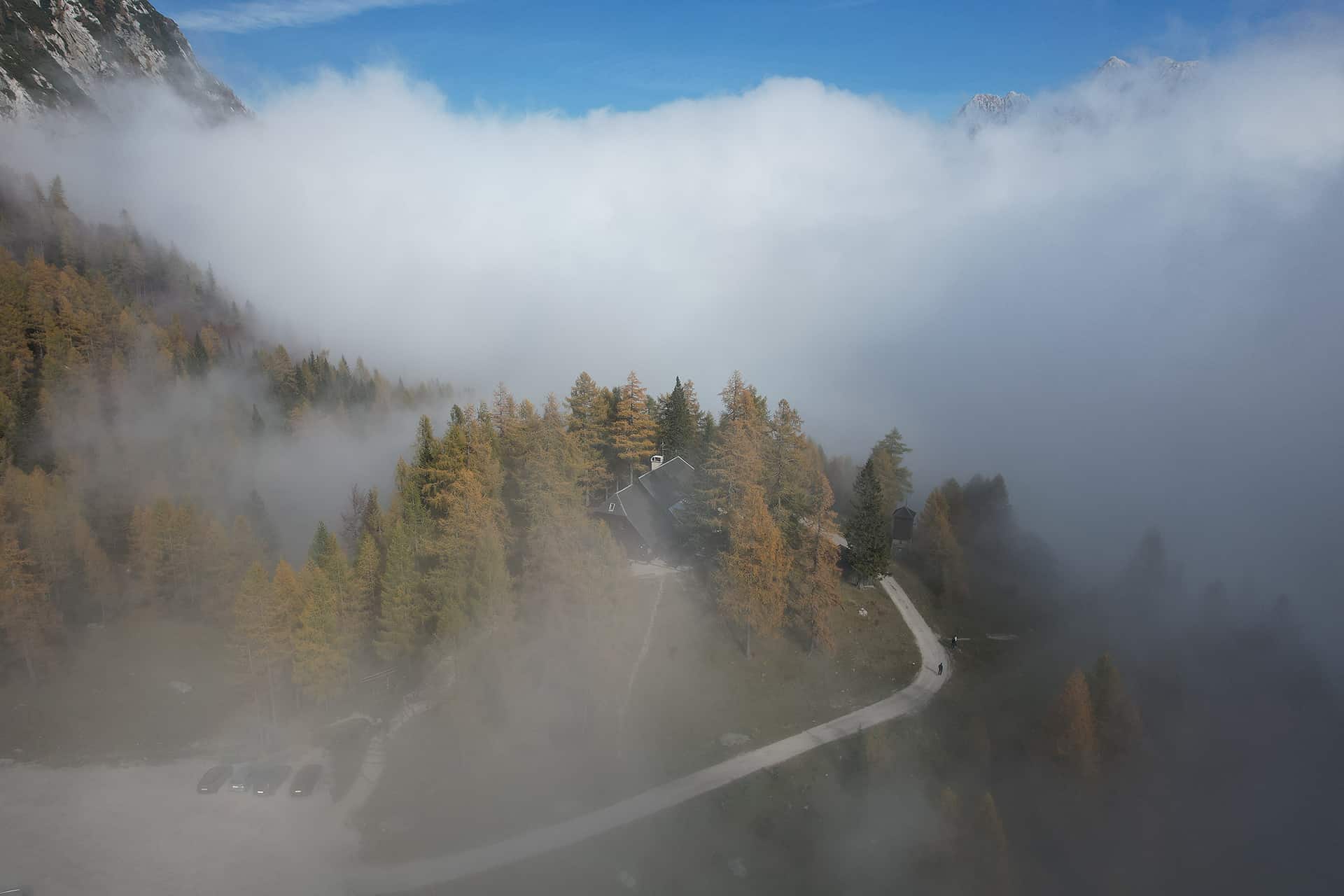
On this page
Jump to the most useful sections of this guide.
- Summer visit: parking, hiking and rooms
- CONDITIONS IN THE MOUNTAINS
- EQUIPMENT
- SELECTION OF A ROUTE
- USE MAPS AND APPS
- EN ROUTE WITH A GUIDE
- RESERVATIONS OF MOUNTAIN HUTS
- Respect and protect the natural mountain environment
- Be a responsible visitor to the park
- What to do if an accident happens?
- Related mountain and travel guides
Quick summary
The most useful points from this guide before you continue.
Stay on Vršič Pass
Stay at Erjavčeva koča on Vršič Pass
Erjavčeva koča is a mountain hut at Vršič Pass, between Kranjska Gora, Trenta, the Soča Valley and the Julian Alps. It is a practical base for hikers, road-trippers, cyclists and guests who want to stay close to the mountain pass.
- Direct location on the Vršič Pass road
- Good base for hiking, scenic drives and Julian Alps day trips
- Useful for guests visiting Kranjska Gora, Trenta, Soča Valley and Triglav National Park
- Food, mountain-hut atmosphere and practical local information in one place
This block is designed for independent guests and self-service booking. It does not imply a price guarantee or live availability.
Before you book your stay
Vršič Pass is a high mountain location, so it is worth checking a few practical details before you travel. This helps you plan your arrival, parking, hiking day and overnight stay more easily.
Access and road conditions
The Vršič road can be affected by season, weather and traffic. Before travelling, check current access information and plan enough time for the mountain road.
Parking
Parking rules and availability around Vršič can change by season and operator. Check the latest parking information before arrival, especially in busy periods.
Rooms and overnight stay
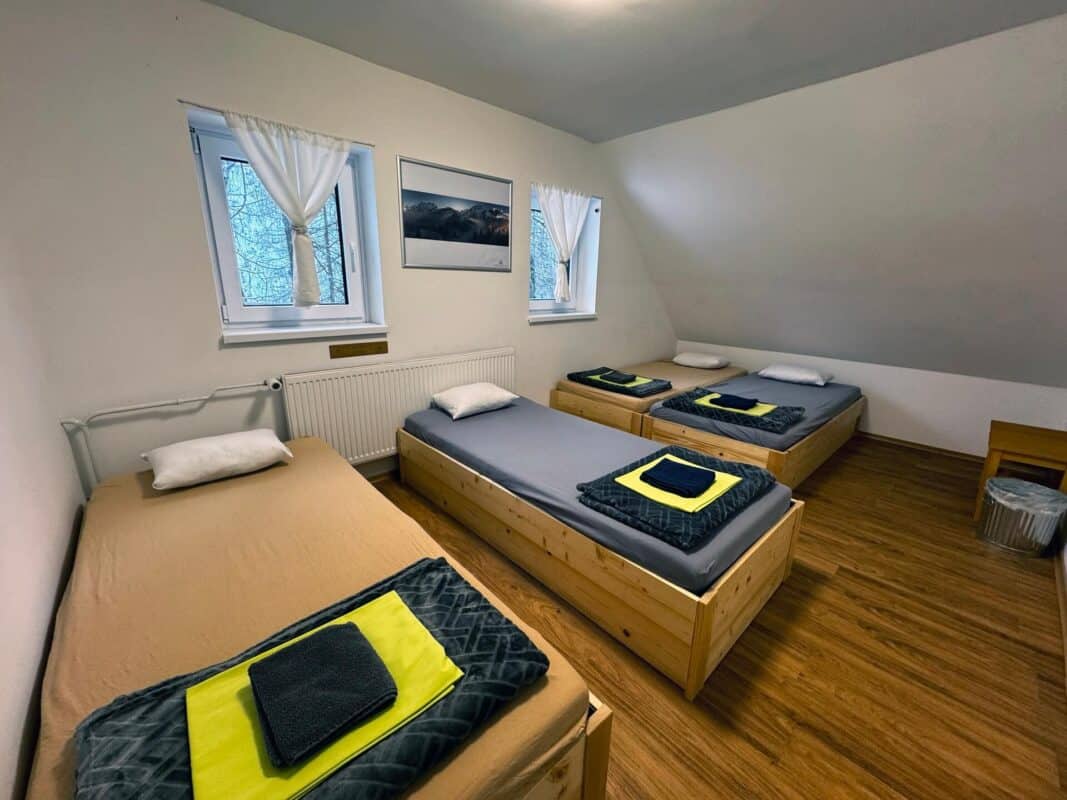
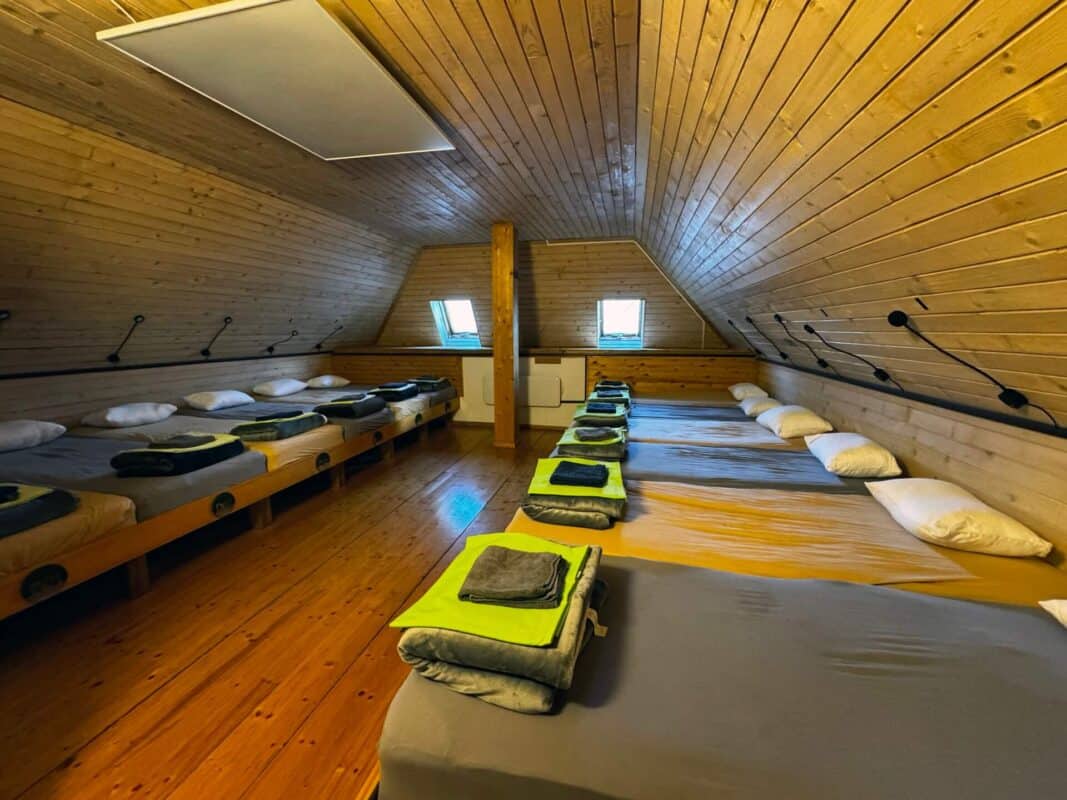
If you plan to stay overnight, check room availability in advance. This is especially important during the hiking season, weekends and good-weather periods.
Food, opening hours and groups
Opening times may vary outside the main summer season or by arrangement with groups. Contact the hut directly for the latest information before making fixed plans.
Self-service planning for your stay at Vršič Pass
- Check room and availability options first.
- Read access, parking and arrival notes before travelling.
- Arrive with your own plan for Vršič, Kranjska Gora, Trenta and the Soča Valley.
- Use contact only for special cases, not for information already explained on the page.
A trusted mountain hut at Vršič Pass
Erjavčeva koča has been part of the Vršič mountain pass experience for generations. Guests use it as a practical alpine base for hiking, cycling, scenic drives, visits to Kranjska Gora and trips toward Trenta and the Soča Valley.
Ready to stay on Vršič Pass? Check the verified accommodation page and reserve directly with the hut.
Erjavčeva koča is a mountain hut at 1525 m, not a hotel or hostel. Come for nature, simple shelter and the rhythm of the mountains.
- ✓Direct access to Vršič, trails and Triglav National Park
- ✓Quiet evenings, early starts and weather-dependent mountain life
- ✓Food, shelter and practical help from the hut team
- ✓Unspoiled nature, mountain views and fresh alpine air
- ×Perfect silence during busy mountain days
- ×A valley resort experience
- ×Luxury hotel rooms or city-hotel services
- ×Hostel-style nightlife or loud late evenings
Before you book your stay at Vršič Pass
Use the booking information on this page to decide independently. Booking platforms can help with comparison, but your reservation should be clear before you travel. Contact is only for special cases.
Direct booking is best for
- Checking rooms and availability
- Reading access, parking and arrival details
- Booking when your dates and plan are clear
- Special questions only for groups, late arrival or winter conditions
Booking platforms are useful for
- Comparing accommodation options
- Reading platform-specific reviews
- Managing platform bookings in one account
- Using platform filters and policies
No price guarantee is implied. This block encourages self-service planning and reduces unnecessary calls or emails.
What happens after you check availability?
Checking availability is the first booking step, not a request for personal travel planning. Read the arrival, access and parking information before you book. Contact is only for special cases.
- Choose the room or stay option that fits your plan.
- Complete the booking request with your travel date and arrival plan.
- Before travelling, read the access, parking and seasonal notes; use contact only for groups, late arrival or winter conditions.
CTA clicks are measured as intent signals. This block is designed for self-service reservations and to reduce unnecessary calls or emails.
Summer visit: parking, hiking and rooms
In summer, Vrsic is busy with hikers, cyclists and scenic-road visitors. Plan arrival time, parking, weather protection and overnight questions before you leave.
- Arrive early when parking demand is high.
- Check weather before longer hikes.
- For overnight stays, contact the hut directly before travel.
This block is a practical planning reminder, not a live availability statement.
This guide is prepared from the perspective of Erjavčeva koča, a mountain hut on Vršič Pass. Use it together with current weather, road conditions and responsible behaviour in Triglav National Park.
How to plan your trip to the mountains?
How to plan your trip to the mountains?
A mountain trip must be carefully planned. Think about how long you are prepared to walk, to what altitude you wish to ascend, and what difficulty level matches your physical fitness. Check out the weather forecast, the condition of the trail you plan to take, the opening times of mountain huts, and what equipment is needed. Irrespective of where you go, choose suitable boots with non-slip soles and bring with you a sufficient quantity of (alcohol-free) fluids. Also, check out our list of things to keep in mind before the trip and set out on the trail only after you’ve ticked off all the items on the list.
Remember!
Your final destination isn’t the peak you intend to climb, but your safe return into the valley. Many accidents in the mountains occur when descending peaks.
How to plan your trip to the mountains?
CONDITIONS IN THE MOUNTAINS
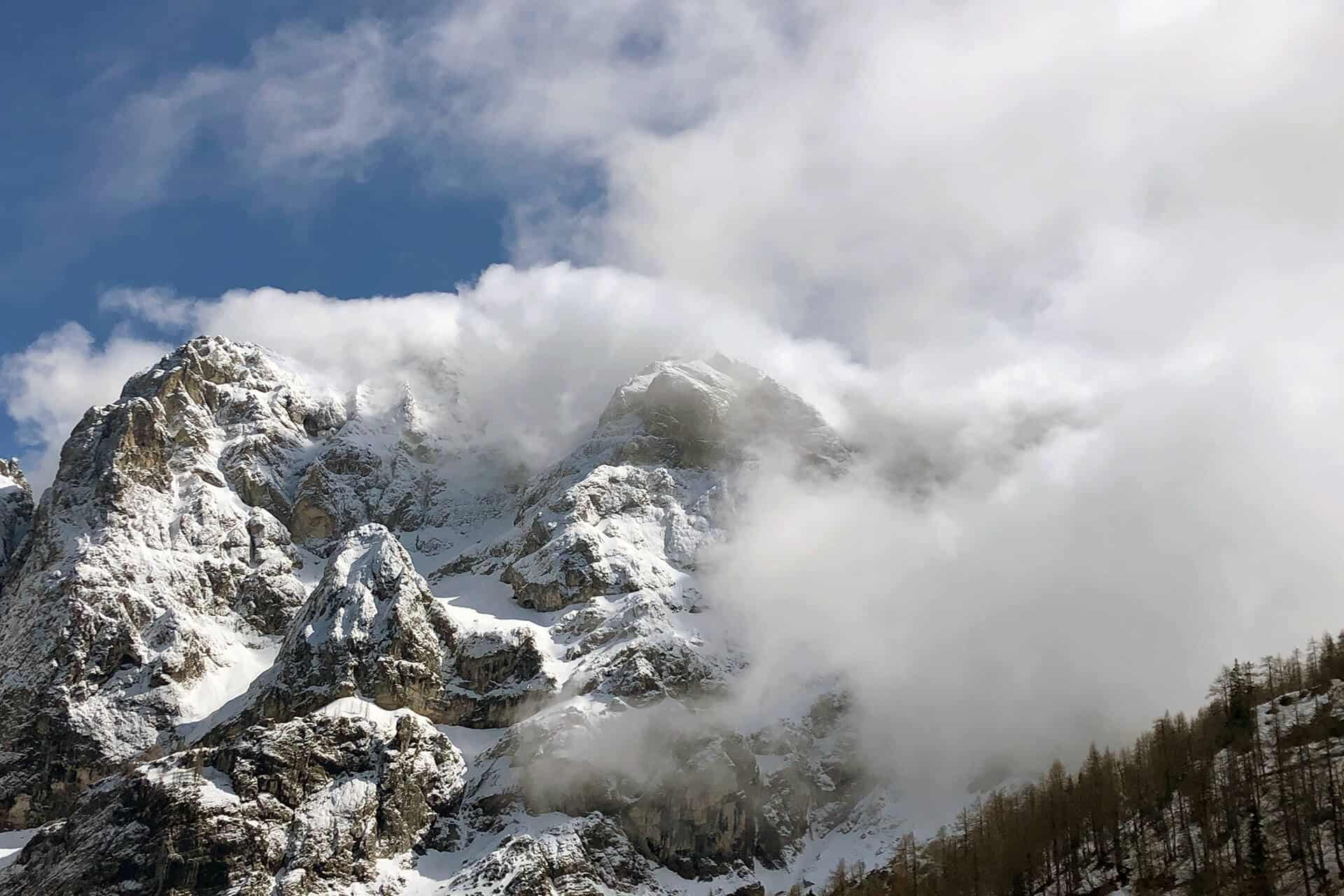
Meteorological conditions in the mountains can change abruptly and it’s very important to check the latest weather forecast before setting out. In doing so, trust only official sources. The current weather forecast for the mountains in Slovenia can be found on the website of the Slovenian Environment Agency. It’s recommended that you set out sufficiently early. In this way, you have more time to solve any complications (equipment malfunctions, loss of orientation, etc.) and avoid possible afternoon storms. If you’re going on a longer trip, learn about the huts and shelters along the way where you can seek refuge in the event of bad weather.
What to do if a storm surprises you in the mountains?
- Descend from ridges and exposed mountain peaks.
- Avoid places with wire ropes and metal objects or where the rock is red, as this indicates that it contains metal. Also avoid places where lightning strikes frequently. Such locations can be identified by lone trees, split trees and rocks, and churned ground.
- Move all metal objects that you have with you to a safe distance of at least 10 metres.
- Don’t touch the rockface with your body. Position yourself as low to the ground as possible.
- If you find shelter in a cave or a hollow, the safest place is in the middle of it.
- The safest position for avoiding lightning strikes is on scree, but lower yourself into a crouch or sit on your backpack.
Summer storms cause sudden cooling. The temperature may drop by 20 degrees or more in a matter of minutes.
Increasingly violent storms and thunderstorms, which leave destruction behind, can also be encountered in Slovenian mountains. Thus, you should always check the current condition of mountain trails.
Current first-hand information
To help you check the situation in the mountains, we gathered for you the most important official links to this data. Nevertheless, pay close attention to any changes in the weather along the way.

How to plan your trip to the mountains?
EQUIPMENT
When you decide on a trip, it’s important to select appropriate equipment. This selection depends on several factors, which primarily involve the level of difficulty of the trail and the conditions in the mountains. It’s very important to be sufficiently hydrated with alcohol-free fluids.
If venturing on a trip lasting several hours or a whole day, or if setting out on challenging trails, it’s necessary to take with you aluminium foil, a bivouac bag or a large black bag as heat insulation in the event of an accident or when bivouacking, a headlamp and spare batteries, additional clothes to change into, and a climbing helmet. For very difficult routes, self-belaying set and a climbing harness are mandatory. It’s very important to know how to use the equipment correctly, so learn to do so before going into the mountains and check that it’s fully functional.
Don’t forget that you’ll be exposed to the sun in the mountains. Take with you sunglasses, high UV sunscreen and a suitable hat (baseball cap, headscarf, etc.).
Conditions in winter are even more challenging and you’ll need even more equipment. Hiking boots won’t suffice on snowy and icy surfaces, you’ll require crampons and an ice-axe. You should know that classical 12-tooth cramponsare suitable for a winter trip in the mountains. Shoe snow chains aren’t a suitable substitute for crampons. However, crampons alone are not enough, you must also always use an ice-axe. But you must also know how to use both correctly. You should keep an avalanche safety kit (beacon, probe and shovel)in your backpack in the winter and know how to use it. You’re also advised to have an avalanche airbag backpack.
Remember!
Always carry appropriate equipmentwith you and learn how to use it correctly. Check the condition of the equipment and test it before you set out on a trip.

How to plan your trip to the mountains?
SELECTION OF A ROUTE
When planning a trip into the mountains, think carefully about what route to choose. It’s important to choose a route that you’ll be able to manage. Think about how long you want to walk, how high you want to ascend, what difficulty level to choose, when to start your trip, which part of Slovenia you want to visit, etc. When considering your options, don’t forget the following:
- Don’t overestimate your psychophysical readiness and fitness level. If a certain trail seems too difficult or long, opt for an easier and shorter one.
- Make sure to have all the appropriate equipment for the selected trail.
- Check if there are mountain huts along the way where you can take a break.
- Your level of experience and possible fear of heights should also be considered. If you lack experience, you should venture into the mountains with a mountain guide.
- Check out the current condition of trails. It’s possible that a trail can become impassable practically overnight due to a storm, fallen trees or landslides. Don’t use closed mountain trails.
- Let people in the valley know where you’re going and when you’re planning to return. Sign your name in summit books and enter your direction of arrival and departure, so that the rescue team will find you more easily in the event of an accident.
Remember!
When selecting your destination, always think about how you’re going to reach it. Spectacular photographs from a certain route or a peak shouldn’t be your main criterion. Instead, you should prioritise your safety and the suitability of your destination in relation to your experience, knowledge, fitness and equipment.

USE MAPS AND APPS
During your hike, you can rely on special apps to help you track your planned route, inform you about specific features and provide you with the information you need. But pay attention. Not all apps are suitable. Only trust the apps that use objective, updated and real data and not sources in which the descriptions of mountain trails are mostly subjective and often misleading. The maPZS and Slovenia Outdoor apps are suitable for the Slovenian Alps.
EN ROUTE WITH A GUIDE
You’re advised to go hiking or mountaineering with a licensed mountain guide for the best and safest experience. Mountain guides are able to advise and guide you on safe paths, make sure that you use the appropriate equipment and guide you safely on mountain peaks or along mountain trails. When choosing a guide, pay attention to their licence and whether it is suitable for the route you’re planning.
Mountain guide
You should choose mountain guides with a suitable licence who are capable of taking you on difficult or very difficult mountain trails, Alpine climbing or ski touring. Slovenian mountain guides also hold the international IFMGA licence.

RESERVATIONS OF MOUNTAIN HUTS
There are 159 mountain huts and lodges and 18 bivouacs in Slovenia. You can find delicious homemade dishes in the majority of huts, while larger huts and lodges also provide overnight accommodation. They usually have dormitory rooms, but more and more huts are now also offering single rooms. The huts also serve as information points in the mountains where visitors can obtain information on the current conditions of the trail and can seek refuge from bad weather. They are also used as points of notification about accidents in the mountains.
The majority of mountain huts are only open in the summer, from May until October. Some of them stay open throughout the year on weekends. Certain huts are particularly popular and quite busy in the summer, so we recommend that you book your bed in the selected hut before going to the mountains.
You can make your reservations through a special system that currently includes 21 of the most popular and visited huts. Upon reservation, the end price of the overnight stay will be shown, which you can pay with a credit card. The reservation can be cancelled free of charge no later than one or two days before your scheduled arrival date, depending on the individual mountain hut.

Respect and protect the natural mountain environment
Nature is truly amazing along the mountain paths, but also very sensitive. A large section of the Julian Alps is situated in Triglav National Park and many areas in the Karavanke and the Kamnik-Savinja Alps are protected as parts of Natura 2000. High peaks are surrounded by green forests at lower altitudes. These cover two thirds of Slovenia and are teeming with life. To minimise the impact on these sensitive ecosystems, it’s necessary to explore them with a great deal of respect and responsibility. Help us preserve the beauty of the mountain landscape and the creatures that live in it and are an integral part of it. Observe the rules for responsible venturing into nature of Triglav National Park and other protected areas.
Be a responsible visitor to the park
Triglav National Park consists of three protection areas with different levels of protection. The first two areas represent the narrower section of the park in which strict rules of conduct and prohibition apply. The third area is the peripheral part and includes certain populated areas. In addition to the provided code of conduct in the natural environment, additional sustainability recommendations apply regarding the preservation of the park’s wealth of natural and cultural heritage.
- Use public transport to get to starting points.
- Support the local economy by purchasing local products and choose products and experiences you recognise as local collective brands.
- Take your rubbish with you.
- Book your accommodation directly with local providers. Book your bed in mountain huts via the reservation system.
- Obtain necessary information and make sure that your venture into the mountains is safe and responsible.
What to do if an accident happens?
A visit to the mountains carries a certain level of risk. Accidents, most frequently slips, occur due to unfamiliarity with the terrain, inadequate physical and mental fitness and inappropriate or insufficient equipment or footwear. With good organisation and preparation for a mountain trip, we can do a lot to reduce the risk, but something unpredictable can happen at any time. What to do in the event of an accident
If you’re the first to reach the injured person, it’s important to stay calm and collected and reassure other people who may be present. Assess the situationand protect yourself and the injured person from possible falling rocks, landslides and cold. Give first aid to the best of your abilities.

Call 112 for help!
If you’re in an area with no signal, make sure that the news of the accident reaches the first notification point of the Mountain Rescue Service as soon as possible. This can usually be found in mountain huts and other outposts in mountains and valleys. The SAPOGO automated emergency radios are installed in certain outposts.
Modern signposts are also equipped with special identification numbers. The caller who reports an accident in the mountains gives this number to the rescue team so that the location of the accident can be found more accurately.


source: here
Trips and Hikes around the hut
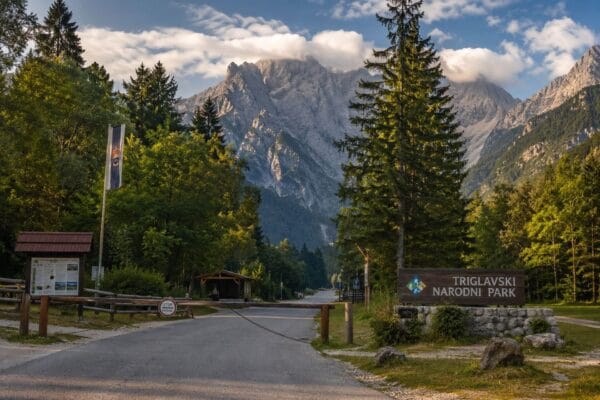
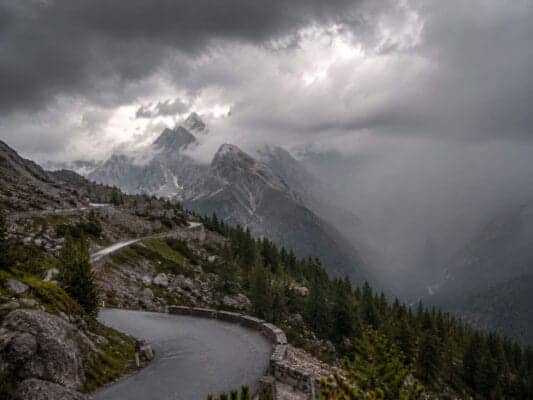
Why visit a moutain hut?
We are open year-round
We are located in the heart of Triglav National Park
Book a stay in the iconic, first-built mountain hut on the Vršič Pass

Erjavčeva mountain hut is open year-round. Reserve your stay and spend some time in the natural paradise of Triglav National Park (UNESCO), near Kranjska Gora, on the Vršič mountain pass in the heart of the park.
Reserve your stayRelated mountain and travel guides
Choose the next verified guide for planning routes, parking, overnight stays and places near Vršič Pass.
- Slovenia – Julian Alps – Kranjska Gora – Vršič Pass – Erjavčeva koča Mountain Hut — travel guide
- 10 Things to Do in Kranjska Gora and Around — travel guide
- Tamar valley — travel guide
- High mountain lakes — travel guide
- Accommodation in Mountain hut Vršič Kranjska Gora Slovenia — travel guide
- Hanzova pot on Prisojnik — travel guide
Plan your visit from Erjavčeva koča
Useful guides, practical information and accommodation options for Vršič Pass, Triglav National Park and the Julian Alps.
Book your stay at Erjavčeva koča
Ready to stay on Vršič Pass? Check the verified accommodation page and reserve directly with the hut.
Road, parking and arrival FAQ
Use these answers before relying on a route, booking time or parking plan.
Is this a live Vršič road status?
No. The site can guide you to access information, but current road conditions should be checked before departure.
What should I plan before driving up?
Plan the approach, parking, arrival time and a backup option for mountain weather or seasonal traffic.
Can I use the hut as a base for nearby routes?
Yes, but match your route, daylight and return plan before you start.
Where should I go next on the site?
Use the verified access, parking or accommodation links shown on this page.