
 Slovenščina
 Bosanski
 Hrvatski
 Čeština
 Dansk
Dansk Dutch
Dutch Suomi
Suomi Français
 Deutsch
 Magyar
 Italiano
 Polski
 српски
 Slovenčina
 Español
 Svenska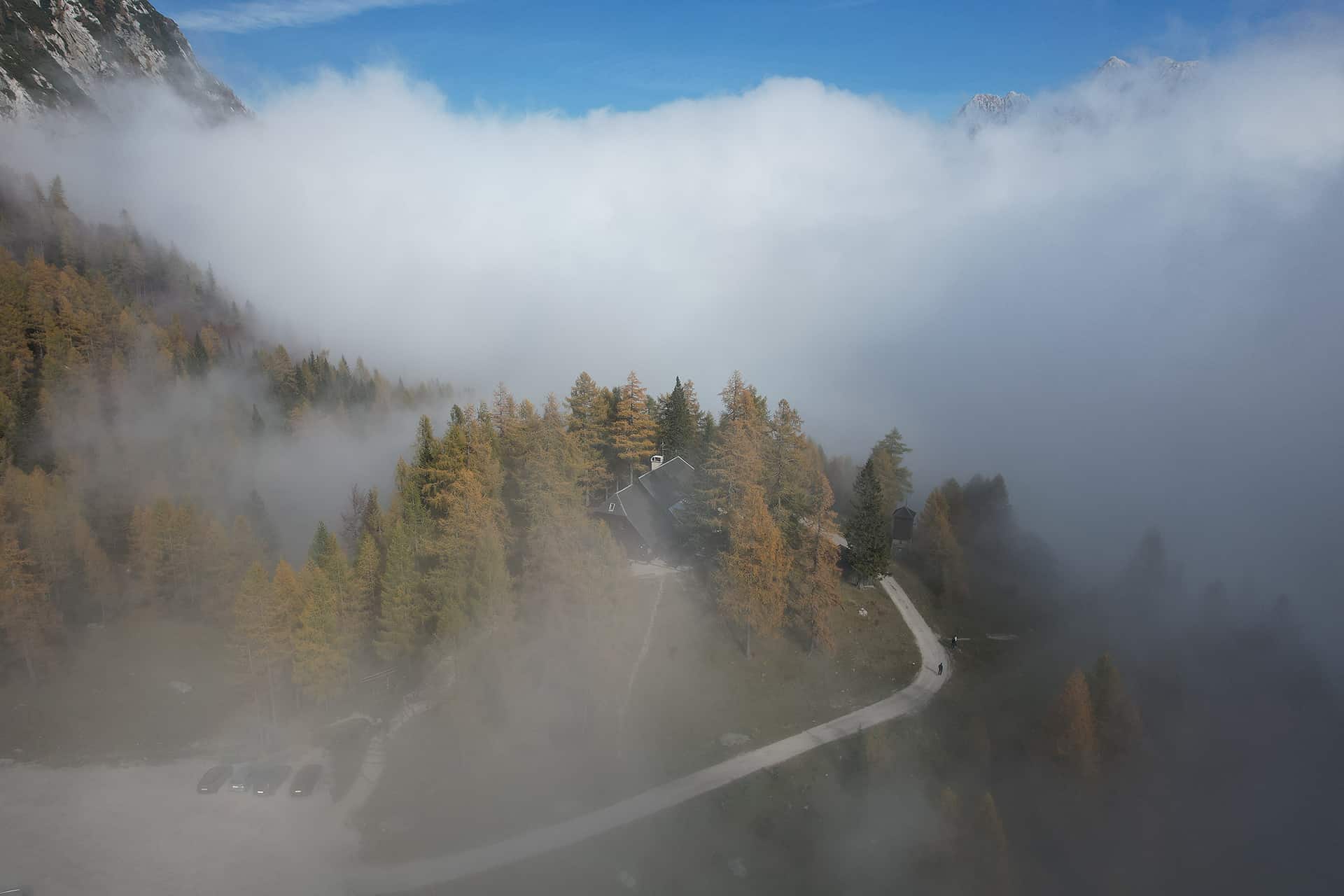
On this page
Jump to the most useful sections of this guide.
- Summer visit: parking, hiking and rooms
- Gateway to the Julian Alps / The Only Mountain Hut Open Year-Round on Vršič Pass
- Why Stay at Erjavčeva koča on Vršič Pass?
- Accommodation, Capacity and Facilities
- Open Year-Round: Experience Vršič in Every Season
- Best Activities by Season
- Spring: Waterfalls, Snow Patches and Fresh Alpine Air
- Summer: Hiking, Cycling, Climbing and the Full Circle Trip
- Autumn: Golden Larches, Quiet Trails and Photography
- Winter: Snow, Silence and a Real Mountain-Hut Experience
- Best Choices for Families with Children
- The Ultimate Circle Trip: Vršič – Trenta – Bovec – Predil – Kranjska Gora
Quick summary
The most useful points from this guide before you continue.
Stay on Vršič Pass
Stay at Erjavčeva koča on Vršič Pass
Erjavčeva koča is a mountain hut at Vršič Pass, between Kranjska Gora, Trenta, the Soča Valley and the Julian Alps. It is a practical base for hikers, road-trippers, cyclists and guests who want to stay close to the mountain pass.
- Direct location on the Vršič Pass road
- Good base for hiking, scenic drives and Julian Alps day trips
- Useful for guests visiting Kranjska Gora, Trenta, Soča Valley and Triglav National Park
- Food, mountain-hut atmosphere and practical local information in one place
This block is designed for independent guests and self-service booking. It does not imply a price guarantee or live availability.
Before you book your stay
Vršič Pass is a high mountain location, so it is worth checking a few practical details before you travel. This helps you plan your arrival, parking, hiking day and overnight stay more easily.
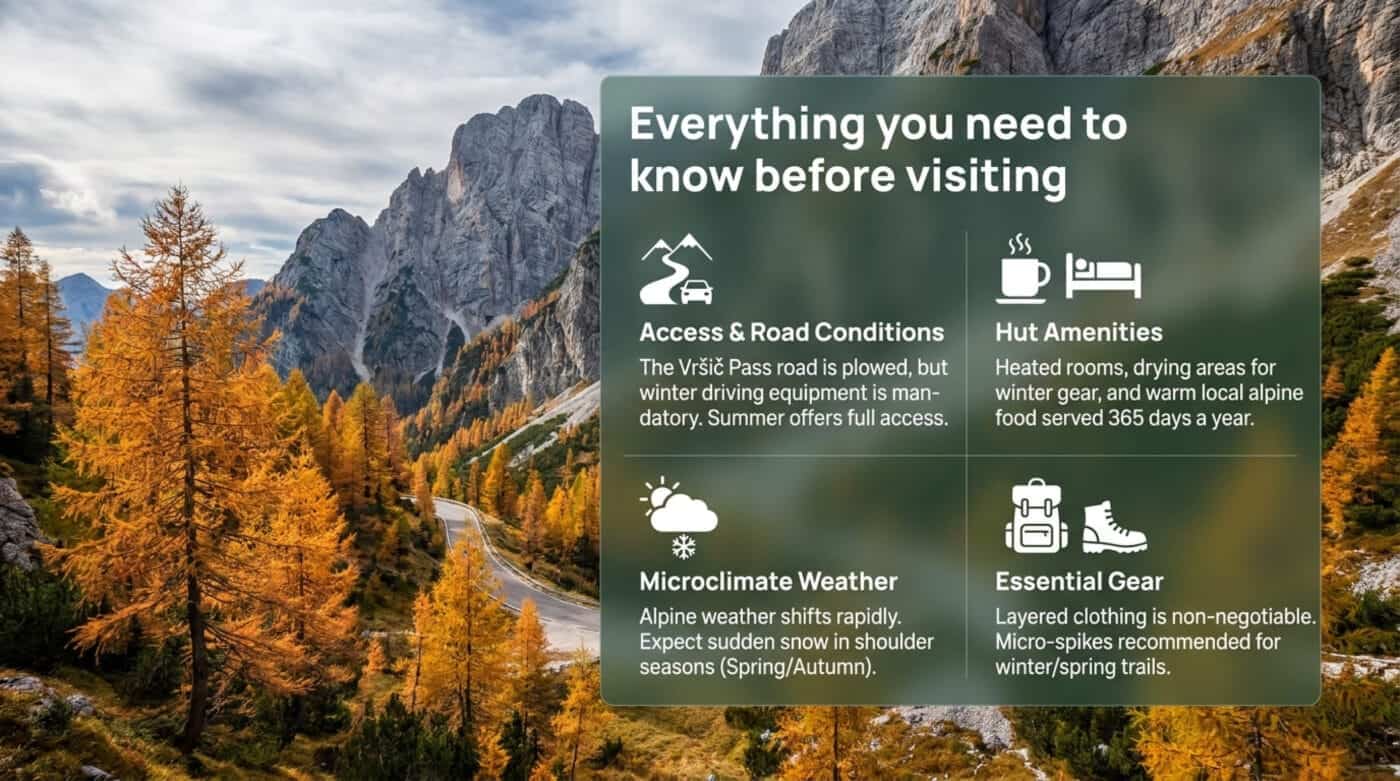
Access and road conditions
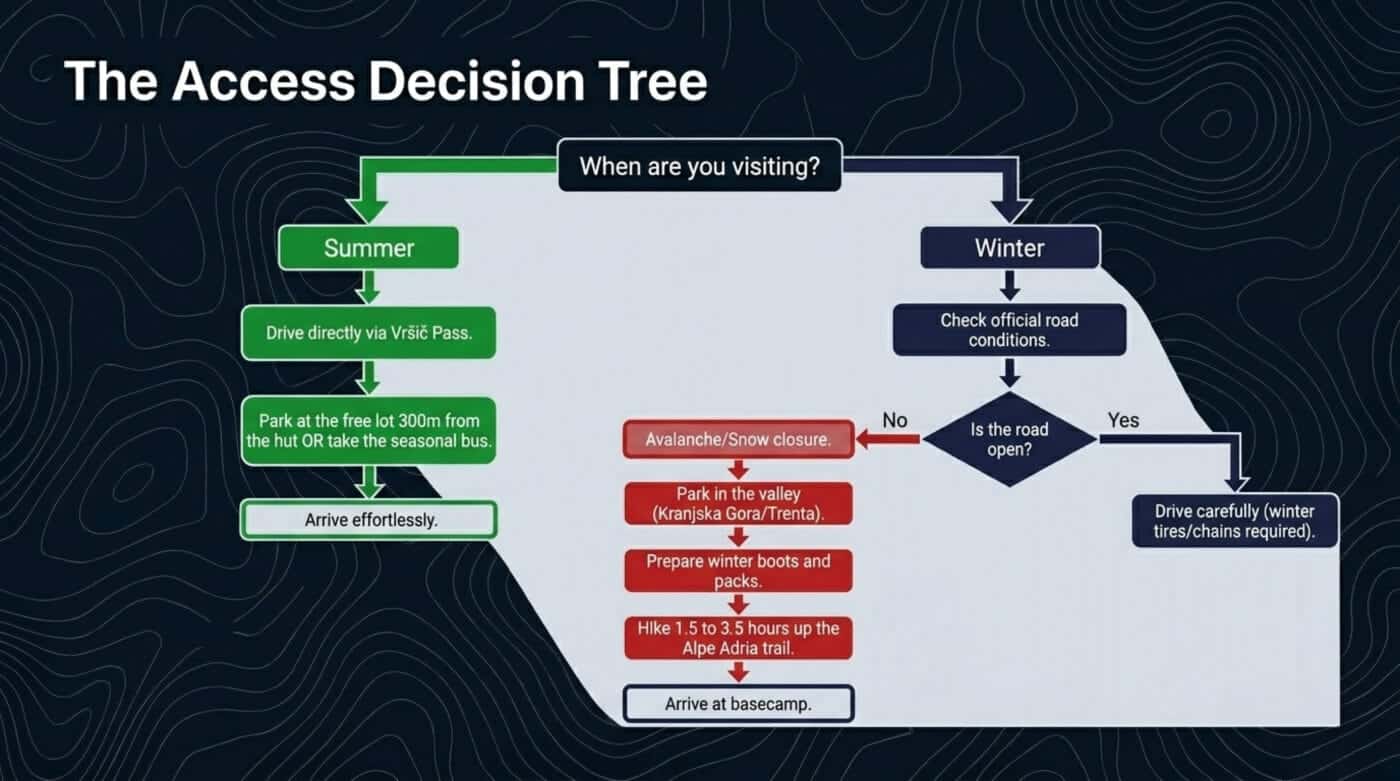
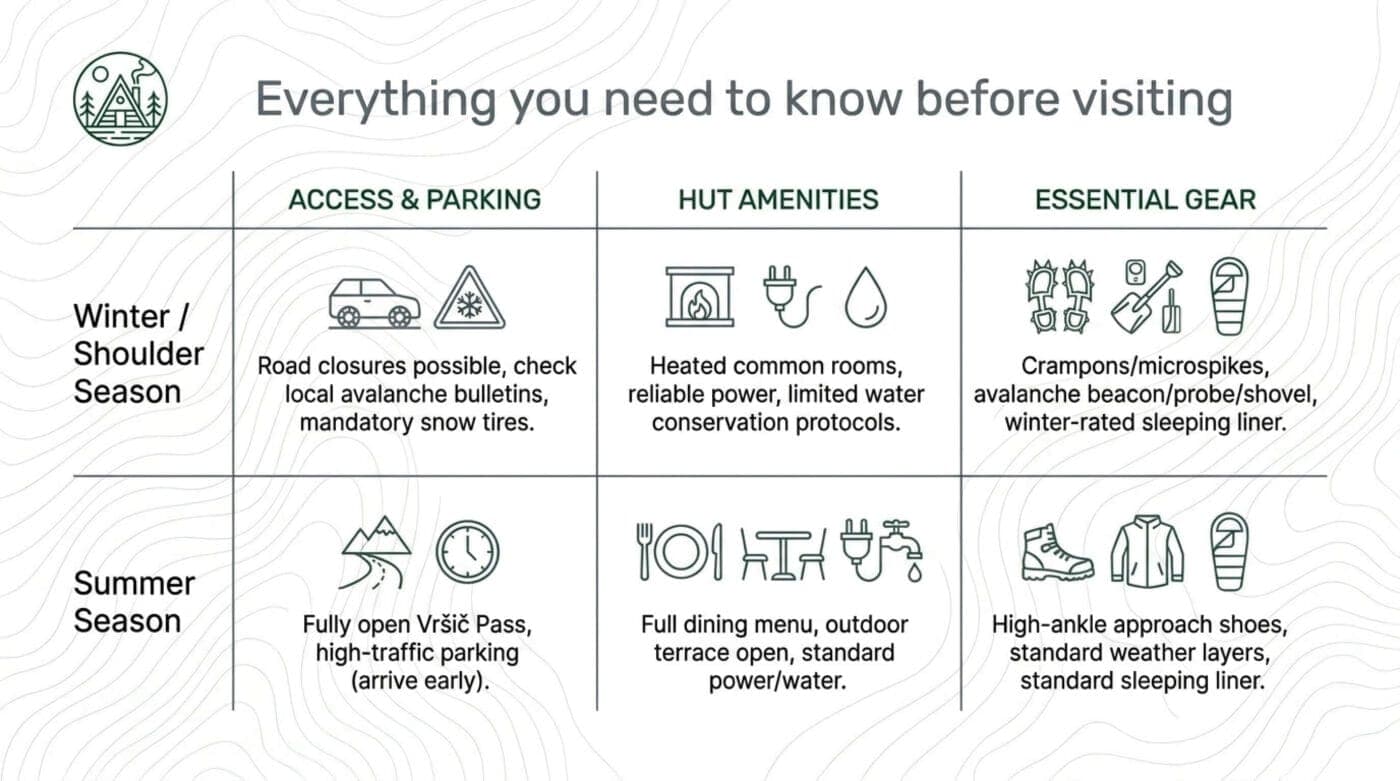
The Vršič road can be affected by season, weather and traffic. Before travelling, check current access information and plan enough time for the mountain road.
Parking
Parking rules and availability around Vršič can change by season and operator. Check the latest parking information before arrival, especially in busy periods.
Rooms and overnight stay
If you plan to stay overnight, check room availability in advance. This is especially important during the hiking season, weekends and good-weather periods.
Food, opening hours and groups
Opening times may vary outside the main summer season or by arrangement with groups. Contact the hut directly for the latest information before making fixed plans.
Self-service planning for your stay at Vršič Pass
- Check room and availability options first.
- Read access, parking and arrival notes before travelling.
- Arrive with your own plan for Vršič, Kranjska Gora, Trenta and the Soča Valley.
- Use contact only for special cases, not for information already explained on the page.
A trusted mountain hut at Vršič Pass
Erjavčeva koča has been part of the Vršič mountain pass experience for generations. Guests use it as a practical alpine base for hiking, cycling, scenic drives, visits to Kranjska Gora and trips toward Trenta and the Soča Valley.
Ready to stay on Vršič Pass? Check the verified accommodation page and reserve directly with the hut.
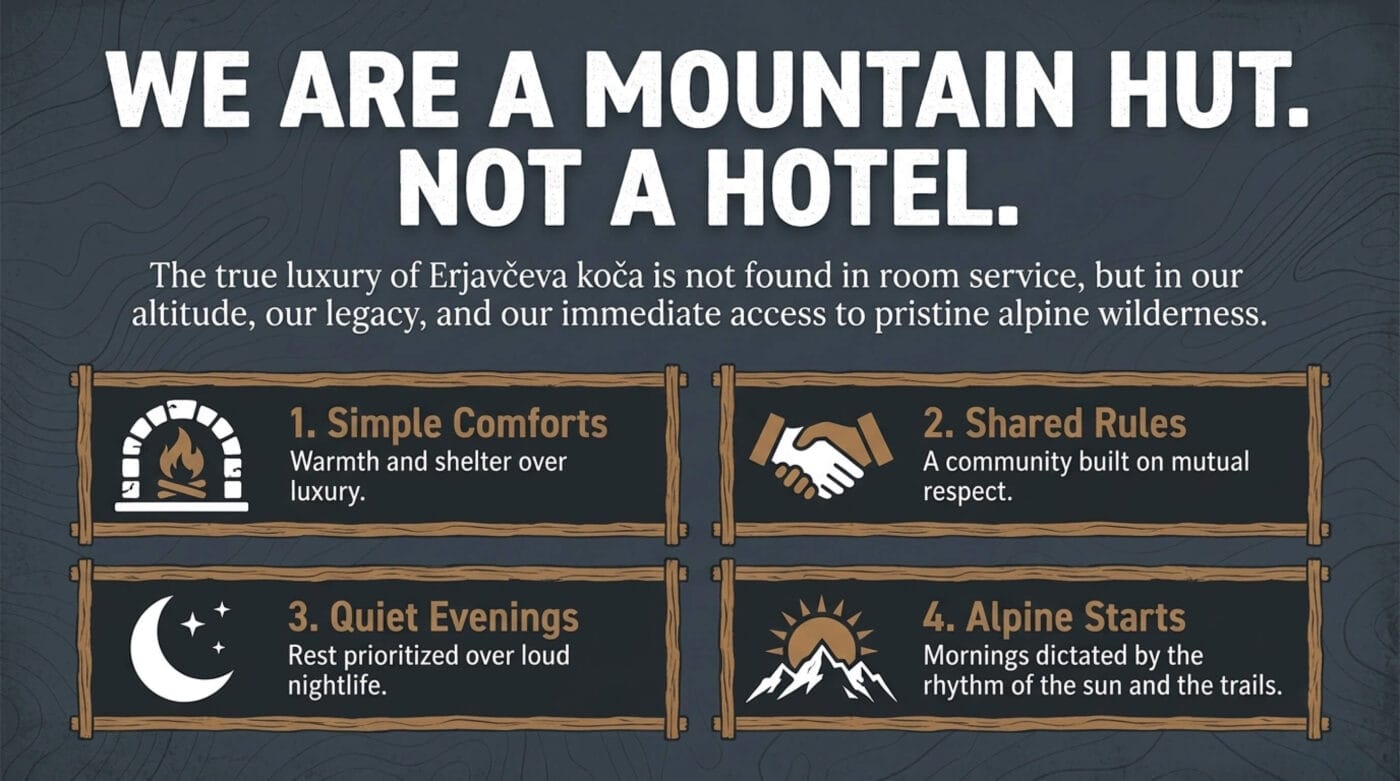
Erjavčeva koča is a mountain hut at 1525 m, not a hotel or hostel. Come for nature, simple shelter and the rhythm of the mountains.
- ✓Quiet evenings, early starts and weather-dependent mountain life
- ✓Food, shelter and practical help from the hut team
- ✓Unspoiled nature, mountain views and fresh alpine air
- ✓A place to rest before or after your mountain trip
- ×A valley resort experience
- ×Luxury hotel rooms or city-hotel services
- ×Hostel-style nightlife or loud late evenings
- ×Private bathrooms in every room
Before you book your stay at Vršič Pass
Use the booking information on this page to decide independently. Booking platforms can help with comparison, but your reservation should be clear before you travel. Contact is only for special cases.
Direct booking is best for
- Checking rooms and availability
- Reading access, parking and arrival details
- Booking when your dates and plan are clear
- Special questions only for groups, late arrival or winter conditions
Booking platforms are useful for
- Comparing accommodation options
- Reading platform-specific reviews
- Managing platform bookings in one account
- Using platform filters and policies
No price guarantee is implied. This block encourages self-service planning and reduces unnecessary calls or emails.
What happens after you check availability?
Checking availability is the first booking step, not a request for personal travel planning. Read the arrival, access and parking information before you book. Contact is only for special cases.
- Choose the room or stay option that fits your plan.
- Complete the booking request with your travel date and arrival plan.
- Before travelling, read the access, parking and seasonal notes; use contact only for groups, late arrival or winter conditions.
CTA clicks are measured as intent signals. This block is designed for self-service reservations and to reduce unnecessary calls or emails.
Summer visit: parking, hiking and rooms
In summer, Vrsic is busy with hikers, cyclists and scenic-road visitors. Plan arrival time, parking, weather protection and overnight questions before you leave.
- Arrive early when parking demand is high.
- Check weather before longer hikes.
- For overnight stays, contact the hut directly before travel.
This block is a practical planning reminder, not a live availability statement.
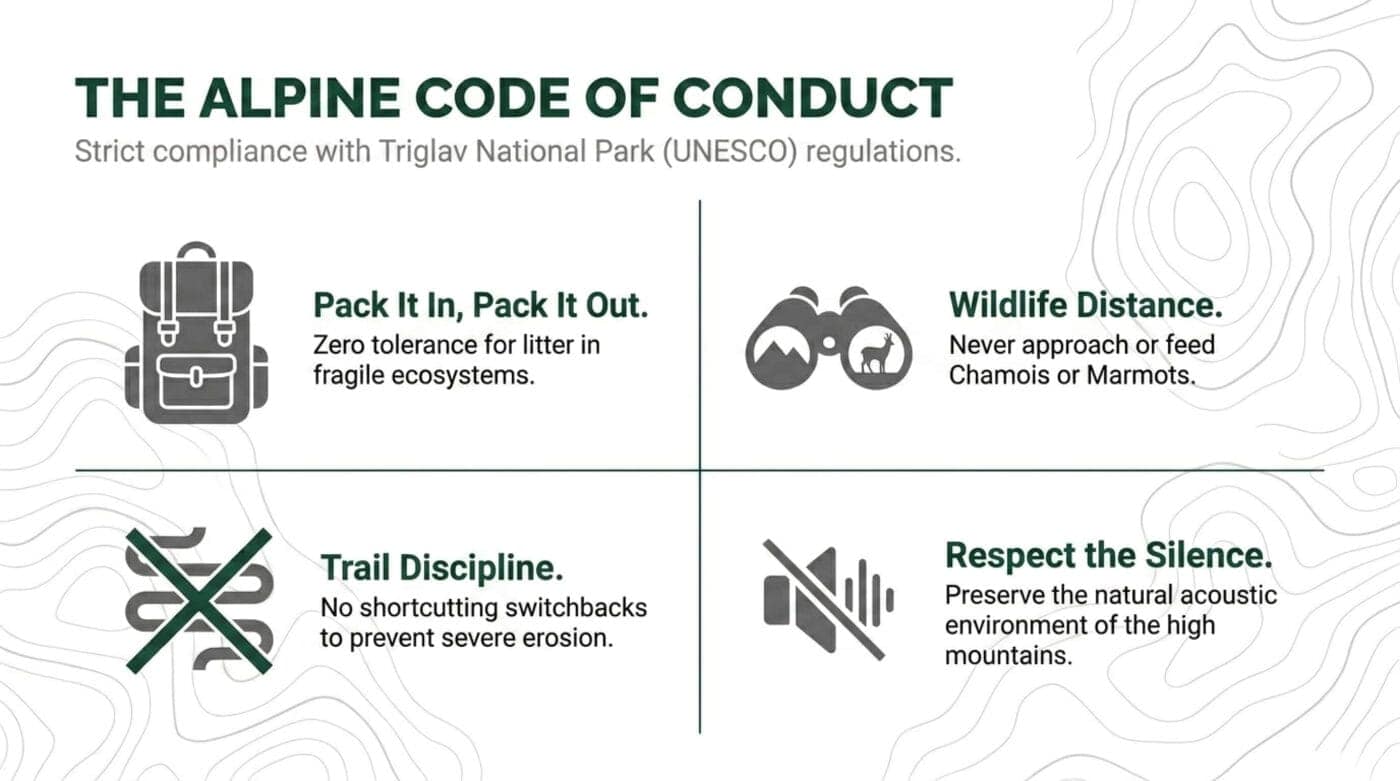
This guide is prepared from the perspective of Erjavčeva koča, a mountain hut on Vršič Pass. Use it together with current weather, road conditions and responsible behaviour in Triglav National Park.
Gateway to the Julian Alps / The Only Mountain Hut Open Year-Round on Vršič Pass
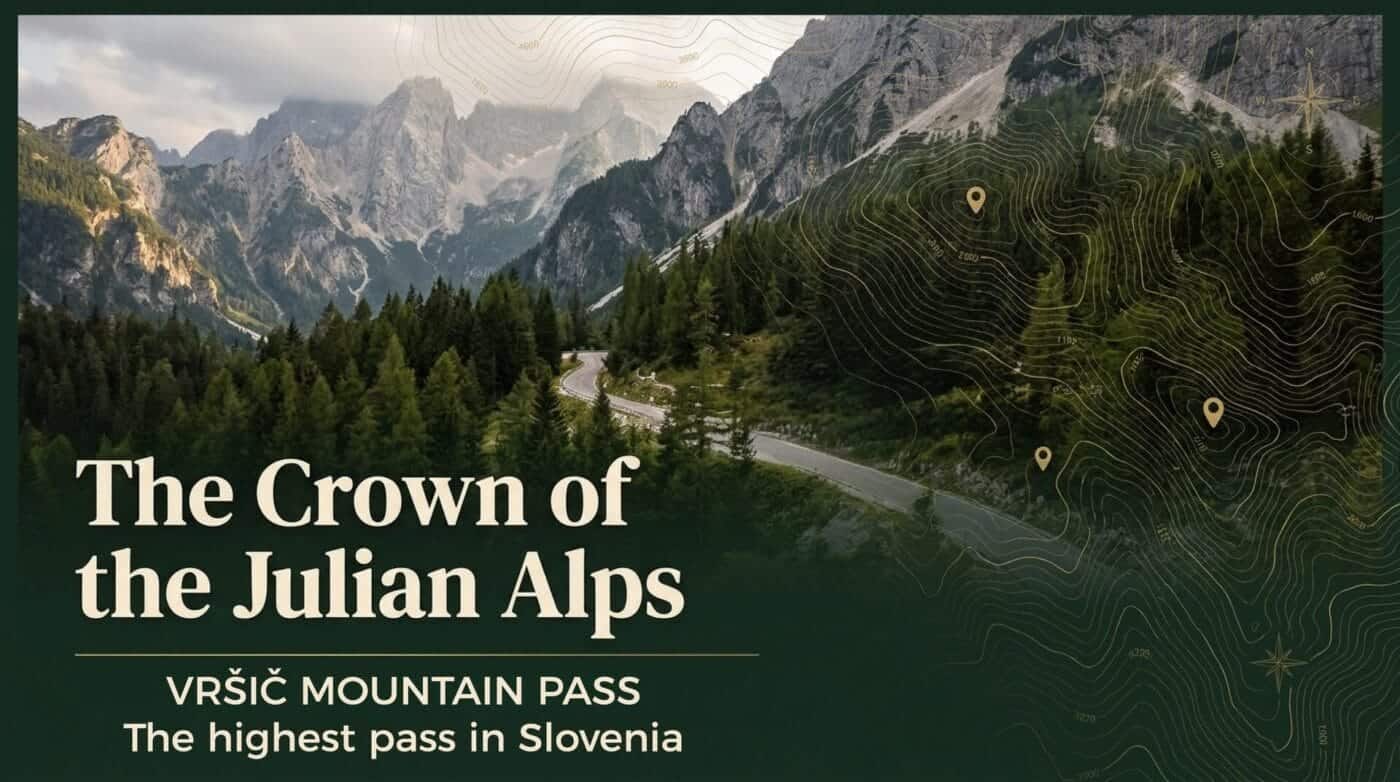
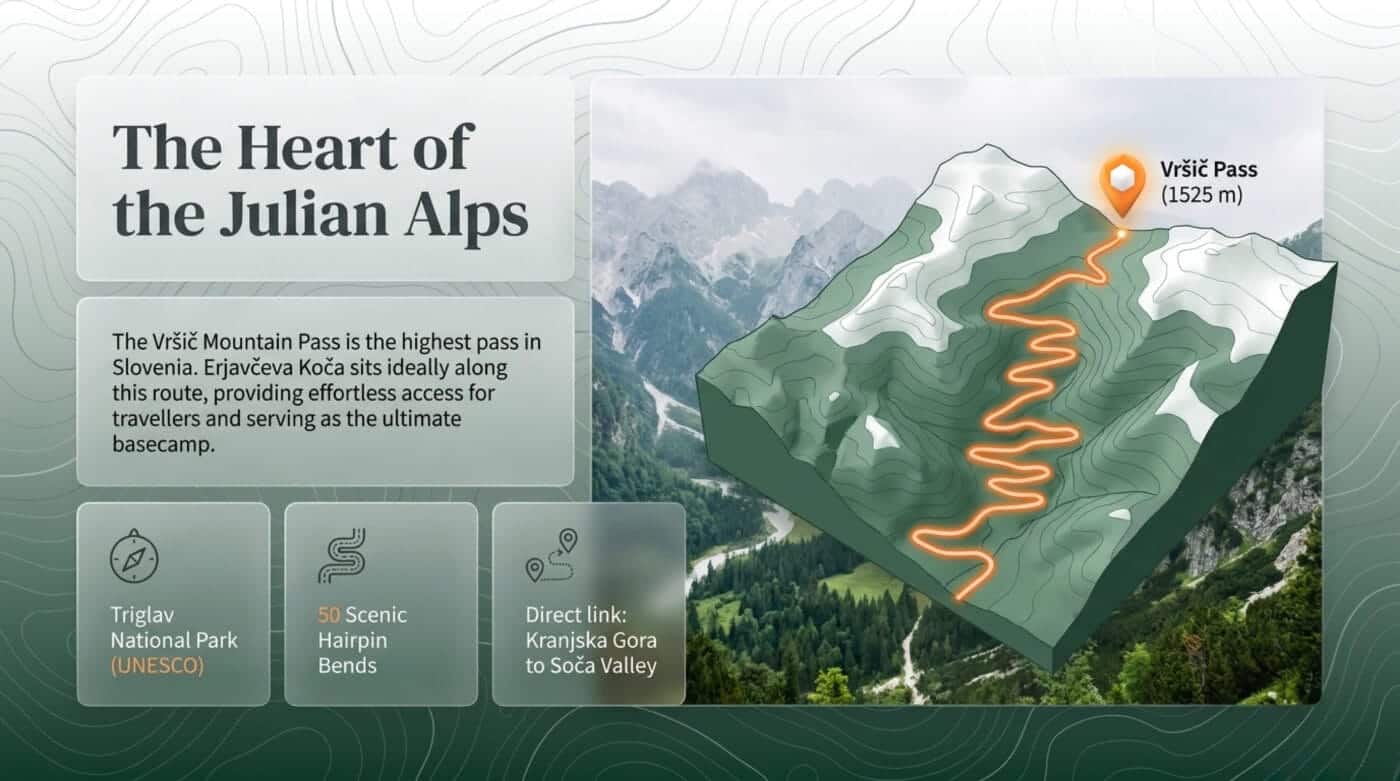
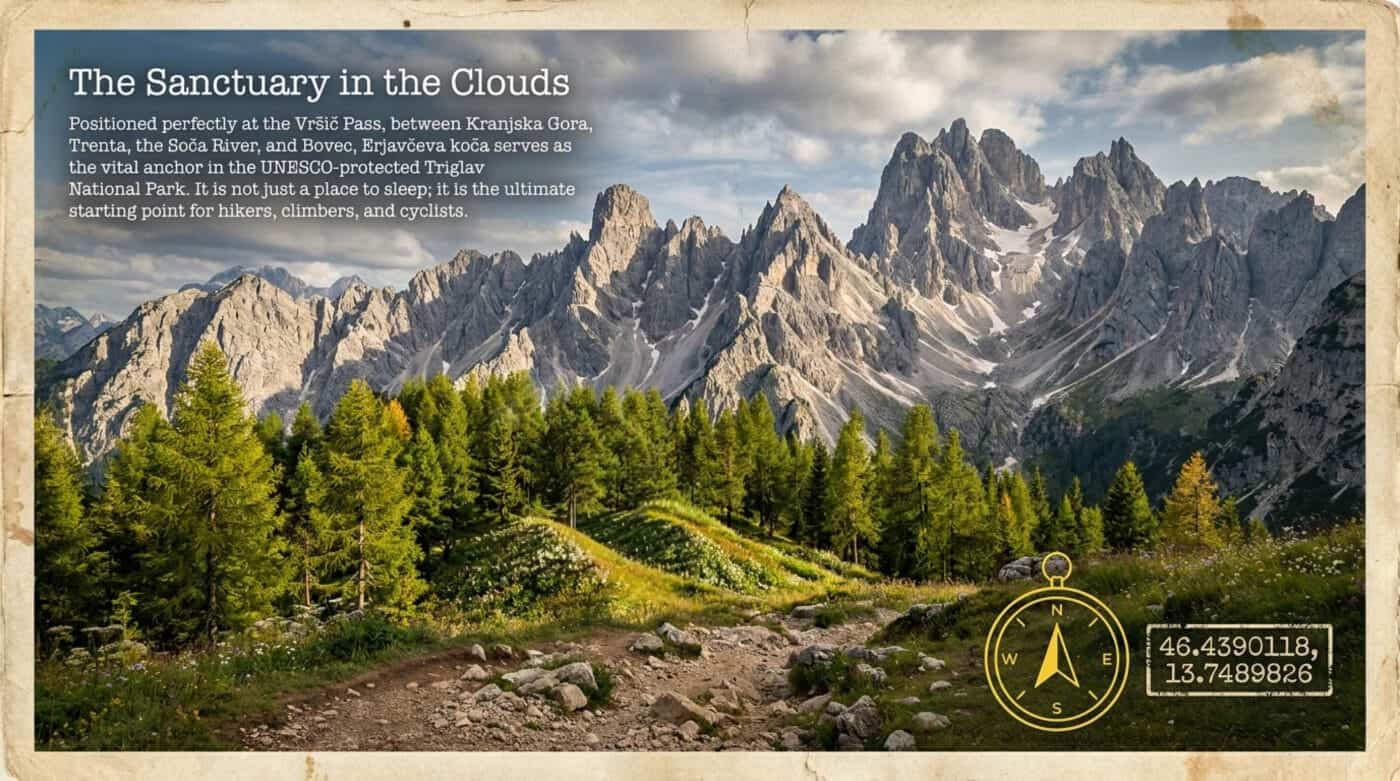
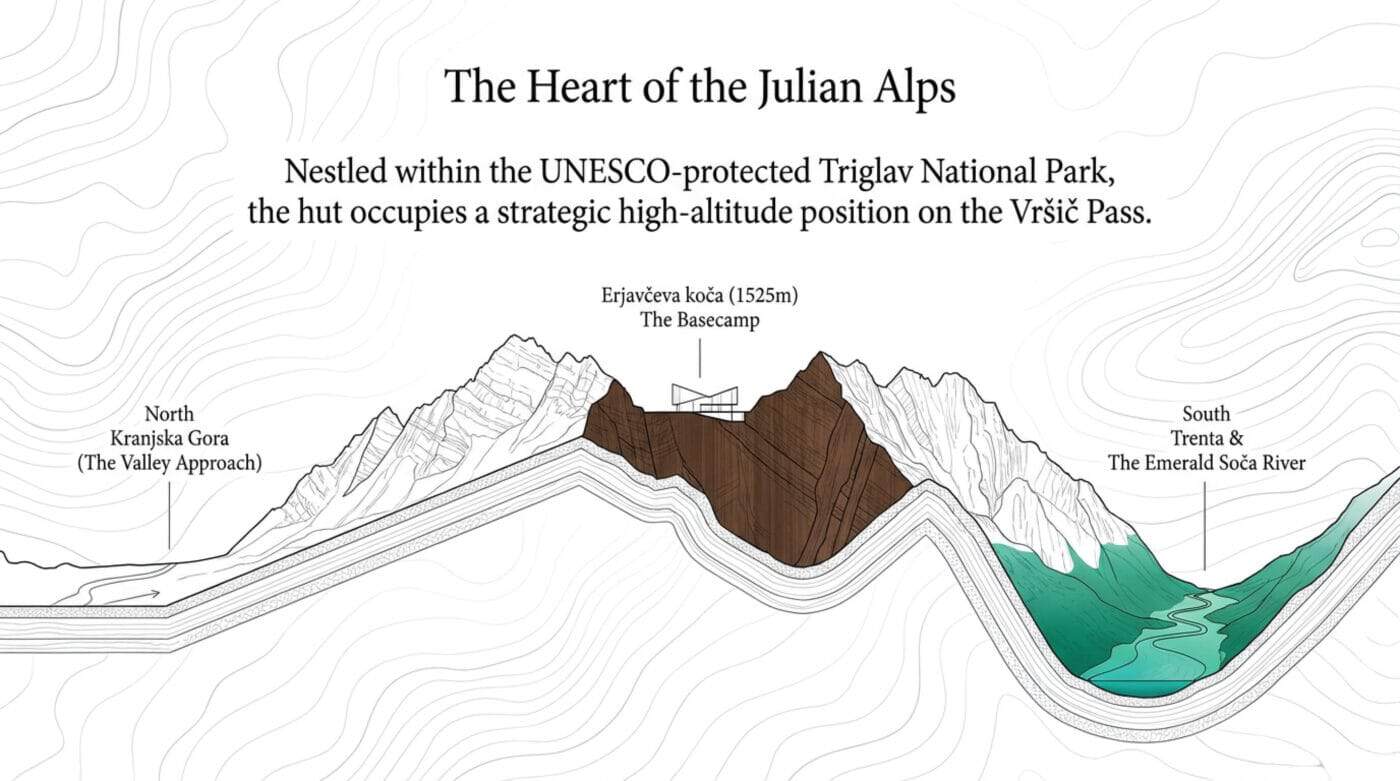
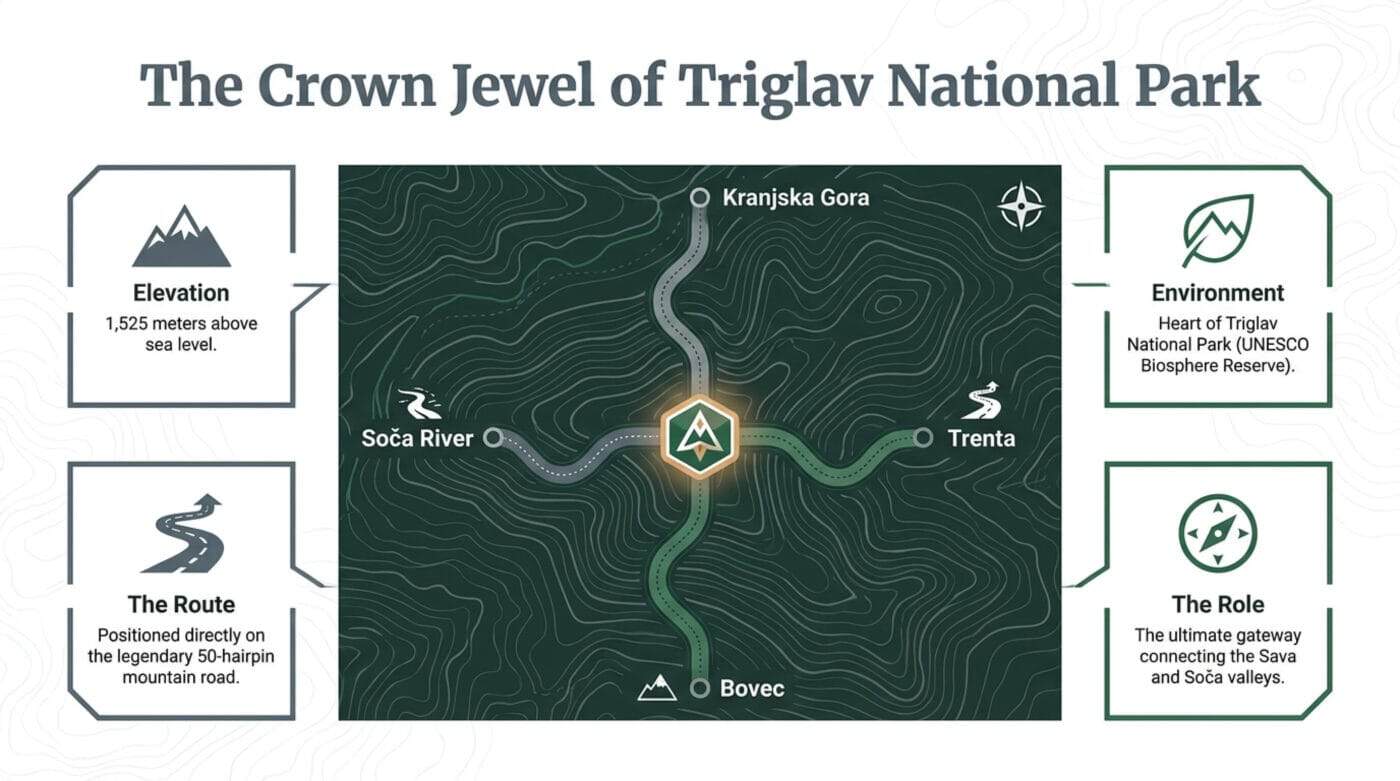
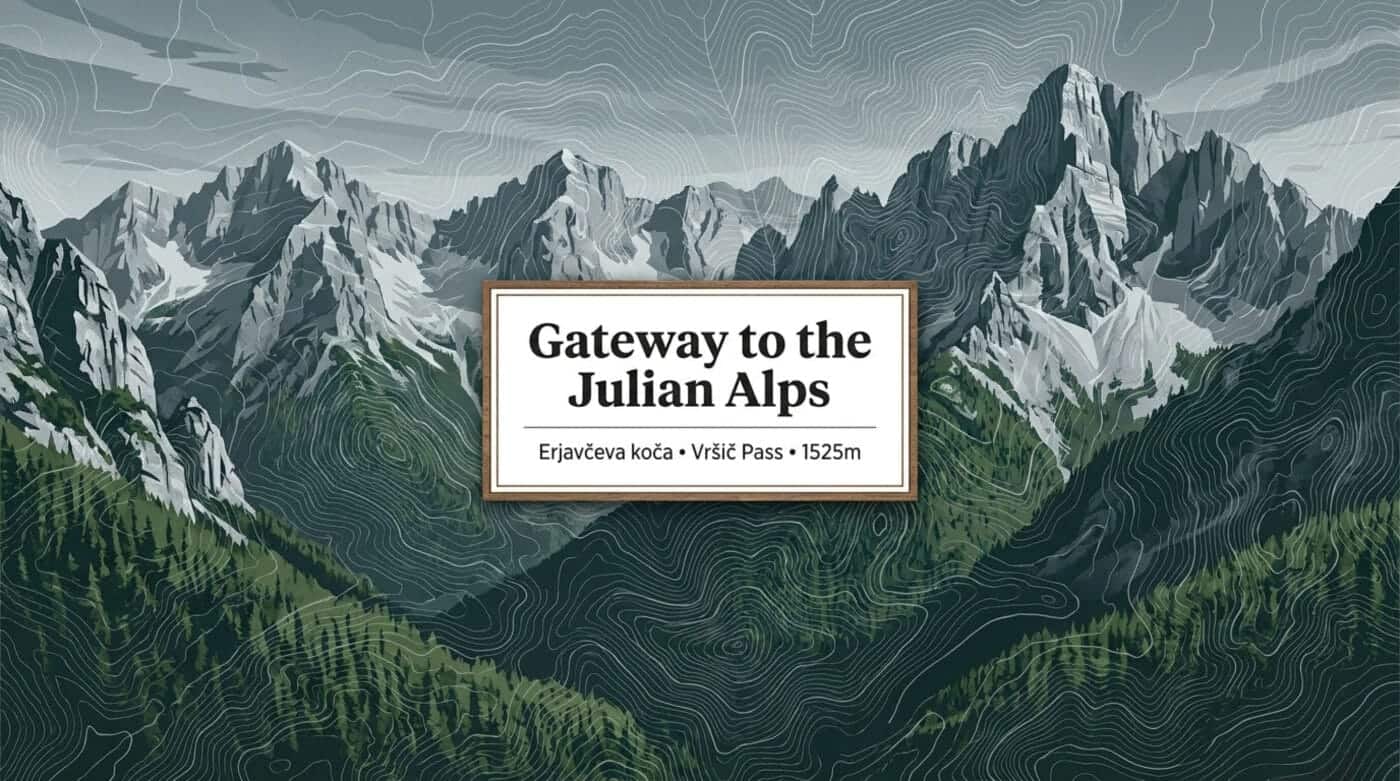
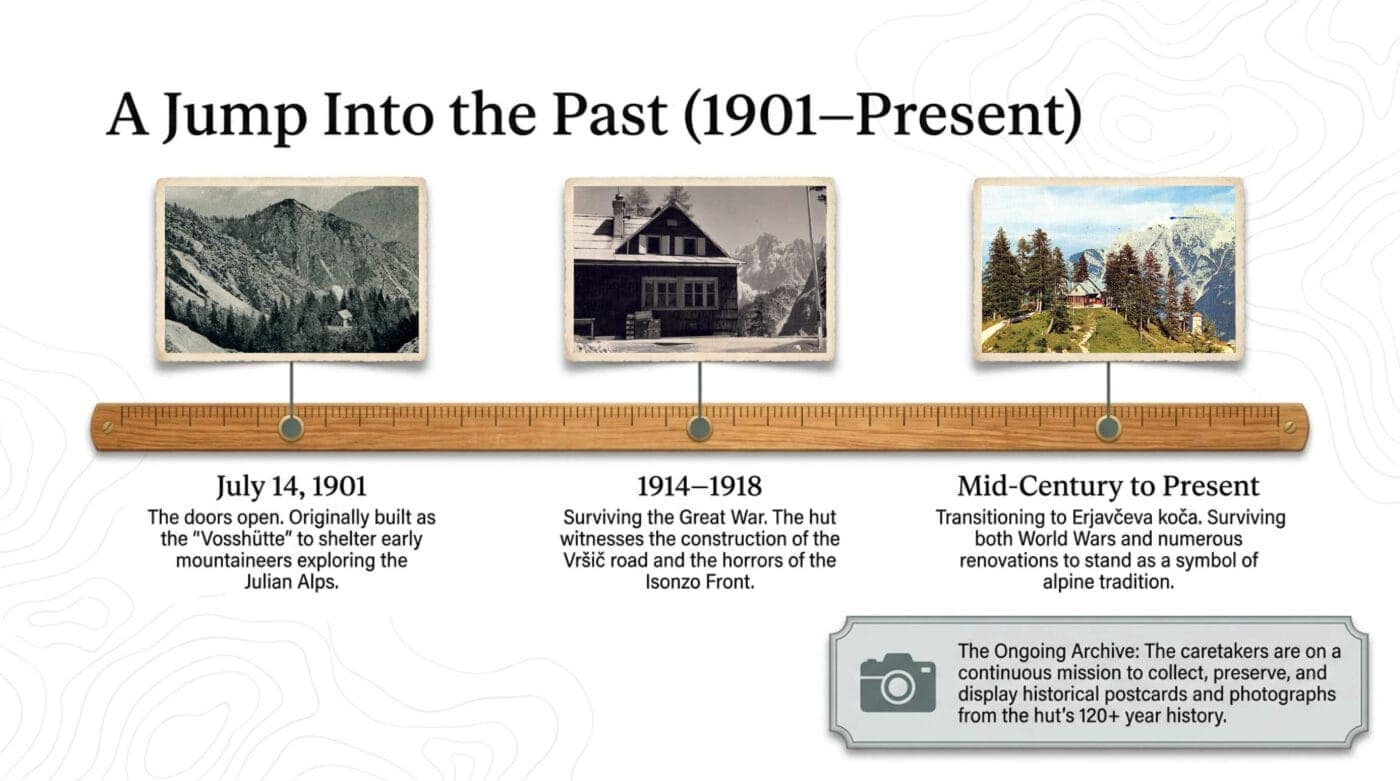
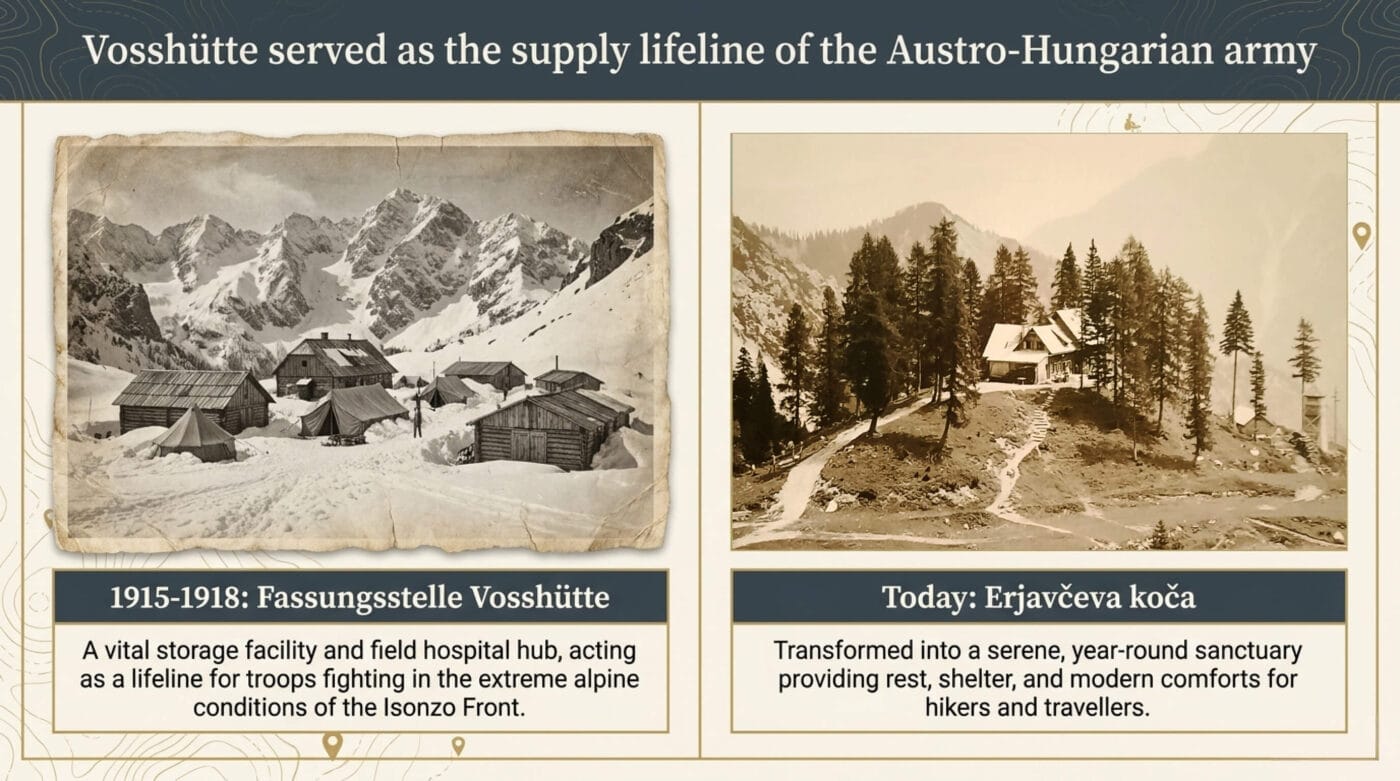
Erjavčeva koča mountain hut stands in one of the most exceptional locations in Slovenia: on Vršič Pass, between Kranjska Gora, Trenta, the Soča Valley and Bovec, in the heart of the Julian Alps. At 1,525 metres above sea level, this historic mountain hut has welcomed travellers, hikers, mountaineers, cyclists, photographers and road-trippers since 1901. It is more than accommodation; it is a gateway to the Julian Alps, a safe alpine base, a warm mountain home and one of the best starting points for discovering Triglav National Park, Slovenia’s highest mountain road pass and the most scenic landscapes of northwestern Slovenia.
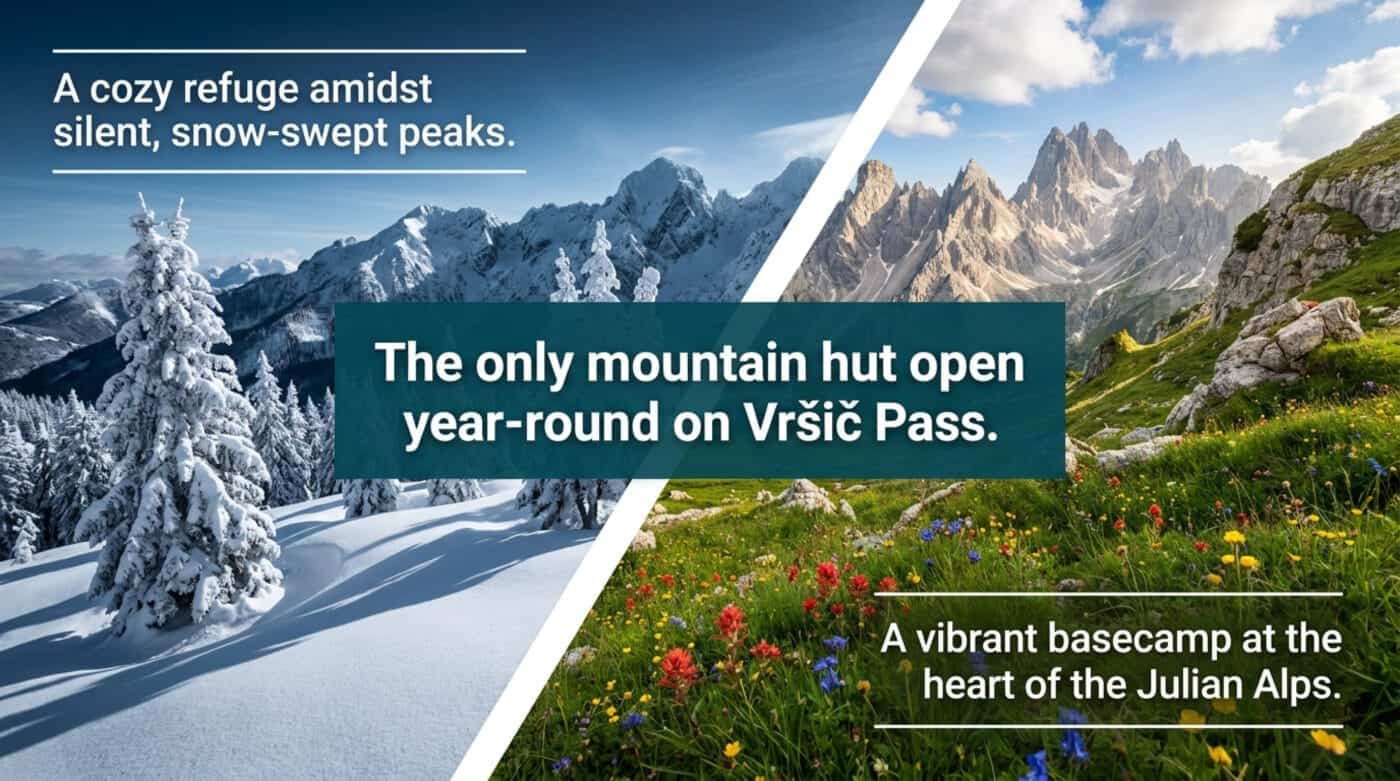
If you are searching for where to stay in the Julian Alps, accommodation near Kranjska Gora, mountain hut on Vršič Pass or the best base for exploring the Soča Valley and Triglav National Park, Erjavčeva koča is one of the most practical and atmospheric choices in Slovenia. The hut is open throughout the year, which makes it rare among mountain huts on Vršič Pass and especially valuable for guests who want to experience the mountains not only in summer, but also in spring, autumn and winter. Every season changes the landscape completely, and that is exactly why staying here for 2 to 4 days is the best way to understand this part of the Julian Alps.

Erjavčeva koča – Slemenova špica – Sleme
At Sleme, the world opens up. Meadows spread beneath rocky cliffs, and rising like a...
Oct

Mala Mojstrovka
Mala Mojstrovka, Vršič mountain pass. Due to its relatively high starting altitude is among the...
Feb

Prisankovo okno
The hike to Prisank Window (Prisankovo okno) from the Vršič Pass offers an exhilarating adventure...
Nov
Why Stay at Erjavčeva koča on Vršič Pass?
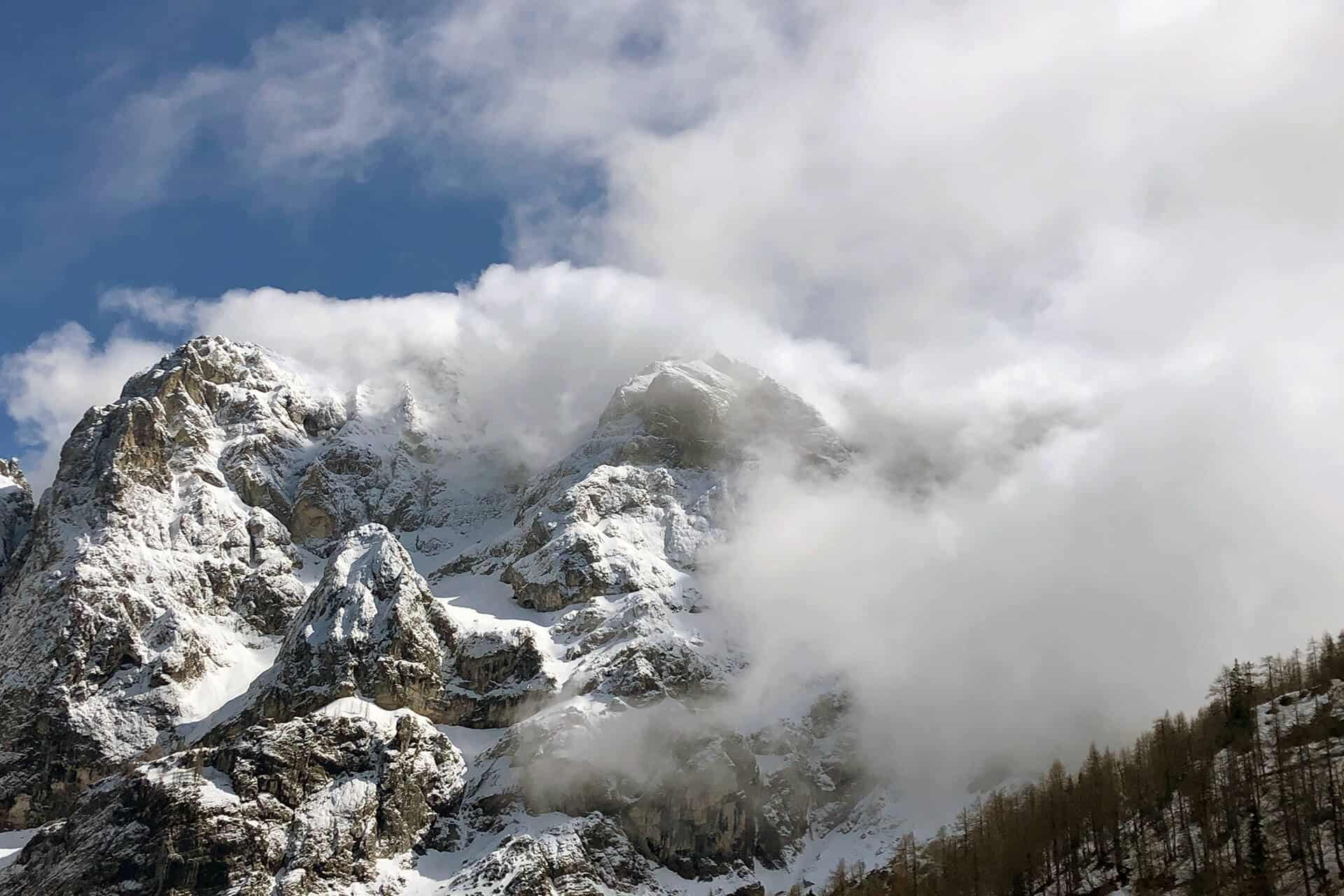
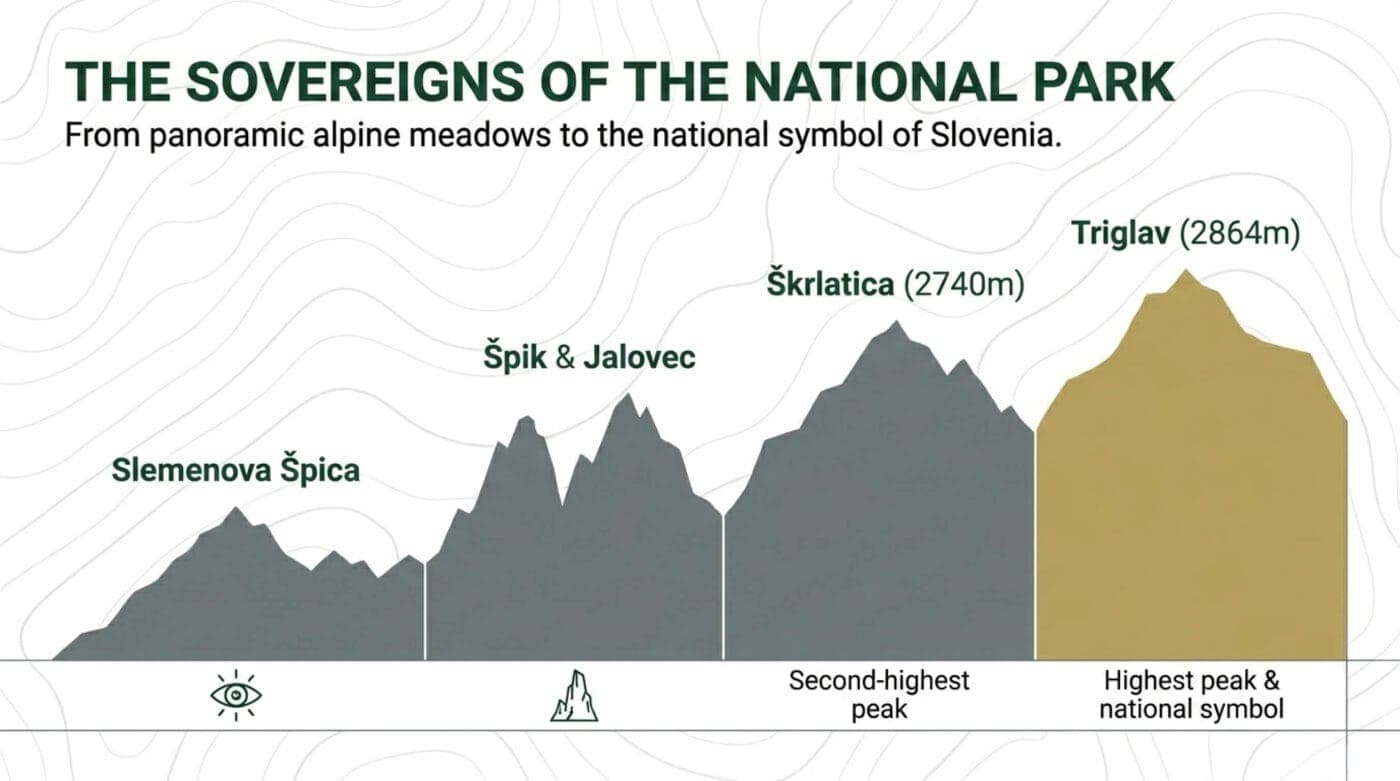
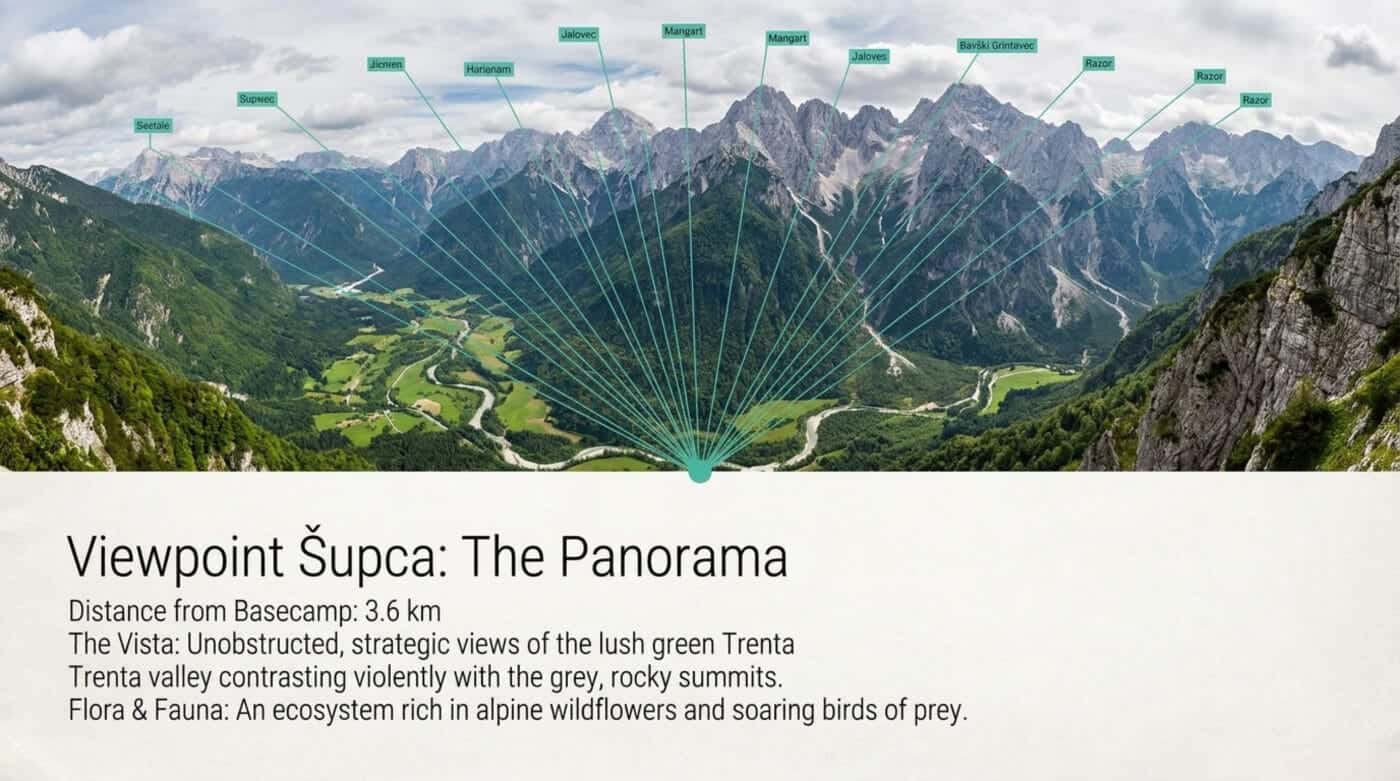
The greatest advantage of Erjavčeva koča is its location. The hut stands directly on the Vršič road, close to the highest point of the pass, with views of the mountains in every direction. To the east, the mighty ridges of Prisank rise above the scree of Suha Pišnica, together with the legendary stone face of Ajdovska deklica. Toward Krnica and the Martuljek mountains, visitors can admire Špik, Škrlatica and some of the wildest peaks in the Julian Alps. Toward the west and south, the landscape opens toward Vršič, Trenta and the high mountain world above the Soča Valley.
This is not a valley hotel where the mountains are somewhere in the distance. Here, the mountains begin at the doorstep. Morning light changes the colour of the peaks, clouds move quickly across the pass, snow can surprise visitors even outside winter, and summer evenings often bring golden light over the surrounding slopes. Guests do not need to drive far to feel the alpine atmosphere; they are already inside it. That is the real value of sleeping at Erjavčeva koča.
The hut is suitable for travellers who want simple comfort, good food, practical advice, a safe base and direct access to nature. It is also suitable for families, couples, small groups, hikers, cyclists, photographers, road-trippers and visitors who want to experience mountain life without pretending that they are in a city hotel. The charm is in the simplicity: warm beds, shared mountain stories, alpine food, fresh air, views, silence and the feeling that time moves differently here.


Wrong Google Maps information
Wrong Google Maps information. To avoid inaccurate information, we regularly publish the condition of the...
Feb

Polaris Otter PRO
Polaris Otter PRO. A snowmobile trailer comes in handy. It can also transport mountain rescue...
Jan

How to get to Vršič mountain pass
There are many ways to get on Vršič pass, and some options are already explained...
May
Accommodation, Capacity and Facilities
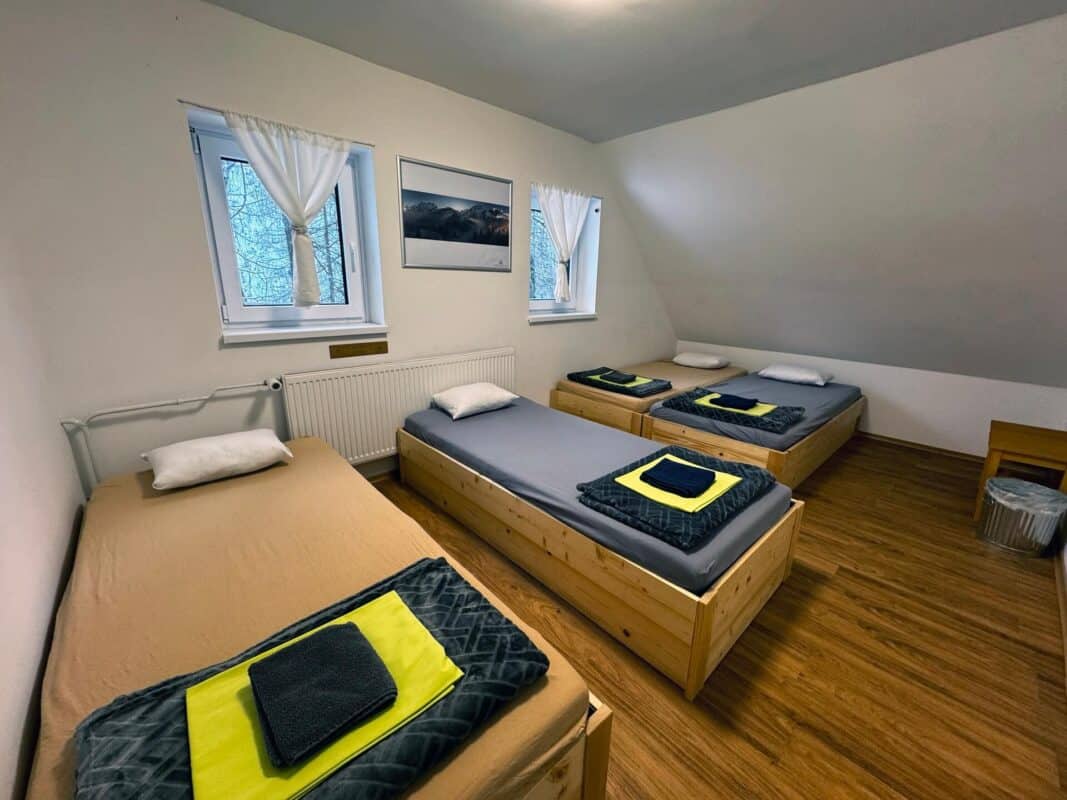
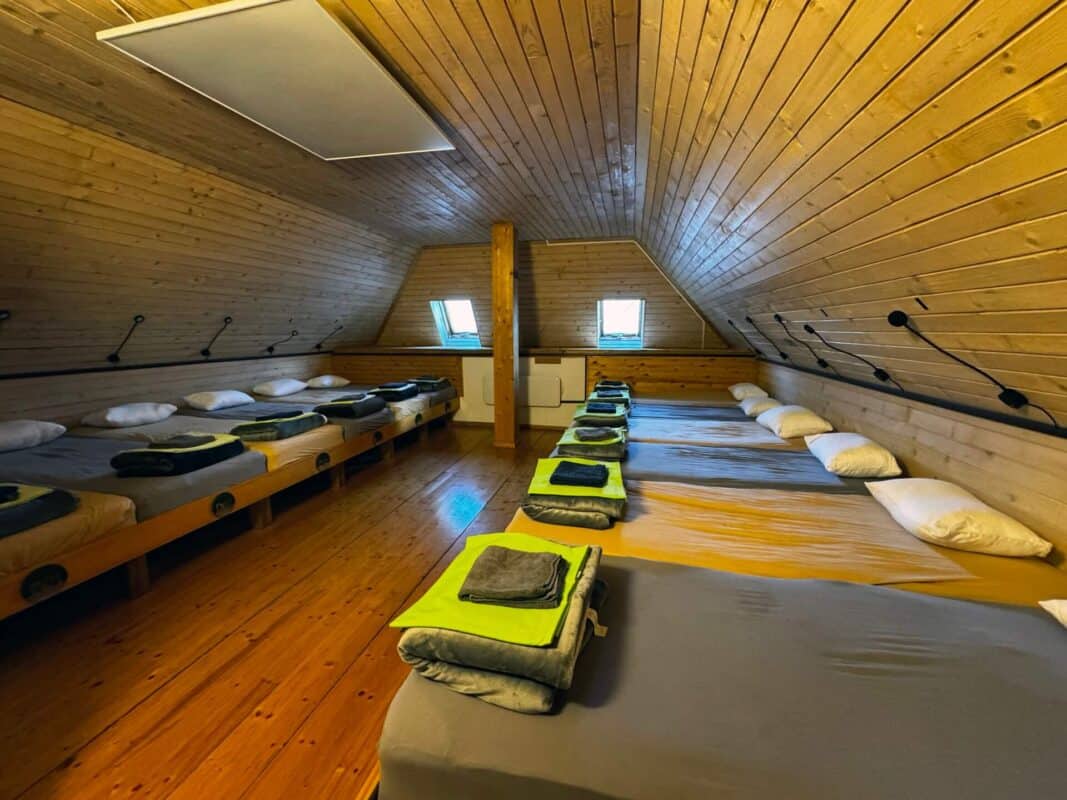
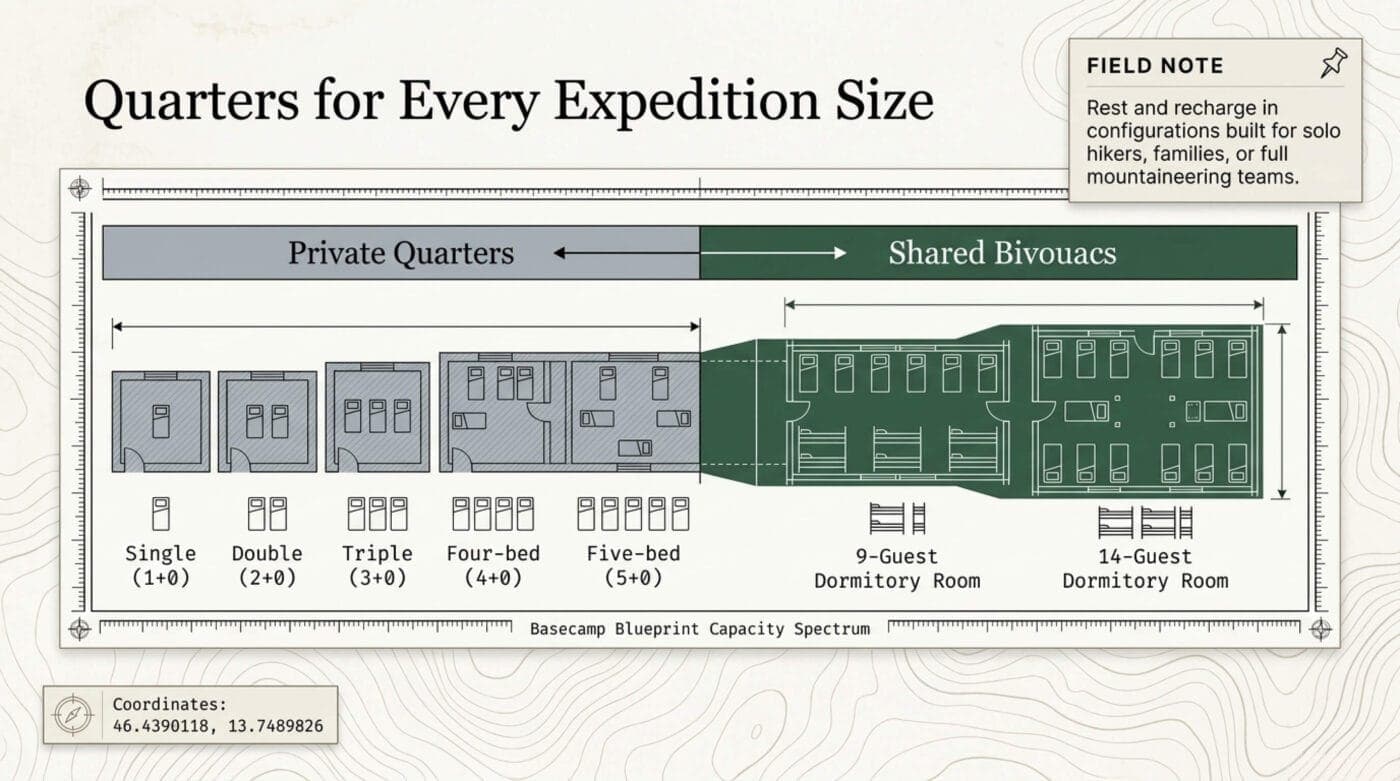
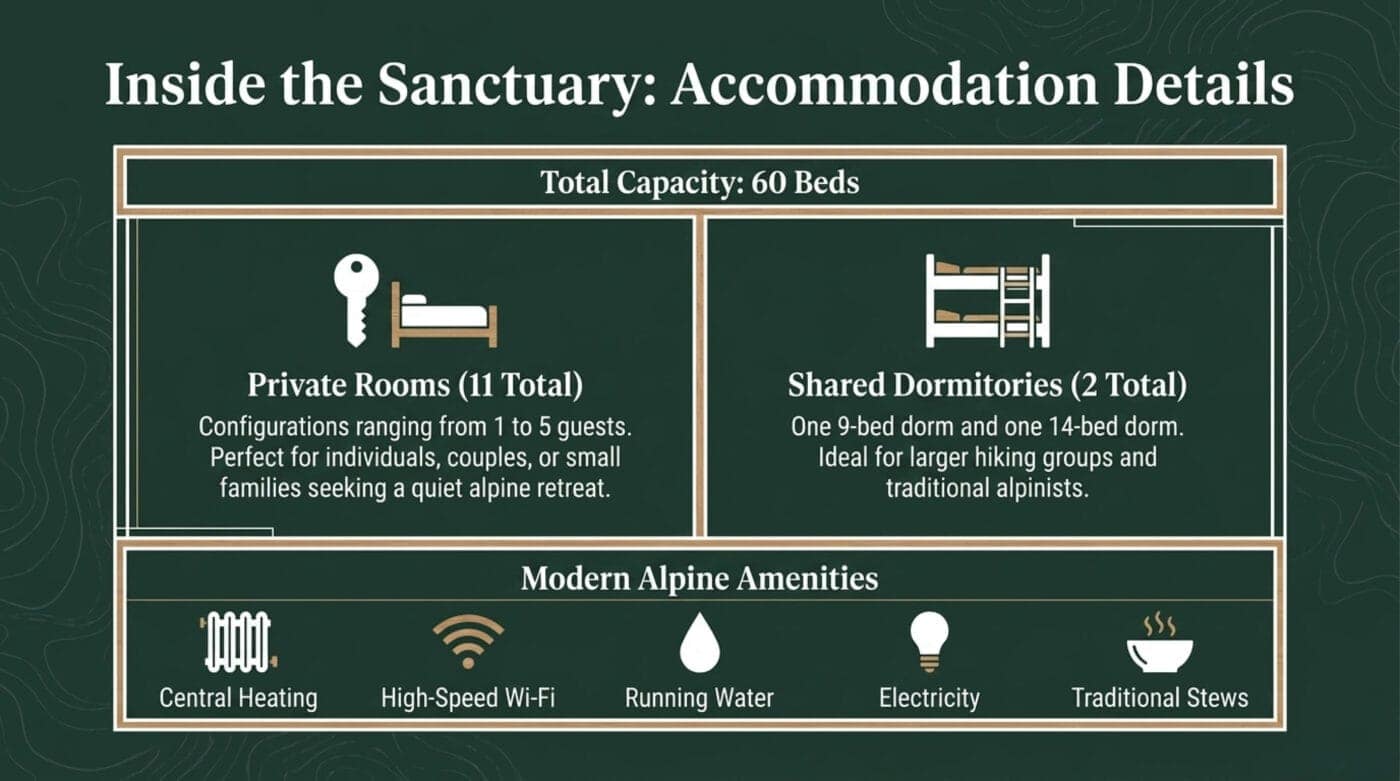
Erjavčeva koča offers a traditional mountain-hut stay with both private rooms and shared sleeping options. The hut offers around 60 beds, including private rooms and dormitory-style accommodation. Guests can choose between greater privacy and the classic shared mountain-hut experience, depending on their travel style, group size, and expectations. The hut is suitable for overnight stays, half-board stays, group visits, team gatherings, celebrations and private events.

Renovation of the Erjavčeva hut
Renovation of the Erjavčeva hut. We are proud to live in the National park, and...
Mar

New Beds and Mattresses
We are pleased to announce that we have listened to your requests and have carried...
Sep

Internet speed update
Internet speed update with Starlink. From now on, you will be satisfied with the connection...
Apr
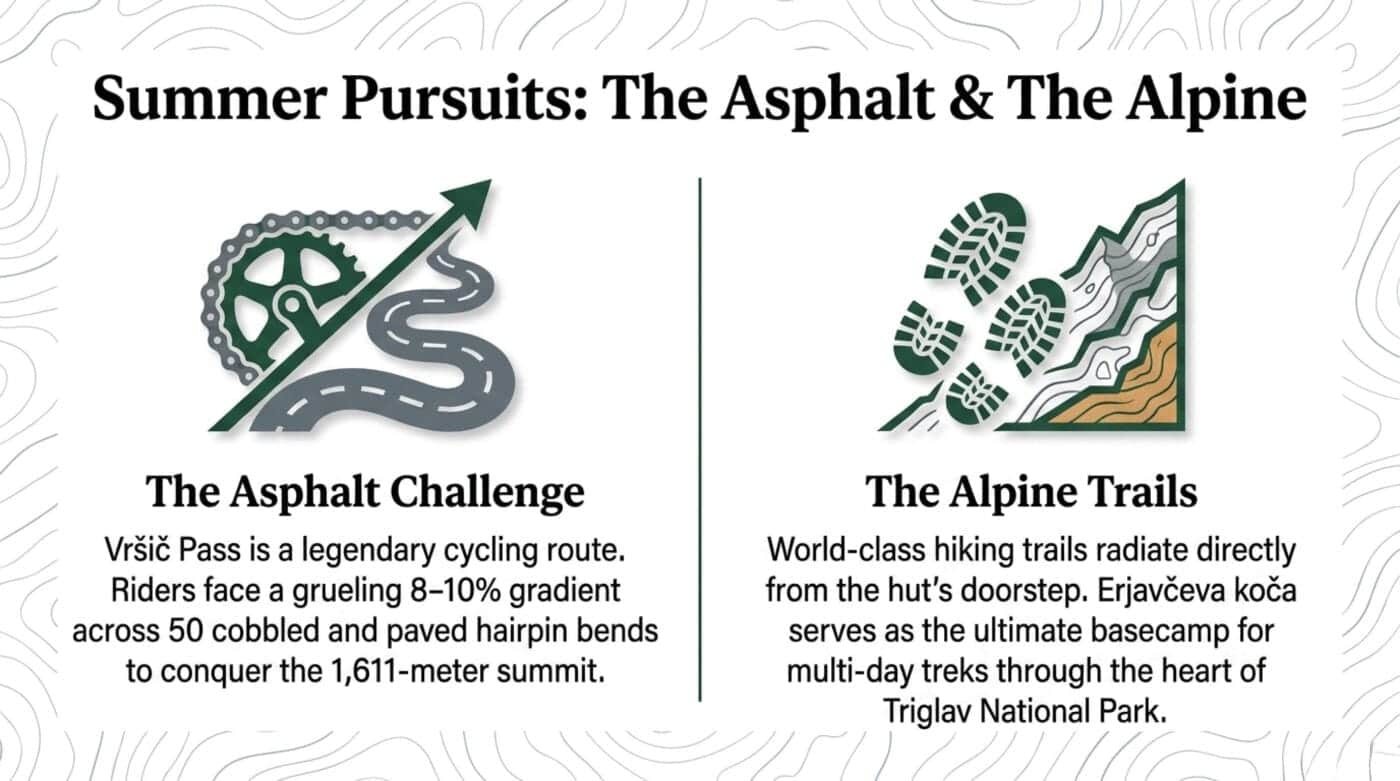
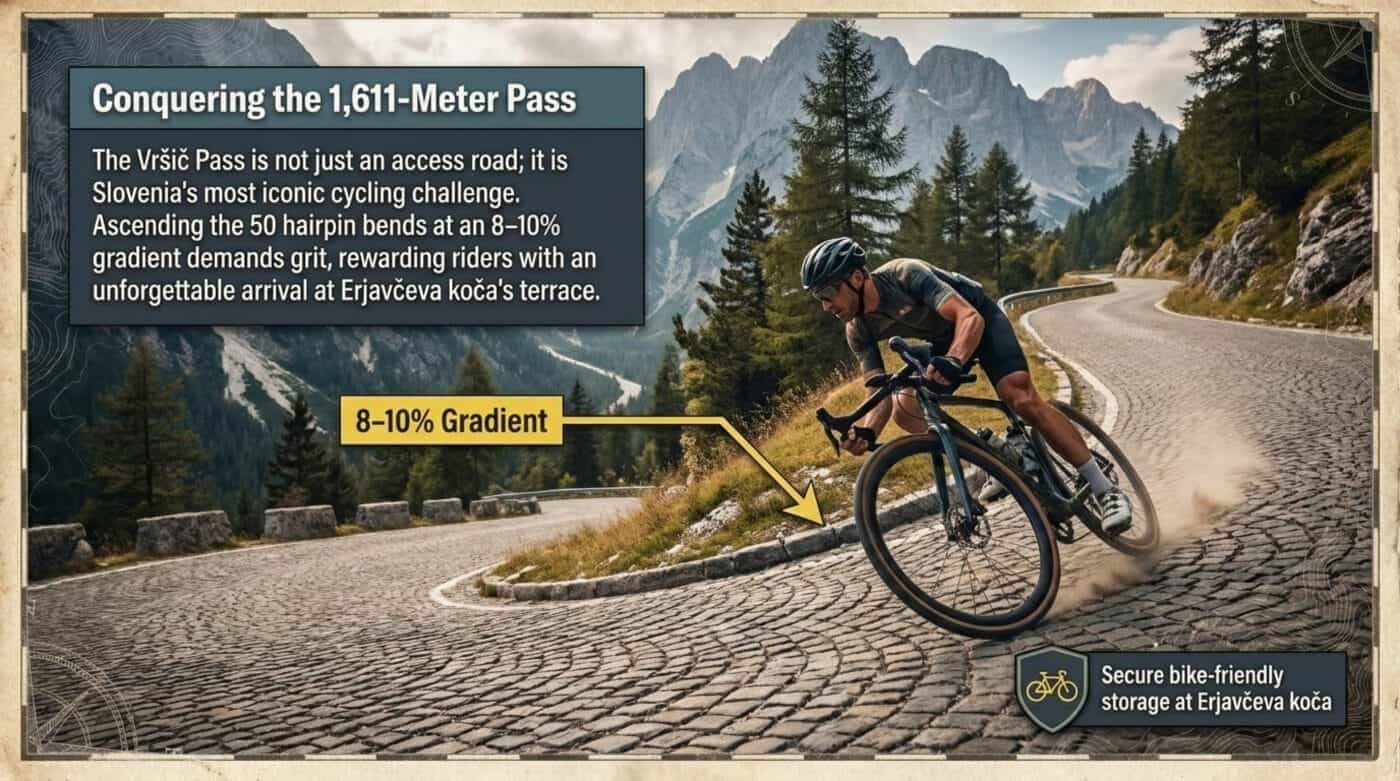
Facilities include a dining room, restaurant service, drinks, warm meals, outdoor seating, mountain views and practical information for visitors exploring the area. The hut is also known as a family-friendly and cyclist-friendly mountain hut. That matters, because Vršič is not only a hiking destination; it is also one of Slovenia’s most important cycling challenges, a famous scenic road, a mountain photography location and a crossroads for travellers between Kranjska Gora and the Soča Valley.
Because the hut is popular, and because the Vršič area can become busy during weekends, holidays, summer season, autumn weekends and good-weather periods, guests should book as early as possible. Early reservations help the hut prepare rooms, food, staff, arrival information, and mountain advice. It also gives visitors a better chance to stay longer instead of rushing through one of the most beautiful alpine areas in Slovenia.
Open Year-Round: Experience Vršič in Every Season
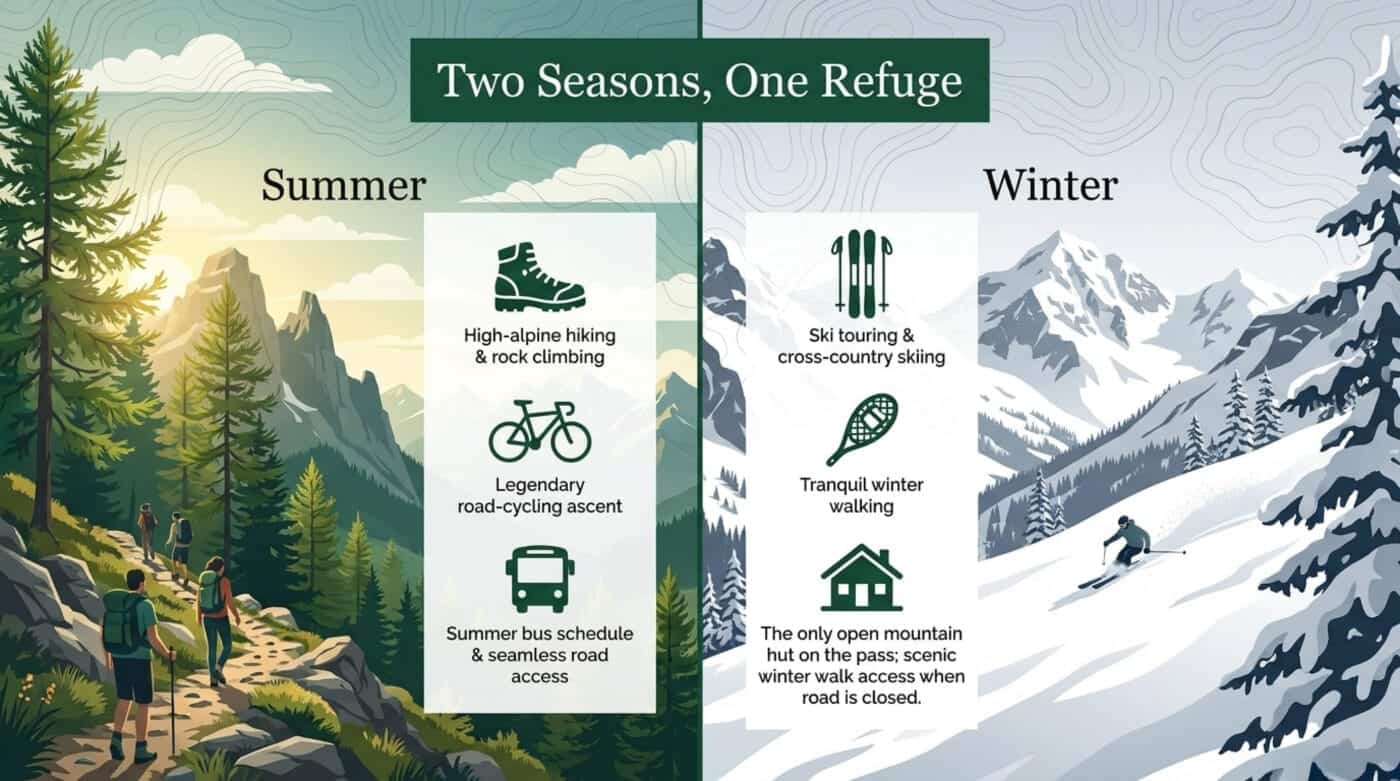
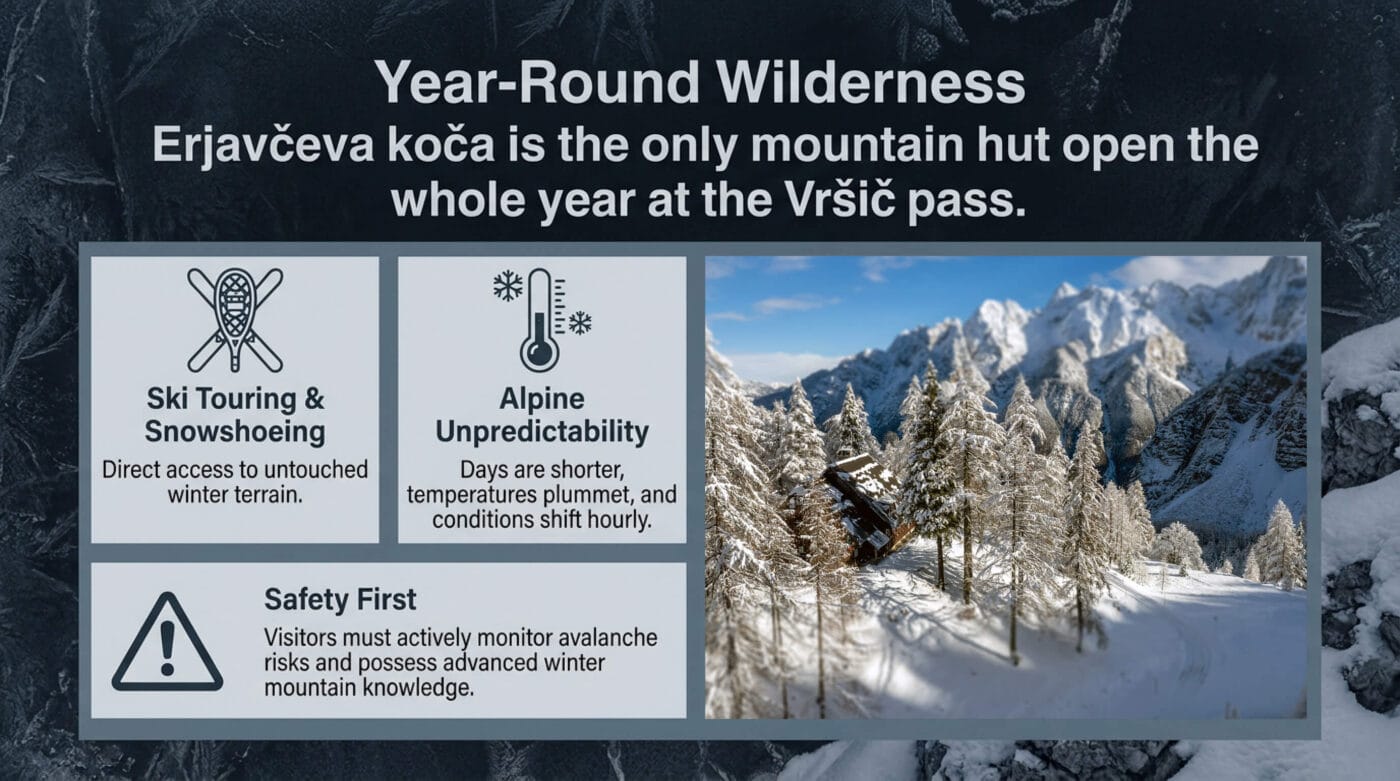
Erjavčeva koča is open year-round, which makes it especially valuable for travellers who want to experience the Julian Alps outside the short main summer season. Vršič is beautiful in July and August, but it is not only a summer destination. Spring brings snow patches, waterfalls, fresh alpine air and powerful contrasts between green valleys and white peaks. Summer offers hiking, climbing, cycling and road trips. Autumn brings golden larches, quieter trails, colourful forests and some of the best photography conditions of the year. Winter turns the pass into a silent alpine world of snow, cold air, peaceful views and a completely different mountain mood.
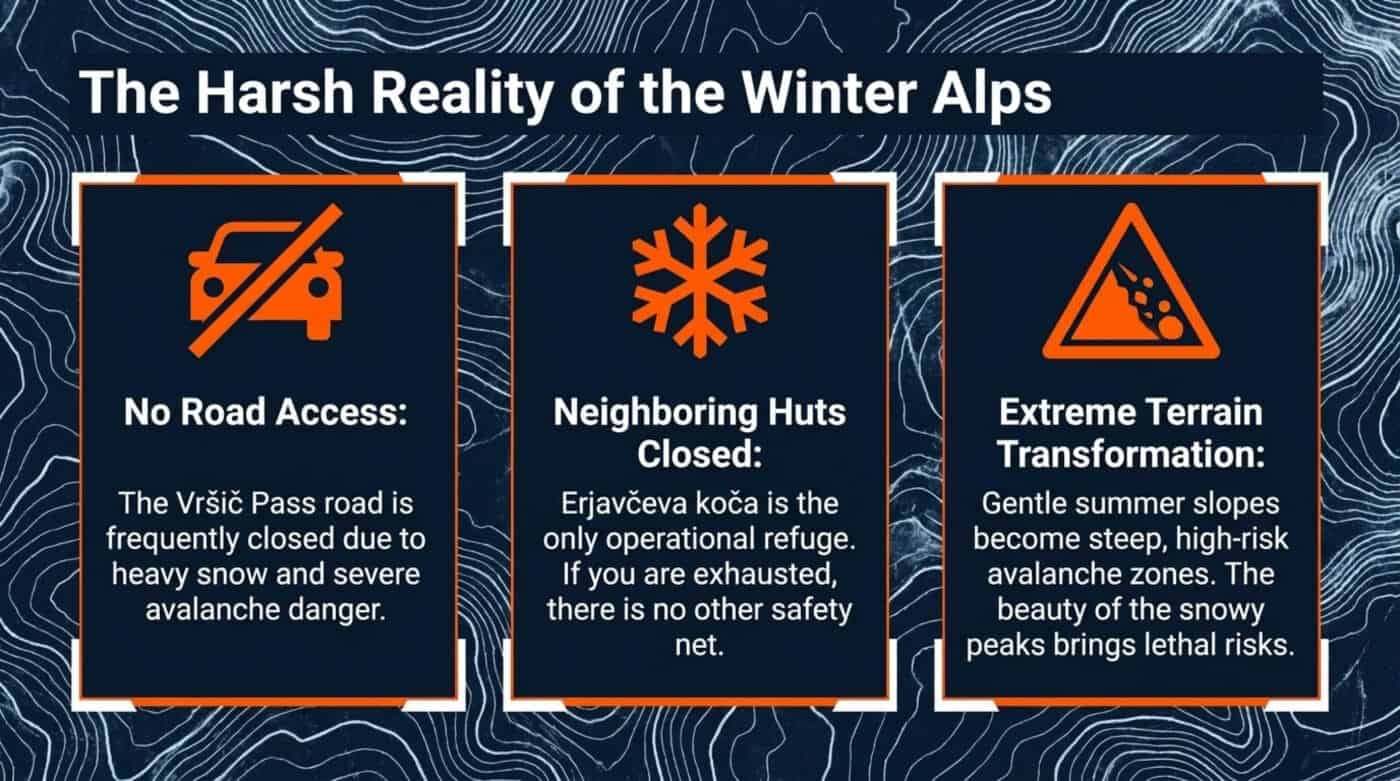
Visitors should always check road and weather conditions before arrival, especially in winter and early spring, because Vršič is a high mountain pass and access can change quickly. The road over the entire pass may be affected by snow, ice, avalanches or seasonal closures, but the hut’s year-round operation means that guests can plan a real mountain stay in every season with the right preparation. This is one of the reasons why Erjavčeva koča is not just a stop on the road, but a destination in itself.
Best Activities by Season
Spring: Waterfalls, Snow Patches and Fresh Alpine Air
Spring on Vršič is full of contrasts. In the valleys, flowers may already be blooming, while higher on the pass, snow can still remain on slopes and shaded areas. This is a beautiful time for photography, short walks, scenic drives and visiting waterfalls, because melting snow makes rivers and cascades especially powerful. Good spring day trips include Lake Jasna, Zelenci Nature Reserve, Planica, Tamar Valley, Peričnik Waterfall, Martuljek Waterfalls, the source of the Soča River, Great Soča Gorge, Virje Waterfall and Boka Waterfall.
Spring is also a good season for families who want scenic stops rather than long alpine hikes. Children usually enjoy Lake Jasna, Zelenci boardwalks, Planica, Tamar, the Soča River viewpoints and easy waterfall visits. Higher mountain routes may still be snowy or unsafe, so spring is best approached with flexibility: choose lower trails, scenic drives and short natural attractions, and leave high peaks for stable summer conditions.
Summer: Hiking, Cycling, Climbing and the Full Circle Trip
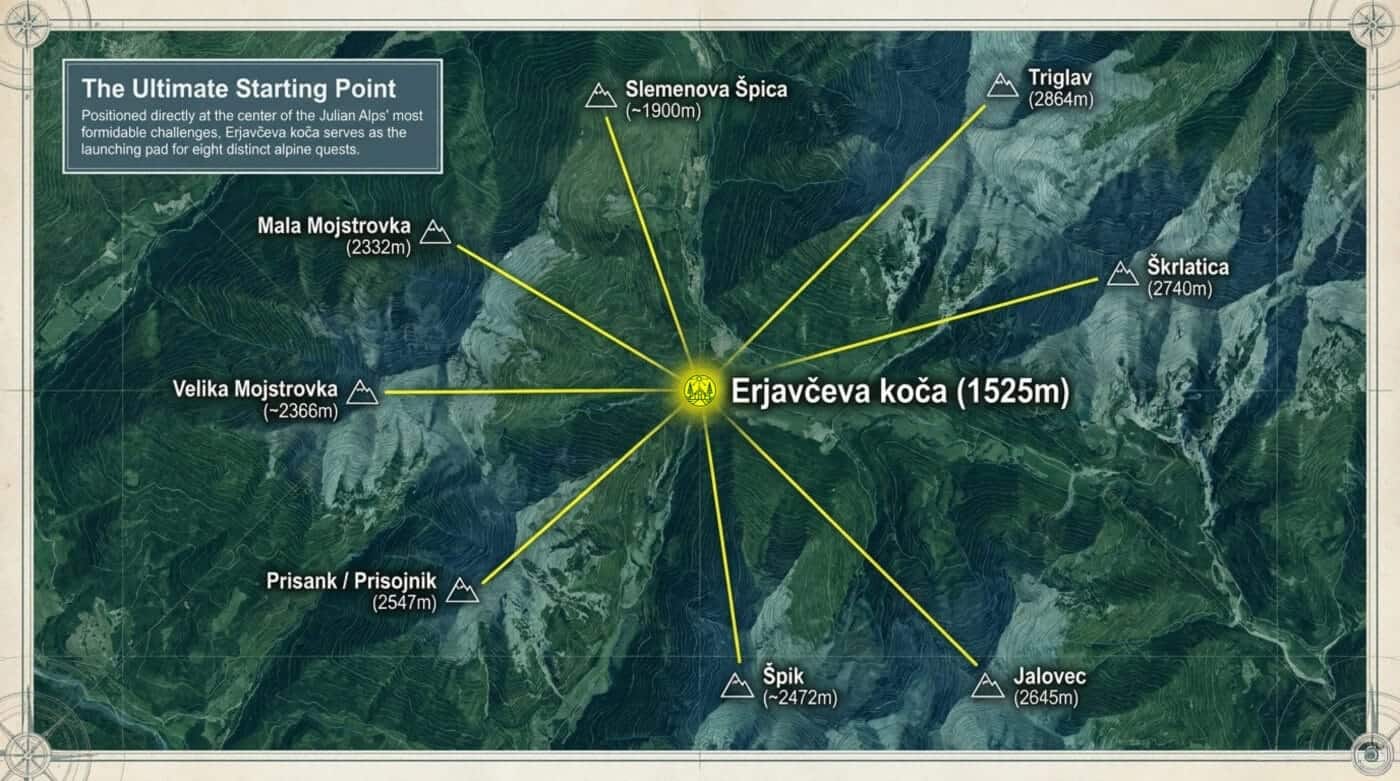
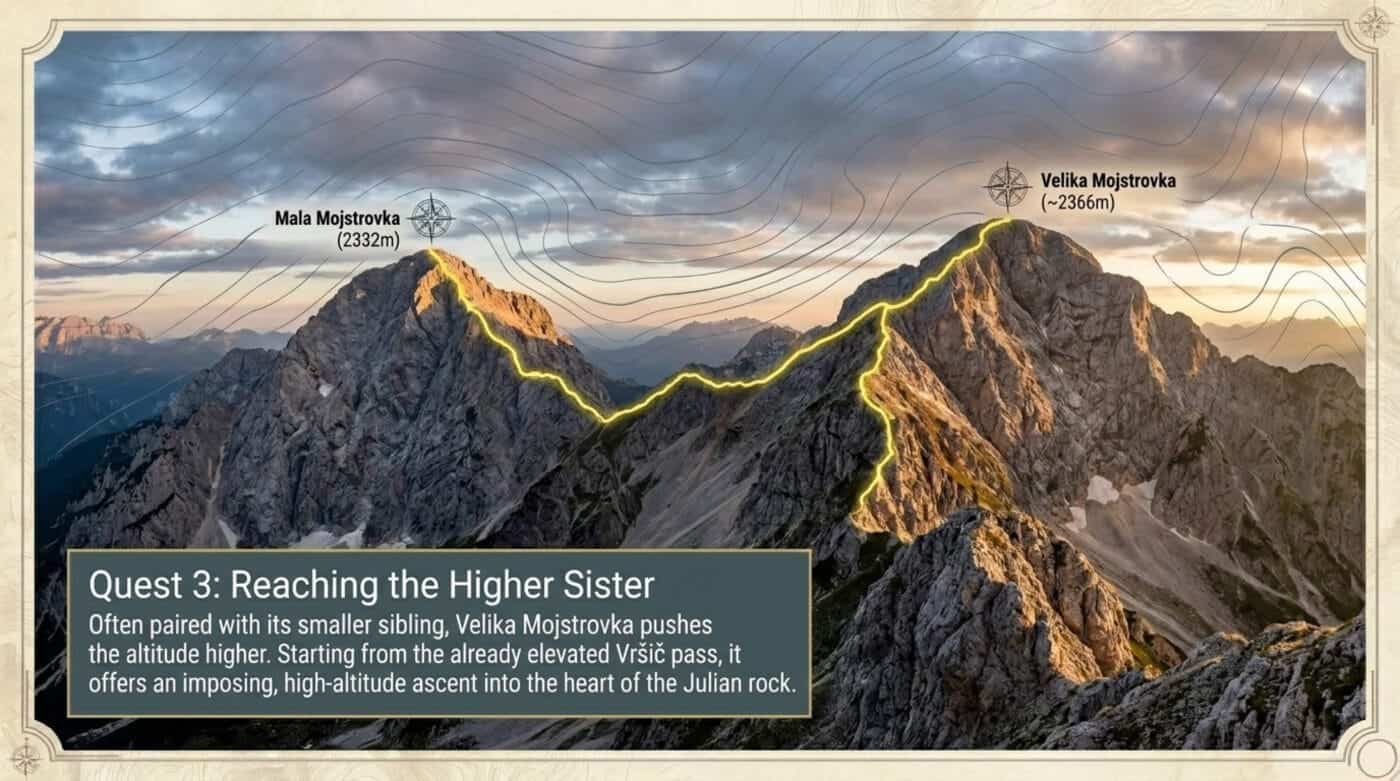
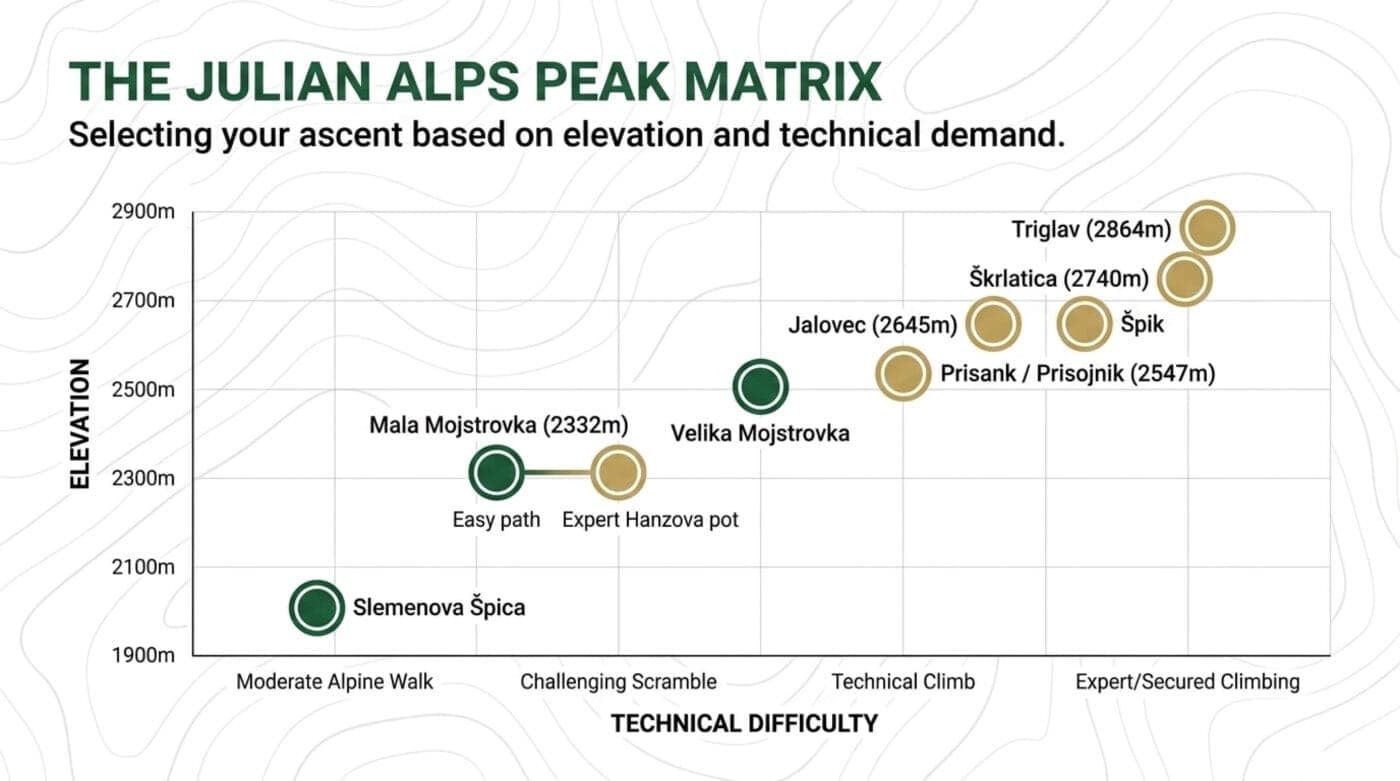
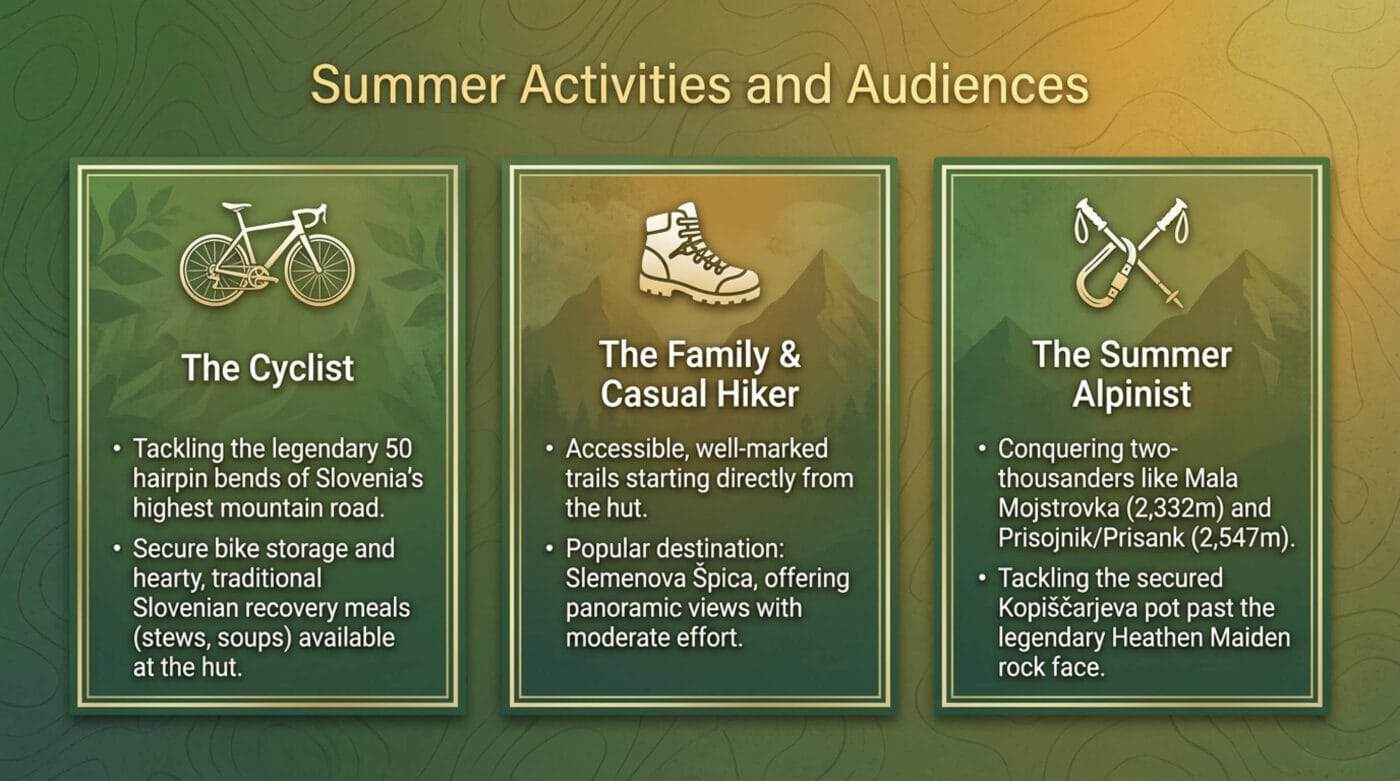
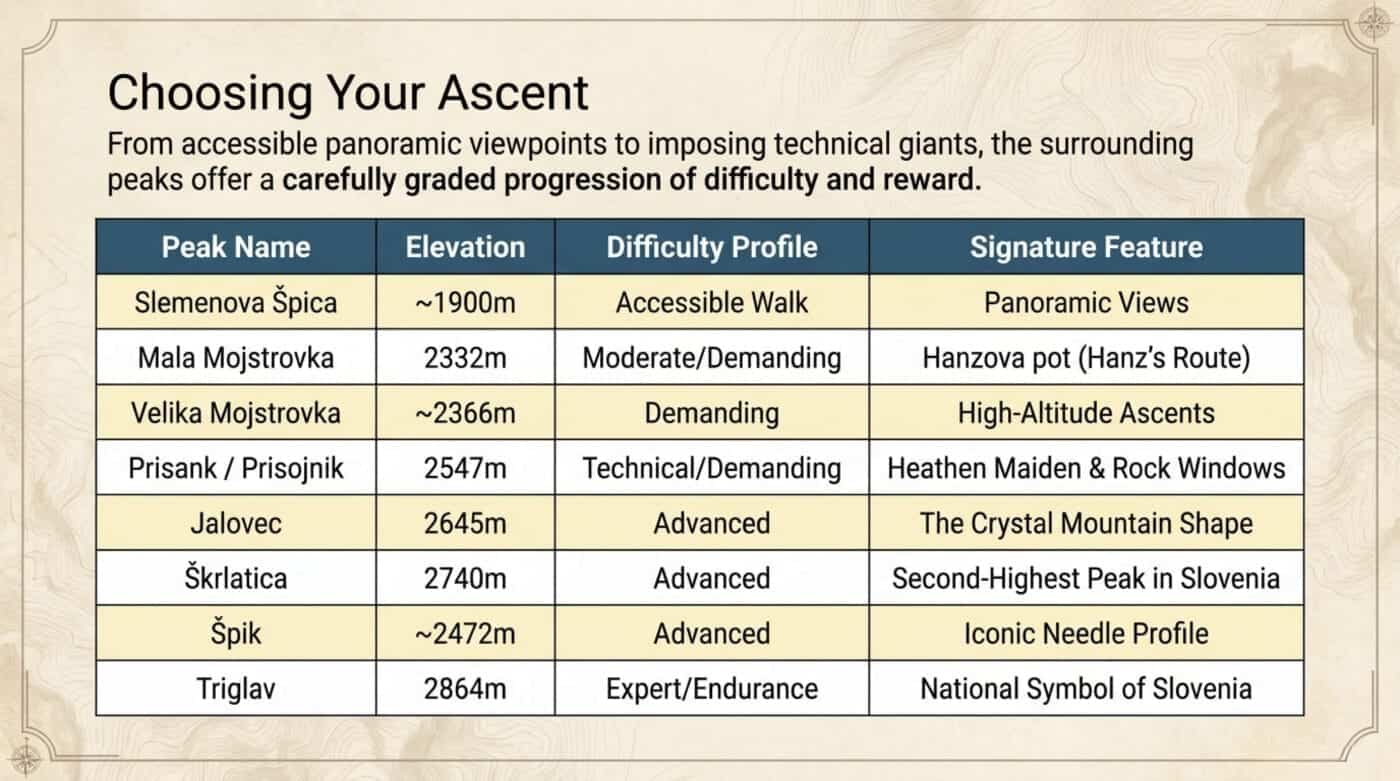
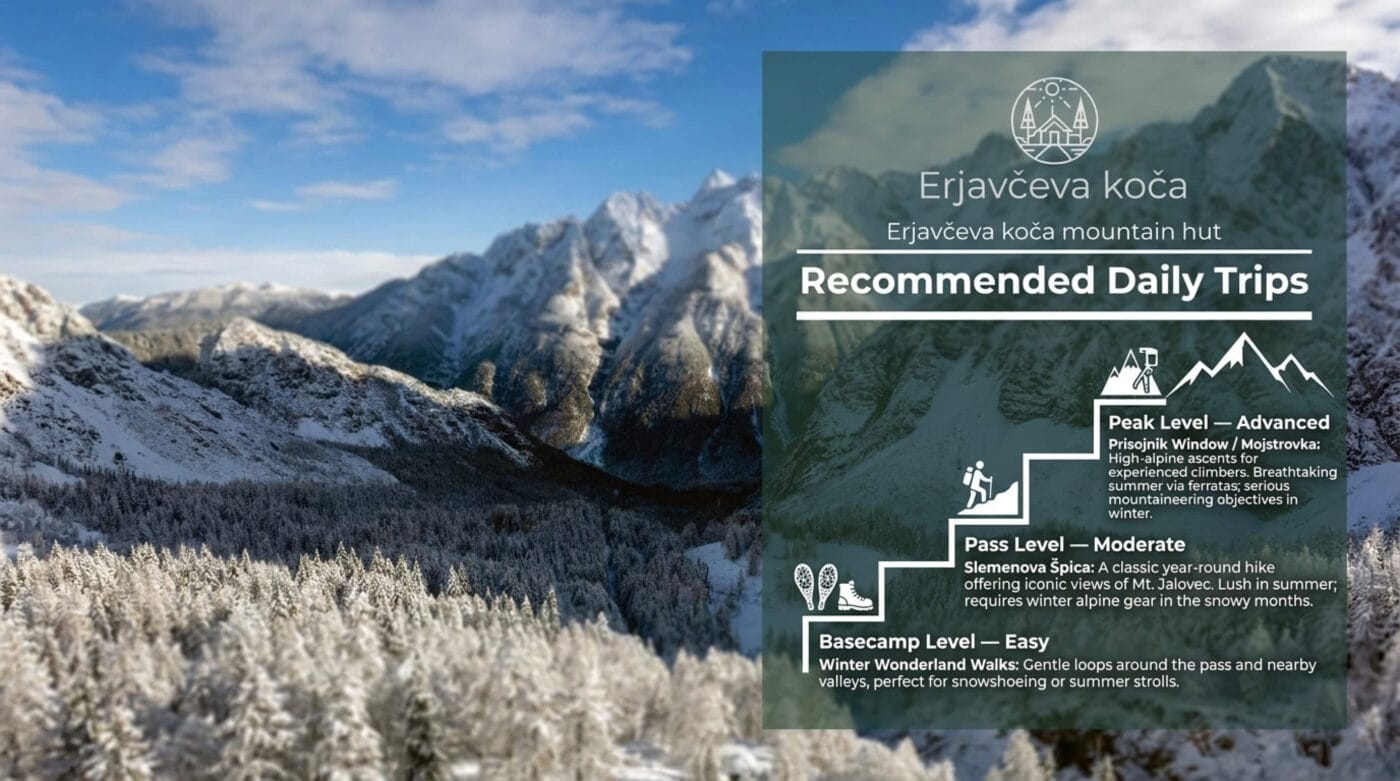
Summer is the classic season for hiking in the Julian Alps. From Erjavčeva koča, visitors can explore Slemenova Špica, Sovna glava, Prednje Robičje, viewpoints around Vršič, or more serious routes toward Mala Mojstrovka, Prisank, Razor and Jalovec. Easier walks are suitable for families and casual hikers, while demanding routes require experience, proper shoes, stable weather and respect for alpine terrain.
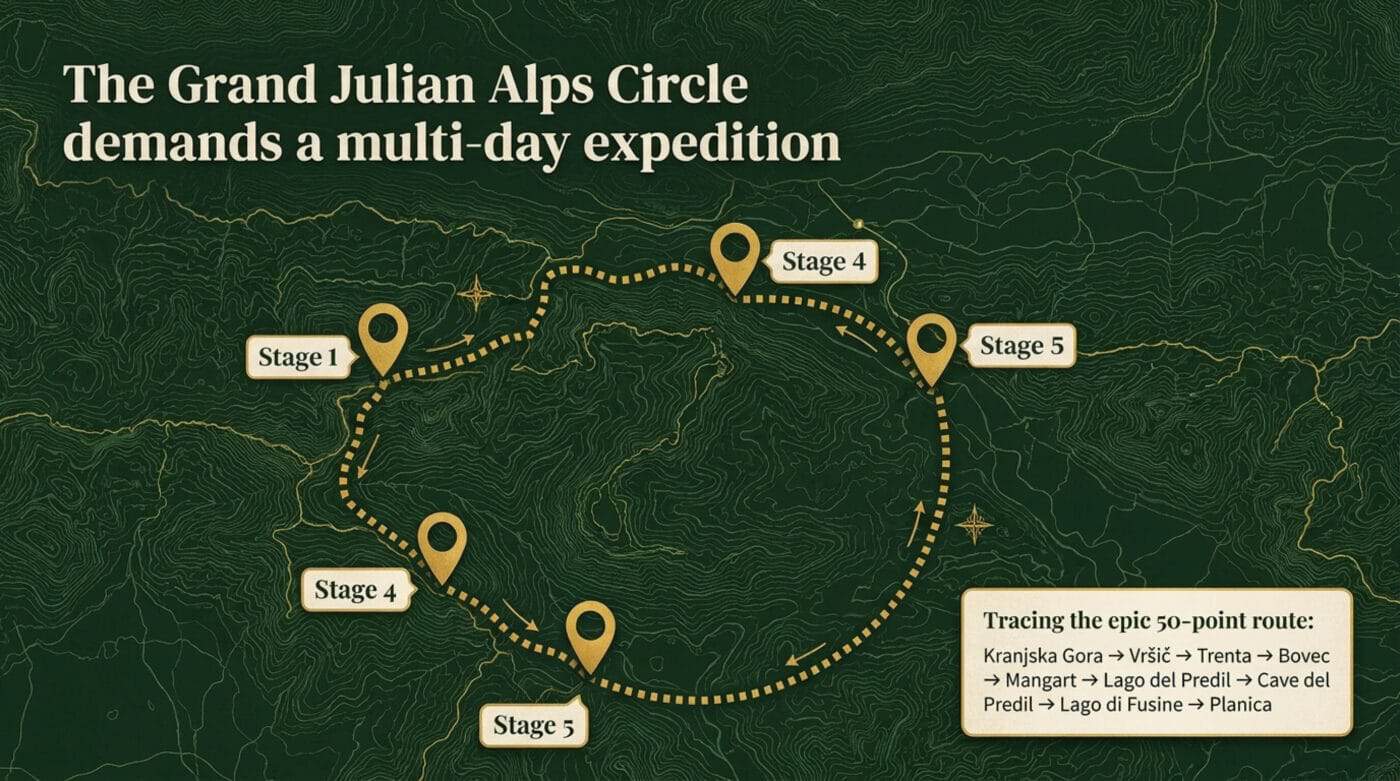
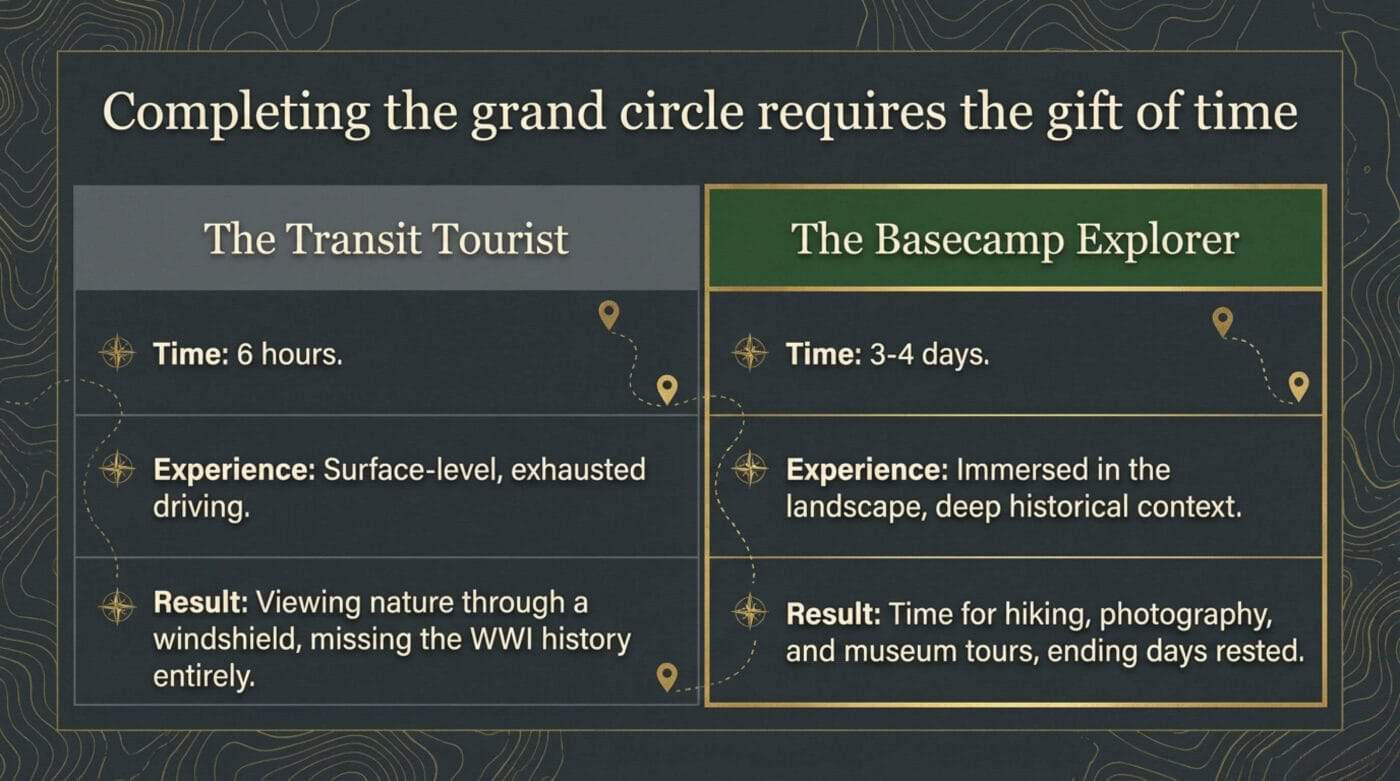
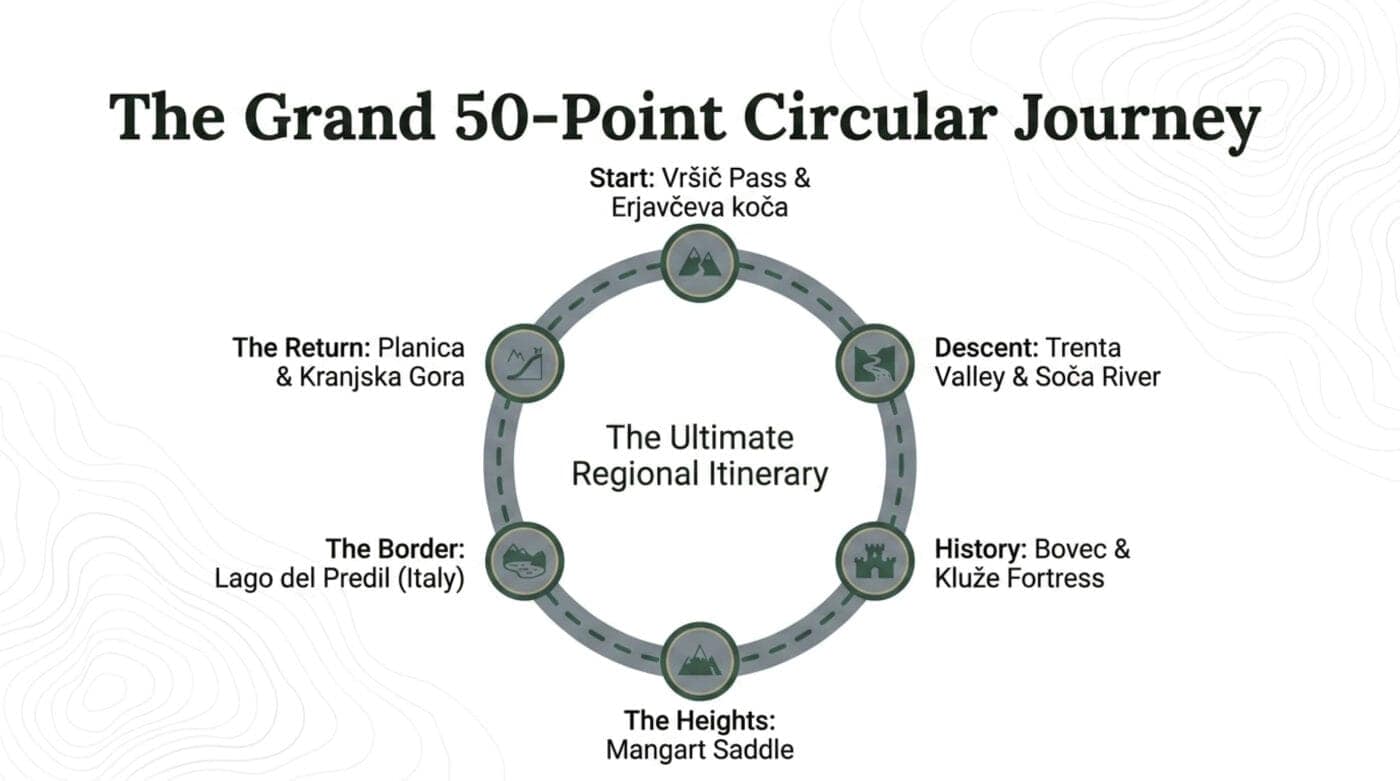
Summer is also the best time for the full Vršič – Bovec – Predil – Kranjska Gora circle trip. The route connects Slovenia’s highest mountain road pass, the Soča Valley, Bovec, Log pod Mangartom, Predil Pass, Lake Predil, Cave del Predil, Fusine Lakes, Tarvisio, Rateče, Zelenci, Planica and Kranjska Gora. It is one of the most beautiful road trips in the Julian Alps and can be done in one long day, but it is much better when spread across two days or combined with a 2–4 day stay at Erjavčeva koča.
Autumn: Golden Larches, Quiet Trails and Photography
Autumn may be the most beautiful season for travellers who love photography, silence and colour. The larches around Vršič, Slemenova Špica, Tamar and the Julian Alps turn golden, the air becomes clear, and the summer crowds slowly disappear. This is one of the best times for hiking to Slemenova Špica, visiting Lake Jasna, driving the Russian Road, photographing Ajdovska deklica, exploring the Soča Valley and spending quiet evenings at the hut.
Autumn is also excellent for couples, photographers and families with older children. The days are shorter, and temperatures can fall quickly, so planning is important, but the rewards are enormous: soft light, peaceful trails, colourful forests, strong mountain contrasts and a more personal experience of the Julian Alps. For many visitors, autumn is the season when Vršič feels most authentic.
Winter: Snow, Silence and a Real Mountain-Hut Experience
Winter on Vršič is not about rushing. It is about snow, silence, warm food, mountain views and the feeling of being far away from everyday life. When conditions allow, winter visitors can enjoy snowy walks, photography, peaceful hut evenings and the romantic atmosphere of the Julian Alps. Nearby winter-friendly attractions include Kranjska Gora, Planica Nordic Centre, Zelenci, Lake Jasna and winter views of the Vršič road.
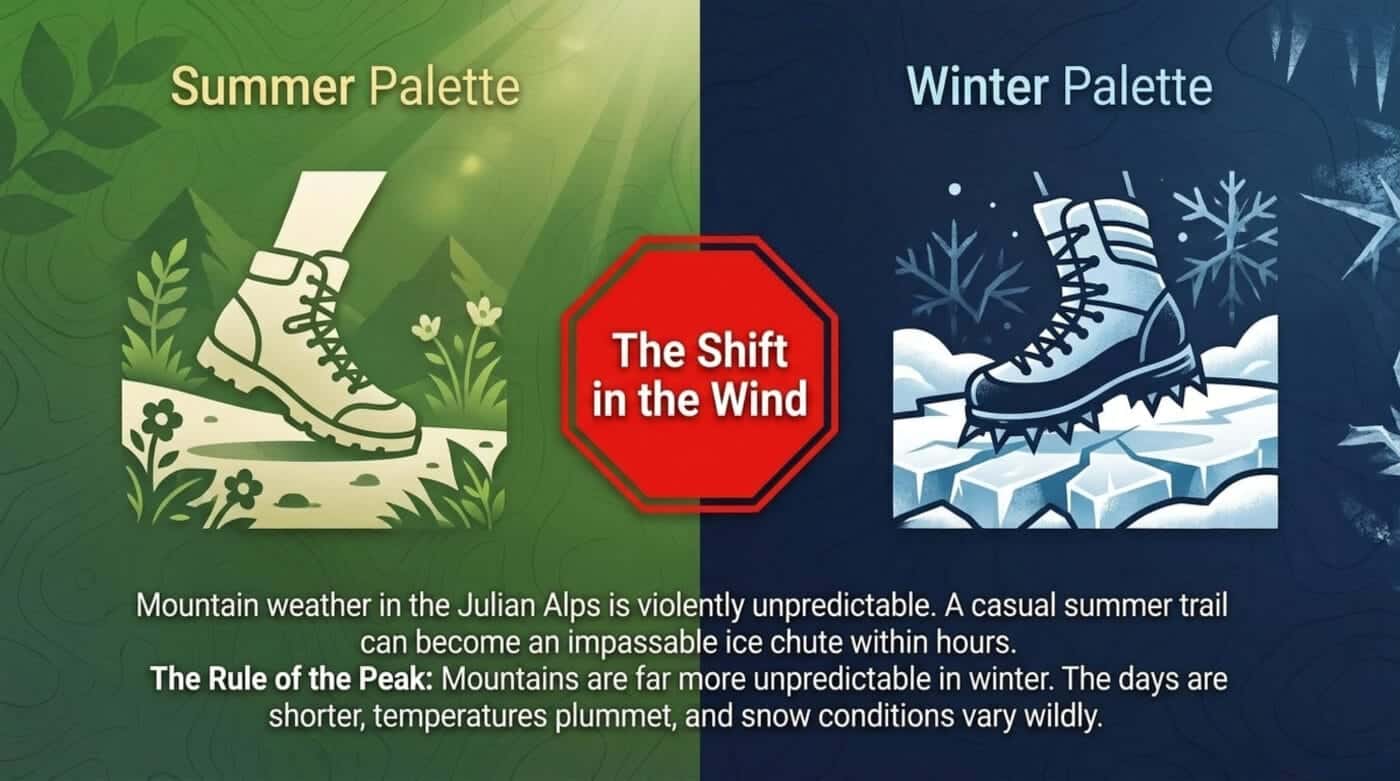
Winter mountain travel must be taken seriously. Conditions can change quickly, roads can be icy or closed, and snow can make even simple terrain more difficult. Families with children should focus on safe, accessible attractions in Kranjska Gora, Planica, Zelenci and the hut area when conditions are appropriate. Experienced winter hikers and ski tourers should check avalanche conditions, equipment and local advice before any route above the pass.
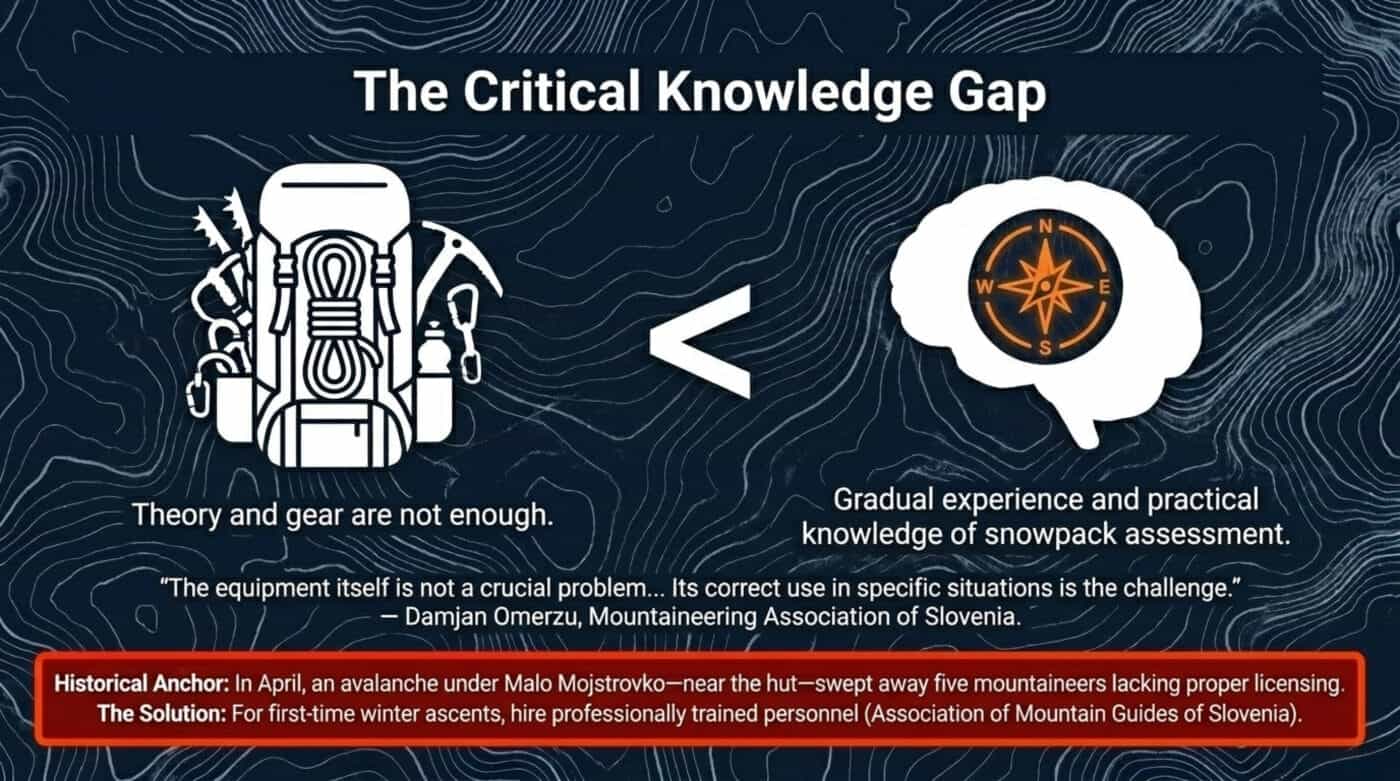
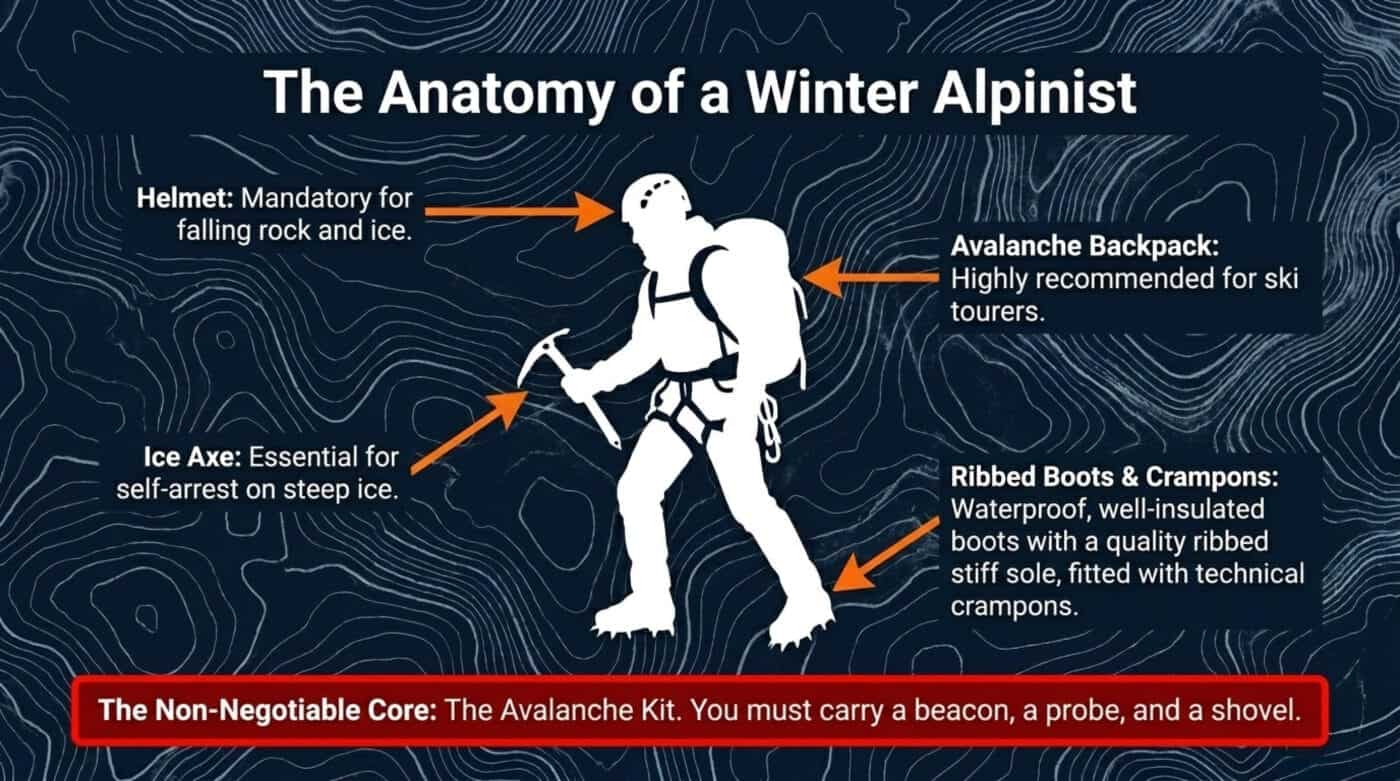

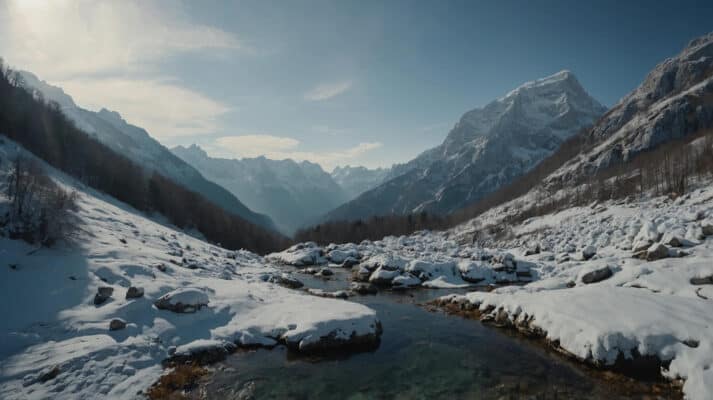
Above the Vršič Pass in Winter
Above the Vršič Pass in Winter; Comfortably to Snow-Covered Peaks. The article in Planinski vestnik,...
Feb

Danger of avalanches
Danger of avalanches. Avalanches can be described by their size, destructive potential, initiation mechanism, composition,...
Jan
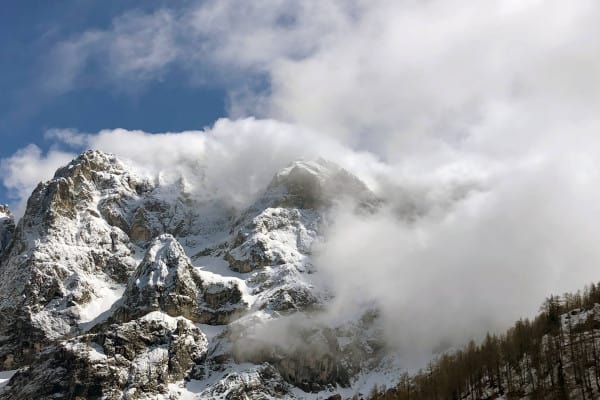
Weather at Vršič pass
Get a piece of weather information firsthand about the weather at Vršič pass. All reliable...
Feb
Best Choices for Families with Children
Families do not need to climb high peaks to enjoy the Julian Alps. Around Erjavčeva koča, many experiences are suitable for children when conditions are safe, and adults plan realistically. The best family-friendly choices include Lake Jasna, Zelenci Nature Reserve, Planica Nordic Centre, Tamar Valley, short walks around Vršič, viewpoints near the hut, the Russian Chapel, Ajdovska deklica viewpoints, Peričnik Waterfall, Martuljek Waterfalls lower access, Great Soča Gorge viewpoints, Lake Predil and Fusine Lakes.
For families, the best plan is usually to stay 2 to 4 days and avoid doing too much in one day. One day can be spent in Kranjska Gora, Lake Jasna, and Zelenci. Another day can be used for Planica and Tamar. A third day can be used for Vršič viewpoints, the Russian Chapel and a short walk near the hut. A fourth day can become a scenic drive to Trenta, the Soča River or Lake Predil. Children often remember simple moments most: snow near the hut, sheep on the pass, a waterfall, a wooden bridge, hot chocolate, a mountain view or sleeping in a real mountain hut.
The Ultimate Circle Trip: Vršič – Trenta – Bovec – Predil – Kranjska Gora
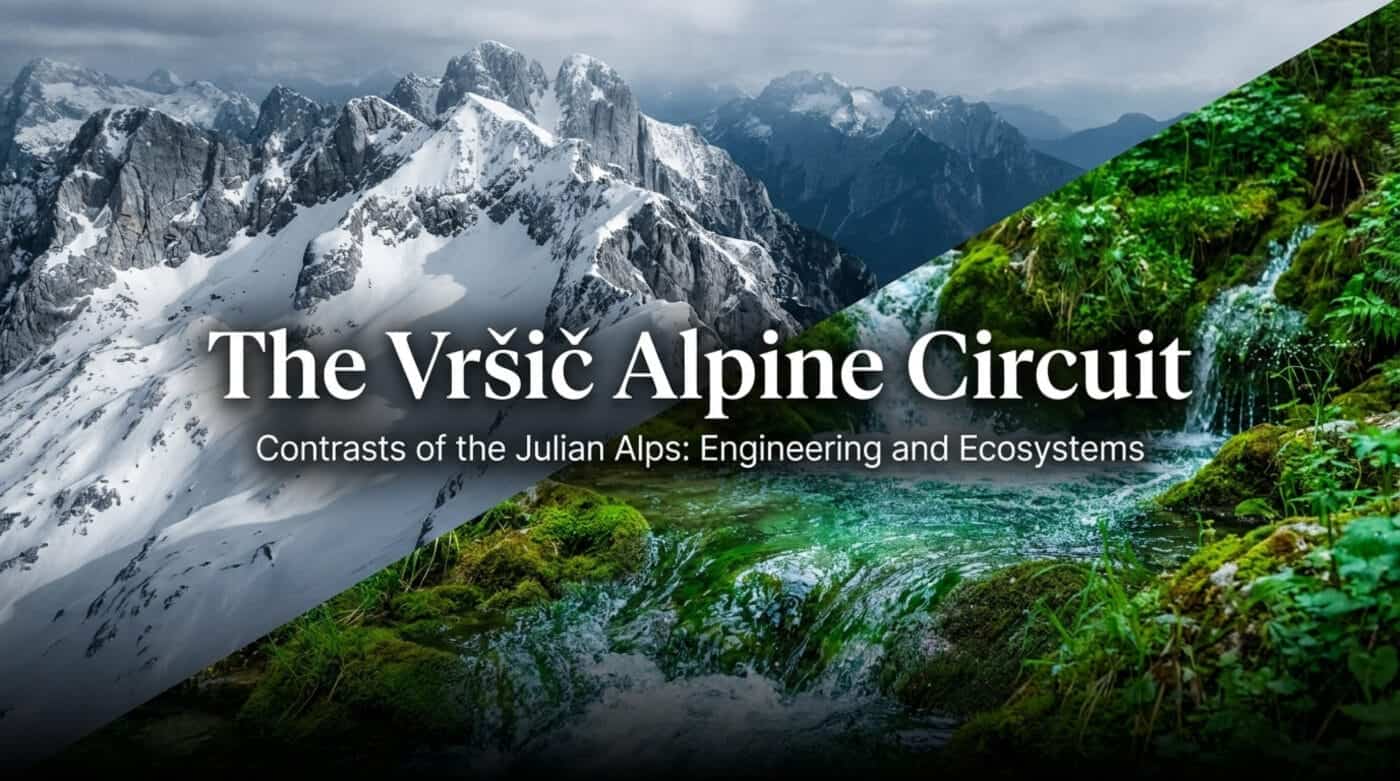
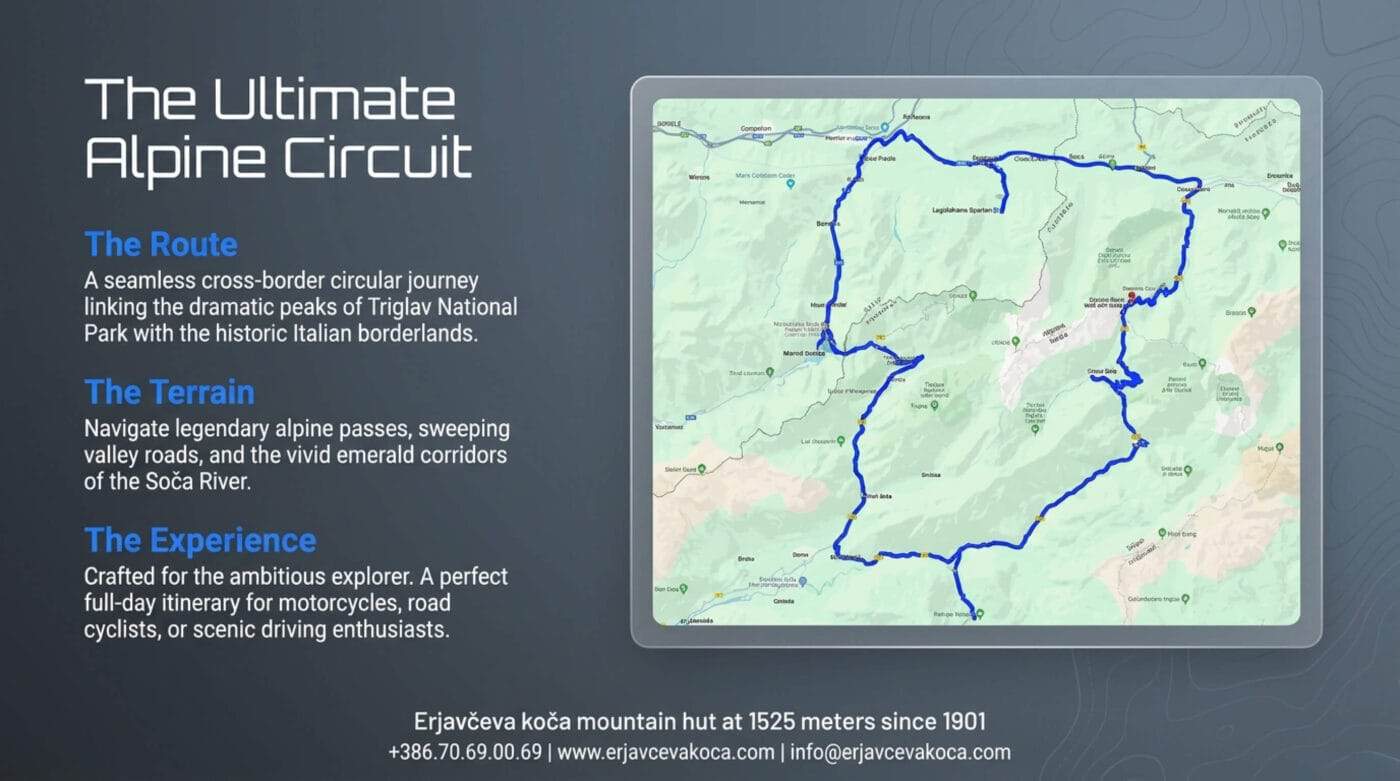
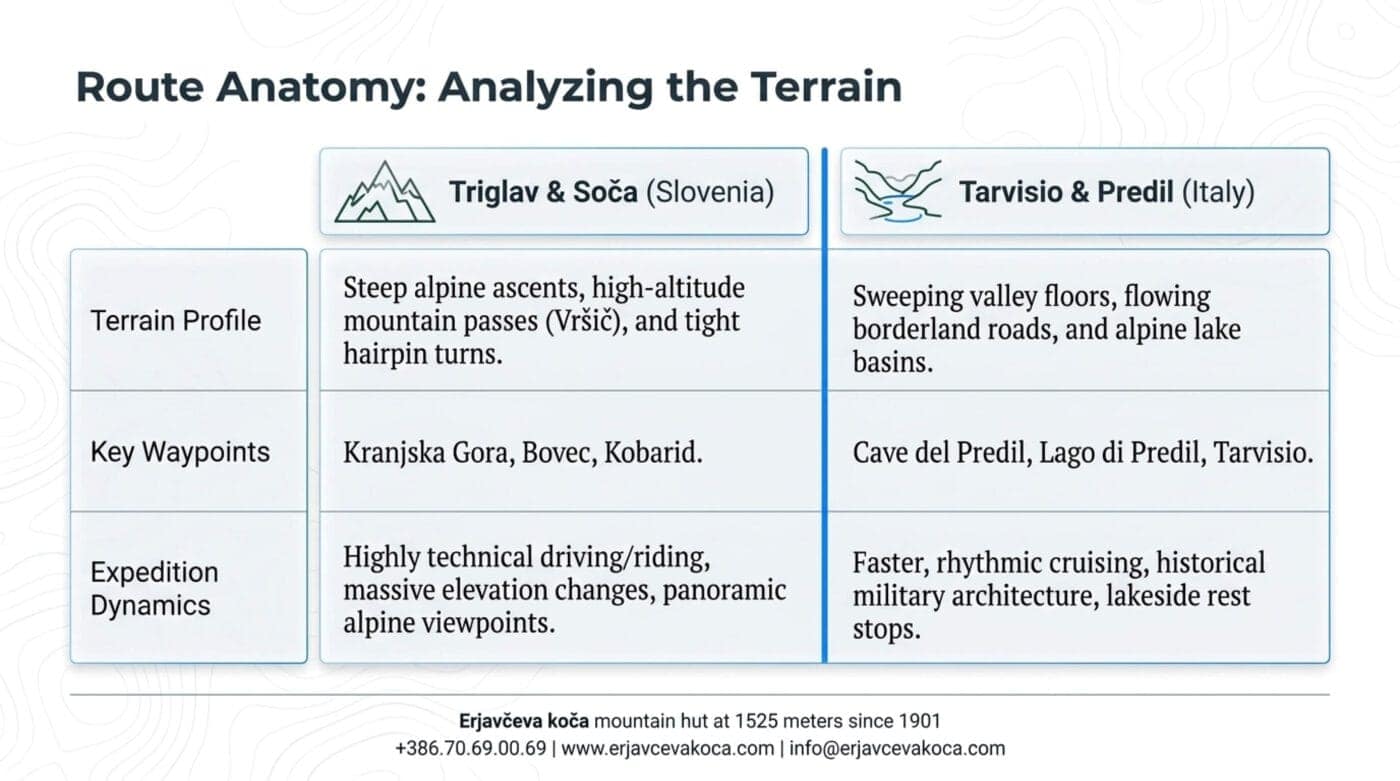
The Vršič – Trenta – Bovec – Predil – Kranjska Gora circle trip is one of the best travel experiences in Slovenia. It is a loop of mountain roads, rivers, waterfalls, lakes, history, borderlands and alpine culture. Starting and ending at Erjavčeva koča makes the route especially natural: sleep on Vršič Pass, descend into Trenta, follow the Soča Valley toward Bovec, cross toward Predil Pass and Italy, then return through Tarvisio, Fusine, Rateče and Kranjska Gora.
Less than 50 kilometres apart
Vršič Mountain Pass is a gateway to many natural wonders, historical monuments, and outdoor adventures...
Mar

Exploring the Breathtaking Circle Road from Kranjska Gora Through Vršič Pass Trenta Bovec Mangart and Beyond
This circle route takes travellers through the Vršič Pass, down the enchanting Trenta Valley along...
Apr

Share Your Memories with Us!
Share Your Memories of Kranjska Gora, Vršič Pass, and Erjavčeva Mountain Hut!
Jan

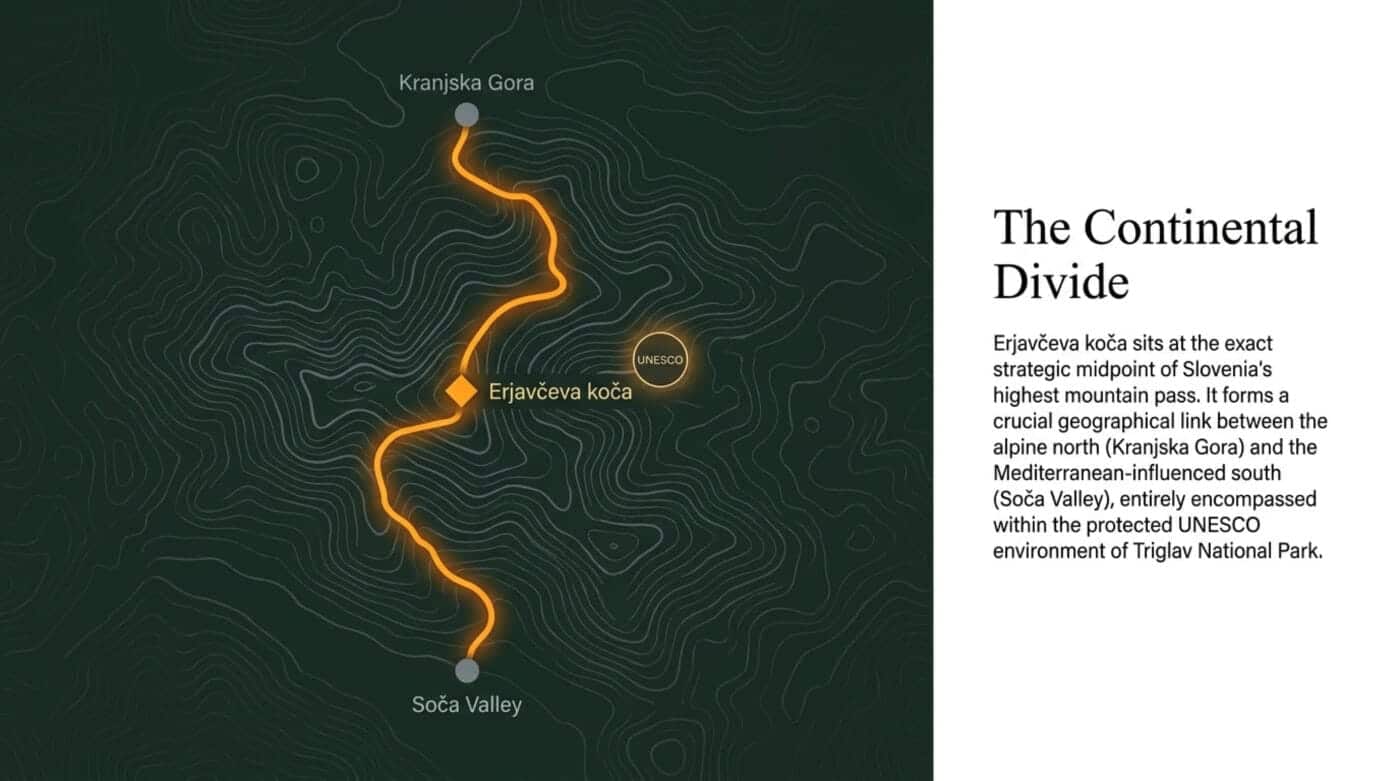
Part 1: Erjavčeva koča – Vršič Pass – Trenta
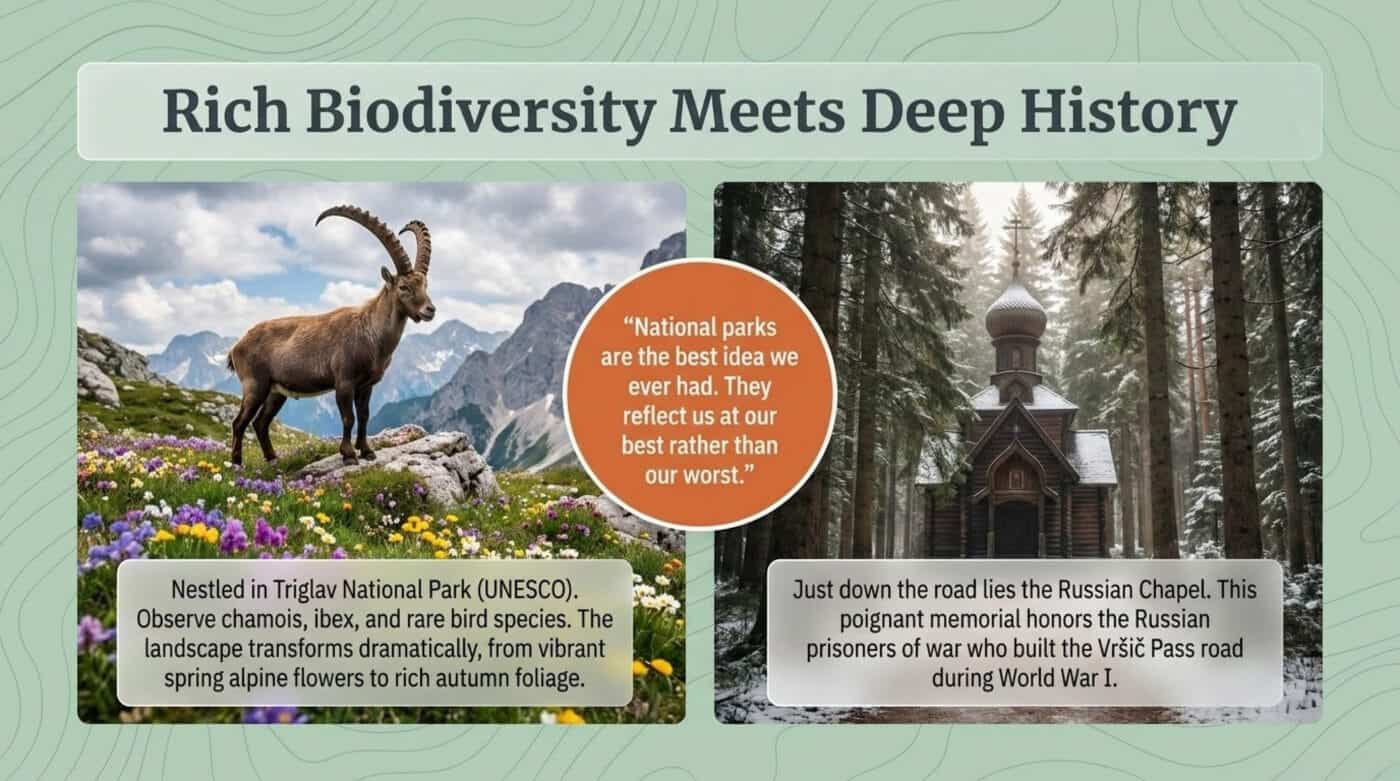
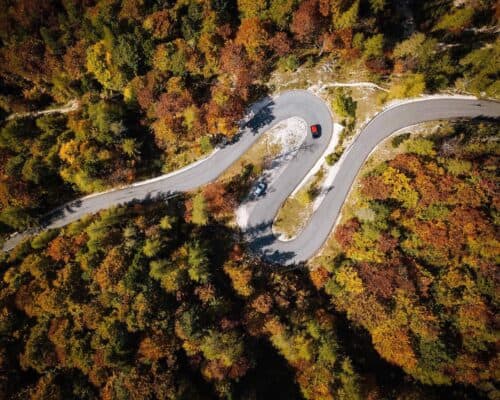
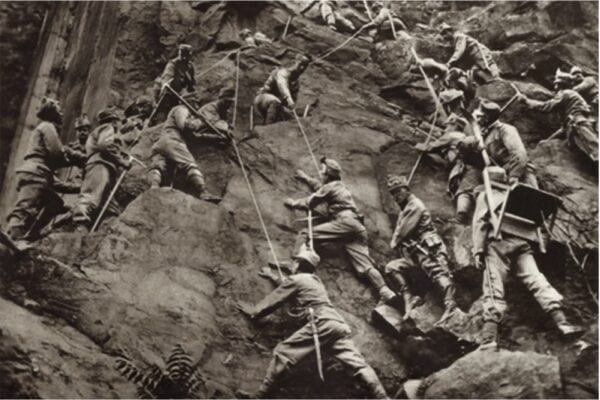
Begin at Erjavčeva koča and take time for the top of Vršič Pass. Stop for views, photograph the surrounding peaks, look for Ajdovska deklica in the wall of Prisank, admire the area of Prisank Window and remember that this road was built in extremely difficult conditions during the First World War. The descent toward Trenta feels like entering another mountain world: steeper, quieter, wilder and more closely connected with the Soča River.
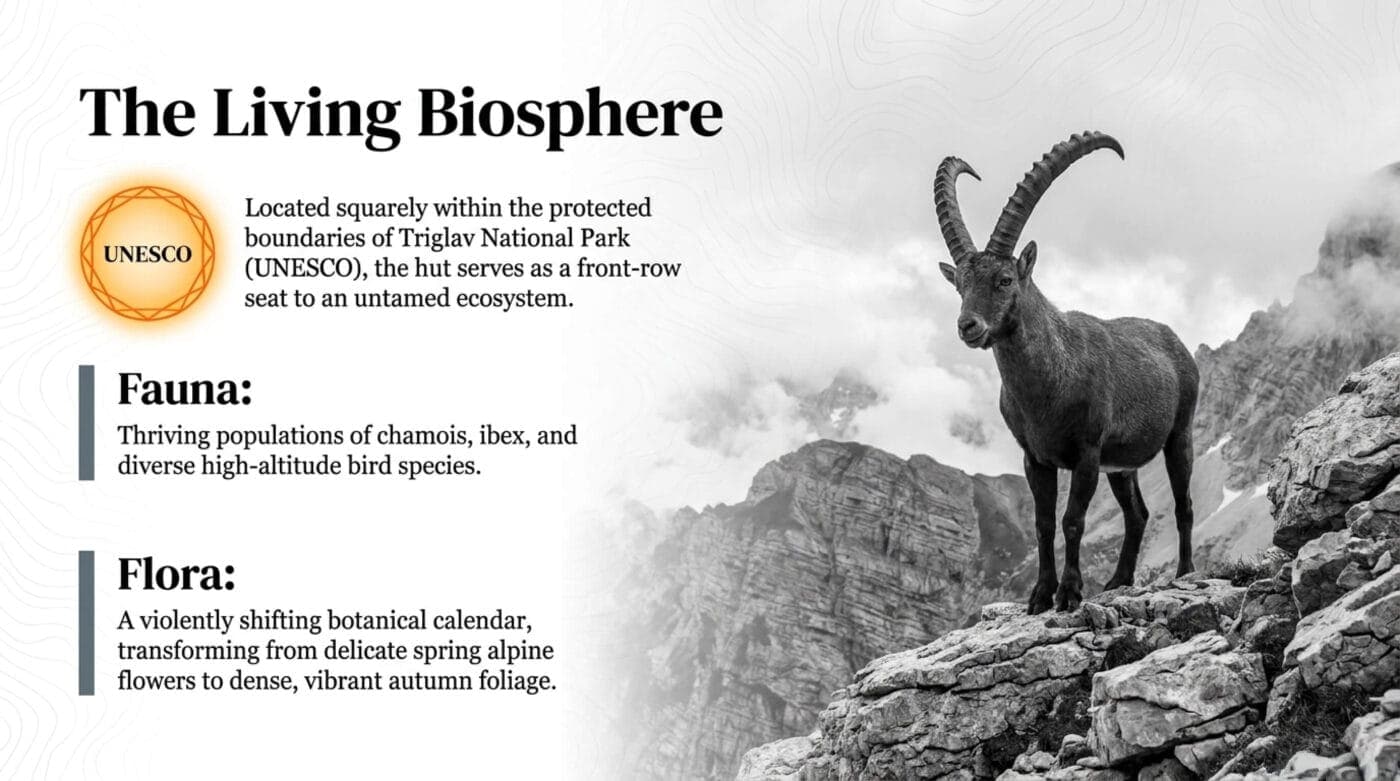
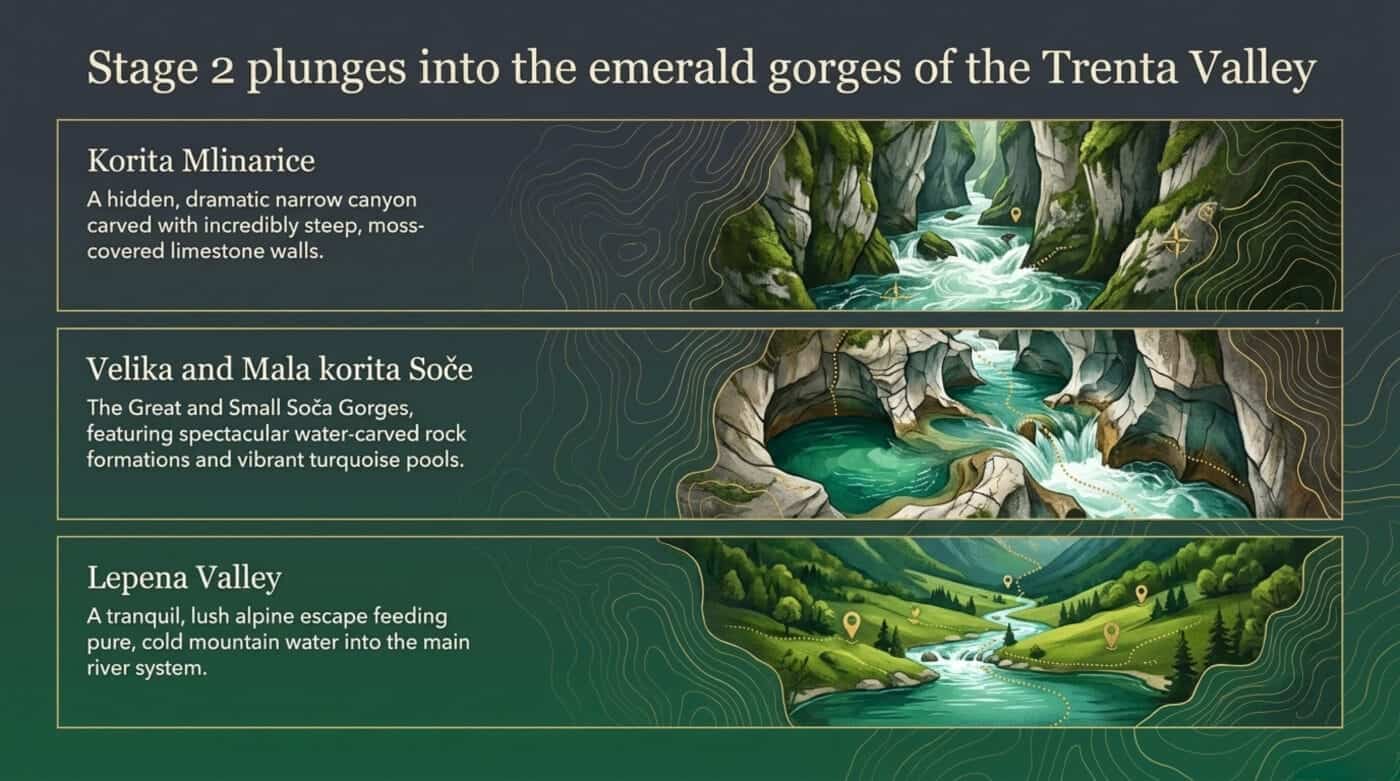
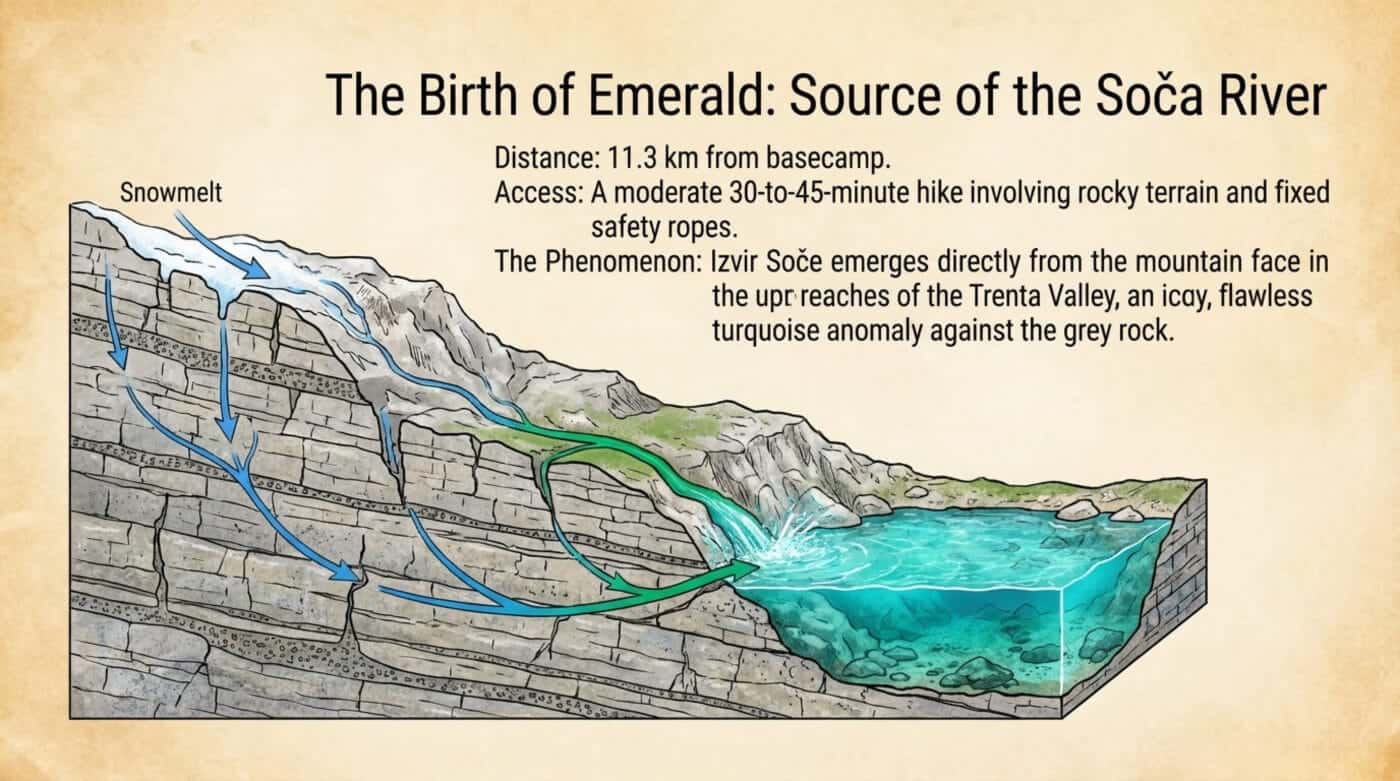
In Trenta, visit the source of the Soča River, the Alpine Botanical Garden Juliana, the Julius Kugy Monument, Mlinarica Gorge and the Trenta Museum / Dom Trenta. These stops explain the valley’s natural, cultural, and historical significance. Trenta is not only a beautiful place; it is a living mountain landscape where traditional life, alpine plants, river systems, mountaineering history and protected nature meet.
Part 2: Trenta – Soča Valley – Bovec
Continue down the upper Soča Valley and stop at the Small Soča Gorge, the Great Soča Gorge, the village of Soča, the Lepena Valley and river viewpoints along the way. The Soča River changes constantly: sometimes narrow and powerful, sometimes wide and calm, sometimes turquoise, sometimes emerald. This part of the route is perfect for photography, short walks and understanding why the Soča Valley is one of the most beautiful alpine valleys in Europe.
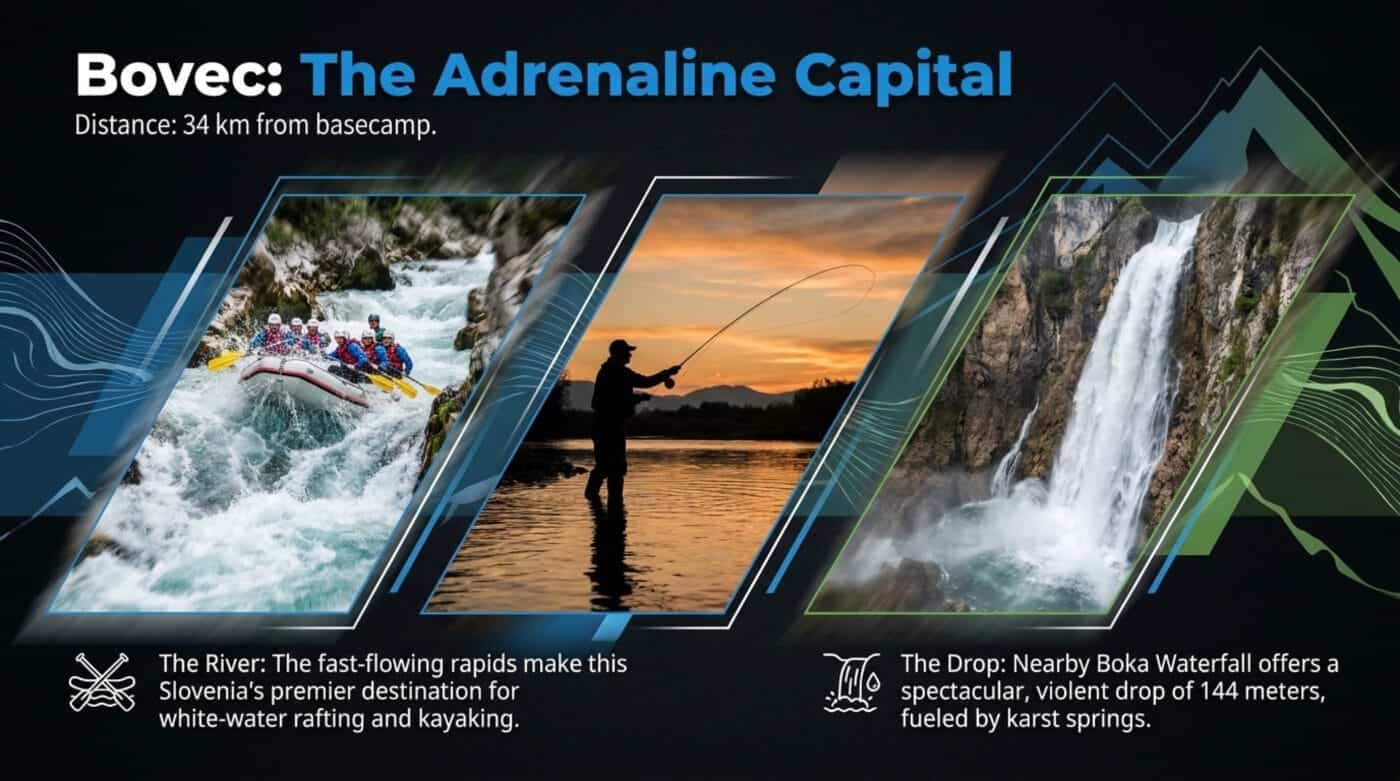
Bovec is the adventure centre of the route. Visitors can choose rafting, kayaking, canyoning, paragliding, hiking, cycling or a more relaxed visit to waterfalls and viewpoints. Nearby highlights include Boka Waterfall, Virje Waterfall, Kozjak Waterfall, Kluže Fortress and the Koritnica Gorge. For families, Bovec can be a good lunch stop and a base for shorter waterfall visits. For active travellers, it can easily become a full extra day.
Part 3: Bovec – Kluže – Log pod Mangartom – Predil Pass
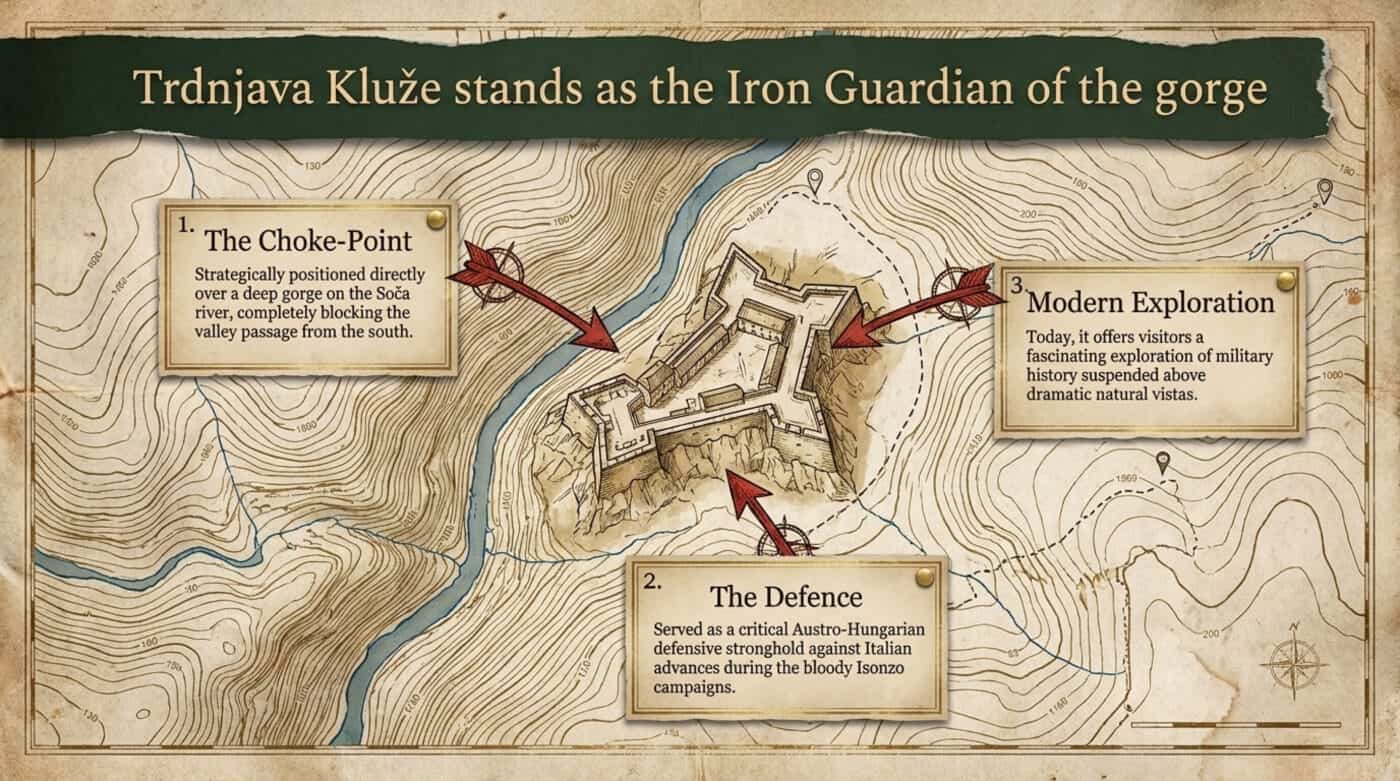
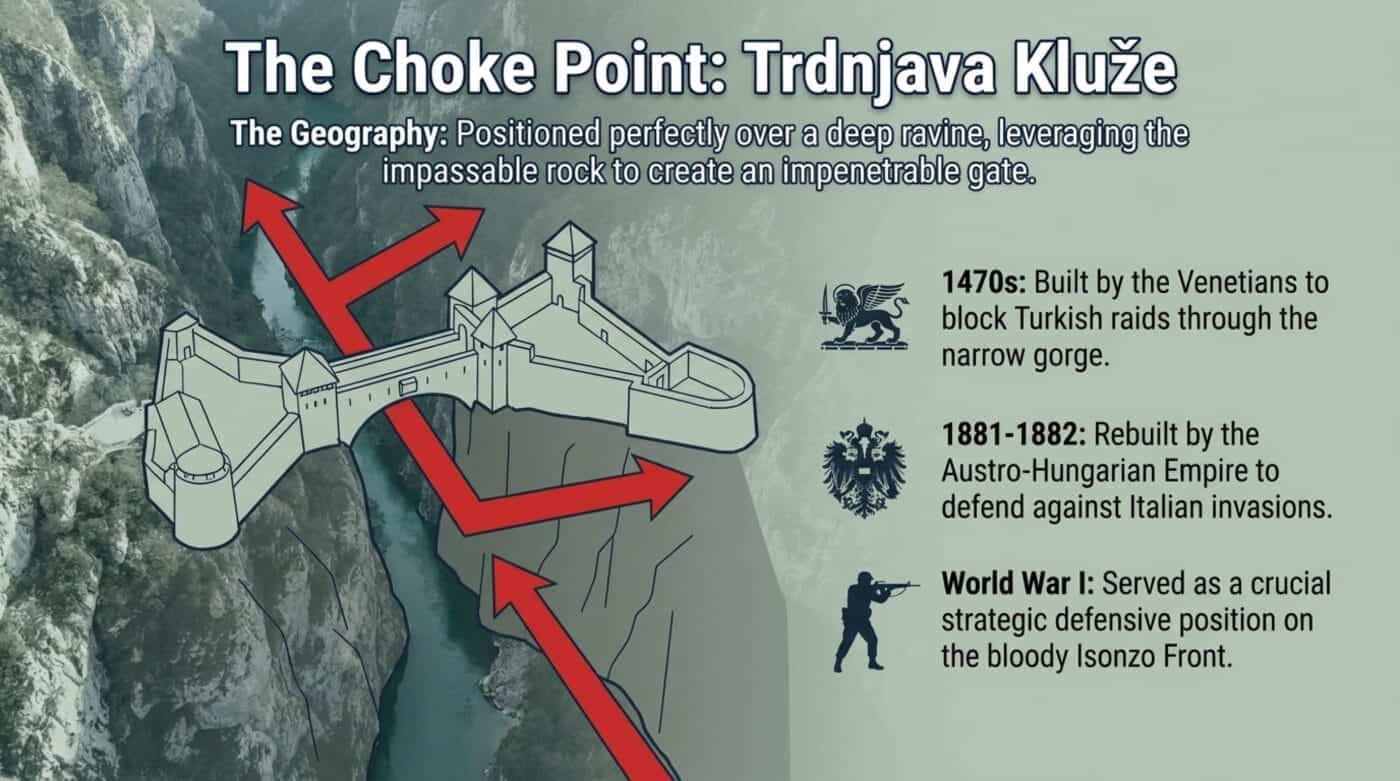
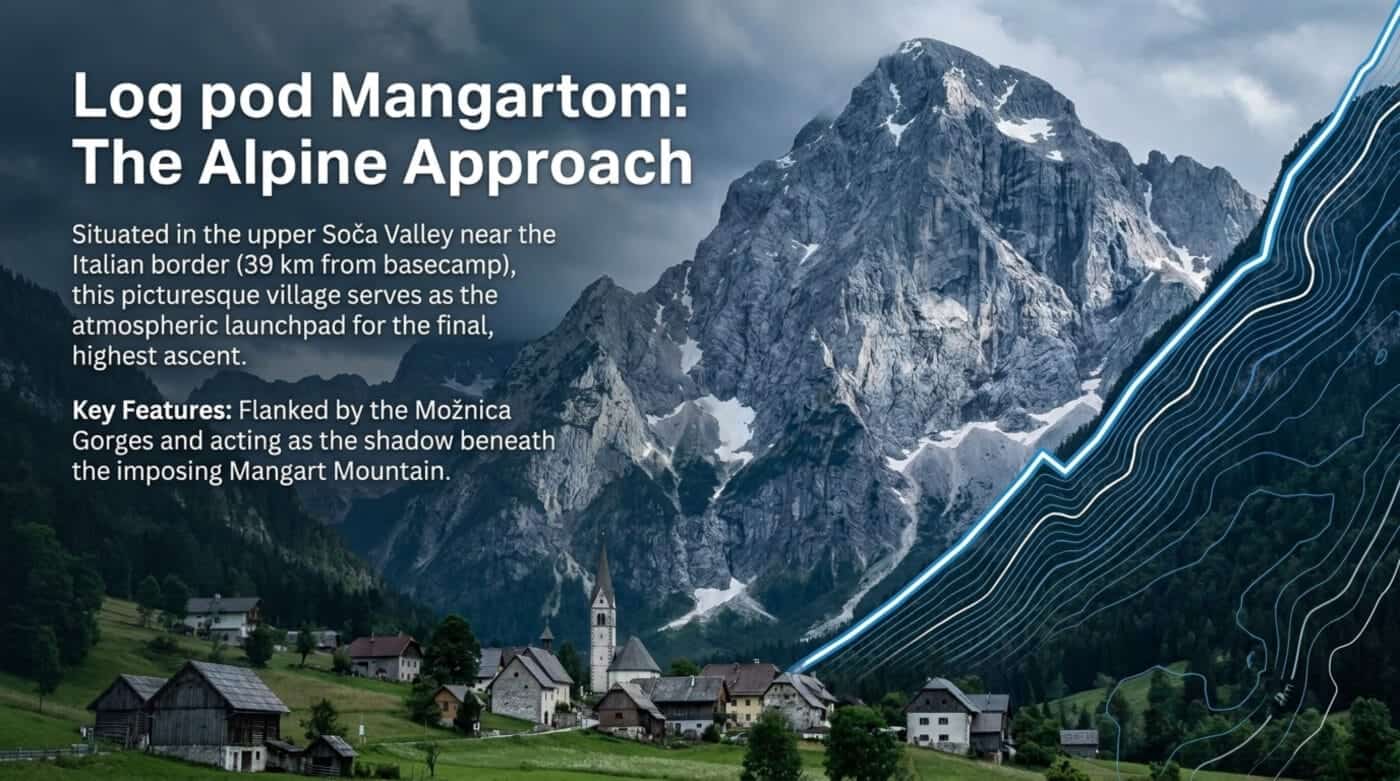
From Bovec, continue toward Fort Kluže, one of the most important historical fortresses in the area, standing above the narrow Koritnica Gorge. Then drive through the Koritnica Valley toward Log pod Mangartom, a beautiful alpine village beneath Mangart. This part of the route combines natural beauty with history, from old military routes and fortifications to the mining connections between Slovenia and Italy.
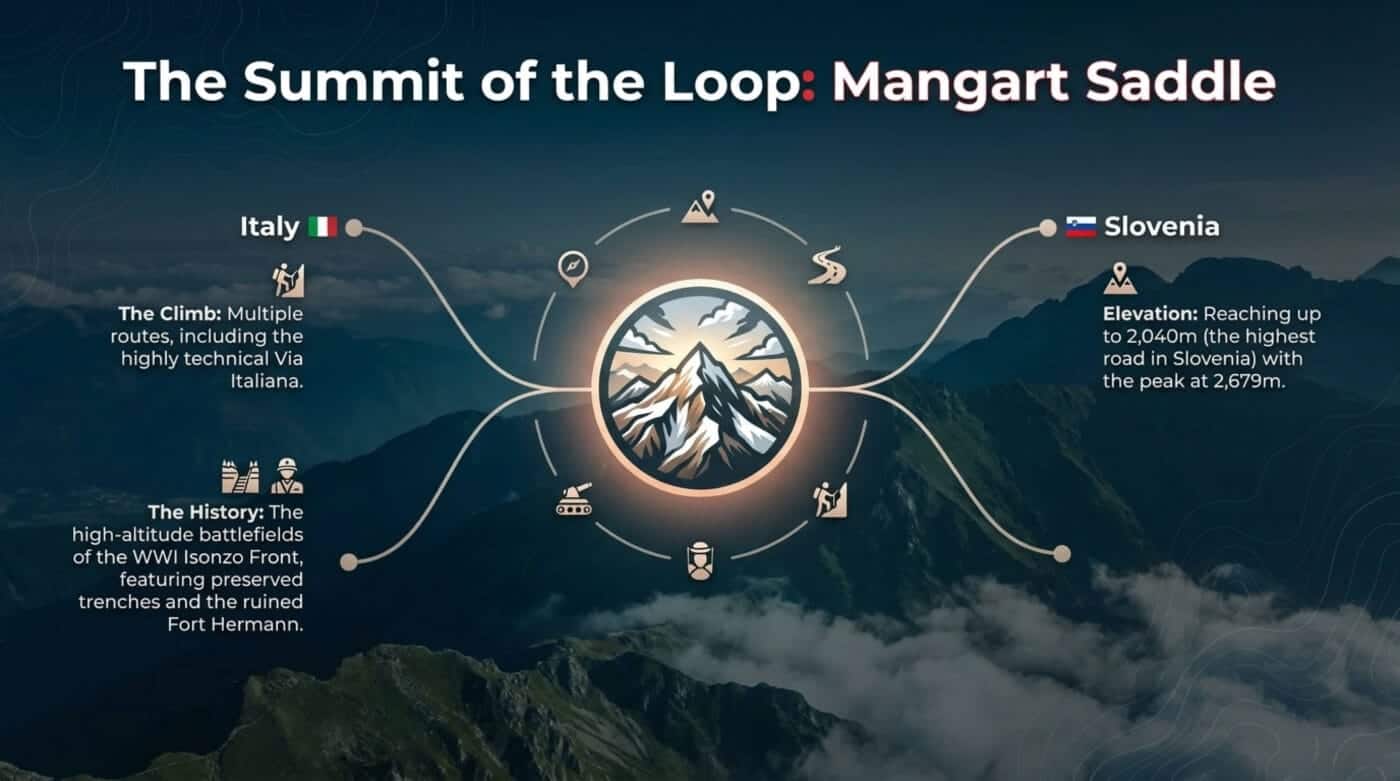
Continue toward Predil Pass, also known as Predel, on the border between Slovenia and Italy. Near the pass, include the ruins and memorial landscape of Predil Fortress, which played a role during the wars against Napoleon and later in the military history of this border region. The fortress ruins, the mountain road, and the surrounding cliffs make this a powerful historical stop before crossing to the Italian side.


Virje waterfall
Virje Waterfall, a hidden gem nestled in the enchanting landscapes of the Soča Valley in...
Jan
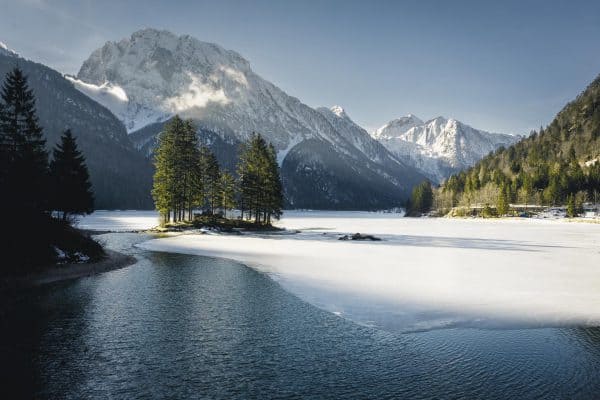
Predil Lake
Due to its picturesque setting beneath the Kanin massif, the lake is a popular tourist...
Dec
Part 4: Lake Predil – Cave del Predil – Tarvisio – Fusine Lakes
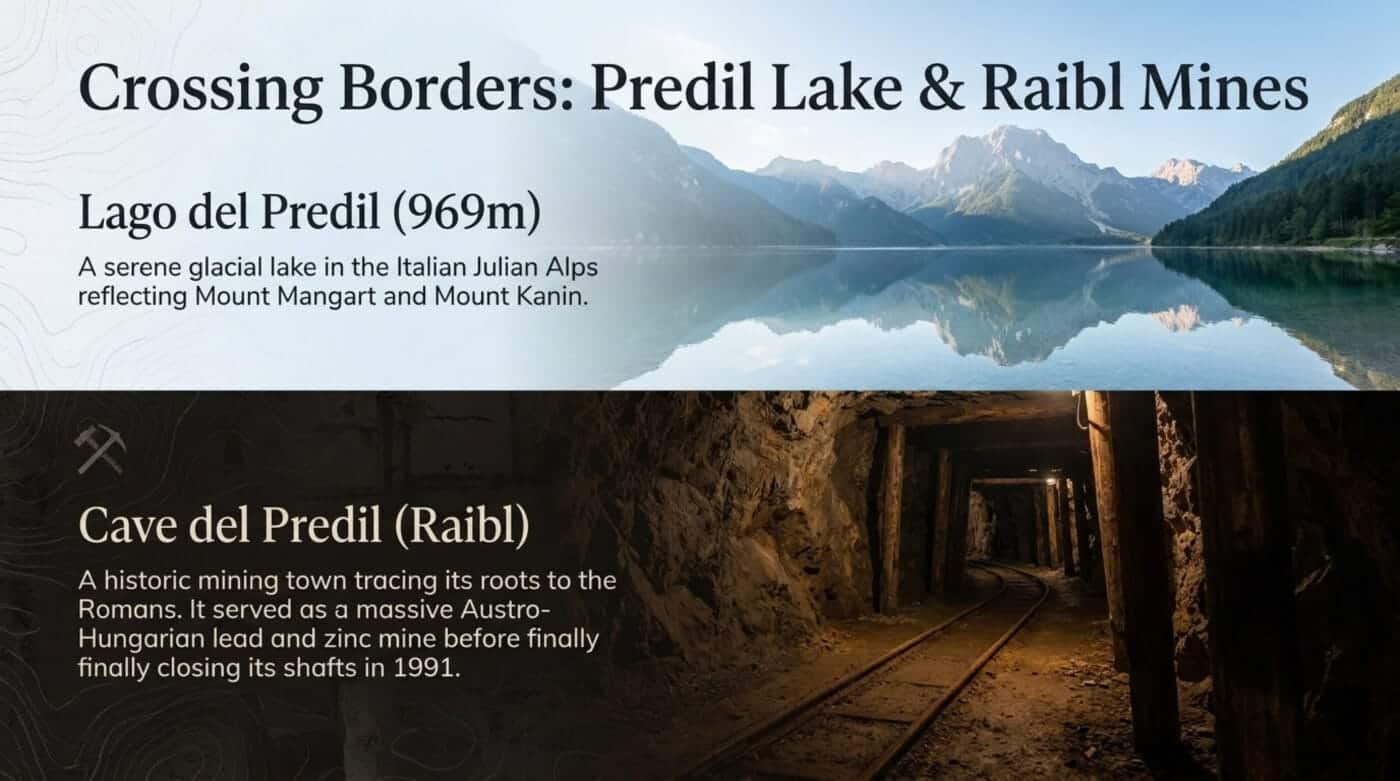
After crossing the border, stop at Lake Predil, also known as Raibl Lake, one of the most beautiful alpine lakes in the Italian Julian Alps. It lies in a glacial basin surrounded by forests and mountains, and it is especially beautiful in summer, autumn and winter. Nearby, Cave del Predil adds a completely different layer to the trip: mining history. The old Raibl mine was one of the most important lead and zinc mines in Europe, and today the museum complex and geomining park help visitors understand miners’ lives and the industrial past of this mountain borderland.
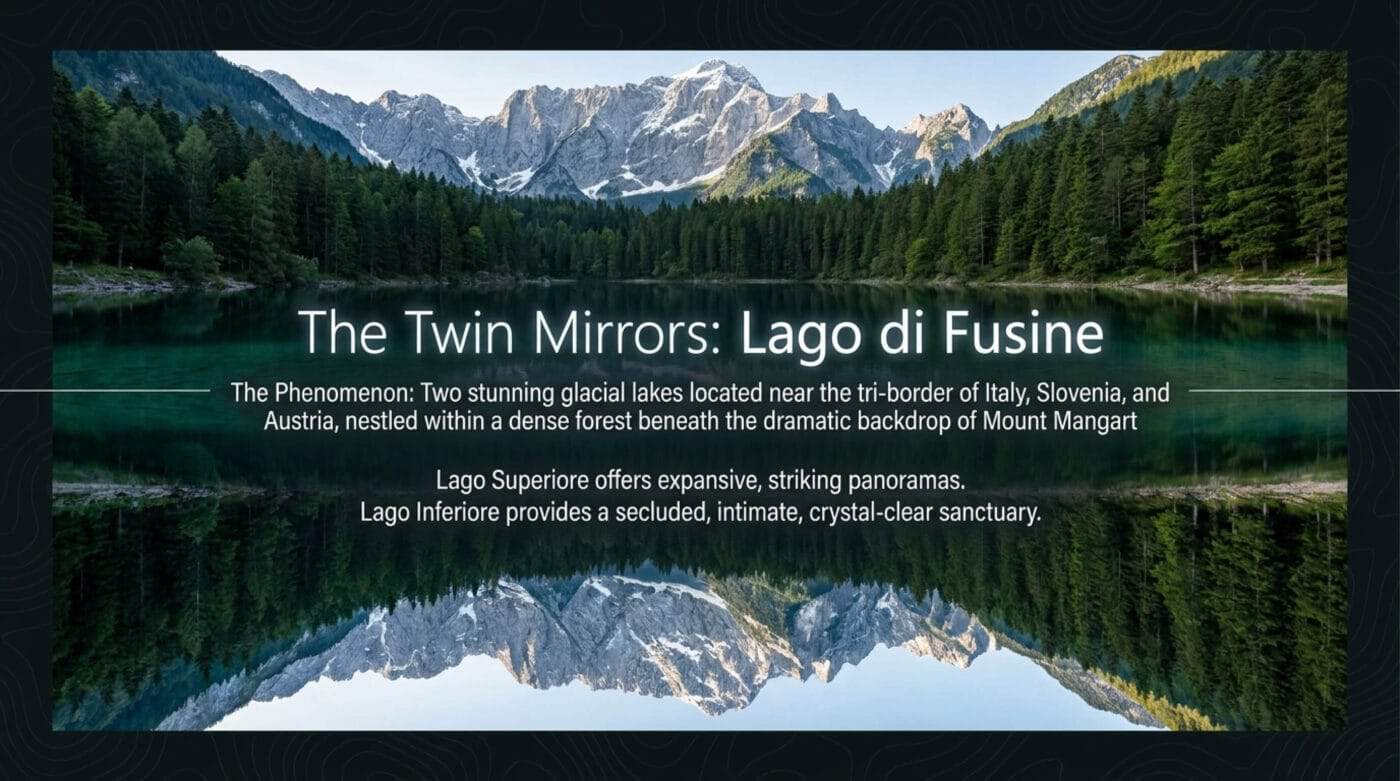
From Cave del Predil, continue toward Tarvisio and the Fusine Lakes, two glacial lakes beneath the Mangart and Ponza mountain scenery. These lakes are among the most beautiful cross-border natural attractions near Slovenia. They are ideal for families, photographers, easy walking, quiet breaks and travellers who want to see how the Julian Alps continue across the border into Italy.
Part 5: Rateče – Zelenci – Planica – Kranjska Gora – Erjavčeva koča
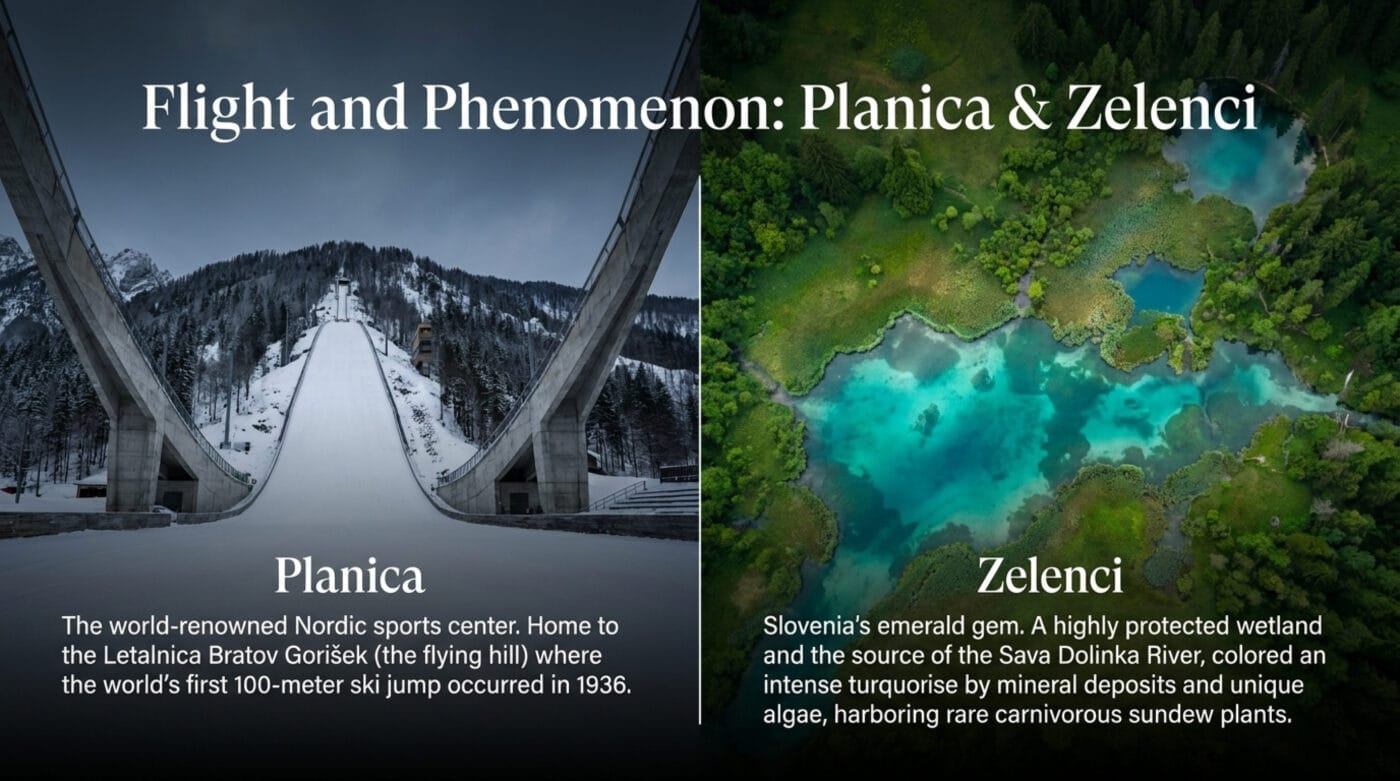
Return to Slovenia through Rateče and stop at Zelenci Nature Reserve, the emerald source of the Sava Dolinka River. The wooden walkways, green water and views toward the Ponce mountains make Zelenci one of the easiest and most rewarding family stops in the Kranjska Gora area. Nearby, Planica Nordic Centre offers ski-jumping history, a museum, cross-country skiing, activities, views and the atmosphere of one of Slovenia’s most iconic sports locations.
From Planica, continue to Tamar Valley if time allows, then return through Kranjska Gora and Lake Jasna before driving back up to Erjavčeva koča. This final part of the circle trip connects the soft northern side of the Julian Alps with the dramatic high pass where the journey began. It is a route of contrasts: river and rock, forest and road, history and sport, family stops and serious mountains.
30–50 Places to Visit Around Erjavčeva koča
Erjavčeva koča is one of the best bases for exploring a wide circle of attractions in Slovenia and across the nearby Italian border. These places can be combined into easy family trips, photography routes, hiking days, historical visits or full scenic drives.
- Vršič Pass – Slovenia’s highest mountain road pass.
- Russian Road – the historic road built during the First World War.
- Russian Chapel – a memorial to Russian prisoners of war.
- Ajdovska deklica – the legendary stone face in Prisank.
- Prisank Window – a famous natural rock opening above Vršič.
- Šupca Viewpoint – a panoramic viewpoint on the Vršič road.
- Slemenova Špica – one of the most beautiful and family-friendlier panoramic hikes above Vršič.
- Sovna glava – a shorter viewpoint hike near the pass.
- Prednje Robičje – a quiet summit area close to Erjavčeva koča.
- Mala Mojstrovka – a popular but serious mountain objective.
- Velika Mojstrovka – a higher and quieter summit in the Mojstrovka group.
- Prisank / Prisojnik – one of the dominant peaks above Vršič.
- Razor – an elegant high mountain above the Trenta and Krnica area.
- Jalovec – one of the most iconic mountains in Slovenia.
- Lake Jasna – a must-see lake near Kranjska Gora.
- Kranjska Gora – the main alpine town below Vršič.
- Krnica Valley – a peaceful valley starting near Lake Jasna.
- Mala Pišnica Valley – a protected natural valley near Kranjska Gora.
- Zelenci Nature Reserve – the emerald source of the Sava Dolinka River.
- Rateče – a traditional border village near Planica.
- Planica Nordic Centre – ski jumping, ski flying, museum and family activities.
- Tamar Valley – a beautiful valley beyond Planica.
- Nadiža Waterfall – the first visible source of the Sava Dolinka.
- Črne vode Waterfall – a lesser-known waterfall above Tamar.
- Gozd Martuljek – a village with views of Špik and the Martuljek mountains.
- Martuljek Waterfalls – two beautiful waterfalls below Špik.
- Peričnik Waterfall – one of the most famous waterfalls in Triglav National Park.
- Mojstrana – an important gateway to Triglav National Park.
- Slovenian Alpine Museum – the museum of Slovenian mountaineering heritage.
- Vrata Valley – the valley leading toward the north face of Triglav.
- Krma Valley – one of the classic approaches toward Triglav.
- Kot Valley – a quieter glacial valley near Mojstrana.
- Trenta Valley – a traditional alpine valley on the Soča side of Vršič.
- Source of the Soča River – one of the most beautiful karst springs in the Julian Alps.
- Alpine Botanical Garden Juliana – the historic botanical garden in Trenta.
- Julius Kugy Monument – a tribute to the great admirer of the Julian Alps.
- Mlinarica Gorge – a narrow and dramatic gorge near Trenta.
- Small Soča Gorge – a short but beautiful gorge of the Soča River.
- Great Soča Gorge – one of the most famous natural sights in the upper Soča Valley.
- Lepena Valley – a peaceful side valley near the Soča River.
- Bovec – the adventure centre of the Soča Valley.
- Boka Waterfall – one of Slovenia’s most powerful waterfalls.
- Virje Waterfall – a photogenic waterfall near Bovec.
- Kluže Fortress – a historical fortress above the Koritnica Gorge.
- Koritnica Gorge – a dramatic gorge near Kluže and Bovec.
- Log pod Mangartom – a scenic alpine village below Mangart.
- Predil Pass – the mountain pass between Slovenia and Italy.
- Predil Fortress – historical fortress ruins near the border pass.
- Lake Predil – a glacial alpine lake on the Italian side.
- Cave del Predil – a historic mining village and museum area near Tarvisio.
- Fusine Lakes – two beautiful glacial lakes near the Slovenian border.
Suggested 2–4 Day Stay at Erjavčeva koča
2 Days: The Essential Vršič Experience
For a short stay, spend the first day exploring the Vršič area: Russian Chapel, Ajdovska deklica, Prisank Window, viewpoints and a short walk near the hut. Spend the second day driving either toward Kranjska Gora, Lake Jasna, Zelenci and Planica, or toward Trenta and the source of the Soča River. This is the minimum stay for visitors who want more than a quick photo stop.
3 Days: Vršič, Soča and Kranjska Gora
With three days, the experience becomes much richer. Use one day for Vršič hikes and viewpoints, one day for the Soča side with Trenta, the Soča source and the Great Soča Gorge, and one day for Kranjska Gora, Lake Jasna, Zelenci, Planica and Tamar. This is the best balance for couples, families and first-time visitors to the Julian Alps.
4 Days: The Full Alpine Circle
With four days, visitors can slow down and complete the full alpine circle trip without rushing. Add Bovec, Kluže, Log pod Mangartom, Predil Pass, Predil Fortress, Lake Predil, Cave del Predil, Fusine Lakes and Tarvisio. This creates one of the most varied alpine holidays in Slovenia, combining mountain roads, rivers, waterfalls, lakes, fortresses, mining history, winter-sports heritage and peaceful evenings back at Erjavčeva koča.
Why Book Early?
Erjavčeva koča is often busy because it stands in a strategic and beautiful location on Vršič Pass. Summer hikers, cyclists, motorcyclists, families, photographers, road-trippers, winter travellers and groups all use the hut as a base or stop. Booking early gives you a better choice of accommodation, helps the hut prepare for your arrival, and allows you to plan a proper 2–4-day stay instead of leaving everything to chance.
Early booking is especially important for weekends, holidays, high summer, autumn larch season, winter weekends and special dates. If you are travelling as a family or group, an early reservation is even more important. The mountain hut is not a large hotel in the valley; capacity is limited, and that is part of its charm.

We enjoy preserving tradition at Erjavčeva Mountain Hut
The Erjavčeva Mountain Hut on Vršič Pass is a unique symbol of hospitality, perseverance, and...
Jan

Mountain Huts in Slovenia: Tradition, Restoration, and Community Significance
Mountain Huts in Slovenia: Tradition, Restoration, and Community Significance
Dec

Erjavčeva koča Is Not a Hotel, Guest House, or Hostel: What It Means to Stay in a Real Slovenian Mountain Hut
Erjavčeva koča on the Vršič Pass is a historic Slovenian mountain hut, not a hotel,...
May
Conclusion: Do Not Just Cross Vršič — Stay Here
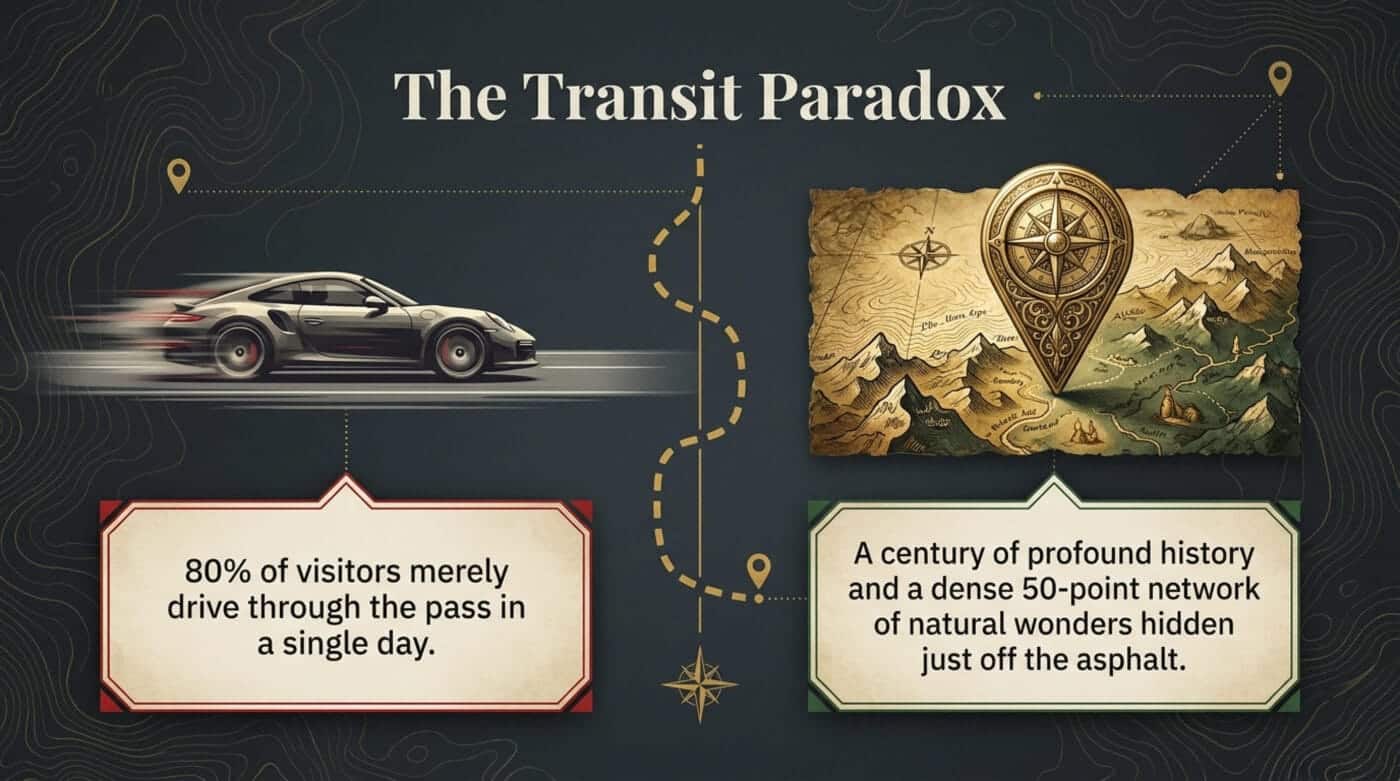
Many visitors cross Vršič Pass in a few hours. They stop, take a picture, and continue to the Soča Valley, never realising how much they missed. Erjavčeva koča gives you the chance to experience the pass in a different way: slowly, deeply and in every season. From here, you can hike, drive, photograph, rest, explore, learn history, visit waterfalls and lakes, cross into Italy, return through Kranjska Gora and still come back to the same warm mountain hut in the evening.
Stay 2 to 4 days at Erjavčeva koča on Vršič Pass and let the Julian Alps unfold properly. One day is a visit. Two days are an experience. Three or four days become a real alpine story.


Related mountain and travel guides
Choose the next verified guide for planning routes, parking, overnight stays and places near Vršič Pass.
- 10 Things to Do in Kranjska Gora and Around — travel guide
- Tamar valley — travel guide
- High mountain lakes — travel guide
- Is there anywhere I can park? — travel guide
- Snow on Vršič on May 12 – Why Mountain Weather Changes So Quickly — travel guide
- Slovenia My way of exploring — travel guide
Plan your visit from Erjavčeva koča
Useful guides, practical information and accommodation options for Vršič Pass, Triglav National Park and the Julian Alps.
Book your stay at Erjavčeva koča
Ready to stay on Vršič Pass? Check the verified accommodation page and reserve directly with the hut.
Road, parking and arrival FAQ
Use these answers before relying on a route, booking time or parking plan.
Is this a live Vršič road status?
No. The site can guide you to access information, but current road conditions should be checked before departure.
What should I plan before driving up?
Plan the approach, parking, arrival time and a backup option for mountain weather or seasonal traffic.
Can I use the hut as a base for nearby routes?
Yes, but match your route, daylight and return plan before you start.
Where should I go next on the site?
Use the verified access, parking or accommodation links shown on this page.