
 Slovenščina
 Bosanski
 Hrvatski
 Čeština
 Dansk
Dansk Dutch
Dutch Suomi
Suomi Français
 Deutsch
 Magyar
 Italiano
 Polski
 српски
 Slovenčina
 Español
 Svenska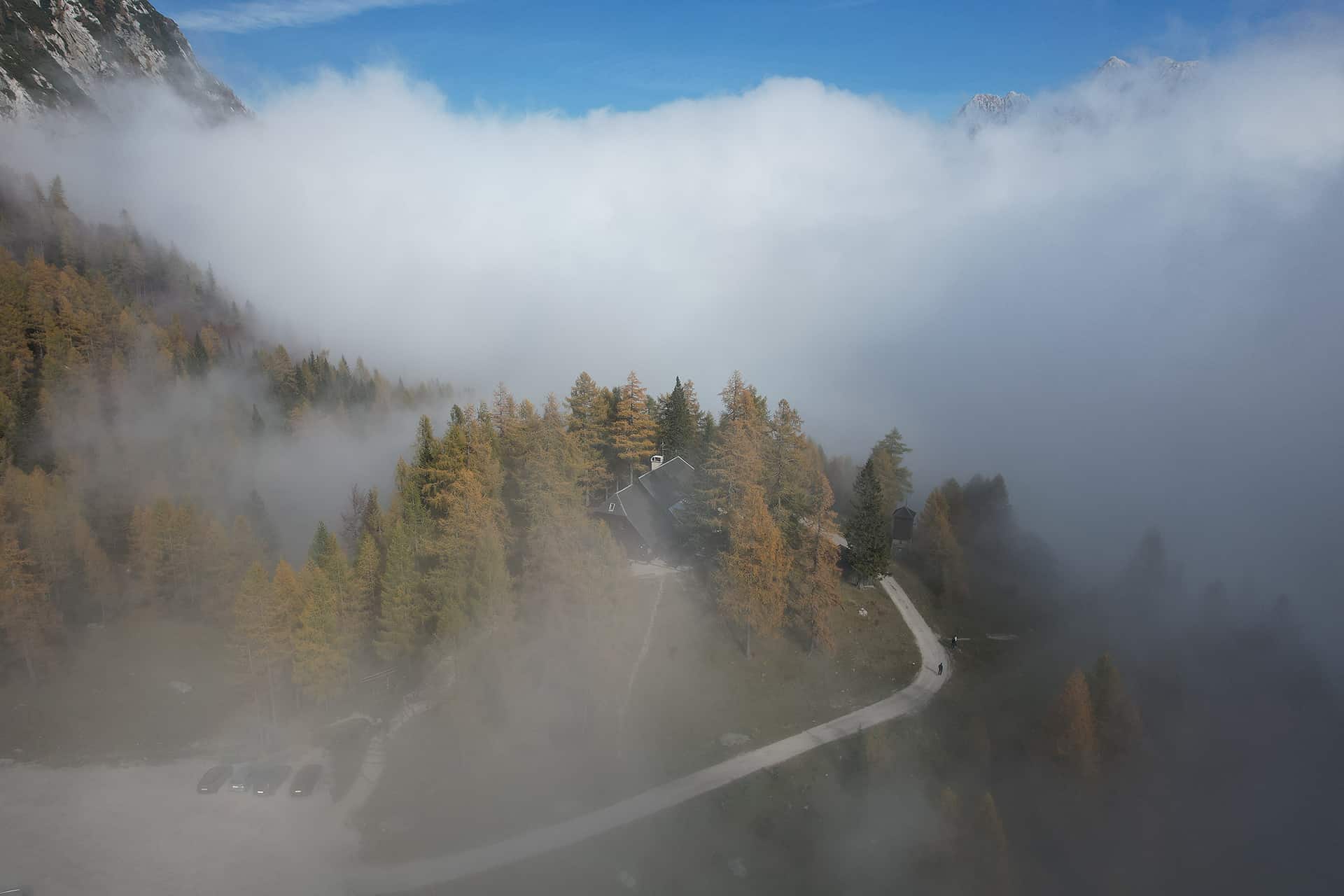
On this page
Jump to the most useful sections of this guide.
This guide is prepared from the perspective of Erjavčeva koča, a mountain hut on Vršič Pass. Use it together with current weather, road conditions and responsible behaviour in Triglav National Park.
Ready to stay on Vršič Pass? Check the verified accommodation page and reserve directly with the hut.
Erjavčeva koča is a mountain hut at 1525 m, not a hotel or hostel. Come for nature, simple shelter and the rhythm of the mountains.
- ✓Unspoiled nature, mountain views and fresh alpine air
- ✓A place to rest before or after your mountain trip
- ✓Simple mountain-hut comfort and shared house rules
- ✓Direct access to Vršič, trails and Triglav National Park
- ×Hostel-style nightlife or loud late evenings
- ×Private bathrooms in every room
- ×Unlimited parking or guaranteed road access in every weather
- ×Perfect silence during busy mountain days
Stay on Vršič Pass
Stay at Erjavčeva koča on Vršič Pass
Erjavčeva koča is a mountain hut at Vršič Pass, between Kranjska Gora, Trenta, the Soča Valley and the Julian Alps. It is a practical base for hikers, road-trippers, cyclists and guests who want to stay close to the mountain pass.
- Direct location on the Vršič Pass road
- Good base for hiking, scenic drives and Julian Alps day trips
- Useful for guests visiting Kranjska Gora, Trenta, Soča Valley and Triglav National Park
- Food, mountain-hut atmosphere and practical local information in one place
This block is designed for independent guests and self-service booking. It does not imply a price guarantee or live availability.
Before you book your stay
Vršič Pass is a high mountain location, so it is worth checking a few practical details before you travel. This helps you plan your arrival, parking, hiking day and overnight stay more easily.
Access and road conditions
The Vršič road can be affected by season, weather and traffic. Before travelling, check current access information and plan enough time for the mountain road.
Parking
Parking rules and availability around Vršič can change by season and operator. Check the latest parking information before arrival, especially in busy periods.
Rooms and overnight stay
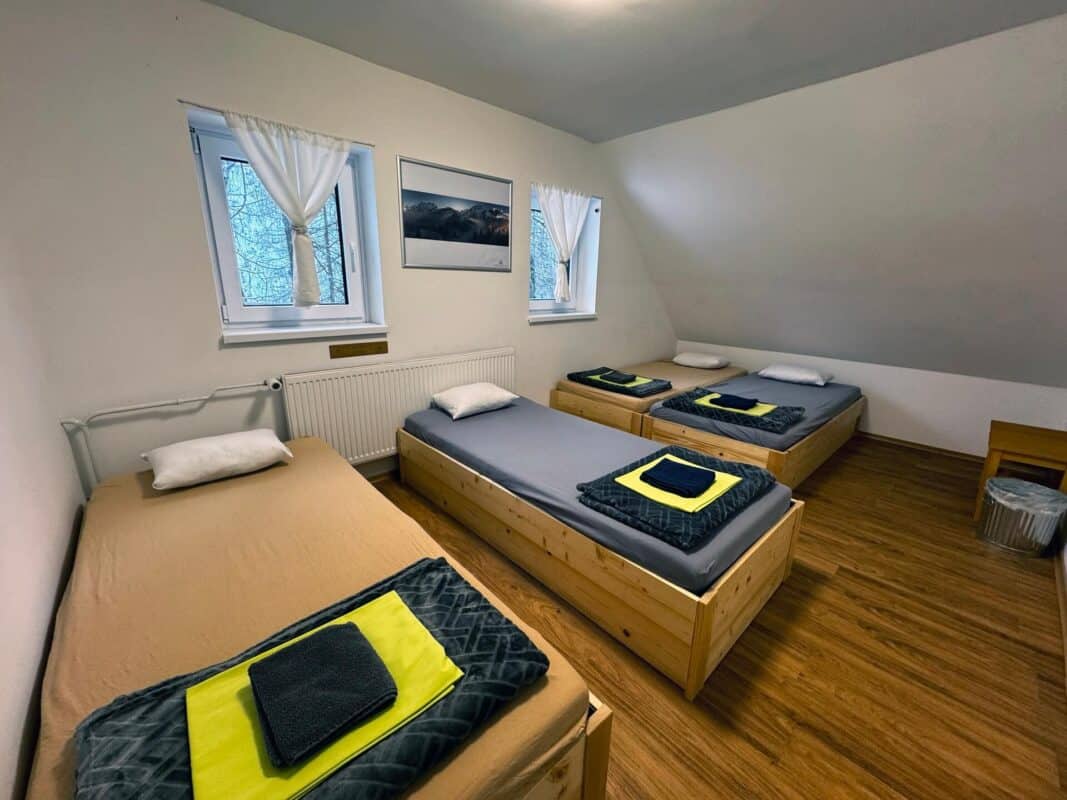
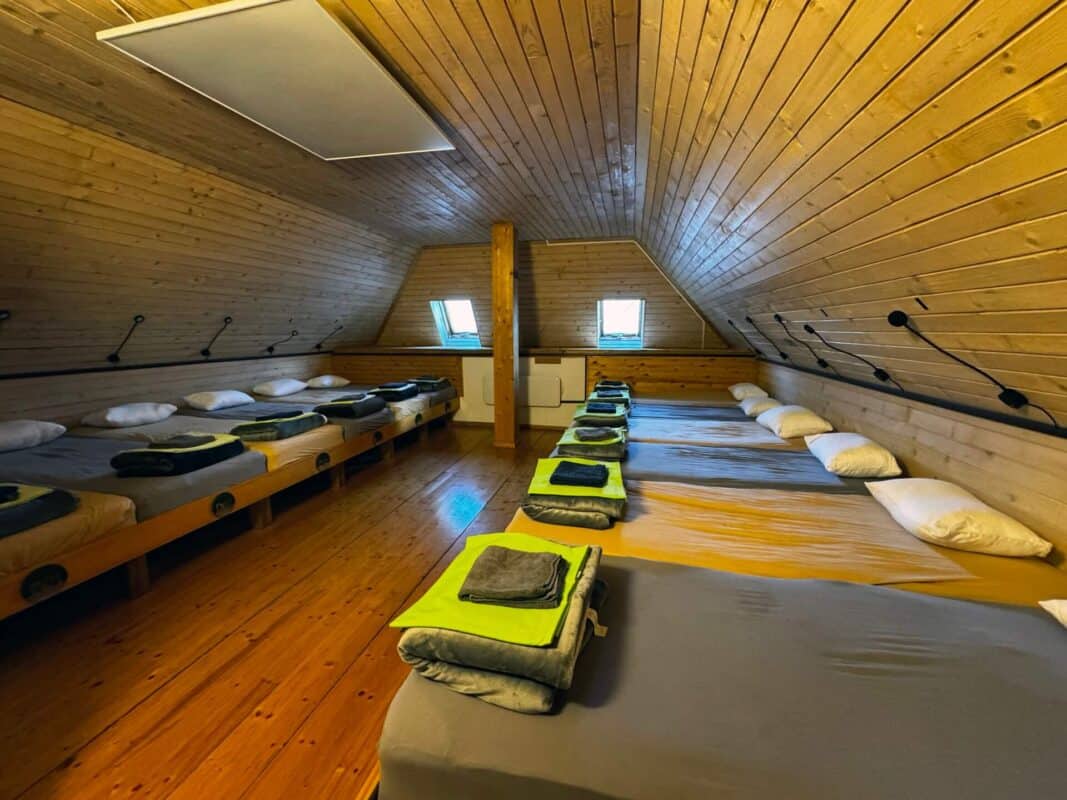
If you plan to stay overnight, check room availability in advance. This is especially important during the hiking season, weekends and good-weather periods.
Food, opening hours and groups
Opening times may vary outside the main summer season or by arrangement with groups. Contact the hut directly for the latest information before making fixed plans.
Self-service planning for your stay at Vršič Pass
- Check room and availability options first.
- Read access, parking and arrival notes before travelling.
- Arrive with your own plan for Vršič, Kranjska Gora, Trenta and the Soča Valley.
- Use contact only for special cases, not for information already explained on the page.
A trusted mountain hut at Vršič Pass
Erjavčeva koča has been part of the Vršič mountain pass experience for generations. Guests use it as a practical alpine base for hiking, cycling, scenic drives, visits to Kranjska Gora and trips toward Trenta and the Soča Valley.
Before you book your stay at Vršič Pass
Use the booking information on this page to decide independently. Booking platforms can help with comparison, but your reservation should be clear before you travel. Contact is only for special cases.
Direct booking is best for
- Checking rooms and availability
- Reading access, parking and arrival details
- Booking when your dates and plan are clear
- Special questions only for groups, late arrival or winter conditions
Booking platforms are useful for
- Comparing accommodation options
- Reading platform-specific reviews
- Managing platform bookings in one account
- Using platform filters and policies
No price guarantee is implied. This block encourages self-service planning and reduces unnecessary calls or emails.
What happens after you check availability?
Checking availability is the first booking step, not a request for personal travel planning. Read the arrival, access and parking information before you book. Contact is only for special cases.
- Choose the room or stay option that fits your plan.
- Complete the booking request with your travel date and arrival plan.
- Before travelling, read the access, parking and seasonal notes; use contact only for groups, late arrival or winter conditions.
CTA clicks are measured as intent signals. This block is designed for self-service reservations and to reduce unnecessary calls or emails.
Summer visit: parking, hiking and rooms
In summer, Vrsic is busy with hikers, cyclists and scenic-road visitors. Plan arrival time, parking, weather protection and overnight questions before you leave.
- Arrive early when parking demand is high.
- Check weather before longer hikes.
- For overnight stays, contact the hut directly before travel.
This block is a practical planning reminder, not a live availability statement.
How German mountain huts became Slovenian and how their names were changed
After the First World War ended, when the Austro-Hungarian Empire collapsed, most Slovenian territory became part of the Kingdom of Serbs, Croats, and Slovenes. The operation of foreign societies was legally prohibited, including the operation of the branches of the German-Austrian Alpine Club (Deutscher und Österreichischer Alpenverein – DÖAV) or the Austrian Tourist Club (Österreichischer Touristen Club – ÖTC), which were very active in our Alps before the First World War. Their trails and huts were taken over by the Slovenian Mountaineering Association (SPD).
However, the Slovenian mountaineering organisation also lost many facilities, members, and branches that remained outside the borders of the new state after the Rapallo Treaty with Italy and the Carinthian Plebiscite in Austria. The SPD lost 13 of its 27 branches, while 15 huts were abandoned or destroyed during the war, and five remained on foreign territory. The establishment of the border with Austria in the Karawanks cut off the Carinthian branches from the organisation’s headquarters on the Slovenian side. The same happened to the branches that remained on the Italian side of the Rapallo border.
DÖAV and ÖTC received compensation for the huts that remained on Slovenian territory. Although the compensation was modest, it was both offered and accepted. At the same time, however, German circles continued to promote the idea that the huts had been “robbed” from them after the war. In Munich, between the two World Wars, the mountaineering museum even displayed an exhibition called die geraubte Stadt (“the robbed city”), featuring models of all the lost Austrian huts that had remained in the territories of the new states, including Italy and the Kingdom of Serbs, Croats, and Slovenes.
In the first Mountaineering Journal (Planinski vestnik), published after World War I, in the report on general meetings, we can read how the president of the Slovenian Mountaineering Association, Dr. Fran Tominšek, emphasised in his introductory speech on December 27, 1919, at the general meeting of the Slovenian Mountaineering Association in the National Hall in Ljubljana:
“The success is that the association has freed itself from all old debts and could now also take over the huts of the German and Austrian mountaineering associations into its possession; he emphasises that we will also hospitably serve foreigners and guests in the taken-over huts and that former members of the German mountaineering association will by no means be prohibited from visiting these huts, only that we cannot tolerate any intolerance or discourtesy from German visitors; furthermore, he emphasises that now, when the national struggle in the mountains has ended, we can now with even greater joy undertake work for the development of mountaineering in the northern regions.”
One of the first measures was renaming existing German mountain huts and shelter names. For example, Vosshütte under Vršič — became Erjavčeva koča.
The renaming was done by a commission of Dr. Josip Ciril Oblak, Josip Wester, Dr. Anton Švigelj, and Rudolf Badjura.

Voshütte – Erjavec Lodge at Vršič (1905)
This is probably the oldest photograph we'll find of Voshütte - Erjavec Lodge (today Erjavčeva...
Mar
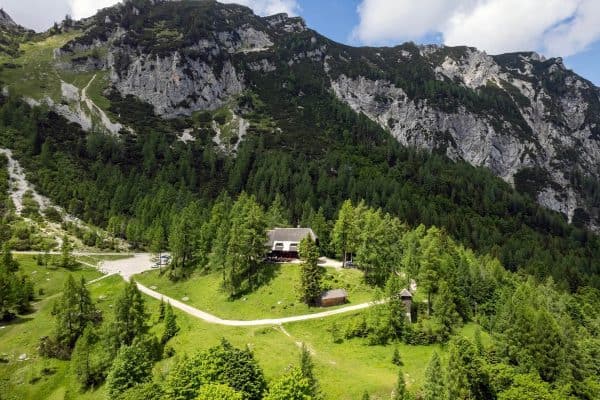

We enjoy preserving tradition at Erjavčeva Mountain Hut
The Erjavčeva Mountain Hut on Vršič Pass is a unique symbol of hospitality, perseverance, and...
Jan
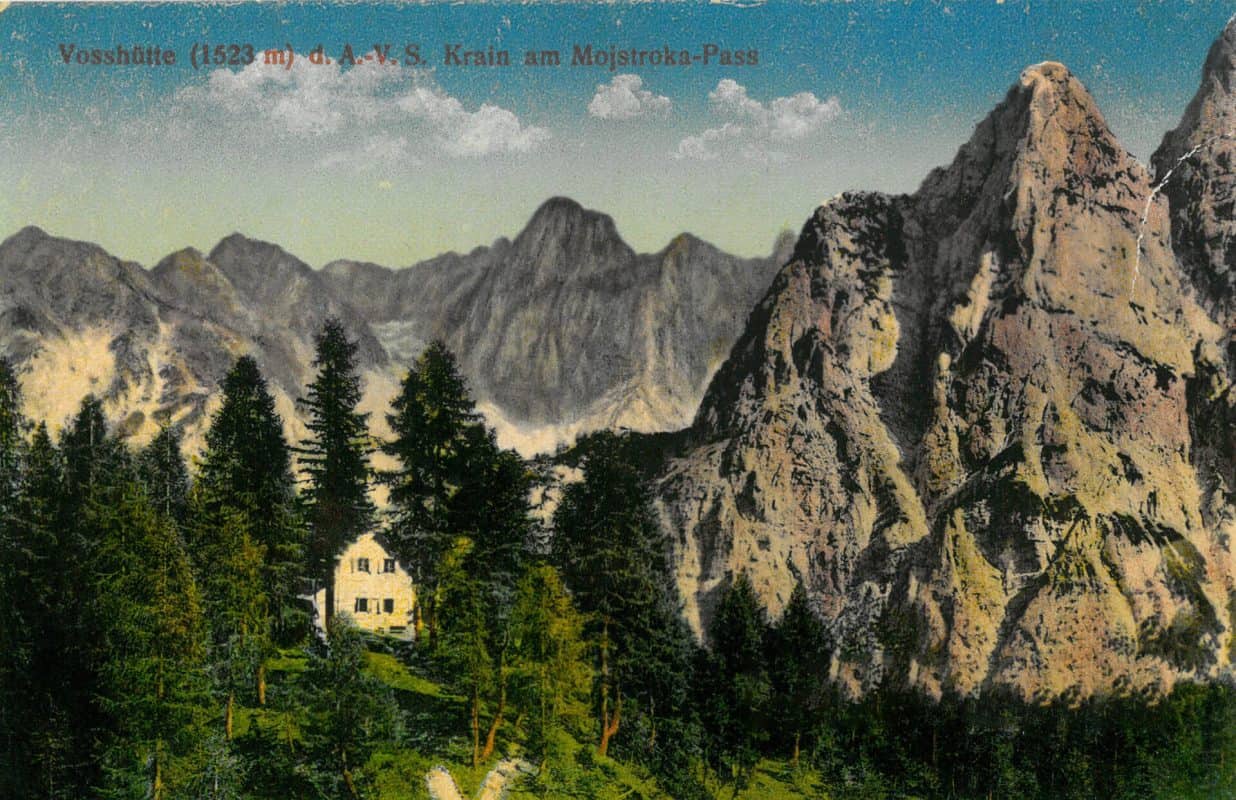
How mountain huts became Slovenian
Photo and article source: archive Peter Mikša
Trips and Hikes around the hut
Why visit a moutain hut?
We are open year-round
We are located in the heart of Triglav National Park
Book a stay in the iconic, first-built mountain hut on the Vršič Pass

Erjavčeva mountain hut is open year-round. Reserve your stay and spend some time in the natural paradise of Triglav National Park (UNESCO), near Kranjska Gora, on the Vršič mountain pass in the heart of the park.
Reserve your stayRelated mountain and travel guides
Choose the next verified guide for planning routes, parking, overnight stays and places near Vršič Pass.
- Slovenia – Julian Alps – Kranjska Gora – Vršič Pass – Erjavčeva koča Mountain Hut — travel guide
- 10 Things to Do in Kranjska Gora and Around — travel guide
- Tamar valley — travel guide
- High mountain lakes — travel guide
- Accommodation in Mountain hut Vršič Kranjska Gora Slovenia — travel guide
- Hanzova pot on Prisojnik — travel guide
Plan your visit from Erjavčeva koča
Useful guides, practical information and accommodation options for Vršič Pass, Triglav National Park and the Julian Alps.
Book your stay at Erjavčeva koča
Ready to stay on Vršič Pass? Check the verified accommodation page and reserve directly with the hut.
Road, parking and arrival FAQ
Use these answers before relying on a route, booking time or parking plan.
Is this a live Vršič road status?
No. The site can guide you to access information, but current road conditions should be checked before departure.
What should I plan before driving up?
Plan the approach, parking, arrival time and a backup option for mountain weather or seasonal traffic.
Can I use the hut as a base for nearby routes?
Yes, but match your route, daylight and return plan before you start.
Where should I go next on the site?
Use the verified access, parking or accommodation links shown on this page.