


 Slovenščina
 Bosanski
 Hrvatski
 Čeština
 Dansk
Dansk Dutch
Dutch Suomi
Suomi Français
 Deutsch
 Magyar
 Italiano
 Polski
 српски
 Slovenčina
 Español
 Svenska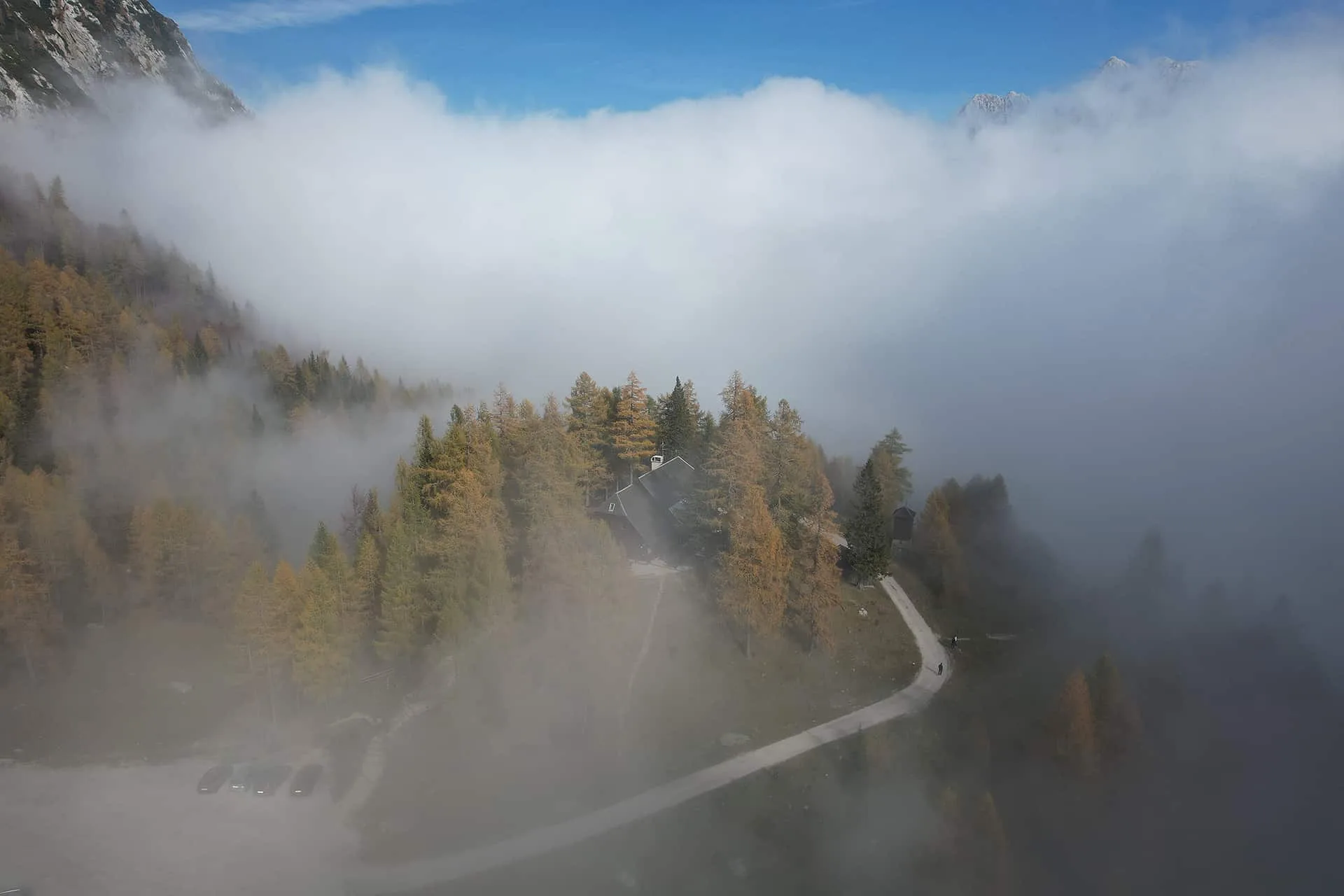

On this page
Jump to the most useful sections of this guide.
This guide is prepared from the perspective of Erjavčeva koča, a mountain hut on Vršič Pass. Use it together with current weather, road conditions and responsible behaviour in Triglav National Park.
Ready to stay on Vršič Pass? Check the verified accommodation page and reserve directly with the hut.
Erjavčeva koča is a mountain hut at 1525 m, not a hotel or hostel. Come for nature, simple shelter and the rhythm of the mountains.
- ✓A place to rest before or after your mountain trip
- ✓Simple mountain-hut comfort and shared house rules
- ✓Direct access to Vršič, trails and Triglav National Park
- ✓Quiet evenings, early starts and weather-dependent mountain life
- ×Private bathrooms in every room
- ×Unlimited parking or guaranteed road access in every weather
- ×Perfect silence during busy mountain days
- ×A valley resort experience
Stay on Vršič Pass
Stay at Erjavčeva koča on Vršič Pass
Erjavčeva koča is a mountain hut at Vršič Pass, between Kranjska Gora, Trenta, the Soča Valley and the Julian Alps. It is a practical base for hikers, road-trippers, cyclists and guests who want to stay close to the mountain pass.
- Direct location on the Vršič Pass road
- Good base for hiking, scenic drives and Julian Alps day trips
- Useful for guests visiting Kranjska Gora, Trenta, Soča Valley and Triglav National Park
- Food, mountain-hut atmosphere and practical local information in one place
This block is designed for independent guests and self-service booking. It does not imply a price guarantee or live availability.
Before you book your stay
Vršič Pass is a high mountain location, so it is worth checking a few practical details before you travel. This helps you plan your arrival, parking, hiking day and overnight stay more easily.
Access and road conditions
The Vršič road can be affected by season, weather and traffic. Before travelling, check current access information and plan enough time for the mountain road.
Parking
Parking rules and availability around Vršič can change by season and operator. Check the latest parking information before arrival, especially in busy periods.
Rooms and overnight stay
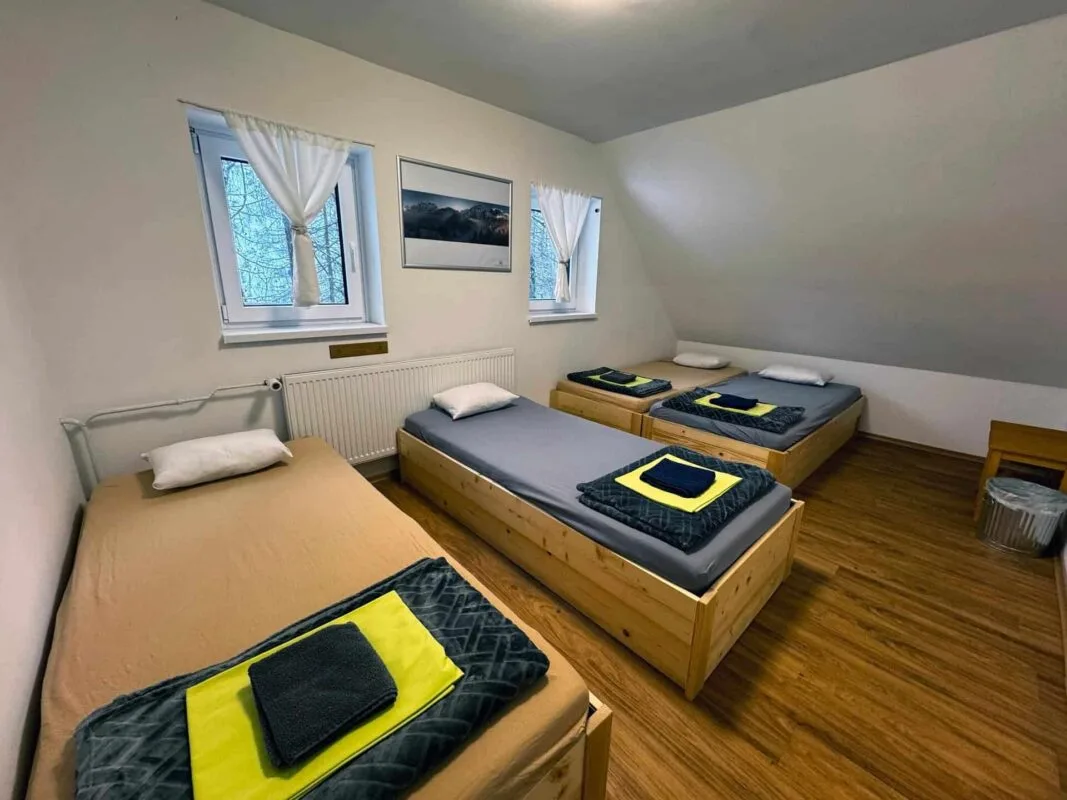
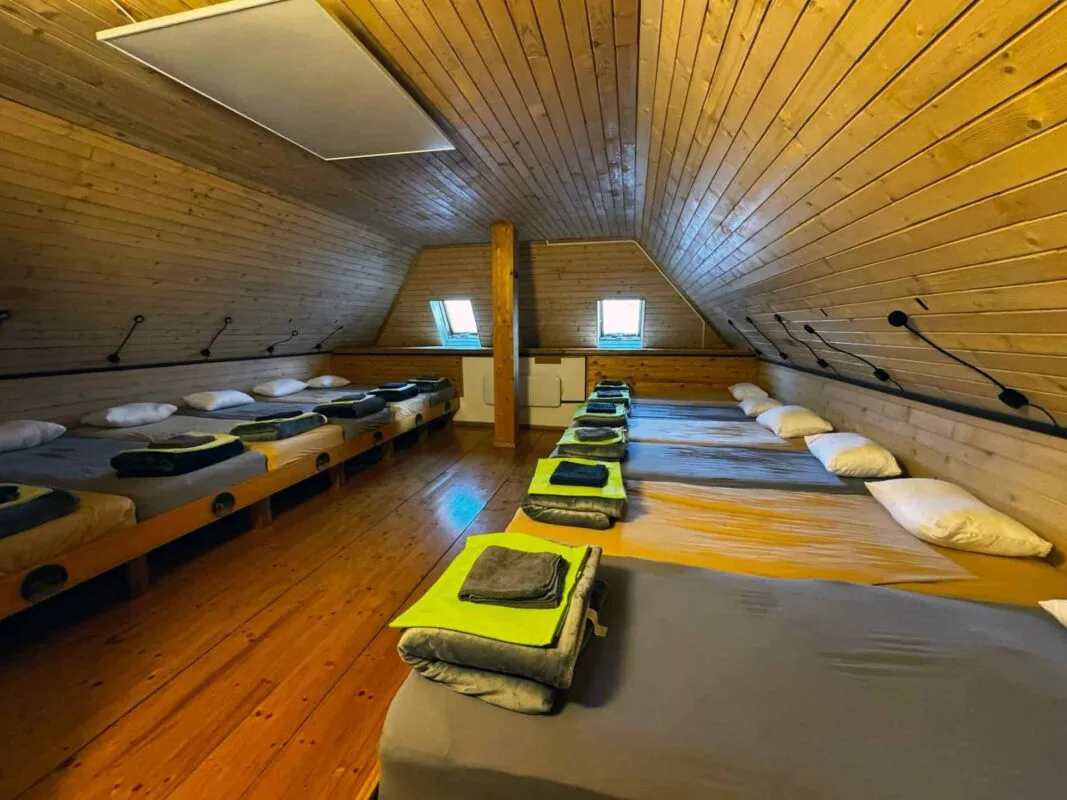
If you plan to stay overnight, check room availability in advance. This is especially important during the hiking season, weekends and good-weather periods.
Food, opening hours and groups
Opening times may vary outside the main summer season or by arrangement with groups. Contact the hut directly for the latest information before making fixed plans.
Self-service planning for your stay at Vršič Pass
- Check room and availability options first.
- Read access, parking and arrival notes before travelling.
- Arrive with your own plan for Vršič, Kranjska Gora, Trenta and the Soča Valley.
- Use contact only for special cases, not for information already explained on the page.
A trusted mountain hut at Vršič Pass
Erjavčeva koča has been part of the Vršič mountain pass experience for generations. Guests use it as a practical alpine base for hiking, cycling, scenic drives, visits to Kranjska Gora and trips toward Trenta and the Soča Valley.
Before you book your stay at Vršič Pass
Use the booking information on this page to decide independently. Booking platforms can help with comparison, but your reservation should be clear before you travel. Contact is only for special cases.
Direct booking is best for
- Checking rooms and availability
- Reading access, parking and arrival details
- Booking when your dates and plan are clear
- Special questions only for groups, late arrival or winter conditions
Booking platforms are useful for
- Comparing accommodation options
- Reading platform-specific reviews
- Managing platform bookings in one account
- Using platform filters and policies
No price guarantee is implied. This block encourages self-service planning and reduces unnecessary calls or emails.
What happens after you check availability?
Checking availability is the first booking step, not a request for personal travel planning. Read the arrival, access and parking information before you book. Contact is only for special cases.
- Choose the room or stay option that fits your plan.
- Complete the booking request with your travel date and arrival plan.
- Before travelling, read the access, parking and seasonal notes; use contact only for groups, late arrival or winter conditions.
CTA clicks are measured as intent signals. This block is designed for self-service reservations and to reduce unnecessary calls or emails.
Summer visit: parking, hiking and rooms
In summer, Vrsic is busy with hikers, cyclists and scenic-road visitors. Plan arrival time, parking, weather protection and overnight questions before you leave.
- Arrive early when parking demand is high.
- Check weather before longer hikes.
- For overnight stays, contact the hut directly before travel.
This block is a practical planning reminder, not a live availability statement.
Soča Front – Isonzo Front
Soča Front - Isonzo Front
Soča Front – Isonzo Front
The bloodiest military confrontation on mountainous terrain around Vršič pass
The World War I started with a shot in Sarajevo on 28 June, 1914. Gavrilo Princip a young Bosnian assassinated Archduke Franz Ferdinand, the heir to the throne of Austro-Hungary. The states of Europe formed two major political and military blocks of allied powers. On one side Austro-Hungary, Germany, Italy and Turkey. On the opposing side England, France, Russia, Serbia, Montenegro, Japan.
War declarations on all sides followed and WW I started on 4th August 1914 on a number of fronts and battlegrounds: the Western Front reached from the North Sea to Swiss border, where the opposing forces were English / French and German armies.
The Eastern Front, where Austro-Hungary battled Russia in Galicia, and Germany confronted Russia in Eastern Prussia, from Baltic Sea to Romanian border. The second Austro-Hungarian battle ground was the Balkan Front against Serbia.
Soča Front - Isonzo Front
Soča Front – Isonzo Front
Other fronts were opened up as Japan and Turkey joined in the war. It became truly a war on world scale when United States of America entered the war in 1917 on the side of English, French and Russians. It was finished with the capitulation of Germany on 11 November 1918. 36 states of the 57 states in the world took part in this war. There were 70 million men mobilized, of those 10 millions were killed.
In the town of Kobarid / Caporetto in Soča Valley (Isonzo in It.), one of the most scenic regions of Slovenia, there is today a great World War I museum, known as the Kobarid Museum. An initiative of a local group, it received in 1992 the Valvasor Prize, the highest Slovenian museum award, and won the Council of Europe Museum prize in 1993. An enormous number of visitors from Austria, Italy, Slovenia, Poland, Czech Republic, Slovakia, Hungary, and other countries arrive annually to view the the exhibits portraying the events of one of the most ferocious battlefields, as recorded in images and written word – letters and diary entries . They view the exhibits, pay respects and reflect on the destructive horrors of war.
The War Museum exhibits the events that occurred during World War I on the Soča Front / Isonzo Front from 1915 -1917. They cover two and a half years of nearly static battleground fighting, portraying in detail the battles of the Soča Front, one of the bloodiest military confrontations on mountainous terrain, in history.
Soča Front came into being when Italy, till then declared neutral, abandoned its allies, and joined forces with English, French, Russians.., and on 23. May 1915 declared war on Austro-Hungary. By changing sides the Italians were aiming to acquire additional territories, that were part of the Austro-Hungarian Empire, reaching to the Istrian peninsula and including the seaport of Trst / Trieste.
The one-time allies confronted each other on the so-called Soča Front, the south-western area of Austro-Hungarian border. 600 km in length, the line reached from the meeting point of three borders, Switzerland-Italy-Austria, over Tyrol, Carnia and Soča Valley to the Adriatic Sea.
The main action was concentrated in the 90 km of the steep, rocky and mountainous area above the Soča Valley, an area inhabited by Slovenian people since ancient times.
It was a bloody struggle between two giants, on steep rocky terrain, over the mountains of Krn, Gambon and Vršič pass, each side fiercely determined. The Italian army to achieve a break-through through the Vipava Valley, towards the Ljubljana Basin and Trieste. The Austro-Hungarian side was equally determined to maintain its naturally fortified position on the border of rocky mountain peaks.
It was a struggle between two great powers, Italian and Austro-Hungarian, over an area settled on both sides of the Soča River and further south towards the Adriatic Sea by Slovenian people. The majority of men from this area were recruited into the Austro-Hungarian army, however a smaller number, living within the Italian borders, in the Italian army. It was the place of the bloodiest battles in the W W I and the most savage on Slovenian territory, in terms of the fallen, wounded and maimed soldiers, and a dispossessed, rendered homeless populace.

Soča Front – Isonzo Front
On the Austrian side the inhabitants were emptied from the villages and moved away to Carniola / Kranjska. The Austrian authorities removed 80,000 villagers from their homes in the Soča Valley and environs of Gorica (Goriška and Posočje). Italians on their side of the Soča Front exiled around 12,000 Slovenian inhabitants, dispersing them all over Italy. All these people returned to their destroyed homes and devastated fields only in 1919.
The Soča Front in its 12 offensives, a few of them major, where nothing much was gained or lost except for destruction and loss of life, remained static throughout, except for minor advances and retreats on either side. In the meantime new strategies were employed, including gas, mortars, devices of destruction that were innovative, and resulted in enormous loss of life.
Soča Front Battle I (23 June – 7 July 1915) Italian army attempted to conquer the bridgeheads on Soča River near Tolmin and Gorica.
Soča Front Battle II (18 July – 10 August 1915) Again an attempt on the Gorica Bridgehead. Some gains were made by Italians then lost.
Soča Front Battle III (18 October – 4 November 1915) Another attempt by Italians to take positions and the bridgehead. They used air-planes for the first time. Without success.
Soča Front Battle IV (10 November – 5 December 1915) A fierce all-out attempt to take the town of Gorica, by using artillery and air-planes, and aiming for systematic destruction. Only some destroyed areas on the outskirts were taken.
Soča Front Battle V (11 – 16 March 1916) The attempt to take Tolmin and Gorica was again unsuccessful.
Soča Front Battle VI (6 – 17 August 1916) The two main targets of the Italian army were Gorica and the plain of Doberdob. They were successful this time in taking the ruined town of Gorica and the plain of Doberdob, while the Austrian army retreated to their auxiliary line. Italians attempted to drive them further back, but succeeded only in taking the village Opatje selo. They again failed in their chief aim to fight through to Trst/Trieste, the strategically important seaport.
Soča Front Battle VII (14 – 17 September 1916) Italians pushed the defenders past the Miren Castle and some of their positions.
Soča Front Battle VIII (10 – 12 October 1916) Italians achieved some negligible gains.
Soča Front Battle IX (31 October – 4 November 1916) Italian planes bombarded the town of Sežana, and the villages of Dutovlje and Miramar. In fierce charges of three battles, Italians advanced 3 to 4 kilometers, but the breakthrough to Trieste did not succeed.
Soča Front Battle X (12 May – 5 June 1917) Another attempt on Trieste through the gateway of Vipava Valley. There were three major assaults. At the end, Austrians regained the lost positions on Flondar-Fornazza-Vršič line.
Soča Front Battle XI (17 August – 15.September 1917) This represented the greatest effort on the Italian side, they wanted it to be the last and decisive battle. The main arena was between Tolmin on the Soča River and the sea. They achieved success and advanced in several places, forcing the Austrian army to retreat. The weakened Austrian army needed to prepare a major counterattack if it was to stop the Italians from advancing further.
The 11th Soča Front battle was the bloodiest military confrontation of the 12 Soča battles and the most savage ever on Slovenian soil. In 27 days 40,000 Italian soldiers died, 108,000 were wounded. On Austro-Hungarian side there were 10,000 dead, 45,000 wounded, 20,000 sick and 30,000 missing.

Soča Front – Isonzo Front
The use of ammunition was enormous. Italians shot almost 3 million grenades, Austro-Hungarian army 1,500,000 grenades from light artillery, 250,000 from middle weight and 22,000 from heavy mortars. The strength and use of artillery had increased horrendously on the Soča Front since the 1st battle, when Austrians shot 55,000 grenades.
Soča Front Battle XII (24. October – 27 October 1917) In preparation for the counterattack and in view of the shortage of troops, the Emperor Karl I asked the German Emperor Wilhelm II for assistance. The Germans agreed and prepared a major surprise attack from the Upper Soča in the north. The assistance came in troops, supported by the use of poison gas and a concerted action by infantry and artillery. The Italian army was successfully driven from the positions that they had gained in the previous assault.
It was the last battle of the Soča Front, the Italian army retreating in disarray or captured in huge numbers.
From May 1915 till October 1917 over a million lives were lost, and countless number were wounded, maimed or missing. They left behind them an indescribable destruction and a real human, ecological and economical catastrophe.
An Austrian historical military study Austro-Hungary’s Last War made the assessment that the battle of the 87th Infantry Regiment from Celje In Carniola, for the Mali Vrh of Škabriel was the fiercest battle of any Austro-Hungarian unit in the history of the monarchy.
The bloody war was as senseless as it was destructive, starting because some counties that did not have colonial possessions, wished to gain some. Italy entered the war on the condition, that allies would cede to it the territory as far as Trst/Trieste and Istra/Istria. Allies acceded to these demands after the war, ignoring the rights of the Slovenian inhabitants, who wished to be part of the newly formed multinational South Slav state – the Kingdom of Serbs, Croats and Slovenes. A very bitter period in the history of Slovenian people began for the whole Slovenian Littoral/ Primorska and Goriška region, which came under the oppressive Italian Fascist regime. It lasted till the end of WW II, when the Italian Fascist regime with the full power of the state put all its energies into changing the ethnic identity of the region from Slovenian to Italian. The brutal oppression only ceased with the end of World War II, when the area was joined to the Socialist Federal Republic of Yugoslavia, and formed a part of the northern republic – Slovenia.
The Soča Front confrontation was made more complex because Austria-Hungary was a multinational state, containing Germans, Hungarians, Italians, Slovenes, Croats, Serbs, Bosnians, Czechs, Slovaks and Poles. At the end of the brutal war, the Austro-Hungarian monarchy fell apart, and the stage set for a new historical period in the creation of a number of national states.
In the aftermath of WW I the national state of Hungary and Czechoslovakia were created. Subsequently Slovenes, Croats and Serbs formed their multinational Slav state, – the State of Serbs, Croats and Slovenes (1918 – 1929), later renamed Kingdom of Yugoslavia (1929- 1941).
After World War II it became the Socialist Federal Republic of Yugoslavia (1945 -1992). Slovenia declared its sovereignty as an independent democratic state in 1991, and became the Republic of Slovenia. It regained some of its ethnic territories, including the Valley of Soča River, but Trieste with its Slovenian environs was allotted to Italy.


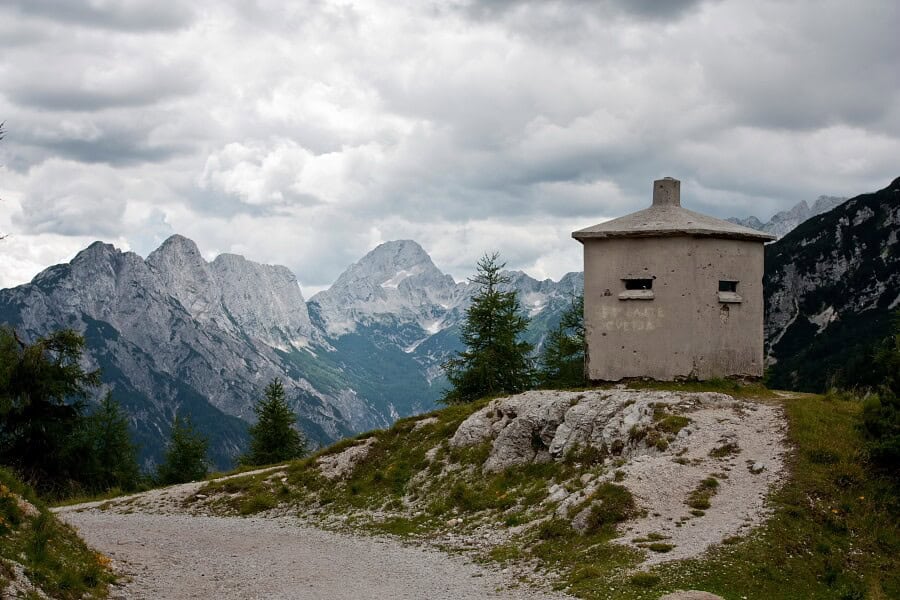
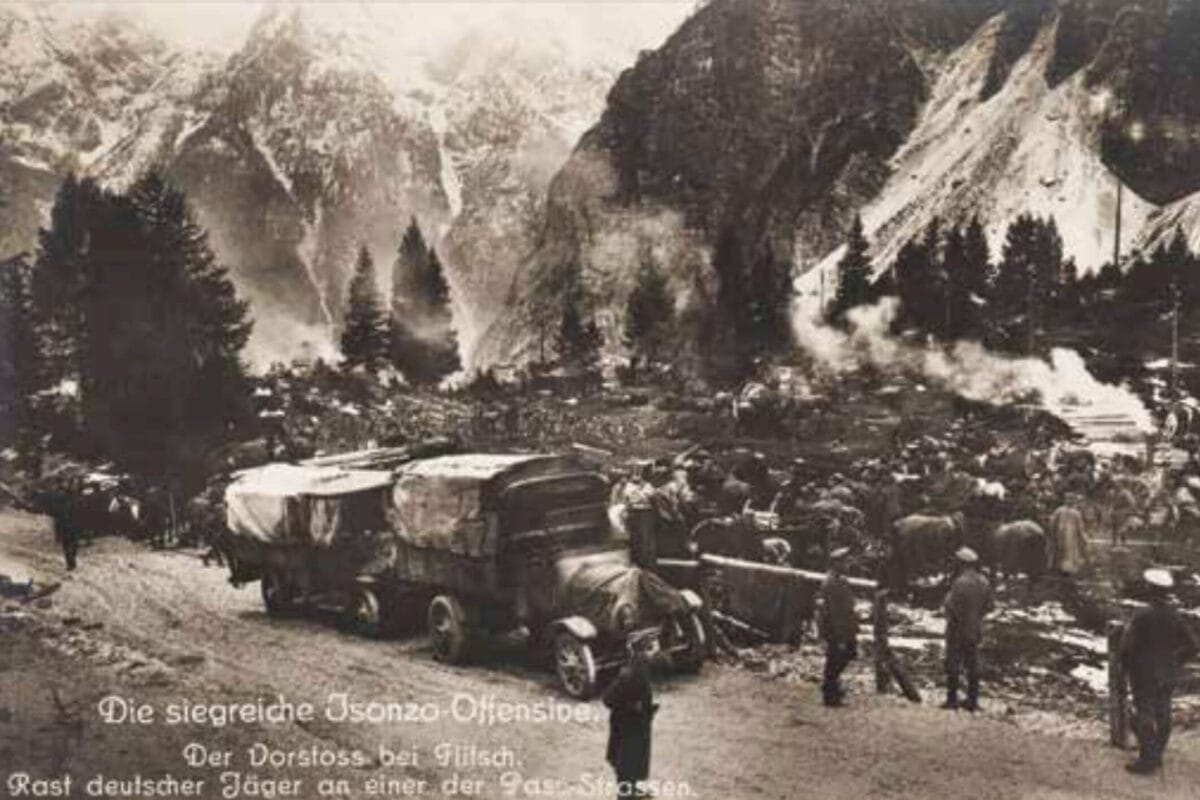

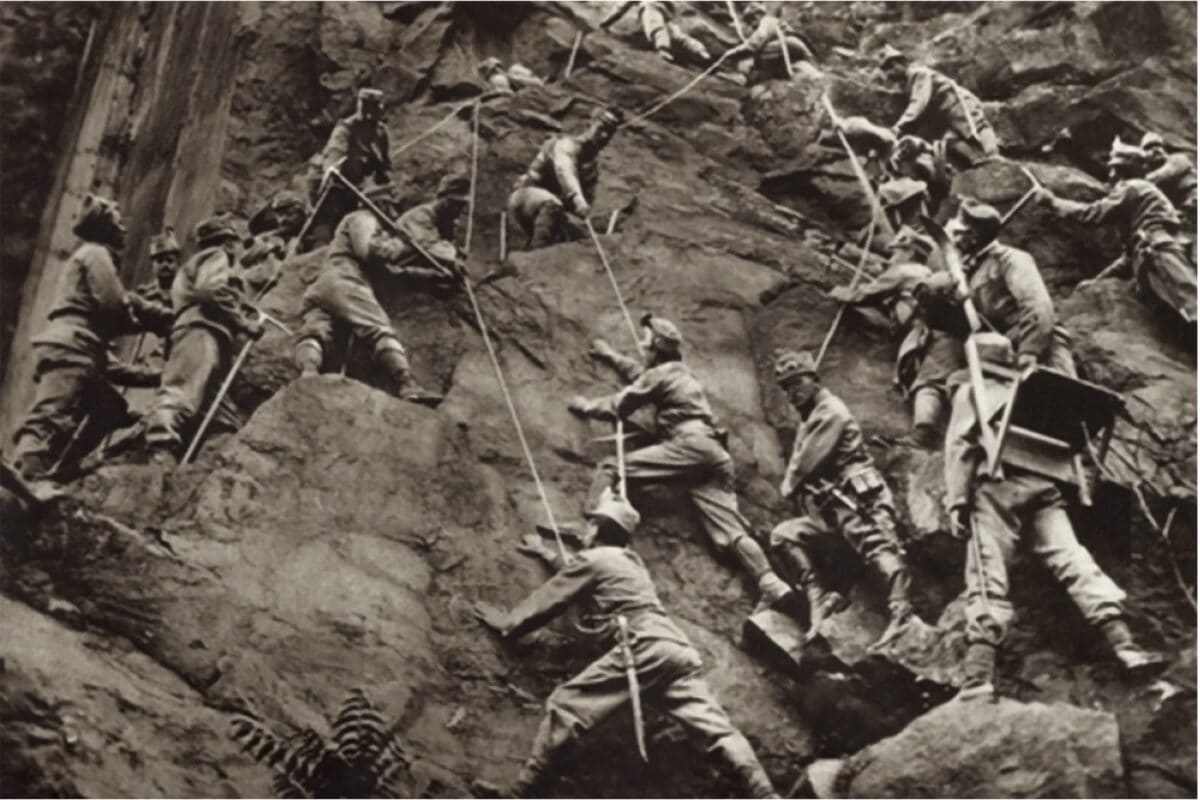
Soča Front – Isonzo Front written by Aleksandra Ceferin – source: here
Trips and Hikes around the hut
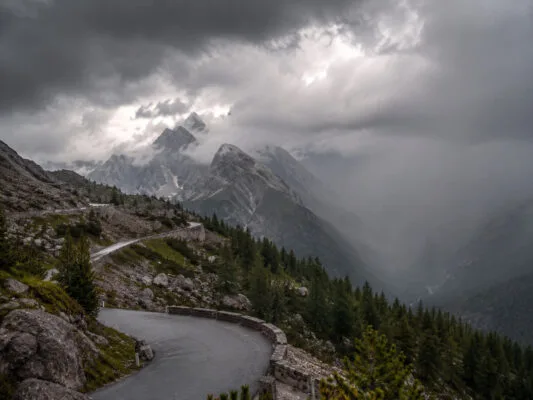
Why visit a moutain hut?
We are open year-round
We are located in the heart of Triglav National Park
Book a stay in the iconic, first-built mountain hut on the Vršič Pass
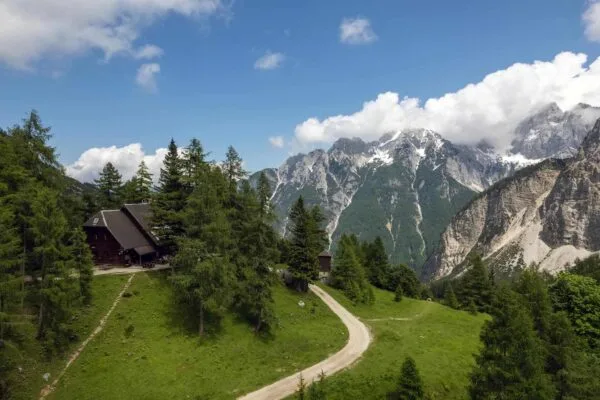
Erjavčeva mountain hut is open year-round. Reserve your stay and spend some time in the natural paradise of Triglav National Park (UNESCO), near Kranjska Gora, on the Vršič mountain pass in the heart of the park.
Reserve your stayRelated mountain and travel guides
Choose the next verified guide for planning routes, parking, overnight stays and places near Vršič Pass.
- Slovenia – Julian Alps – Kranjska Gora – Vršič Pass – Erjavčeva koča Mountain Hut — travel guide
- 10 Things to Do in Kranjska Gora and Around — travel guide
- Tamar valley — travel guide
- High mountain lakes — travel guide
- Accommodation in Mountain hut Vršič Kranjska Gora Slovenia — travel guide
- Hanzova pot on Prisojnik — travel guide
Plan your visit from Erjavčeva koča
Useful guides, practical information and accommodation options for Vršič Pass, Triglav National Park and the Julian Alps.
Book your stay at Erjavčeva koča
Ready to stay on Vršič Pass? Check the verified accommodation page and reserve directly with the hut.
Road, parking and arrival FAQ
Use these answers before relying on a route, booking time or parking plan.
Is this a live Vršič road status?
No. The site can guide you to access information, but current road conditions should be checked before departure.
What should I plan before driving up?
Plan the approach, parking, arrival time and a backup option for mountain weather or seasonal traffic.
Can I use the hut as a base for nearby routes?
Yes, but match your route, daylight and return plan before you start.
Where should I go next on the site?
Use the verified access, parking or accommodation links shown on this page.