
 Slovenščina
 Bosanski
 Hrvatski
 Čeština
 Dansk
Dansk Dutch
Dutch Suomi
Suomi Français
 Deutsch
 Magyar
 Italiano
 Polski
 српски
 Slovenčina
 Español
 Svenska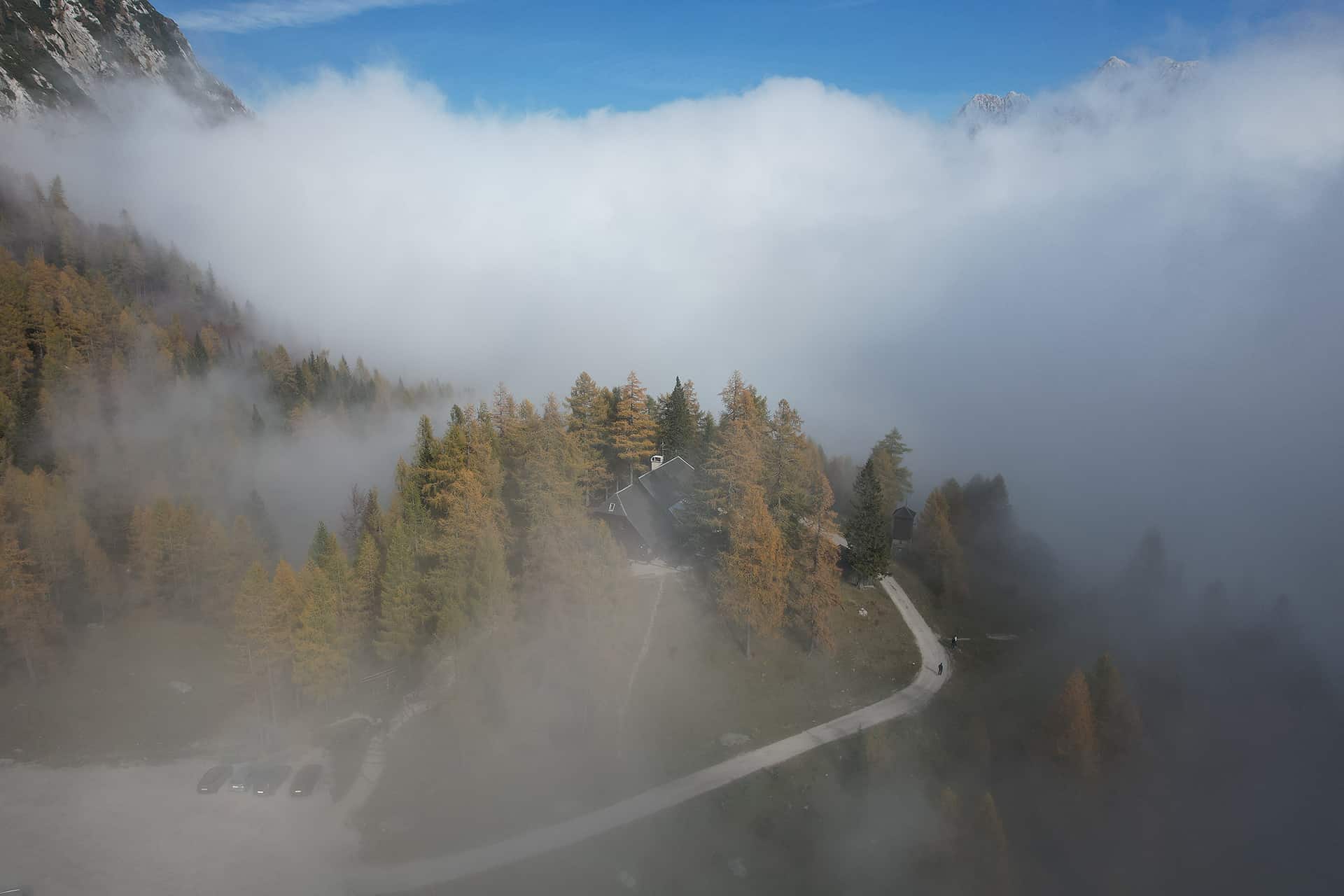

On this page
Jump to the most useful sections of this guide.
- Summer visit: parking, hiking and rooms
- IN THE KINGDOM OF ZLATOROG
- WHY VISIT THE JULIAN ALPS?
- Because you are seeking enchanting natural beauty
- Because you enjoy outdoor activities
- Because the local culture is special
- Because you like to taste the best
- Because you support sustainable tourism
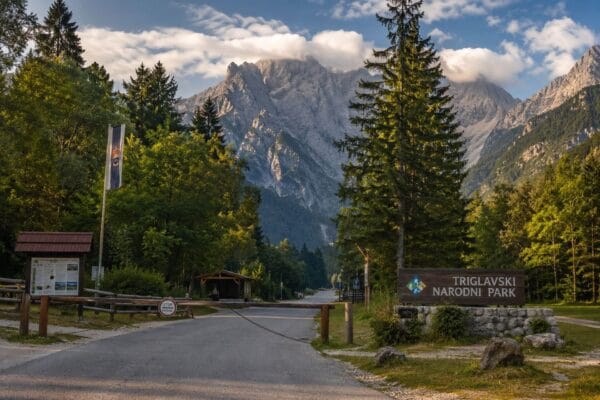
- TRIGLAV NATIONAL PARK
- JULIAN ALPS UNESCO BIOSPHERE RESERVE
- NATURAL SIGHTS
- HIKING
Quick summary
The most useful points from this guide before you continue.
Stay on Vršič Pass
Stay at Erjavčeva koča on Vršič Pass
Erjavčeva koča is a mountain hut at Vršič Pass, between Kranjska Gora, Trenta, the Soča Valley and the Julian Alps. It is a practical base for hikers, road-trippers, cyclists and guests who want to stay close to the mountain pass.
- Direct location on the Vršič Pass road
- Good base for hiking, scenic drives and Julian Alps day trips
- Useful for guests visiting Kranjska Gora, Trenta, Soča Valley and Triglav National Park
- Food, mountain-hut atmosphere and practical local information in one place
This block is designed for independent guests and self-service booking. It does not imply a price guarantee or live availability.
Before you book your stay
Vršič Pass is a high mountain location, so it is worth checking a few practical details before you travel. This helps you plan your arrival, parking, hiking day and overnight stay more easily.
Access and road conditions
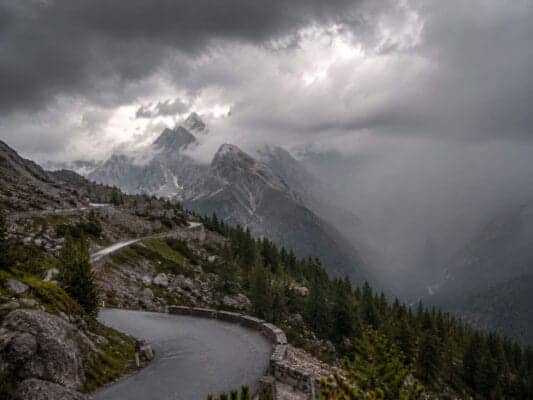
The Vršič road can be affected by season, weather and traffic. Before travelling, check current access information and plan enough time for the mountain road.
Parking
Parking rules and availability around Vršič can change by season and operator. Check the latest parking information before arrival, especially in busy periods.
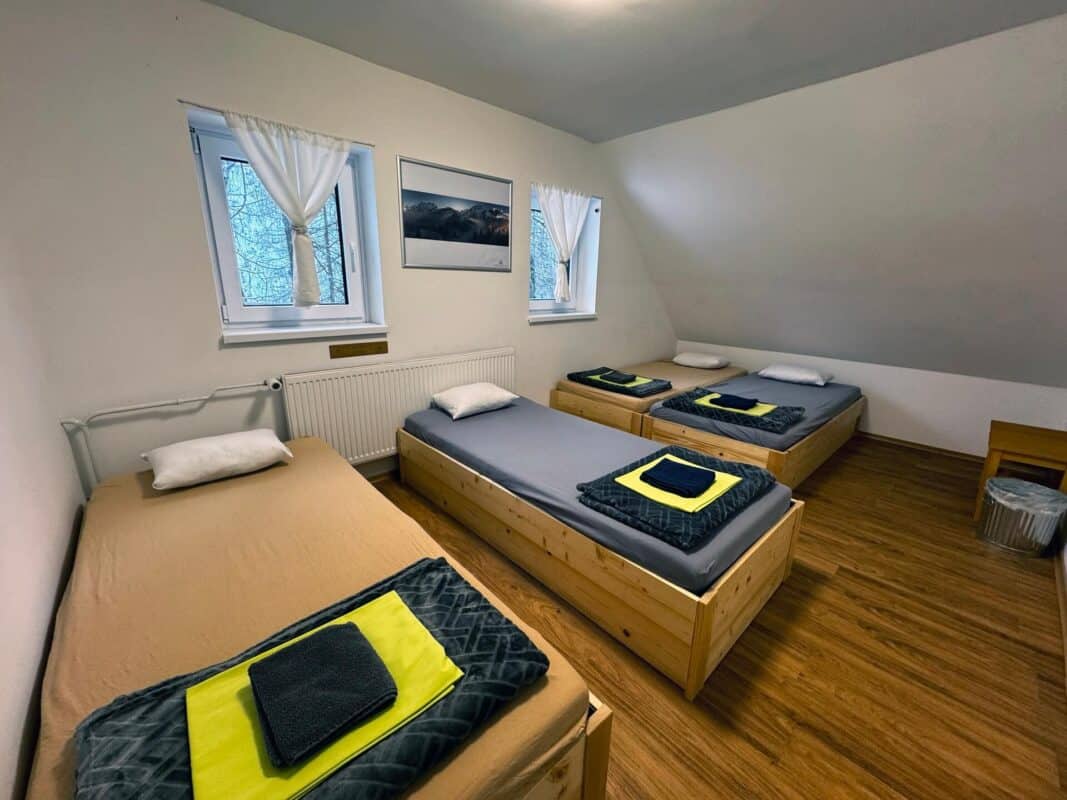
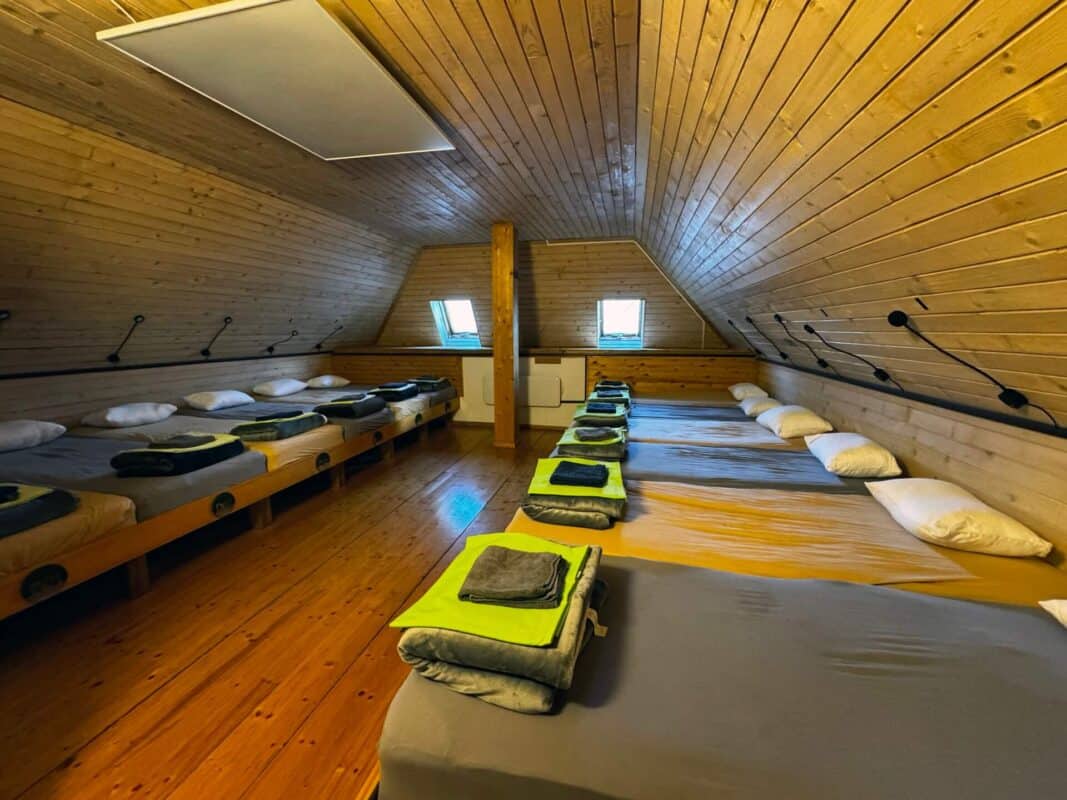
Rooms and overnight stay
If you plan to stay overnight, check room availability in advance. This is especially important during the hiking season, weekends and good-weather periods.
Food, opening hours and groups
Opening times may vary outside the main summer season or by arrangement with groups. Contact the hut directly for the latest information before making fixed plans.
Self-service planning for your stay at Vršič Pass
- Check room and availability options first.
- Read access, parking and arrival notes before travelling.
- Arrive with your own plan for Vršič, Kranjska Gora, Trenta and the Soča Valley.
- Use contact only for special cases, not for information already explained on the page.
A trusted mountain hut at Vršič Pass
Erjavčeva koča has been part of the Vršič mountain pass experience for generations. Guests use it as a practical alpine base for hiking, cycling, scenic drives, visits to Kranjska Gora and trips toward Trenta and the Soča Valley.
Ready to stay on Vršič Pass? Check the verified accommodation page and reserve directly with the hut.
Erjavčeva koča is a mountain hut at 1525 m, not a hotel or hostel. Come for nature, simple shelter and the rhythm of the mountains.
- ✓Quiet evenings, early starts and weather-dependent mountain life
- ✓Food, shelter and practical help from the hut team
- ✓Unspoiled nature, mountain views and fresh alpine air
- ✓A place to rest before or after your mountain trip
- ×A valley resort experience
- ×Luxury hotel rooms or city-hotel services
- ×Hostel-style nightlife or loud late evenings
- ×Private bathrooms in every room
Before you book your stay at Vršič Pass
Use the booking information on this page to decide independently. Booking platforms can help with comparison, but your reservation should be clear before you travel. Contact is only for special cases.
Direct booking is best for
- Checking rooms and availability
- Reading access, parking and arrival details
- Booking when your dates and plan are clear
- Special questions only for groups, late arrival or winter conditions
Booking platforms are useful for
- Comparing accommodation options
- Reading platform-specific reviews
- Managing platform bookings in one account
- Using platform filters and policies
No price guarantee is implied. This block encourages self-service planning and reduces unnecessary calls or emails.
What happens after you check availability?
Checking availability is the first booking step, not a request for personal travel planning. Read the arrival, access and parking information before you book. Contact is only for special cases.
- Choose the room or stay option that fits your plan.
- Complete the booking request with your travel date and arrival plan.
- Before travelling, read the access, parking and seasonal notes; use contact only for groups, late arrival or winter conditions.
CTA clicks are measured as intent signals. This block is designed for self-service reservations and to reduce unnecessary calls or emails.
Summer visit: parking, hiking and rooms
In summer, Vrsic is busy with hikers, cyclists and scenic-road visitors. Plan arrival time, parking, weather protection and overnight questions before you leave.
- Arrive early when parking demand is high.
- Check weather before longer hikes.
- For overnight stays, contact the hut directly before travel.
This block is a practical planning reminder, not a live availability statement.
This guide is prepared from the perspective of Erjavčeva koča, a mountain hut on Vršič Pass. Use it together with current weather, road conditions and responsible behaviour in Triglav National Park.
Julian Alps Triglav National Park Slovenia
Julian Alps Triglav National Park Slovenia
Julian Alps Triglav National Park Slovenia
IN THE KINGDOM OF ZLATOROG
Anyone wishing to catch a great view of Slovenia – from its highest mountains to the Adriatic Sea – should visit Triglav. This mountain, towering to a height of 2,864 metres, bears the name of the Old Slavic deity that held power over the sky, the earth and the underworld. Within the Triglav National Park, together with the mythical Zlatorog, it protects the natural wealth of Slovenia, the first country in the world to be declared a green destination by the international Green Destinations organisation.
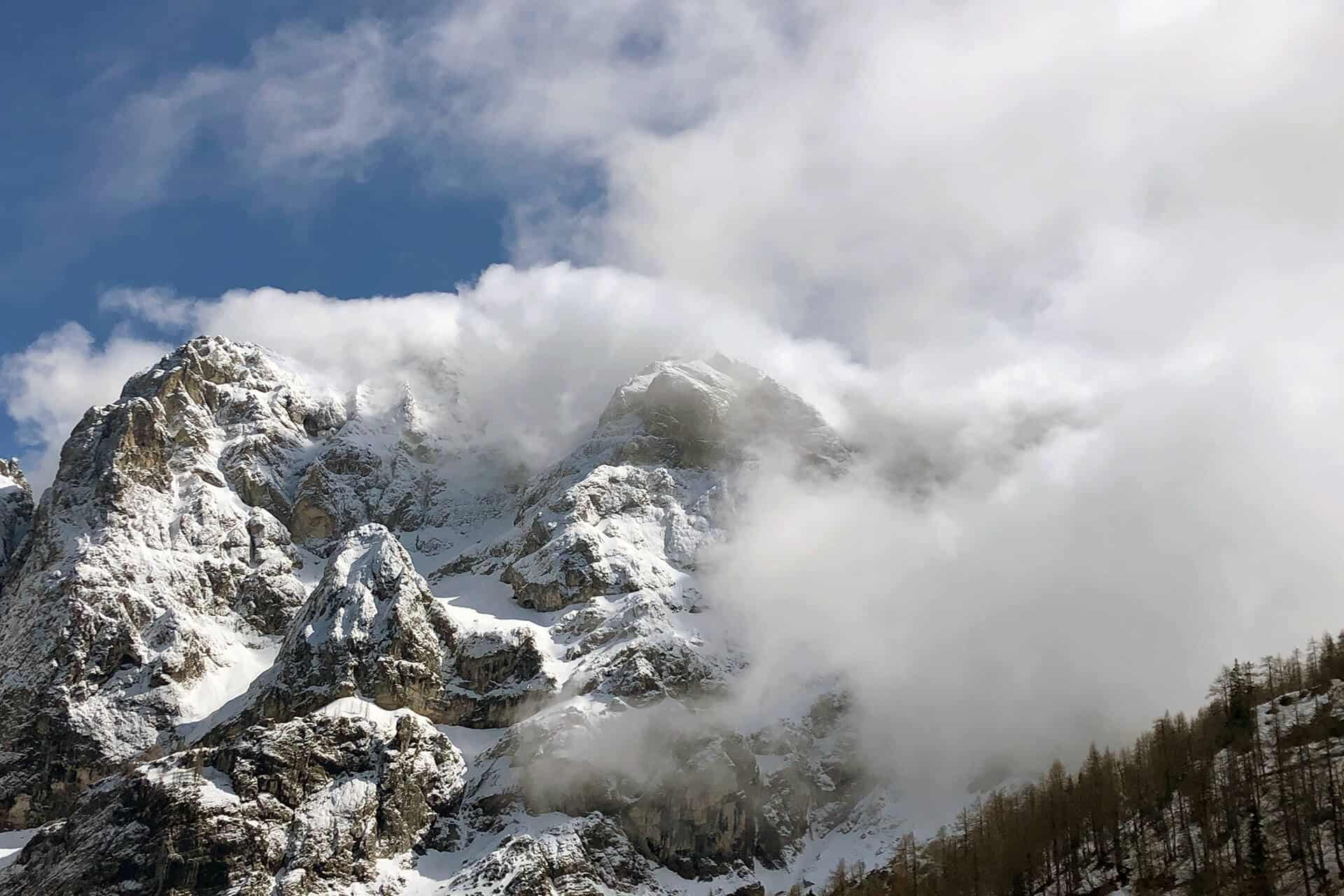
Triglav is the highest peak in the Julian Alps, a mountain range which covers an area of 4,400 km2 and straddles the border between Slovenia and Italy. More than three quarters of the range lies in Slovenia, including more than 150 peaks over two thousand metres. The beauty of the Alpine highlands extends above the valleys of the rivers Soča, Sava Dolinka and Sava Bohinjka and includes Lake Bohinj and Lake Bled, forested hills and lowland pastures, stunning mountain passes, the famous Bohinj Railway and other unique features of the area. These places of outstanding natural beauty and remarkable cultural heritage constitute the first UNESCO biosphere in Slovenia. Lonely Planet has included the easily accessible Slovenian Julian Alps among its “Best in Travel 2018” destinations.
Julian Alps Triglav National Park Slovenia
Julian Alps Triglav National Park Slovenia
WHY VISIT THE JULIAN ALPS?
Because you are seeking enchanting natural beauty
Slovenia is among the most biodiverse countries in the world. The Julian Alps are home to more than seven thousand animal species and over 1600 different plants. Several endemic species have found their habitats in the steep walls of this geologically diverse area with Mesozoic sea deposits and ample fossil remains. Up to a height of 1600 m, the Julian Alps are forested and abound with streams, rivers and waterfalls. The most unique features of the Slovenian Alps can be found in the Triglav National Park, which is one of the oldest in Europe.
Because you enjoy outdoor activities
The Julian Alps are an excellent choice for outdoor activities throughout the year. In summer they attract hikers, hillwalkers, mountain bikers, climbers, paragliders and other sports enthusiasts, while anglers and adrenaline-seekers are drawn to the rivers and lakes of the Triglav National Park. In winter the Park becomes a winter fairy tale, welcoming skiers, snowboarders, tobogganers and more. Routes in the Julian Alps are well marked. Experienced guides will accompany you to more challenging goals and adventures. To seek out active experiences, head to the Soča Valley, which offers ample opportunities for adventure. Then trek on to the hills between Lake Bled and Lake Bohinj, which which form part of the Alpine Pearls network of holiday destinations, linked by environmentally friendly “soft mobility” transport options. When the snow starts falling, be sure to visit the winter sports centres of Kanin, Vogel and Kranjska Gora.
Because the local culture is special
Bled, the charming lake with an island in the middle, is a cosmopolitan tourist town guarded by a castle perched high on a cliff, and has exceptional history as well as numerous events throughout the year. Bohinj, a town by a massive glacial lake in Triglav National Park, charms visitors with its traditional Alpine Flowers Festival and traditional dairy farms. The Soča Valley, dotted by the towns of Tolmin, Kobarid and Bovec, is interlaced with monuments to World War One, the paths of peace, and outdoor museums, and it is also known as the valley of music festivals. Medieval Radovljica is a beekeeping town, known for antique music and chocolate festivals; Kranjska Gora is a venue for large sports and entertainment events throughout the year.
Because you like to taste the best
The Julian Alps are a great venue for foodies as well. In Kobarid you will find Ana Roš, named the World’s Best Female Chef of 2017 by The World’s 50 Best Restaurants organisation, who amazes her guests with her culinary ingenuity. In Kobarid and elsewhere in the Julian Alps, hungry travellers can enjoy authentic natural ingredients, cheese and other dairy farm delicacies and traditional dishes. To wash it down you can enjoy world-renowned wines from nearby Goriška Brda. For the icing on the cake, stop in Bled and indulge yourself with one of their original cream slices, without which no visit to Slovenia is complete.
Because you support sustainable tourism
This land of a thousand natural, cultural and other genuine specialities develops tourism according to sustainable principles. Here you can choose environmentally friendly forms of mobility and accommodation. If you decide to go for a hike, stick to the marked paths. Do not leave any unnecessary marks on the precious natural environment.
TRIGLAV NATIONAL PARK
For Slovenes, the Triglav National Park is a supreme example of natural and cultural heritage. It is also one of the oldest national parks in Europe. Not only that, it is a gallery of uncommonly beautiful images, an open-air museum and a refuge for restless spirits seeking harmony with themselves in harmony with nature.
The excellence and professionalism of the enthusiasts who run the park conserve for us the originality of nature and the cultural landscape and ensure the co-existence of nature and modern man.
The Triglav National Park is the pride of the Julian Alps and the only national park in Slovenia. The park was conceived in as long ago as 1906 and originally centred on the area of the Triglav lakes. In 1981 the park was enlarged. It now covers practically the whole of the Julian Alps in Slovenia and measures 840 square kilometres.
The highest point of the park is the peak of Mt Triglav (2864 metres), the highest mountain in Slovenia, from which the park takes its name; the lowest point is in the Tolmin Gorges (180 metres). The unique natural and cultural heritage of this area of Slovenia is fully contained within the borders of the Triglav National Park.
The national park is divided into three conservation areas. In the core area, conservation areas, nature conservation takes priority. The third conservation area, in which people live and work, is designed to protect the cultural landscape and encourage sustainable husbandry and characteristic local activities.
JULIAN ALPS UNESCO BIOSPHERE RESERVE
In 2003 the Julian Alps UNESCO Biosphere Reserve was established in the Triglav National Park and the wider Julian Alps area. Biosphere reserves are protected under UNESCO’s Man and the Biosphere (MAB) programme. Today more than 500 biosphere reserves in more than 100 countries around the world represent a model of management for the conservation of biodiversity, improvement of life quality and the maintenance of socially, economically and culturally conditioned circumstances that ensure environmentally friendly development.
The importance of biosphere reserves lies above all in the fact that they offer an answer to one of the most important questions of the present age: how to reconcile the conservation of biological and landscape diversity and natural resources with sustainable development. The creation of the Julian Alps UNESCO Biosphere Reserve is not only a prestigious recognition but a responsibility and an opportunity to invite people into a world of unique and unrepeatable natural beauty, breathtaking landscapes and cultural heritage below Mount Triglav!
Julian Alps Triglav National Park Slovenia
NATURAL SIGHTS
That which nature has created and which awakens the noblest sentiments in visitors must be respected and conserved. Slovenia and the Slovenes have been richly blessed with natural wonders. Let us stop for a moment or two and rid ourselves of stress, of pressure, of the rush of everyday city life. Nature is the best physician and the greatest artist.
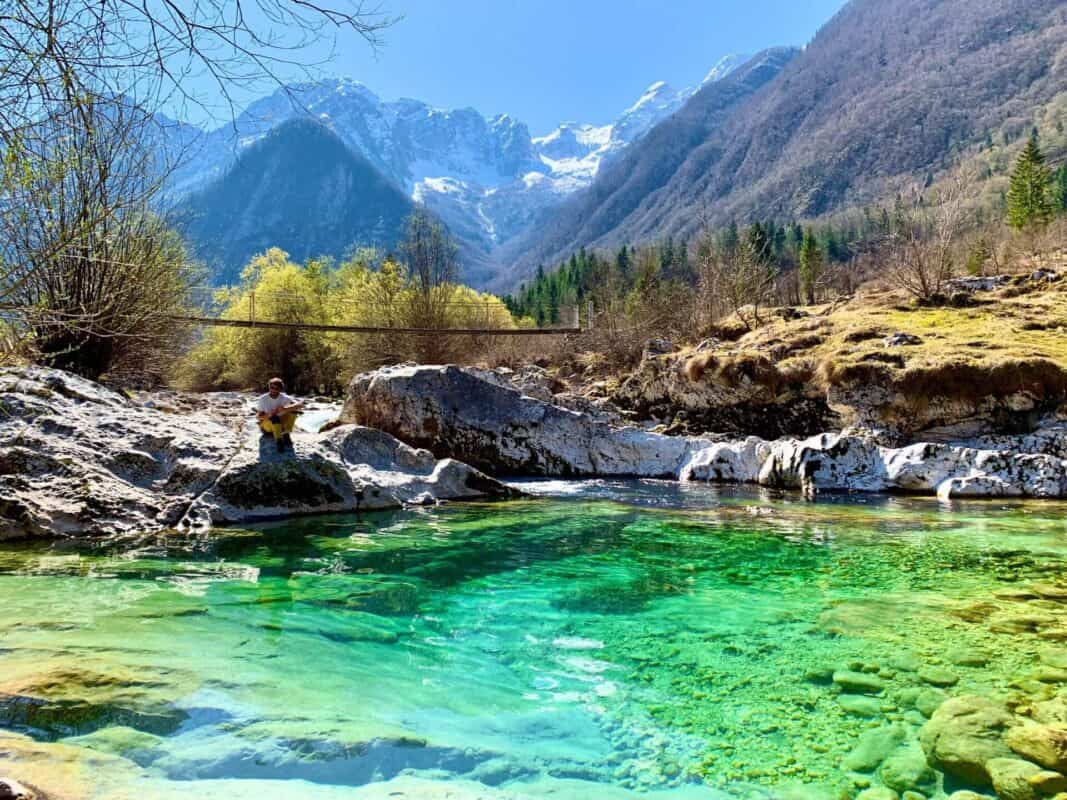
The Julian Alps and the Triglav National Park are one big natural heritage site. It would be impossible to list all the natural wonders they contain. Many are hidden in difficult-to-reach areas of the mountains. We shall therefore list only the most popular sights, which draw hosts of visitors every year. In the Soča Valley this means the river Soča, in particular its source and its wild gorges, the Boka and Kozjak waterfalls and the Tolmin Gorges. In Bohinj the first thing we notice is the lake. Most visitors trek up to the Savica Waterfall, and nearly as many take a walk along the wonderful gorges of the Mostnica. Lake Bled has long been a recognised symbol of Slovenia. Vintgar Gorge is another of the best known natural sights. A magnificent panoramic view of the mountains of the Martuljek group can be admired from the village of Gozd Martuljek, which is also the starting point for a fantastic hike past the Peričnik Waterfall to the foot of Triglav’s north face.
HIKING
When you lace your boots up tight and close the door behind you, that is when you start to live your real life. It is the journey that is important, not the destination. Whether you are crunching snow beneath your feet, tramping through autumn leaves of wonderful colours or listening to the trilling of birds in summer.
The Julian Alps offer an infinite range of hiking opportunities. From paths leading to natural sights of interest and gentle strolls in the valleys, to wanders in the Alpine foothills and demanding ascents into the high mountains. Walks of two to four hours separate the many climbers’ huts and refuges dotted across the region. Good-quality maps cover the entire area.
Every part of the Julian Alps offers its own special features. In the Soča Valley, the most beautiful paths are those along rivers and streams or leading to waterfalls. In the Kranjska Gora area, there are wonderful excursions to the Alpine valleys cut deep between the mountain peaks. Bled and Bohinj offer relaxing lakeside strolls, while in the area around Radovljica tracks and paths lead to ruined castles and hilltop churches offering breathtaking views. Brda is ideal for active holidays all year round, with circular hiking trails winding through the vineyards, orchards and olive groves, as well as the long-distance Alpe Adria Trail.
ALPINISM AND CLIMBING
A good grip, harmony of movements, never exceeding your capabilities but moving acrobatically on the border of daring. The profundity of living makes sense when you are standing on a mountain peak. Winter or summer, it is the weather and a courageous heart that will determine your victories.
The Julian Alps may not reach great heights but in terms of the dimensions of their rock faces they are the equal of other European mountains over four thousand metres high. Travnik, Špik, Triglav and Mangart are the best known peaks, with faces rising 800 to 1,000 metres towards the sky. Triglav’s famous North Wall – 3 kilometres wide and 1,200 metres high – is the third-largest rock face in Europe. There are thousands of routes to try. Together they present an eternal challenge to all those with enough knowledge and courage to tackle them.
Down in the valleys, near the main tourist areas, sports climbers can choose from more than 30 fully equipped climbing centres. These are mainly concentrated in Bohinjska Bela, Bohinj and the Soča Valley. Winter ascents into the mountains are of course the province of the best climbers. Many more visitors head for the frozen waterfalls which can be found in every Alpine valley.
The best known areas for this type of climbing are Log pod Mangartom near Bovec and the Tamar Valley near Rateče. An ice climbing centre in Mojstrana organises climbs in the Mlačca Gorge every winter.
WATER ADVENTURES
We came from the water and to the water we will return. The possibility of fun or adventure on the water is open to everyone. Whether it is a rushing river or a tranquil Alpine lake, foaming rapids or the limpid calm of a smooth surface, returning to the water is an infinite happiness.
The waters of the Julian Alps can be theobject of enchanted wonder or the source of a vast range of activities. The simplest way to discover them can be walks along the banks of streams, rivers and lakes. All three lakes – Lake Bled, Lake Bohinj and the reservoir at Most na Soči – offer easy boating or organised boat trips, either in a characteristic Bled “pletna” or aboard one of the tourist vessels at Bohinj or Most na Soči. In terms of competitive sport, Bled is famous for producing world-class rowers and as a world championship rowing venue, Bohinj hosts an Ironman triathlon and the Soča is a venue for major international kayaking events.
In terms of modern adrenaline sports, the wild beauty that is the river Soča is undoubtedly the best known venue in Slovenia. Every year tens of thousands of visitors enjoy an unforgettable experience with rafts, canoes or hydrospeeds. These activities are also popular on the river Sava. The many interesting ravines and gorges across the area offer plenty of opportunities for canyoning.
Agencies offering qualified guides and instructors and high-quality equipment for water sports and other outdoor activities can be found in many locations throughout the Julian Alps.

CYCLING
Like the whirling wheels of time, now slow, now fast. Exploring the wonderful Julian Alps by bicycle is a way to understand the value and meaning of time.
Cycling is undoubtedly one of the most suitable ways to travel through the Julian Alps. Maps showing cycle routes are available in every tourism centre. Just as with hiking, the options available to cyclists include both easy and pleasant family tours and the most difficult mountain ascents and descents. The two best cycling destinations are Kranjska Gora and Bohinj. The best way to explore the Julian Alps along the route that crosses Slovenia from north to south or on a circular road tour round the Triglav National Park is by mountain bike.
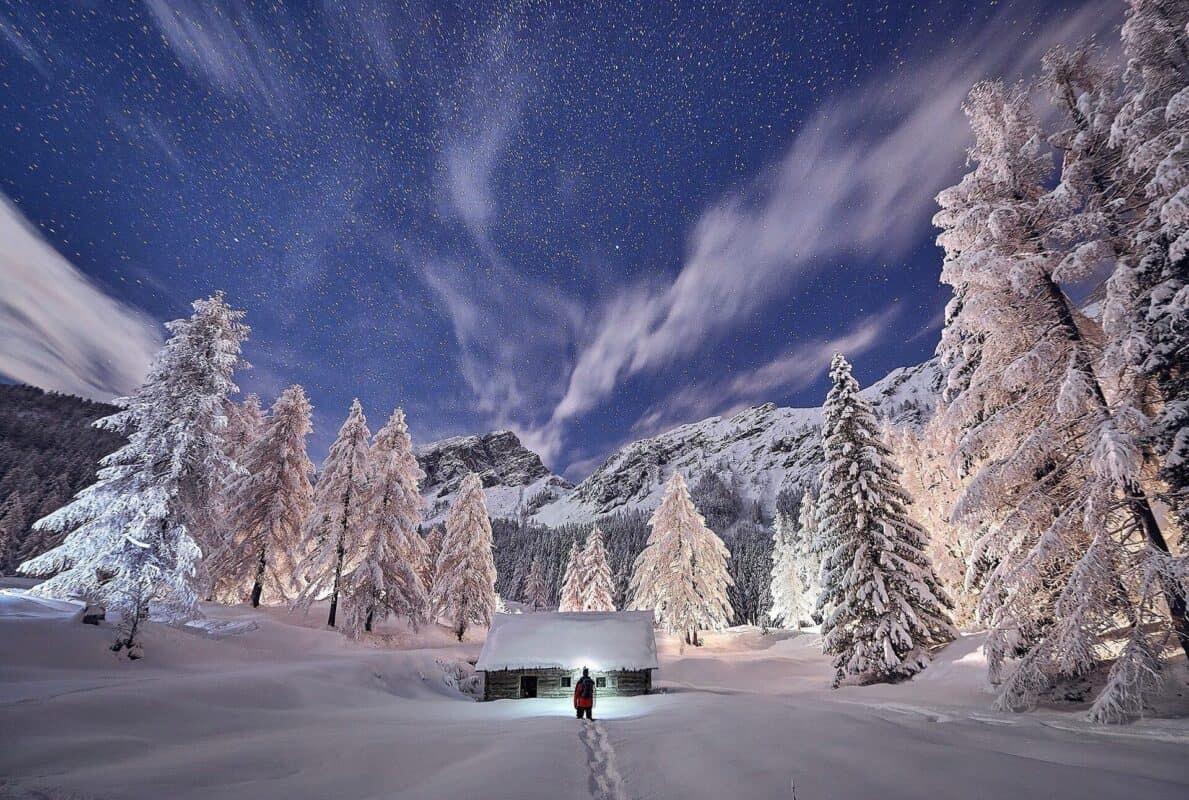
WINTER
We are a nation with a long skiing tradition. Skis even stand by our cradles. And we do not only use them to rush down hills. We also rejoice and fly. And get together. Get to know each other. Many people who meet on skis stay together all their lives.
Kranjska Gora, a World Cup venue, is Slovenia’s best known resort for Alpine skiing and ski jumping (Planica). Bohinj has the Vogel and Senožeta ski centres (the former is the only ski centre in the Triglav National Park), with Soriška Planina not far away. Bovec offers skiing on Kanin, Slovenia’s highest ski resort, which is connected to the Italian resort of Sella Nevea across the border. Bled has the small Straža ski area with a view over Lake Bled. The adrenaline-hungry are well provided for in Kranjska Gora, where the Snow Park is a real challenge for snowboarders and skiers. It is the only snow park in Slovenia that is floodlit at night.
The best-known centre for cross-country skiing is Pokljuka, accessible from both Bled and Bohinj, while a trek on skis below the mighty rock faces into the Tamar Valley is a marvellous experience. In Kranjska Gora (Tromeja) and Bovec (Mangart), tobogganing on snowy roads is becoming increasingly popular.
The biggest adventure of all is ski touring high in the mountains – for safety reasons a mountain guide must always be present.
Julian Alps Triglav National Park Slovenia
ACCOMMODATION
In the beginning was hospitality and every guest was welcome. Diligence and industry have built on this tradition, with the result that the visitor can feel perfectly at home – safe, comfortable and relaxed. But still in touch with the whole world.
Visitors to the Julian Alps can relax in a variety of different accommodation. Lovers of the great outdoors can choose camping or immerse themselves in rural life on a farm holiday. Other options include private rooms, apartments and guest houses and a popular mountain huts.

Julian Alps Triglav National Park Slovenia
source: here
Trips and Hikes around the hut
Why visit a moutain hut?
We are open year-round
We are located in the heart of Triglav National Park
Book a stay in the iconic, first-built mountain hut on the Vršič Pass

Erjavčeva mountain hut is open year-round. Reserve your stay and spend some time in the natural paradise of Triglav National Park (UNESCO), near Kranjska Gora, on the Vršič mountain pass in the heart of the park.
Reserve your stayRelated mountain and travel guides
Choose the next verified guide for planning routes, parking, overnight stays and places near Vršič Pass.
- Slovenia – Julian Alps – Kranjska Gora – Vršič Pass – Erjavčeva koča Mountain Hut — travel guide
- 10 Things to Do in Kranjska Gora and Around — travel guide
- Tamar valley — travel guide
- Accommodation in Mountain hut Vršič Kranjska Gora Slovenia — travel guide
- Hanzova pot on Prisojnik — travel guide
- Running spectacle in the Julian Alps — travel guide
Plan your visit from Erjavčeva koča
Useful guides, practical information and accommodation options for Vršič Pass, Triglav National Park and the Julian Alps.
Book your stay at Erjavčeva koča
Ready to stay on Vršič Pass? Check the verified accommodation page and reserve directly with the hut.
Road, parking and arrival FAQ
Use these answers before relying on a route, booking time or parking plan.
Is this a live Vršič road status?
No. The site can guide you to access information, but current road conditions should be checked before departure.
What should I plan before driving up?
Plan the approach, parking, arrival time and a backup option for mountain weather or seasonal traffic.
Can I use the hut as a base for nearby routes?
Yes, but match your route, daylight and return plan before you start.
Where should I go next on the site?
Use the verified access, parking or accommodation links shown on this page.