
 Slovenščina
 Bosanski
 Hrvatski
 Čeština
 Dansk
Dansk Dutch
Dutch Suomi
Suomi Français
 Deutsch
 Magyar
 Italiano
 Polski
 српски
 Slovenčina
 Español
 Svenska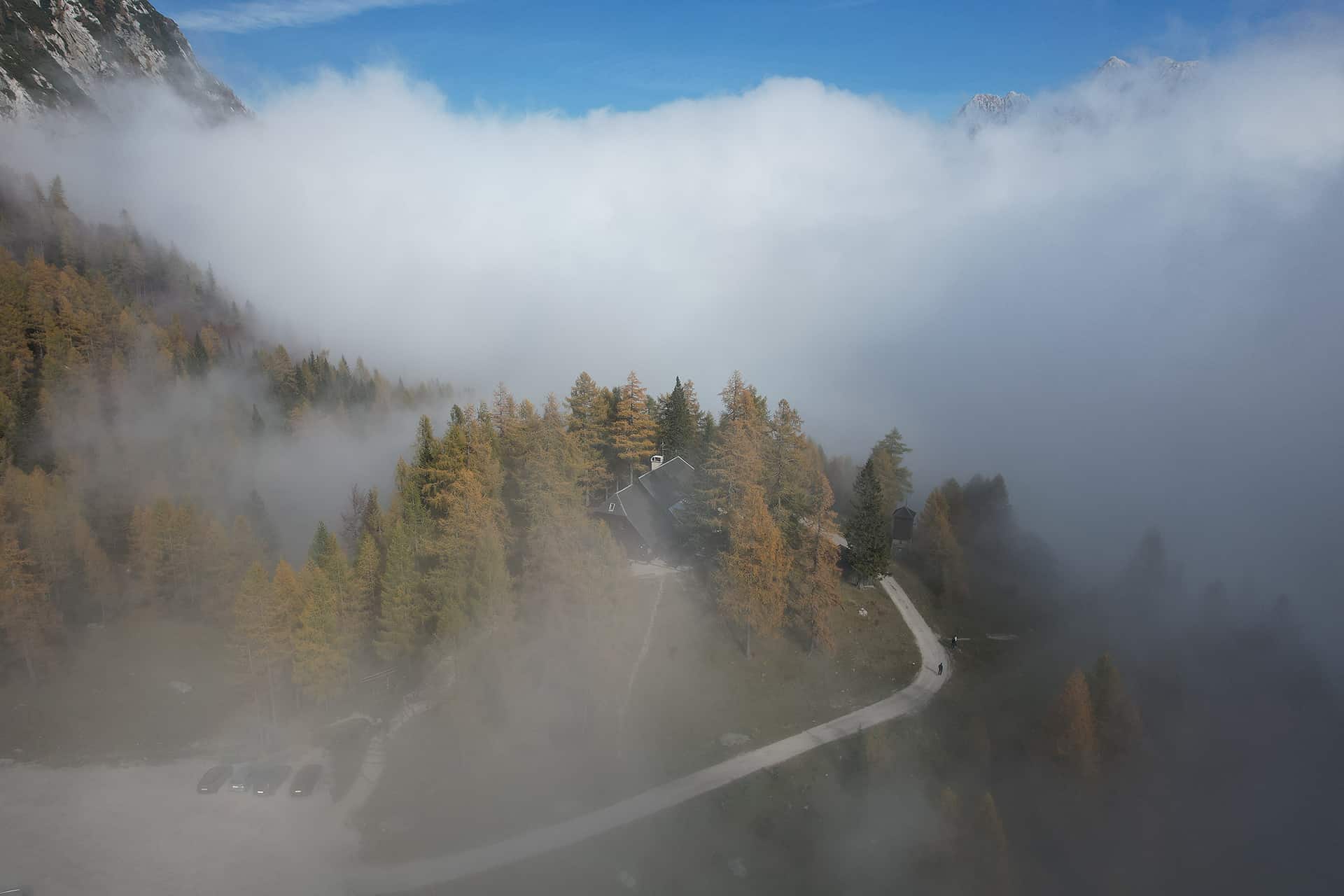

On this page
Jump to the most useful sections of this guide.
Quick summary
The most useful points from this guide before you continue.
Stay on Vršič Pass
Stay at Erjavčeva koča on Vršič Pass
Erjavčeva koča is a mountain hut at Vršič Pass, between Kranjska Gora, Trenta, the Soča Valley and the Julian Alps. It is a practical base for hikers, road-trippers, cyclists and guests who want to stay close to the mountain pass.
- Direct location on the Vršič Pass road
- Good base for hiking, scenic drives and Julian Alps day trips
- Useful for guests visiting Kranjska Gora, Trenta, Soča Valley and Triglav National Park
- Food, mountain-hut atmosphere and practical local information in one place
This block is designed for independent guests and self-service booking. It does not imply a price guarantee or live availability.
Before you book your stay
Vršič Pass is a high mountain location, so it is worth checking a few practical details before you travel. This helps you plan your arrival, parking, hiking day and overnight stay more easily.
Access and road conditions
The Vršič road can be affected by season, weather and traffic. Before travelling, check current access information and plan enough time for the mountain road.
Parking
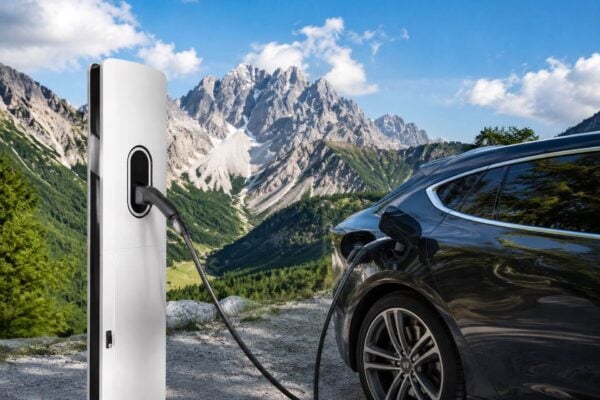
Parking rules and availability around Vršič can change by season and operator. Check the latest parking information before arrival, especially in busy periods.
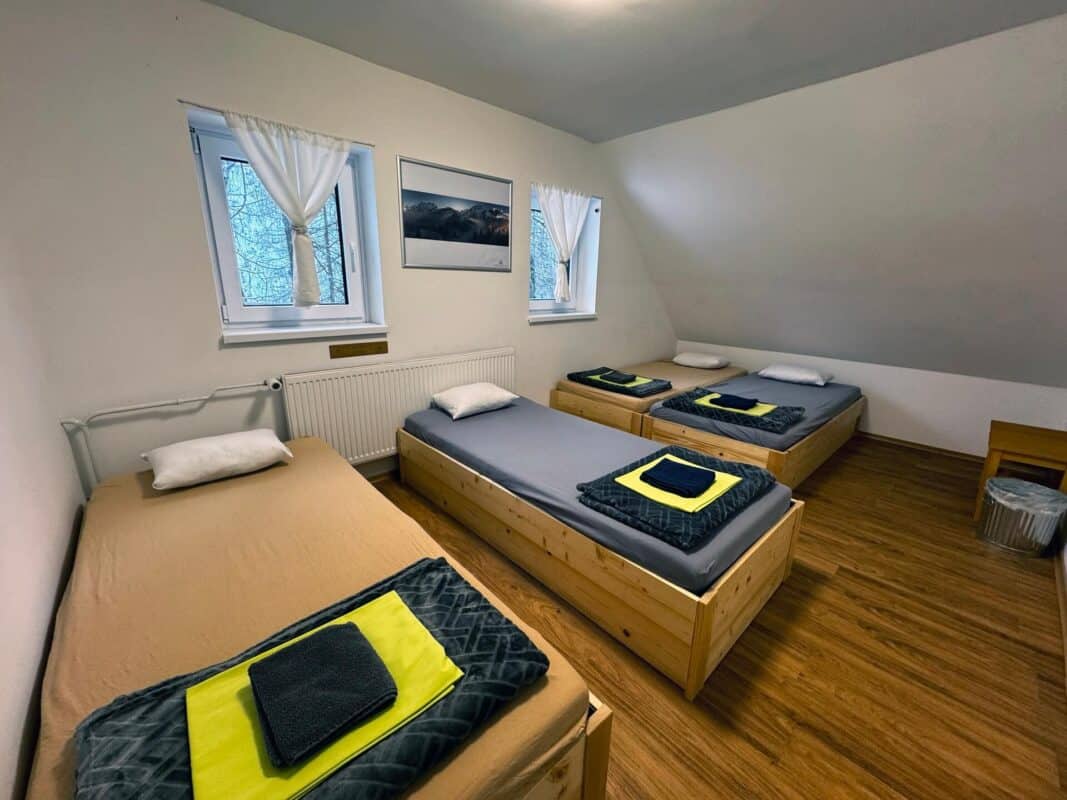
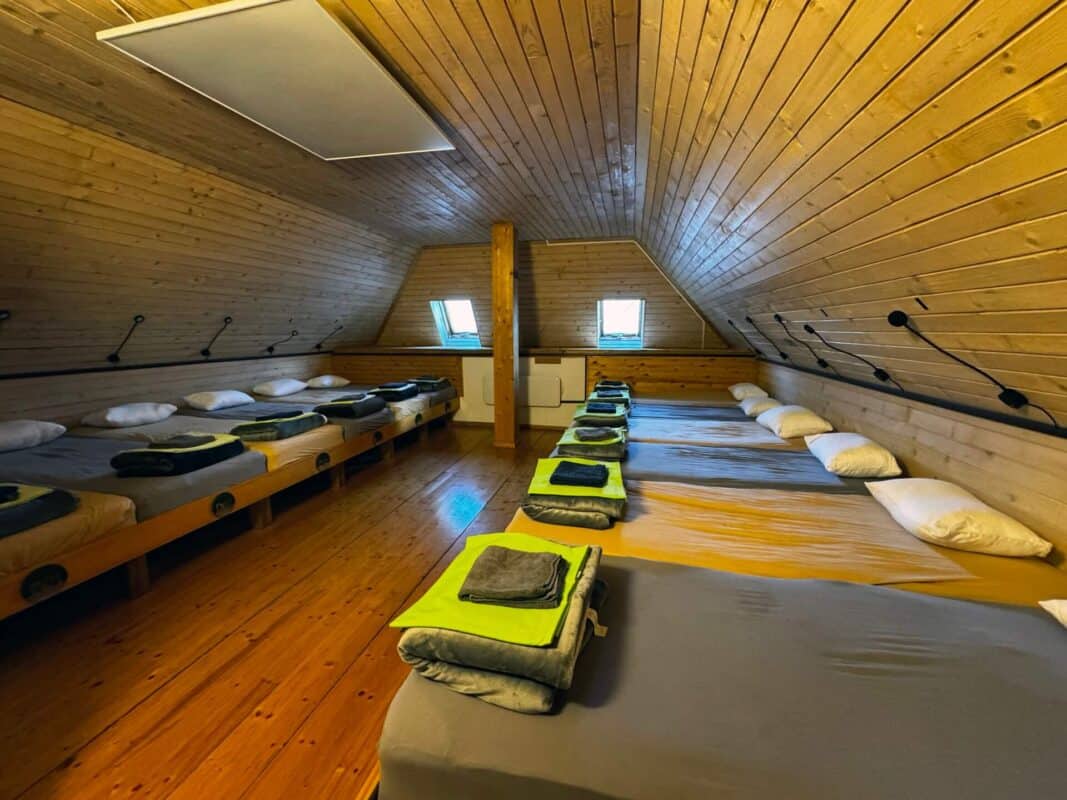
Rooms and overnight stay
If you plan to stay overnight, check room availability in advance. This is especially important during the hiking season, weekends and good-weather periods.
Food, opening hours and groups
Opening times may vary outside the main summer season or by arrangement with groups. Contact the hut directly for the latest information before making fixed plans.
Self-service planning for your stay at Vršič Pass
- Check room and availability options first.
- Read access, parking and arrival notes before travelling.
- Arrive with your own plan for Vršič, Kranjska Gora, Trenta and the Soča Valley.
- Use contact only for special cases, not for information already explained on the page.
A trusted mountain hut at Vršič Pass
Erjavčeva koča has been part of the Vršič mountain pass experience for generations. Guests use it as a practical alpine base for hiking, cycling, scenic drives, visits to Kranjska Gora and trips toward Trenta and the Soča Valley.
Ready to stay on Vršič Pass? Check the verified accommodation page and reserve directly with the hut.
Erjavčeva koča is a mountain hut at 1525 m, not a hotel or hostel. Come for nature, simple shelter and the rhythm of the mountains.
- ✓A place to rest before or after your mountain trip
- ✓Simple mountain-hut comfort and shared house rules
- ✓Direct access to Vršič, trails and Triglav National Park
- ✓Quiet evenings, early starts and weather-dependent mountain life
- ×Private bathrooms in every room
- ×Unlimited parking or guaranteed road access in every weather
- ×Perfect silence during busy mountain days
- ×A valley resort experience
Before you book your stay at Vršič Pass
Use the booking information on this page to decide independently. Booking platforms can help with comparison, but your reservation should be clear before you travel. Contact is only for special cases.
Direct booking is best for
- Checking rooms and availability
- Reading access, parking and arrival details
- Booking when your dates and plan are clear
- Special questions only for groups, late arrival or winter conditions
Booking platforms are useful for
- Comparing accommodation options
- Reading platform-specific reviews
- Managing platform bookings in one account
- Using platform filters and policies
No price guarantee is implied. This block encourages self-service planning and reduces unnecessary calls or emails.
What happens after you check availability?
Checking availability is the first booking step, not a request for personal travel planning. Read the arrival, access and parking information before you book. Contact is only for special cases.
- Choose the room or stay option that fits your plan.
- Complete the booking request with your travel date and arrival plan.
- Before travelling, read the access, parking and seasonal notes; use contact only for groups, late arrival or winter conditions.
CTA clicks are measured as intent signals. This block is designed for self-service reservations and to reduce unnecessary calls or emails.
Summer visit: parking, hiking and rooms
In summer, Vrsic is busy with hikers, cyclists and scenic-road visitors. Plan arrival time, parking, weather protection and overnight questions before you leave.
- Arrive early when parking demand is high.
- Check weather before longer hikes.
- For overnight stays, contact the hut directly before travel.
This block is a practical planning reminder, not a live availability statement.
This guide is prepared from the perspective of Erjavčeva koča, a mountain hut on Vršič Pass. Use it together with current weather, road conditions and responsible behaviour in Triglav National Park.
We are not alone in the mountains, we are just guests
We are not alone in the mountains, we are just guests
We are not alone in the mountains, we are just guests
Changes in terrain and landscape
Irresponsible and unprofessional construction of new forest and agricultural roads, many of which are built without permits, increases harmful erosion processes and undermines the stability of the terrain. These roads create impassable obstacles when they intersect with mountain trails. Introducing invasive alien plant species also poses a dangerous threat to biodiversity in mountain environments.
Intensive mountain grazing in some lower areas, along with land improvements and fertilization, alters the biodiversity and landscape of grazing lands. Meanwhile, traditional grazing practices in high mountain pastures lead to overgrowth and the disappearance of cultural landscapes.
Everyone needs beauty as much as they need food. Everyone needs a place to play, reflect, and pray, where nature can heal the soul and mind and strengthen the body and spirit.
We are not alone in the mountains, we are just guests
Thousands of weary, nervous, and agitated people discover that going to the mountains is, in fact, a return home. Wilderness is a necessity.
– John Muir, American conservationist (1838–1914)
MAIN TASKS OF THE MOUNTAIN NATURE CONSERVATION COMMISSION (KVGN)
Protecting mountain nature means primarily protecting it from humans. Visitors often forget why we go into nature and are merely guests. Instead, we have become the greatest polluters of mountain nature. What can we do to change this, to make it better?
- Protect mountain nature to preserve its primal state and the last remnants of wilderness by promoting a different, more nature-friendly way of visiting and using the mountains and by continually raising public awareness of the importance of mountain conservation.
- Educate mountain nature guardians through regular and refresher seminars, encourage sections for nature conservation within mountaineering associations as direct carriers of KVGN’s guidelines, collaborate with committees for mountain nature conservation at the inter-association level, and organize expert lectures and excursions on mountain nature conservation.
- Promote awareness and knowledge about the importance of nature conservation in all educational programs of the Alpine Association of Slovenia (PZS), especially in programs for the Youth Commission, PZS guides, mountain guides, and alpine instructors.
- Collaborate with the Commission for Mountain Paths and the Commission for Mountain Biking to coordinate and select mountain paths suitable for dual-purpose use.
- Constantly monitor the condition and current events in mountain nature, critically assess harmful interventions in mountain environments, and promptly inform the public with expert opinions on various interventions, plans, and events that negatively affect the mountain environment.
- Emphasize the consistent enforcement of Slovenian and international regulations in nature conservation, preserving landscape values, and spatial integrity.
- Inspire mountain visitors with the unique charm of mountain nature.
The beauty there takes your breath away.
Never doubt that a small, dedicated, and committed group of people can change society. It’s the only thing that ever has.
– Margaret Mead, American anthropologist (1901–1978)

We are not alone in the mountains we are just guests
Mountain visitors are always guests in nature, and we are not alone. Wherever we walk, many plant and animal species have adapted to their habitats. In the complex yet perfectly balanced mountain environment, no superior or inferior, important or unimportant, necessary or unnecessary life forms exist. Every form is equally important and necessary.
Visitors are always welcomed free of charge to a gallery of unique natural beauty and wonders. As guests, we enter a sensitive mountain world where drinking water, the greatest asset of all human civilizations, originates from underground mysteries. The future of this invaluable resource depends solely on us.
As guests, we seek endless opportunities for mental relaxation, personal enrichment, and the renewal of our physical abilities. But are we respectful and considerate enough toward this environment? Sadly, many mountain visitors are not familiar with such sensitivity, behaving recklessly, causing damage, and even endangering the lives of others.
Pristine mountain nature is becoming increasingly scarce while the need to preserve it grows ever more significant. We seek the last remnants of wilderness but forget that by visiting in large numbers; we contribute to its disappearance. We are capable of reaching everywhere. But we can also consciously decide not to go everywhere, leaving some sensitive areas, essential for the survival of endangered species, undisturbed.
Nothing in nature is permanent except constant change. Humans cannot regulate recurring natural processes. When we change them for selfish purposes or out of the mistaken belief that we are managing them, we too often irresponsibly destroy them – to the detriment of nature and ourselves.

Threats to water resources
Slovenia is dependent on water supplies from springs in the mountains and foothills. However, water reserves are limited, springs are threatened, and water pollution is increasing. New roads, growing motor traffic, mass events, and many mountain visitors in recent decades have brought more significant risks to water quality. What goes wrong at the top flows down into countless springs in the valleys.
Forgotten simplicity and modesty
Due to visitor demands, more and more mountain huts and holiday homes offer services comparable to inns in the valley. This increases harmful wastewater, posing a greater risk to water supplies in the valleys. Where have the simplicity, modesty, and homeliness of some mountain huts gone? A step in the right direction is the initiative by the Economic Commission to award the “Environmentally Friendly Mountain Hut” recognition. Many huts already have wastewater treatment plants, but unfortunately, many do not. In some places, dangerous waste is concealed in hidden sinkholes, underbrush, or buried beneath the sand.
Dual-purpose mountain trails
Mountain trails, built through the volunteer work of many generations for safe hiking, are increasingly used by mountain bikers. KVGN, the Commission for Mountain Paths, and the Commission for Mountain Biking have jointly developed criteria for dual-purpose use of mountain trails to avoid conflicts between different users. However, many mountain bikers do not adhere to this agreement. We increasingly encounter them on narrow paths and scree slopes in the high mountains, where some recklessly endanger the safety of older visitors and groups with children, and the deep tracks of their bikes trigger erosion processes in the sensitive natural environment.
Mountains as a competitive arena
Exploiting the mountains as an arena for mass sports competitions and record-breaking brings unnecessary additional environmental burdens: noise from loudspeakers during events, increased traffic with traffic jams and chaotic parking, and consequently, more significant air pollution in natural environments, waste, and carelessness in marking routes for various competitions in mountainous and sub-mountainous regions.
Those who sow roads reap traffic
Walking in the mountains and experiencing nature with your heart and on your feet sounds like an echo from another time. “Drive as far and as high as possible” is becoming the new motto. Tractors and roads serve this purpose, opening the world of mountain wilderness to expensive yet environmentally harmful off-road vehicles. Their owners ignore warning signs that tractor roads are for agricultural use only.
Noise pollution
The culprits of this pollution are varied: noise from increased tourist traffic in the air, especially low-altitude scenic flights in the high mountains (air taxis), new noisy adrenaline sports such as off-road motorcycles, ATVs, and snowmobiles on natural trails, mass noisy events, and concerts of popular music even in front of some mountain huts – something not seen elsewhere in the Alps, including brass bands on Triglav.


We are not alone in the mountains we are just guests
Issued by: Mountain Nature Conservation Commission of the PZS.
Text by: Janez Bizjak, Marjeta Keršič Svetel, Irena Mrak.
Photos by: Marjeta Keršič Svetel, Darko Lorenčič, Darinka Gaberščik, Tanja Menegalija, Shutterstock.
Design: Barbara Bogataj Kokalj.
Printed by: Medium d.o.o., printed on environmentally friendly paper. Reprint, 5,000 copies,
Ljubljana 2015.
Trips and Hikes around the hut
Why visit a moutain hut?
We are open year-round
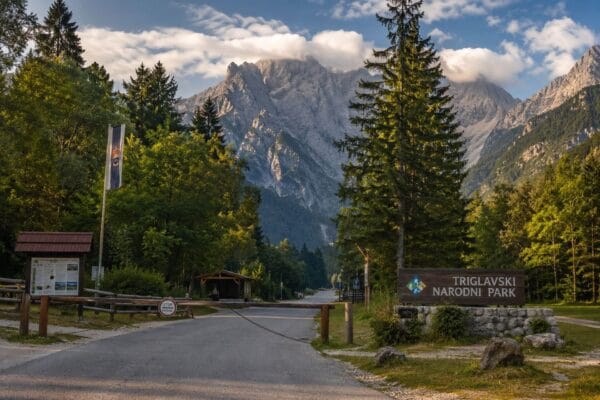
We are located in the heart of Triglav National Park
Book a stay in the iconic, first-built mountain hut on the Vršič Pass

Erjavčeva mountain hut is open year-round. Reserve your stay and spend some time in the natural paradise of Triglav National Park (UNESCO), near Kranjska Gora, on the Vršič mountain pass in the heart of the park.
Reserve your stayRelated mountain and travel guides
Choose the next verified guide for planning routes, parking, overnight stays and places near Vršič Pass.
- Slovenia – Julian Alps – Kranjska Gora – Vršič Pass – Erjavčeva koča Mountain Hut — travel guide
- 10 Things to Do in Kranjska Gora and Around — travel guide
- Tamar valley — travel guide
- High mountain lakes — travel guide
- Accommodation in Mountain hut Vršič Kranjska Gora Slovenia — travel guide
- Hanzova pot on Prisojnik — travel guide
Plan your visit from Erjavčeva koča
Useful guides, practical information and accommodation options for Vršič Pass, Triglav National Park and the Julian Alps.
Book your stay at Erjavčeva koča
Ready to stay on Vršič Pass? Check the verified accommodation page and reserve directly with the hut.
Road, parking and arrival FAQ
Use these answers before relying on a route, booking time or parking plan.
Is this a live Vršič road status?
No. The site can guide you to access information, but current road conditions should be checked before departure.
What should I plan before driving up?
Plan the approach, parking, arrival time and a backup option for mountain weather or seasonal traffic.
Can I use the hut as a base for nearby routes?
Yes, but match your route, daylight and return plan before you start.
Where should I go next on the site?
Use the verified access, parking or accommodation links shown on this page.