

 Slovenščina
 Bosanski
 Hrvatski
 Čeština
 Dansk
Dansk Dutch
Dutch Suomi
Suomi Français
 Deutsch
 Magyar
 Italiano
 Polski
 српски
 Slovenčina
 Español
 Svenska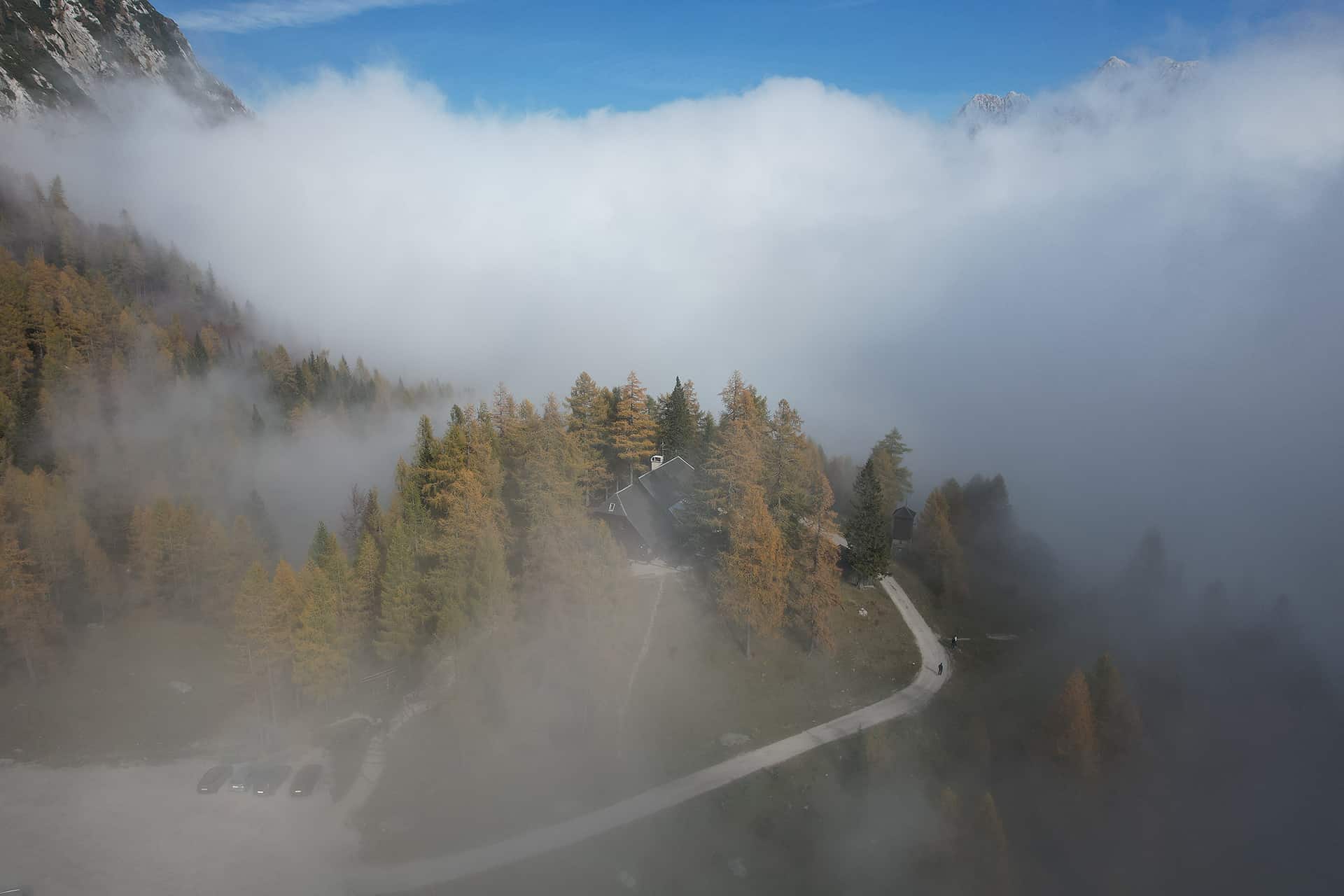
On this page
Jump to the most useful sections of this guide.
This guide is prepared from the perspective of Erjavčeva koča, a mountain hut on Vršič Pass. Use it together with current weather, road conditions and responsible behaviour in Triglav National Park.
Ready to stay on Vršič Pass? Check the verified accommodation page and reserve directly with the hut.
Erjavčeva koča is a mountain hut at 1525 m, not a hotel or hostel. Come for nature, simple shelter and the rhythm of the mountains.
- ✓Quiet evenings, early starts and weather-dependent mountain life
- ✓Food, shelter and practical help from the hut team
- ✓Unspoiled nature, mountain views and fresh alpine air
- ✓A place to rest before or after your mountain trip
- ×A valley resort experience
- ×Luxury hotel rooms or city-hotel services
- ×Hostel-style nightlife or loud late evenings
- ×Private bathrooms in every room
Stay on Vršič Pass
Stay at Erjavčeva koča on Vršič Pass
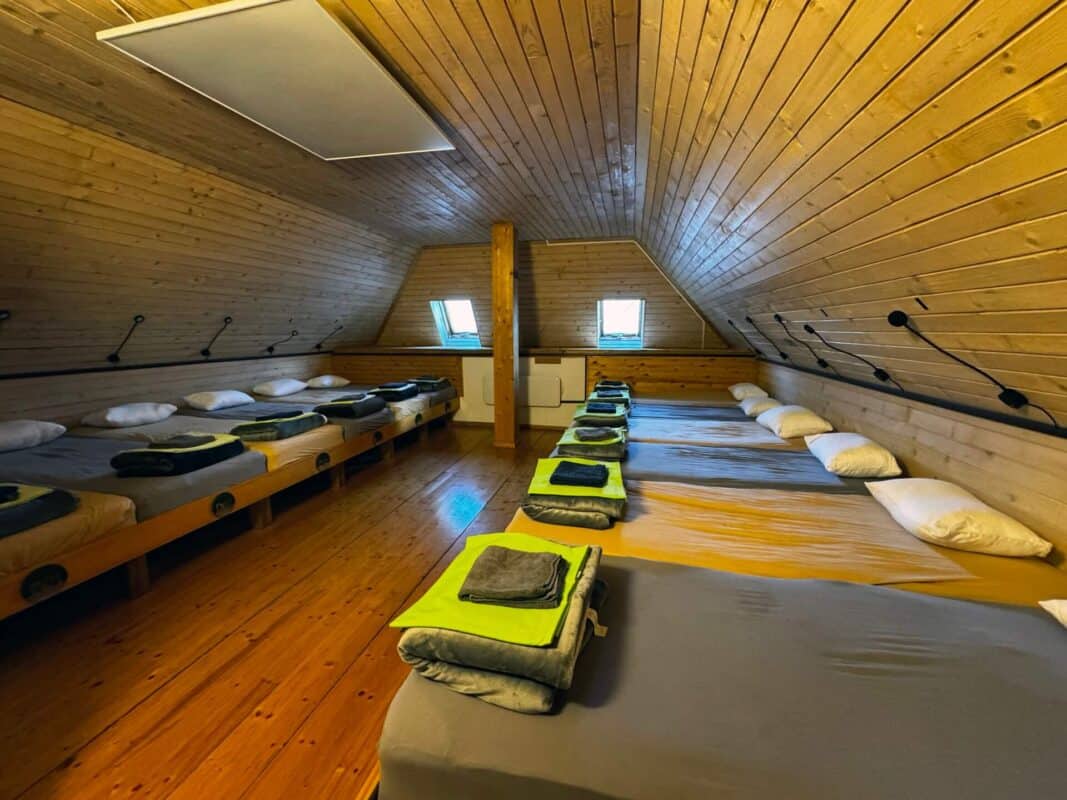
Erjavčeva koča is a mountain hut at Vršič Pass, between Kranjska Gora, Trenta, the Soča Valley and the Julian Alps. It is a practical base for hikers, road-trippers, cyclists and guests who want to stay close to the mountain pass.
- Direct location on the Vršič Pass road
- Good base for hiking, scenic drives and Julian Alps day trips
- Useful for guests visiting Kranjska Gora, Trenta, Soča Valley and Triglav National Park
- Food, mountain-hut atmosphere and practical local information in one place
This block is designed for independent guests and self-service booking. It does not imply a price guarantee or live availability.
Before you book your stay
Vršič Pass is a high mountain location, so it is worth checking a few practical details before you travel. This helps you plan your arrival, parking, hiking day and overnight stay more easily.
Access and road conditions
The Vršič road can be affected by season, weather and traffic. Before travelling, check current access information and plan enough time for the mountain road.
Parking
Parking rules and availability around Vršič can change by season and operator. Check the latest parking information before arrival, especially in busy periods.
Rooms and overnight stay
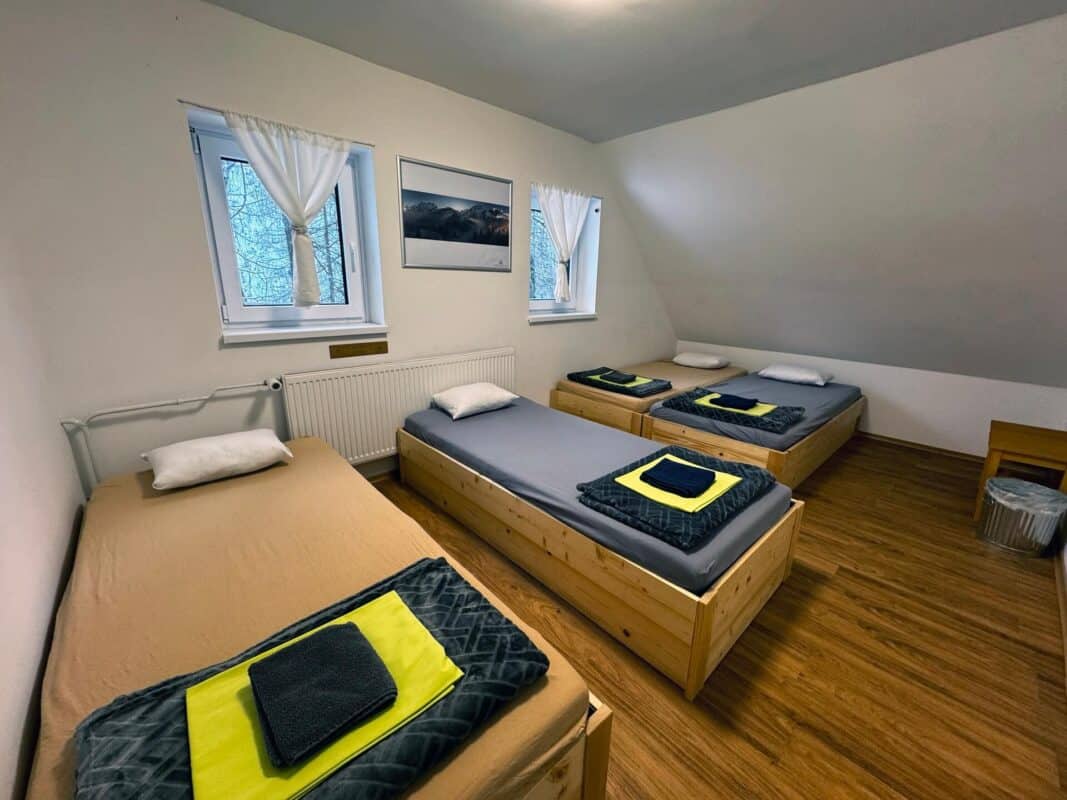
If you plan to stay overnight, check room availability in advance. This is especially important during the hiking season, weekends and good-weather periods.
Food, opening hours and groups
Opening times may vary outside the main summer season or by arrangement with groups. Contact the hut directly for the latest information before making fixed plans.
Self-service planning for your stay at Vršič Pass
- Check room and availability options first.
- Read access, parking and arrival notes before travelling.
- Arrive with your own plan for Vršič, Kranjska Gora, Trenta and the Soča Valley.
- Use contact only for special cases, not for information already explained on the page.
A trusted mountain hut at Vršič Pass
Erjavčeva koča has been part of the Vršič mountain pass experience for generations. Guests use it as a practical alpine base for hiking, cycling, scenic drives, visits to Kranjska Gora and trips toward Trenta and the Soča Valley.
Before you book your stay at Vršič Pass
Use the booking information on this page to decide independently. Booking platforms can help with comparison, but your reservation should be clear before you travel. Contact is only for special cases.
Direct booking is best for
- Checking rooms and availability
- Reading access, parking and arrival details
- Booking when your dates and plan are clear
- Special questions only for groups, late arrival or winter conditions
Booking platforms are useful for
- Comparing accommodation options
- Reading platform-specific reviews
- Managing platform bookings in one account
- Using platform filters and policies
No price guarantee is implied. This block encourages self-service planning and reduces unnecessary calls or emails.
What happens after you check availability?
Checking availability is the first booking step, not a request for personal travel planning. Read the arrival, access and parking information before you book. Contact is only for special cases.
- Choose the room or stay option that fits your plan.
- Complete the booking request with your travel date and arrival plan.
- Before travelling, read the access, parking and seasonal notes; use contact only for groups, late arrival or winter conditions.
CTA clicks are measured as intent signals. This block is designed for self-service reservations and to reduce unnecessary calls or emails.
Summer visit: parking, hiking and rooms
In summer, Vrsic is busy with hikers, cyclists and scenic-road visitors. Plan arrival time, parking, weather protection and overnight questions before you leave.
- Arrive early when parking demand is high.
- Check weather before longer hikes.
- For overnight stays, contact the hut directly before travel.
This block is a practical planning reminder, not a live availability statement.
What Are the Chances of Being Struck by Lightning, and How to Stay Safe in the Mountains?
What Are the Chances of Being Struck by Lightning, and How to Stay Safe in the Mountains?
What Are the Chances of Being Struck by Lightning, and How to Stay Safe in the Mountains?
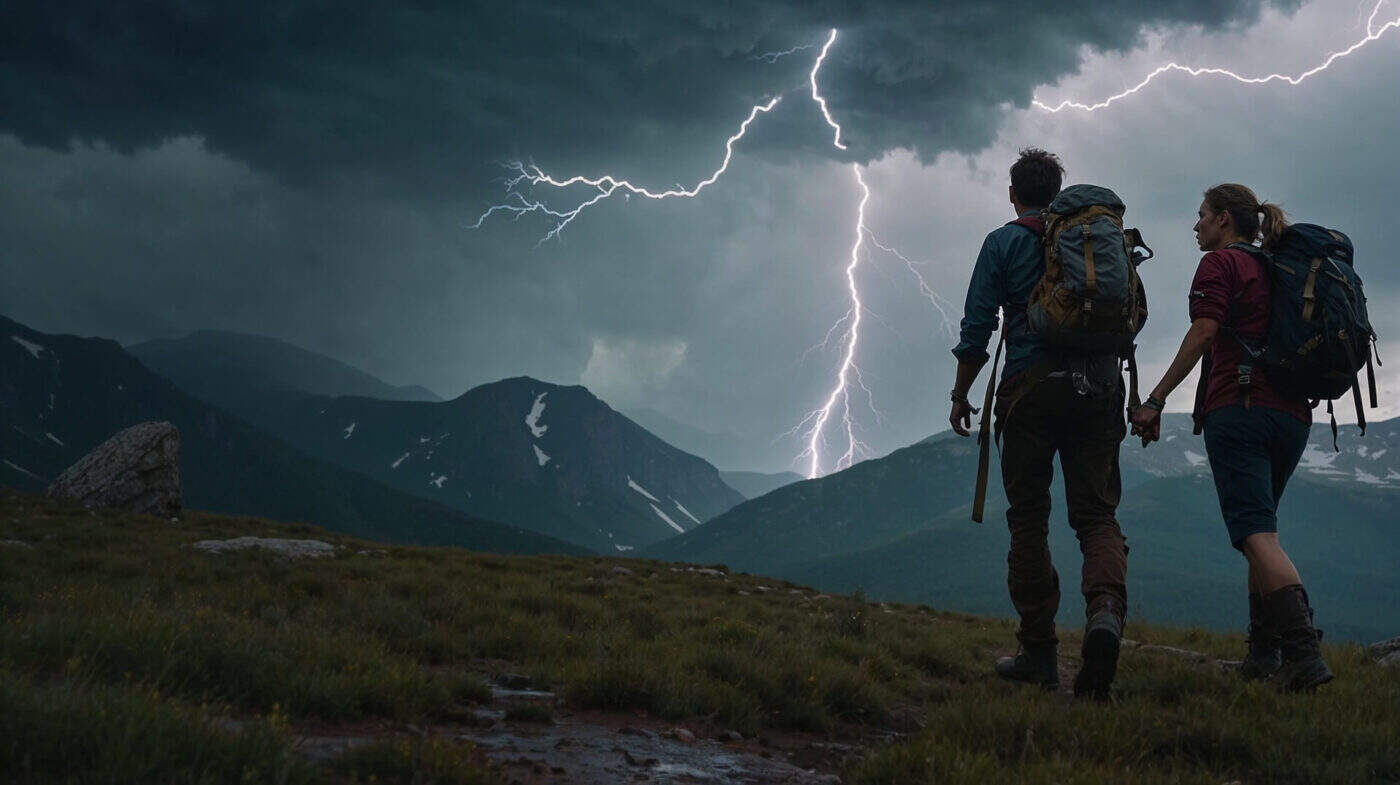
If you’re not sure it’s safe to continue your hike in the mountains, it’s better to turn around and go back, warns mountain guide and alpinist Miha Habjan. Meteorologist Andrej Velkavrh adds that even an ordinary thunderstorm is enough to put you at risk of a lightning strike.
Following yesterday’s tragic incident in Tyrol, where lightning struck and killed three experienced local alpinists, weather expert Andrej Velkavrh and mountain guide Miha Habjan joined Igor E. Bergant in the Odmevi studio to discuss weather phenomena and mountain safety.
Chances of Being Struck by Lightning. Stay Safe in the Mountains

What Are the Chances of Being Struck by Lightning, and How to Stay Safe in the Mountains?
But if a storm does catch us — scree slopes are safer than ridges, and the best refuge is a cave, a car, or a mountain hut. But what if we find ourselves near a metal cable during a storm?
Habjan: At that point, the hiker has already made a grave mistake. You must do everything possible to avoid being on mountain ridges or summits during a storm. If you are caught in the mountains with no huts or shelters nearby, remove any metal equipment you’re using, make yourself as small as possible, sit or kneel, hug your legs, dress appropriately (put on a windbreaker), move away from rock walls, and hope for the best.
The unfortunate alpinists in Tyrol reportedly saw the storm approaching from 40 km away. It began while they were still on the summit. How fast can storms move, and how can lightning catch us off guard?
Velkavrh: Usually, we see the rain area — where we can observe rain curtains or identify the storm cell on radar based on the strongest reflectivity. Sometimes, lightning strikes before the storm’s core even arrives — before any rain starts falling. Lightning can be unpredictable.
Does the saying “lightning from a clear sky” really hold any truth?
Velkavrh: Not really. Some conditions must exist for electrification to occur — particles must collide and generate static charge. A lightning strike is essentially a spark between two poles, and a sufficient charge is needed.

What Are the Chances of Being Struck by Lightning, and How to Stay Safe in the Mountains?
So rain isn’t necessary?
Correct.
Today, some people head into the mountains completely unprepared and uninformed, while others are well-equipped and informed. Is there any gear that could protect a mountaineer or hiker from lightning?
Habjan: No, there isn’t. There are only better or worse decisions — made at home and during the trip itself. These choices determine whether we end up exposed to danger. We must do everything to avoid exposure — or, put another way, we must avoid doing anything that increases our risk of exposure.
What are your personal experiences in observing the weather? Can close observation of the weather and nature, along with apps, help us make better decisions?
Habjan: Yes and no. We don’t always have access to information since there’s not always a signal. For instance, a radar image might show precipitation nearby, which can complicate our decision-making. We should approach it more cautiously — if we’re not sure it’s safe to proceed, it’s better to turn back. After all, as the saying goes: “The mountain will still be there.”
Mr. Velkavrh, how do you personally navigate the environment?
Velkavrh: I also use radar images — they’re probably the best tool currently available. But again, they’re not always accessible, as signal coverage in the mountains can be unreliable. I believe it’s better to make the decision earlier. Once things start happening around you, it’s already a bit late. If the forecast says thunderstorms are likely in the afternoon in a particular area, then it’s better not to go at that time of day. Forecasts can be pretty specific — storms in the afternoon only unless there’s a front that might bring storms earlier.

Source: RTVSLO
Trips and Hikes around the hut

Why visit a moutain hut?
We are open year-round
We are located in the heart of Triglav National Park
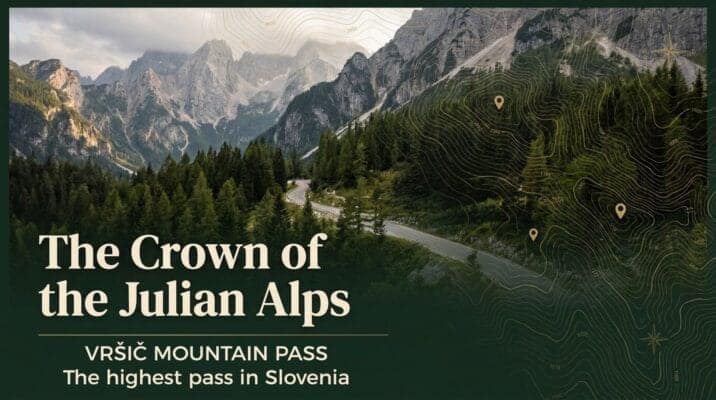
Book a stay in the iconic, first-built mountain hut on the Vršič Pass

Erjavčeva mountain hut is open year-round. Reserve your stay and spend some time in the natural paradise of Triglav National Park (UNESCO), near Kranjska Gora, on the Vršič mountain pass in the heart of the park.
Reserve your stayRelated mountain and travel guides
Choose the next verified guide for planning routes, parking, overnight stays and places near Vršič Pass.
- Is there anywhere I can park? — travel guide
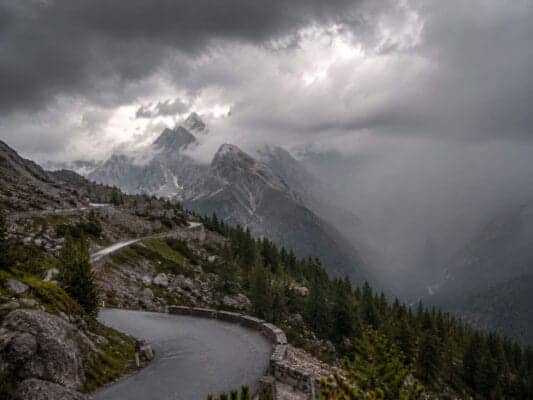
- Snow on Vršič on May 12 – Why Mountain Weather Changes So Quickly — travel guide
- Stay longer in Slovenia — travel guide
- 10 Things to Do in Kranjska Gora and Around — travel guide
- Tamar valley — travel guide
- High mountain lakes — travel guide
Plan your visit from Erjavčeva koča
Useful guides, practical information and accommodation options for Vršič Pass, Triglav National Park and the Julian Alps.
Book your stay at Erjavčeva koča
Ready to stay on Vršič Pass? Check the verified accommodation page and reserve directly with the hut.
Road, parking and arrival FAQ
Use these answers before relying on a route, booking time or parking plan.
Is this a live Vršič road status?
No. The site can guide you to access information, but current road conditions should be checked before departure.
What should I plan before driving up?
Plan the approach, parking, arrival time and a backup option for mountain weather or seasonal traffic.
Can I use the hut as a base for nearby routes?
Yes, but match your route, daylight and return plan before you start.
Where should I go next on the site?
Use the verified access, parking or accommodation links shown on this page.