The most useful points from this guide before you continue.
Stay on Vršič Pass
Stay at Erjavčeva koča on Vršič Pass
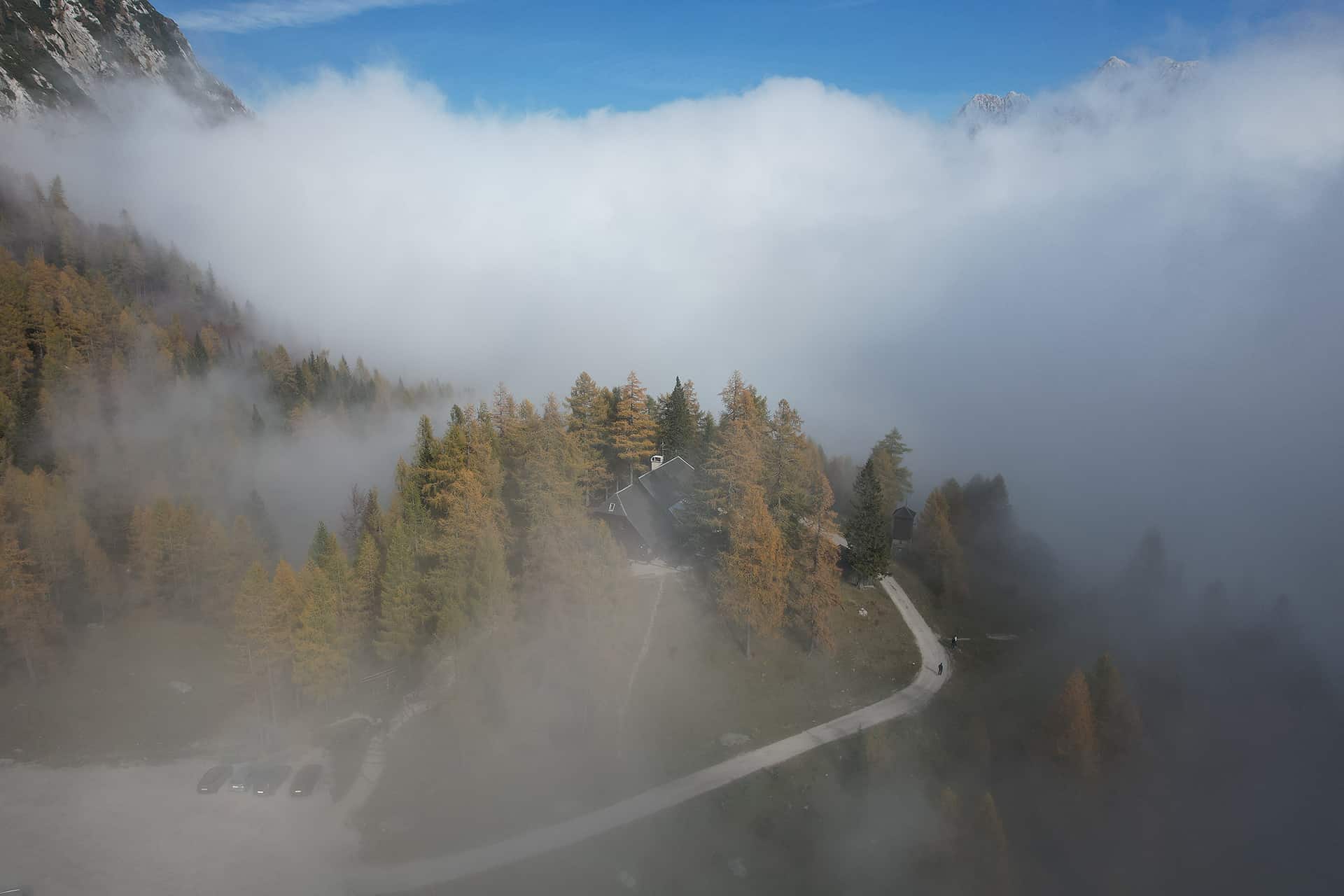
Erjavčeva koča is a mountain hut at Vršič Pass, between Kranjska Gora, Trenta, the Soča Valley and the Julian Alps. It is a practical base for hikers, road-trippers, cyclists and guests who want to stay close to the mountain pass.
Direct location on the Vršič Pass road
Good base for hiking, scenic drives and Julian Alps day trips
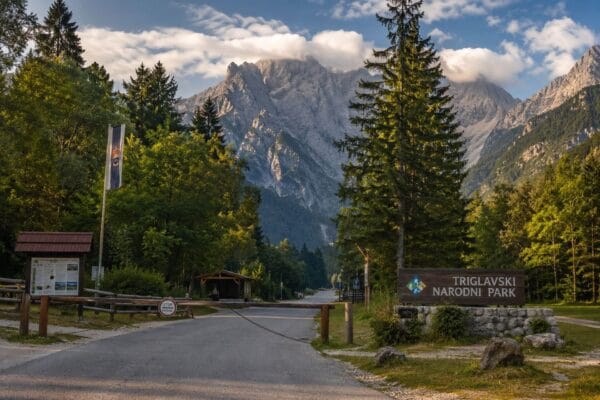
Useful for guests visiting Kranjska Gora, Trenta, Soča Valley and Triglav National Park
Food, mountain-hut atmosphere and practical local information in one place
This block is designed for independent guests and self-service booking. It does not imply a price guarantee or live availability.
Before you book your stay
Vršič Pass is a high mountain location, so it is worth checking a few practical details before you travel. This helps you plan your arrival, parking, hiking day and overnight stay more easily.
Access and road conditions
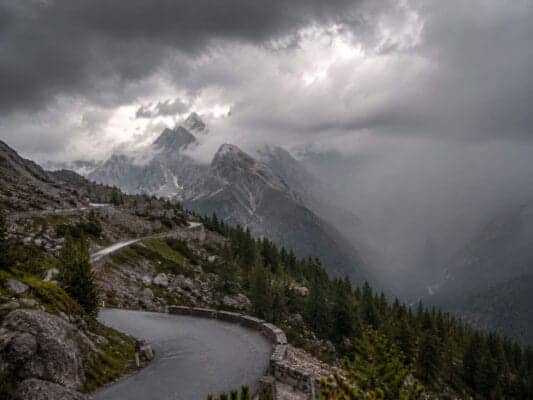
The Vršič road can be affected by season, weather and traffic. Before travelling, check current access information and plan enough time for the mountain road.
Parking
Parking rules and availability around Vršič can change by season and operator. Check the latest parking information before arrival, especially in busy periods.
Rooms and overnight stay
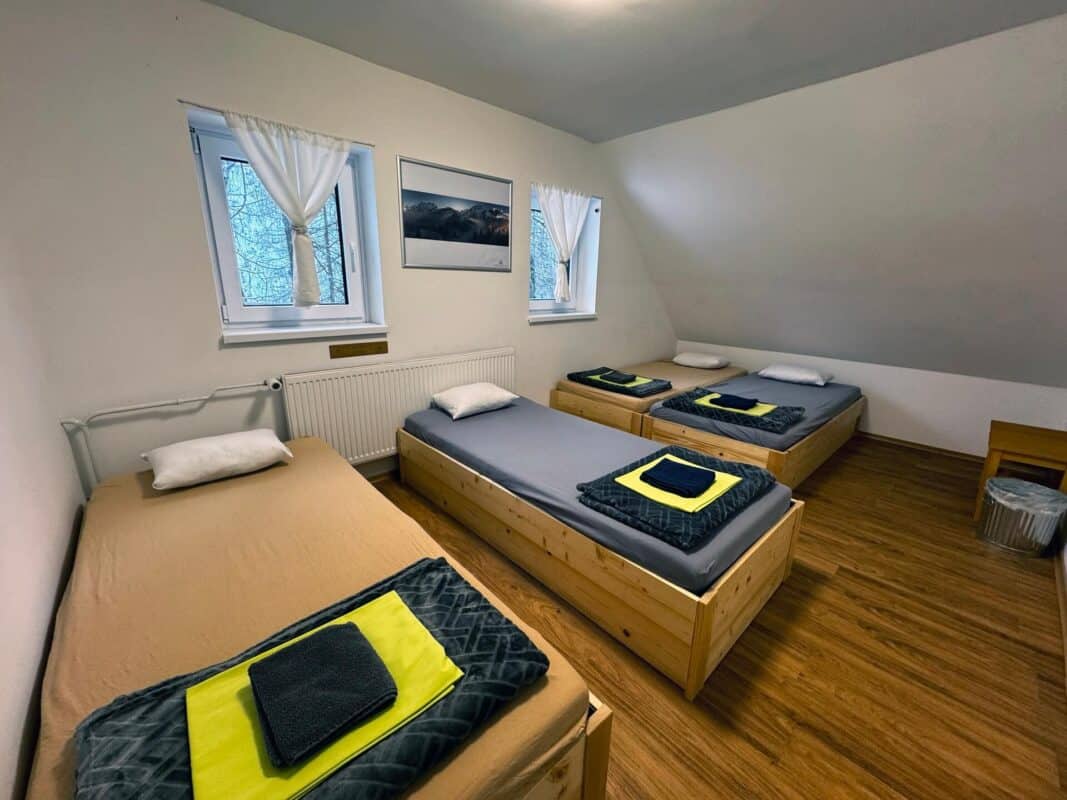
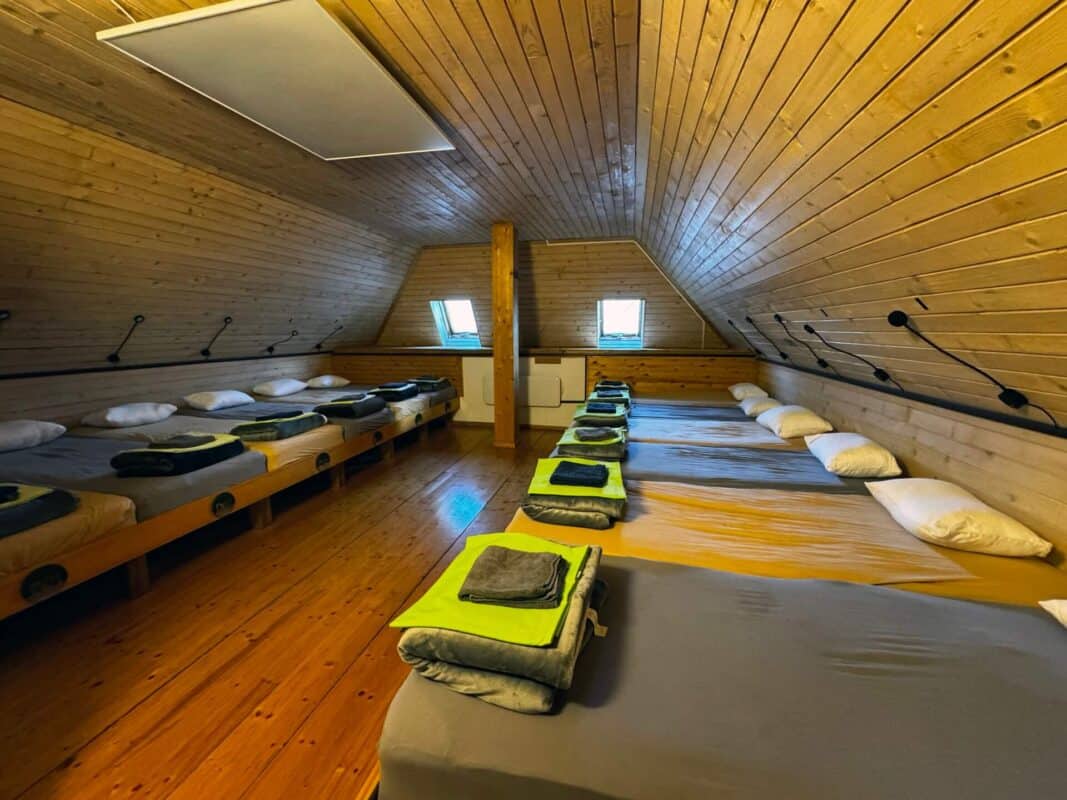
If you plan to stay overnight, check room availability in advance. This is especially important during the hiking season, weekends and good-weather periods.
Food, opening hours and groups
Opening times may vary outside the main summer season or by arrangement with groups. Contact the hut directly for the latest information before making fixed plans.
Self-service planning for your stay at Vršič Pass
Check room and availability options first.
Read access, parking and arrival notes before travelling.
Arrive with your own plan for Vršič, Kranjska Gora, Trenta and the Soča Valley.
Use contact only for special cases, not for information already explained on the page.
A trusted mountain hut at Vršič Pass
Erjavčeva koča has been part of the Vršič mountain pass experience for generations. Guests use it as a practical alpine base for hiking, cycling, scenic drives, visits to Kranjska Gora and trips toward Trenta and the Soča Valley.
Erjavčeva koča is a mountain hut at 1525 m, not a hotel or hostel. Come for nature, simple shelter and the rhythm of the mountains.
✓Expect
✓Unspoiled nature, mountain views and fresh alpine air
✓A place to rest before or after your mountain trip
✓Simple mountain-hut comfort and shared house rules
✓Direct access to Vršič, trails and Triglav National Park
×Do not expect
×Hostel-style nightlife or loud late evenings
×Private bathrooms in every room
×Unlimited parking or guaranteed road access in every weather
×Perfect silence during busy mountain days
Before you book your stay at Vršič Pass
Use the booking information on this page to decide independently. Booking platforms can help with comparison, but your reservation should be clear before you travel. Contact is only for special cases.
Direct booking is best for
Checking rooms and availability
Reading access, parking and arrival details
Booking when your dates and plan are clear
Special questions only for groups, late arrival or winter conditions
No price guarantee is implied. This block encourages self-service planning and reduces unnecessary calls or emails.
What happens after you check availability?
Checking availability is the first booking step, not a request for personal travel planning. Read the arrival, access and parking information before you book. Contact is only for special cases.
Choose the room or stay option that fits your plan.
Complete the booking request with your travel date and arrival plan.
Before travelling, read the access, parking and seasonal notes; use contact only for groups, late arrival or winter conditions.
CTA clicks are measured as intent signals. This block is designed for self-service reservations and to reduce unnecessary calls or emails.
Summer visit: parking, hiking and rooms
In summer, Vrsic is busy with hikers, cyclists and scenic-road visitors. Plan arrival time, parking, weather protection and overnight questions before you leave.
Arrive early when parking demand is high.
Check weather before longer hikes.
For overnight stays, contact the hut directly before travel.
This block is a practical planning reminder, not a live availability statement.
This guide is prepared from the perspective of Erjavčeva koča, a mountain hut on Vršič Pass. Use it together with current weather, road conditions and responsible behaviour in Triglav National Park.
Last updated: 08/02/2026First published: 08/09/2025Reading time: 18 min readPrepared by: Erjavčeva koča team
The Centenary of the Vršič Road
The Centenary of the Vršič Road
Death on the Erzherzog Eugen Strasse
The Centenary of the Vršič Road
(page 4-9)
Dušan Škodič
It was at the beginning of May 1915 when I arrived from Klagenfurt together with twenty comrades at the railway station in Kronau (Kranjska Gora). We all belonged to the 7th Carinthian Infantry Regiment, which had been licking its wounds in its home barracks after returning from Eastern Galicia. Some of us were sent across the Karavanke range, where work had just begun on building a road toward the Soča Valley. It was imperative to complete it as quickly as possible. An Italian breakthrough was very likely, and a new front without a supply route would have been doomed to collapse.
The Centenary of the Vršič Road
A road across mountains where none had existed before
I was assigned as a guard for Russian prisoners of war tasked with building this road. For the time being, several of us guards were quartered high below the pass in the Voss Hut ¹, which had previously been a mountain lodge but whose interior furnishings had already been thoroughly ruined by the military, which used it as a temporary shelter. Barracks for the guards were being built nearby. It was astonishing how much bustle there was here, even though it was clear that the valley had seen hardly any human presence just a few months earlier. From the main construction command in Kranjska Gora, we were assigned to specific sections or sectors into which the route had been divided. At the railway station in Kranjska Gora—where there was such commotion in those days that you would scarcely encounter anything like it even in Vienna—a station for a freight cableway had already been built, though it was not yet operating because the pylons were still being erected higher up. But everything was urgent, and it was only a matter of days before the cable railway would start moving. All around, large depots and barracks for the army had also been prepared.
Almost absent-mindedly, I took in my surroundings on the way, as I first had to report to the military commander, Major Karl Riml, who had his headquarters in a neat villa built at a fine spot about half an hour below the Voss Hut. The major, a Sudeten German, appeared to be a fairly amiable officer. He quickly reviewed my papers, then raised his eyebrows and asked:
“Franz Buhvald, Infantry Regiment No. 7? What nationality are you, Franz Buhvald?”
“Slovene, Herr Major,” I replied, thinking to myself: here we go again! Among officers, Slovenes were considered politically unreliable and were mostly disliked. Riml, fortunately, seemed a different sort of man. He hid a barely perceptible smile behind his moustache and returned my documents with the remark that his command was already fully staffed, so I should report to the Voss Hut, where another command was stationed. The third command, as I soon learned, was right at the top of the pass, which they had named Mojstrovka Pass after a nearby mountain. That command had taken up residence in the Slovene Hut.².
Russian prisoners and their way of the cross
Along the entire route of the road, wherever space allowed, simple barracks were built and packed with Russian prisoners—men who only weeks earlier had been shooting at us in Galicia. How fortunes had turned. Now, still dressed in their worn military coats, they were here and forced to do exhausting labour for us. Served them right. This was, to my mind at the time, clear proof that God was on our side in this war!
Our own barracks at Močila near the Voss Hut were soon ready for occupation, and life there was far more pleasant for us. Unfortunately, there were also many prisoner barracks in the vicinity of Močila, and more prisoners kept arriving day after day, along with horses and all manner of our military units, so there was constant turmoil that required the utmost effort to endure.
My daily work consisted of guarding the Russians, who had to toil from dawn to dusk. Engineers directed the work, each responsible for his own sector. One guard was assigned to about twenty-five Russians, who blasted rock from steep slopes, wielded pickaxes and shovels, and carried stones or gravel on wooden stretchers for embankments. All work was done by hand. Food was scarce even for us, and those wretched devils—as I soon realised—suffered terribly. But the road had to be built quickly, and no mercy was to be shown. The first traffic was supposed to run along it before winter, which seemed utterly impossible to me, no matter how hard we drove them. At the end of May, the declaration of war came, and the Italians, as expected, advanced toward the Soča.
The Centenary of the Vršič Road
1. View of the new road slightly below today’s Erjavčeva Hut.
In the foreground, an Austro-Hungarian officer; in the background, Russian prisoners hurry to complete the final work. The photograph was taken in the winter of 1915/16; above, just as today, the mighty Prisojnik towers over the scene. Source: Europeana
Prisoners were not considered people
Not only fraternisation but any unnecessary conversation with prisoners was strictly forbidden for guards. The only permitted contact was through a Russian interpreter, usually a Jew, who did not have to do any other work. Unfortunately, some of the prisoners realised that I understood a few Russian words—similar to our own—and immediately recognised a kindred Slavic soul in me, which could have cost me dearly.
Someone reported me to the sector engineer Kavalir, a Hungarian who was the embodiment of evil toward the Russians, especially when drunk, which he was most of the time. When things got particularly bad, he would grab a stick and set upon the prisoners, striking wherever it landed. One day, Kavalir—no gentleman at all—summoned me for a report and interrogated me, shouting in a cloud of rum fumes. He insulted me as the lowest Slavic scum fraternising with the enemy and threatened to send me without mercy before a court-martial, which would surely brand me a traitor. After that, it would depend solely on the judge’s mood whether I would be sent straight to the gallows or back to the Galician front on the first train. That would indeed have happened, had Major Riml not intervened on my behalf. He immediately replaced me with a Tyrolean who had just reported to his command and transferred me by order to the other side of the pass.
It was mostly fear of the front that caused some guards to lose all sense of humanity and abuse prisoners who were already suffering terribly. Of course, there were also exceptions who did so out of sheer cruelty, but I did not want to dwell on such wretches—especially when I considered what a lottery the front was. It could easily have been the other way around, with us falling into Russian captivity, as later indeed happened. That too changed my view of the gaunt faces before me; I no longer saw fearsome Russians who had fired at us. It is one thing to shoot at a soldier shooting at you from afar; quite another to torment an unarmed man who has been psychologically and physically dehumanised and brought to the very bottom.
The name Vršič for the road pass came into use much later. At that time, neither the people of Trenta nor those of Kranjska Gora said they were going “to Vršič.” The people of Trenta, who drove their flocks across on goat paths and carried provisions back, said they were going over Kranjski Vrh to Kranj (Kranjska Gora). The people of Kranjska Gora said they were going to Jezerce (dialect: na jezercə), because there was a small permanent lake on the pass, which the army filled in during construction.
The road would have to be passable in winter
In June, I thus found myself in a barracks settlement a few bends below the pass, this time on the Trenta side. This sector was run by Engineer Schutt, who had built himself a fine villa a little above the barracks, where his headquarters were located. Life with him was far more normal than with the drunken Kavalir at Močila. There, with the onset of summer, things were to become even more unbearable, because the military command decided to heed a local forest owner who proposed building suitable avalanche galleries to ensure safe winter passage over the pass.
The proposal was accepted, and large quantities of heavy construction timber—posts, rafters, and thick planks—soon began arriving from the Kranjska Gora side. We could not imagine what all this wood was for, except perhaps to build some sort of roof over the road, which, after all, might not be a bad idea. The demand for timber was such that prisoners on our side also had to saw planks by hand. This was extremely arduous work. Each log was first hoisted onto high supports; one man stood on top pulling the saw upward, while two others pulled it down from either side, slowly cutting six-centimetre-thick planks to cover the framework meant to protect the road from Močila over the pass and a bit further down the Trenta side. The Russians frequently fainted from inadequate nutrition, and diseases began to appear, frightening both us and the officers. The latter kept their distance as much as possible from the unfortunates and left the driving to us. Fortunately, we soon received a steam engine and began sawing planks with a circular saw.
The Centenary of the Vršič RoadThe Centenary of the Vršič Road
2. Avalanche-protection galleries were completely destroyed by an avalanche from Mojstrovka. Source: Europeana
The freight cableway
Despite all difficulties, work progressed surprisingly well, and after just over three months, the road was usable for emergency traffic. This began immediately, even though there was still enormous work to be done, reinforcing shoulders and building retaining walls. Columns of troops rolled toward the Soča to help stem Italian offensives, hauling artillery and equipment in support. The freight cableway from Kranjska Gora also began operating, crossing the pass with several intermediate stations to Trenta. It had limited capacity and was primarily designed to transport food, tools, and hay for horses.
On October 1, our future emperor, Charles, returned from a visit to the front, and all of us—prisoners included—had to line the road for his passage. The slender young heir drove quickly back toward Vienna, and only long afterwards did rumours circulate among us that down on the Soča, where lunch was served, he had imbibed so much cognac that he tumbled into the river. Perhaps these were merely rumours exchanged in confidential conversations, since mocking the heir to the throne would have been punished most severely. Charles, partly because of his frail appearance, never inspired the same respect as the assassinated heir, Franz Ferdinand. Even wrapped in the thickest military greatcoat, as he passed us on a bend below the Slovene Hut, he did not look much thicker than his adjutant’s sabre.
The Centenary of the Vršič Road
3. View of Vršič and the temporary, interrupted road from the Trenta side. The photograph was probably taken shortly before the fatal avalanche. On the right stands the former Slovene Hut, which was damaged in the avalanche. Today it is known as Tičarjev Dom on Vršič. Source: Europeana
Survival under hardship
Hunger gnawed at all of us—except officers and engineers, who had plenty of food and especially drink. Among the Russians, bloody dysentery and other diseases raged; they collapsed, and no amount of shouting helped. They were sent down toward the valley, where medical stations and field hospitals attempted to help them, but many never arrived. Beside every barracks camp, makeshift cemeteries sprang up, and death soon lost its aura of horror.
For survival, anyone is prepared to do whatever it takes. Soon thefts of cargo began at Huda Ravan, where the cableway descended so low that a short cutting had even been excavated. This was especially true when shipments of Liebesgaben—aid in the form of food and clothing collected by civilians throughout the empire—were en route to the front. Some of this aid never reached the front, but culprits were hard to identify because mutual protection prevailed among the thieves. Both prisoners and we guards stole; at times, we would look the other way and then take care of our own stomachs, which fared little better than those of the Russians. One of our men guarding the transhipment station in Trenta, however, overdid it. With the help of middlemen, he began stealing on a large scale, which could not go unnoticed. He was discovered, sent before a court-martial, and probably shot after summary proceedings. He revealed that certain shipments were already missing before the transhipment station, prompting pressure along the entire cableway line. Guards were interrogated, especially the Russians, who were tied to trees and left there even to the bitter end; yet, investigators extracted nothing useful.
In November, the weather in the mountains was unusually fine. There was enough material, and at last work began on erecting the avalanche-protection frameworks, undertaken by a small army of carpenters and woodcutters brought from all over, even beyond Carniola. At the same time, construction began on a large monument to Archduke Eugen, commander-in-chief of the front against Italy. The road was named after him: Erzherzog Eugen Strasse. The monument was conceived as a colossal tribute, with around 200 Russians continuously employed on its construction. It seemed incomprehensible to me to drive exhausted prisoners into such a pointless task as erecting a monument when the war demanded so much more essential work—but I could only remain silent.
What I had taken as punishment when transferred from Klagenfurt now proved a gift. In mid-November, as the Fourth Isonzo Offensive began, heavy thunder again rolled up from the Soča, and I watched my own regiment march grim-faced toward the front. December, too, was unusually fine; the first snow fell only after Christmas, and even then scarcely. Fine weather continued into January, and even in mid-February it was so warm in the sun that we could sunbathe without shirts. The avalanche roofs—which had seemed a waste of time and money, like Eugen’s enormous monument—progressed steadily.
The Centenary of the Vršič Road
5. View of Jalovec a century ago, when the road from Kranjska Gora reached the Trenta Valley. Source: Europeana
Snow, snow, snow…
In the last days of February, the temperature dropped suddenly, and we awoke to a bitterly cold, snowy morning. Everything was white, and prisoners equipped with shovels were sent to clear the road so it would remain passable at all times. But the snowfall continued, and after a week, the intermittent road had become an uncovered tunnel; no one remembered the previous warm days. The snow was completely dry and powdery like the finest flour, and therefore, at least not heavy. The prisoner barracks were poorly and hastily built and full of gaps; people, exhausted by cold, disease, and scant food, were in a truly miserable state. They could scarcely move even empty shovels. Nevertheless, the order stood: the road must remain passable day and night, regardless of the consequences.
At noon on March 8, I was returning with a group of staggering Russians from the Slovene Hut toward Huda Ravan for lunch. Visibility was so poor that we could barely see the road ahead. Suddenly, a sound we had never heard before began approaching from above, behind us. It grew gradually but did not alarm us. Only when it mingled with the crowd’s scream and then abruptly fell silent did our hearts leap into our throats, and we exchanged glances. Unsure what to do, I lit a cigarette. There was no officer present—because the snowfall kept them comfortably in their barracks—and I still had to bring the Russians back to camp, regardless of what had happened above.
Then voices reached us, and figures soon appeared. It was the group coming to relieve us at snow clearing—but now everything was fleeing downhill in terror. Gaunt, bearded faces with bulging eyes shouted “Avalanche, avalanche,” mixed with a few guards from the Kranjska Gora sector. All were empty-handed, having thrown away everything in their flight. Terror seized us too, and together we fled to Huda Ravan, where Engineer Schutt and officers staggering out of their smoky den barely managed to stop us. They soon realised something dreadful had occurred, but all communication with Kranjska Gora and the command on the other side was cut off. Indescribable fear reigned; nothing was visible, and we did not know what else might emerge from the white void surrounding us.
The Centenary of the Vršič Road
6. Lieutenant Colonel Karl Riml on horseback in front of the Riml Hut, which housed the military headquarters for the construction of the road. He married a local woman and settled in Kranjska Gora; a few years after the collapse of the monarchy, he emigrated. His hut later became today’s Koča na Gozdu (Forest Hut). Source: Europeana
The Centenary of the Vršič Road
7. Archduke Eugen of Austria, commander of the entire front against Italy, during an inspection of the new road, which was essential for supplying the Isonzo Front. Source: Europeana
Devastation
The next morning, officers entered the prisoner barracks and tried at gunpoint to force the Russians to go up to the pass for rescue operations, assuming there were victims. It was futile; the Russians resisted, and neither were we any better disposed. Someone muttered aloud that they should send us to the front instead, if they must—just not back up there. Against the killing whiteness, even weapons were useless!
In the afternoon, a few of us nevertheless gathered the courage to go see what had happened above. The road on the pass was buried in snow; nothing indicated where it had been cleared, as it looked cemented over. We could no longer identify the spot where, only yesterday, the twenty-meter-high monument framework had stood; there was nothing there. The top two stations of the freight cableway were also destroyed. We crossed toward the Slovene Hut, where some of our men were trying to reach by throwing aside packed snow that reached the tops of the doors. In doing so, they came upon two unfortunate prisoners whom gusts of wind had hurled against the wall and who had suffocated below. Their mouths were stuffed with snow, their eyes glinting as if still alive. The prisoners who saw them wept like children; horror constricted our throats.
We continued toward Močila to see how the wooden galleries had fared in the disaster. To our disappointment, we found only a few broken rafters jutting like splinters from the snow deposit, hard as stone. Prisoners there had already begun rescue work, hacking with picks and shovels through avalanche debris mixed with remnants of shattered beams and planks. The work was extremely difficult, and they soon encountered the first victims—people who had been on the pass at the moment of the avalanche, hoping the strong roof would save them from the destructive force. Instead, shattered timbers had mangled them, tearing off limbs and heads; only rarely was a body even remotely intact. There was no hope of survivors. Toward evening, another avalanche slid, and in terror we fled back to our meagre shelters. For several nights afterwards, none of us slept peacefully; we were all ears, listening into the dead night.
The Centenary of the Vršič Road
8. Russian prisoners of war and Austro-Hungarian officers during the arduous construction of the road on a bend below today’s Koča na Gozdu (Forest Hut). Source: Europeana
The road completed
Fourteen days later, after the sun had shone for a full week, an order came for all personnel and prisoners to go down into the valley, where there was no danger. It warmed up, and wet-snow avalanches began sliding from Mojstrovka and Slemen. These were much slower than dry avalanches but heavy and thunderous. One day, two artillery pieces were brought to Močila, from which they fired for a long time into the slope, but the snow did not even stir. It seemed it would only come down when the thaw wished it. That indeed happened a few days later, when a wet avalanche from Slemen almost reached the entrance of the Voss Hut. After that, movement on the pass became safer, and on Riml’s order (he had meanwhile been promoted to lieutenant colonel), prisoners began clearing operations.
Only the thaw revealed the full devastation wrought by the avalanche on people and on the works meant to oppose nature’s power. Numbers were concealed, but it was said that about 110 prisoners and 6 or 7 guards were uncovered in total. Of the wooden roofs, only splinters remained. How many thousands of combined victims the Erzherzog Eugen Strasse claimed through hunger, bloody dysentery, cholera, smallpox, and human sadism no one knew—and no one cared. The road was finished. The prisoners, no longer needed there, were sent elsewhere. We guards, too, were soon sent on to the trenches of the Isonzo or Tyrolean fronts.
The Centenary of the Vršič Road
9. Simple Russian peasants in captivity as prisoners of war. Fear of an uncertain future shines from their eyes. Source: Europeana
Sources:
Franc Uran: Kako se je delala cesta na Vršič, Planinski vestnik 13/3 (1957), 151–163.
Ivan Arih: Gradnja ceste preko Vršiča v času prve svetovne vojne, Železar (1975).
France Malešič: Spomin in opomin gora. Kronika smrtnih nesreč v slovenskih gorah. Radovljica: Didakta, 2005.
We are located in the heart of Triglav National Park
Book a stay in the iconic, first-built mountain hut on the Vršič Pass
Erjavčeva mountain hut is open year-round. Reserve your stay and spend some time in the natural paradise of Triglav National Park (UNESCO), near Kranjska Gora, on the Vršič mountain pass in the heart of the park.
We use cookies to improve your browsing experience, measure traffic, and enhance website functionality. You can accept all cookies, reject non-essential cookies, or manage your preferences. Cookie Policy,
Privacy Policy
and Terms of Use.
!
Google Maps displays incorrect information that the road to Erjavčeva koča is closed. The road to Erjavčeva koča is open and normally passable from both directions.



 Slovenščina
 Bosanski
 Hrvatski
 Čeština
 Dansk
Dansk Dutch
Dutch Suomi
Suomi Français
 Deutsch
 Magyar
 Italiano
 Polski
 српски
 Slovenčina
 Español
 Svenska