The most useful points from this guide before you continue.
Stay on Vršič Pass
Stay at Erjavčeva koča on Vršič Pass
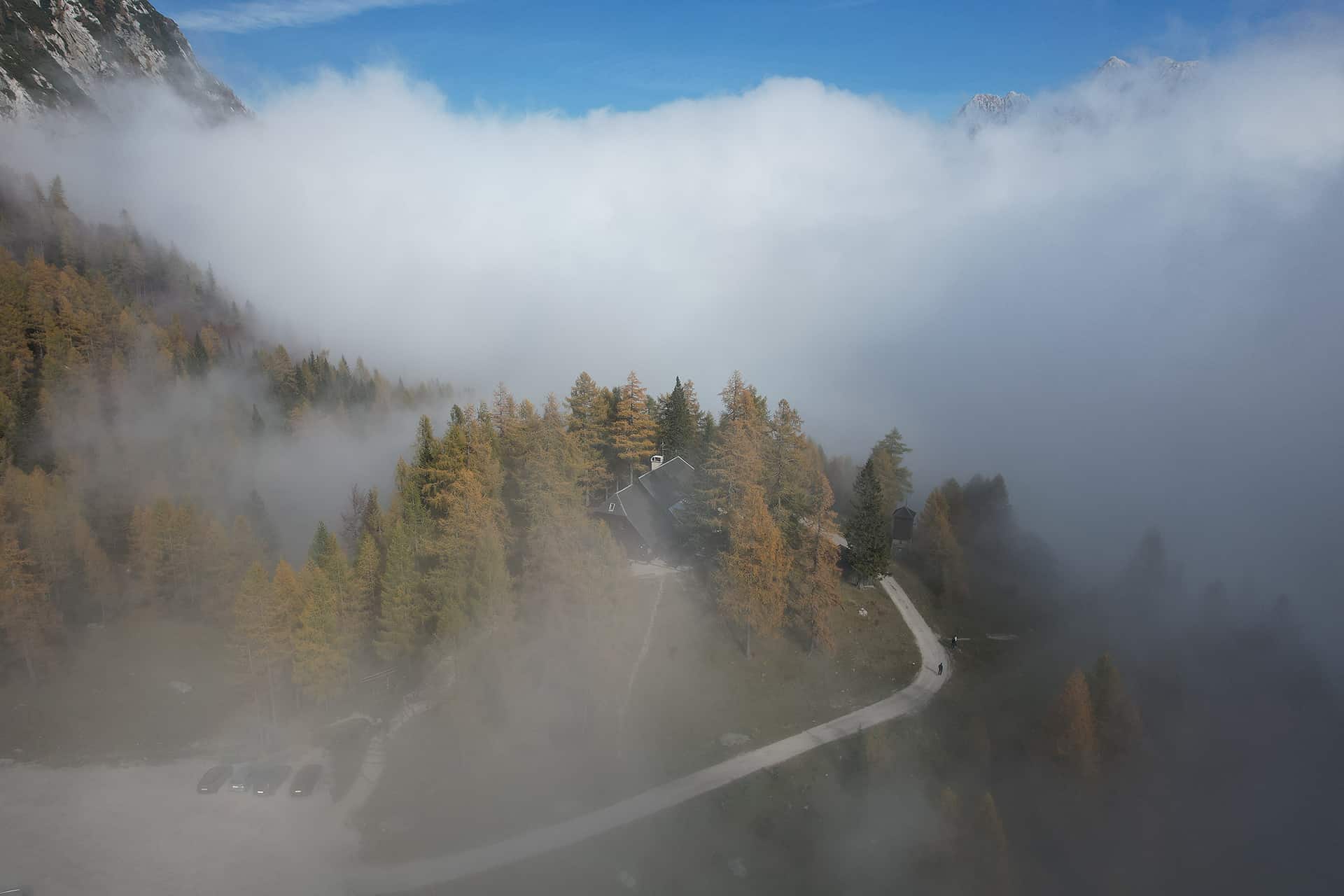
Erjavčeva koča is a mountain hut at Vršič Pass, between Kranjska Gora, Trenta, the Soča Valley and the Julian Alps. It is a practical base for hikers, road-trippers, cyclists and guests who want to stay close to the mountain pass.
Direct location on the Vršič Pass road
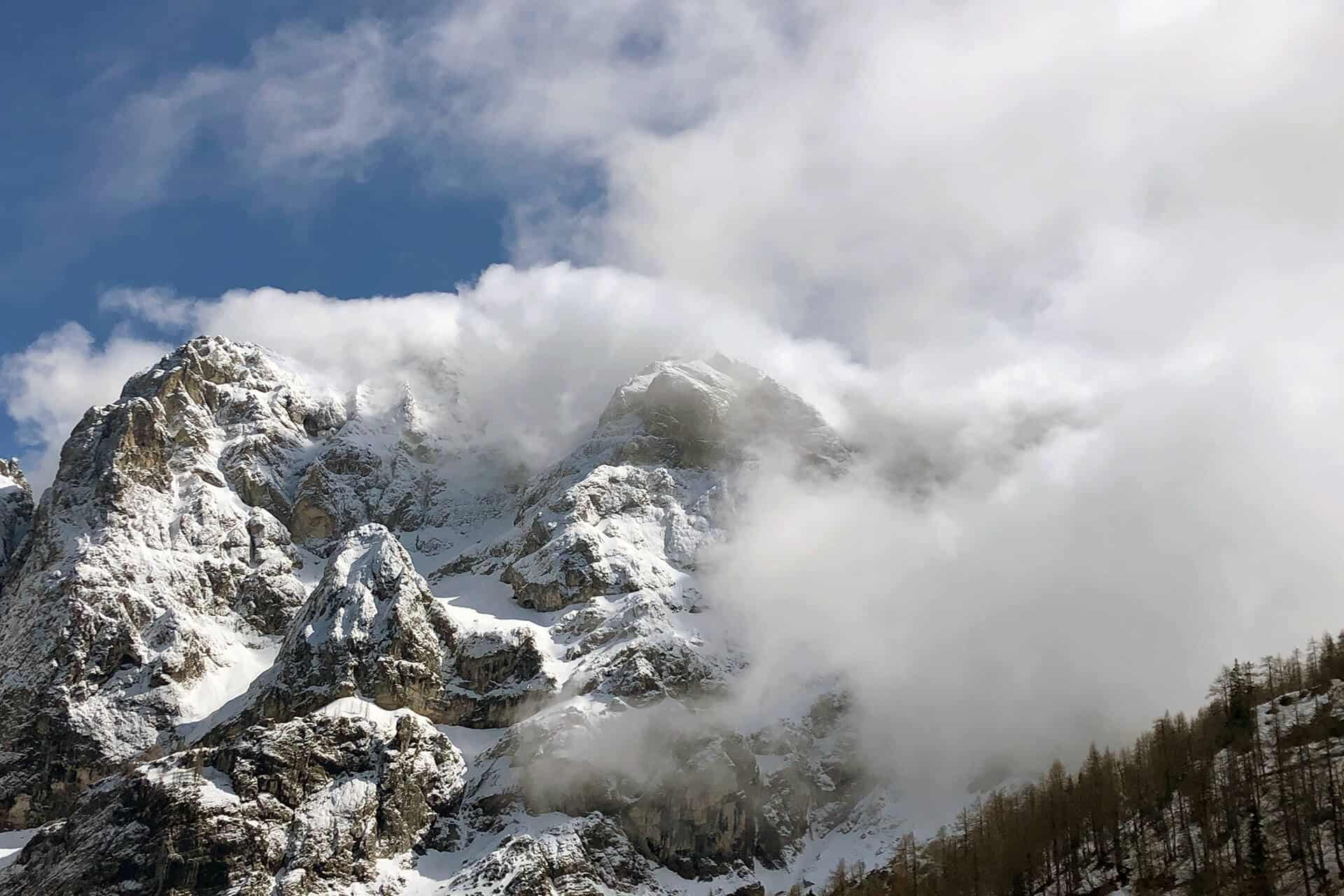
Good base for hiking, scenic drives and Julian Alps day trips
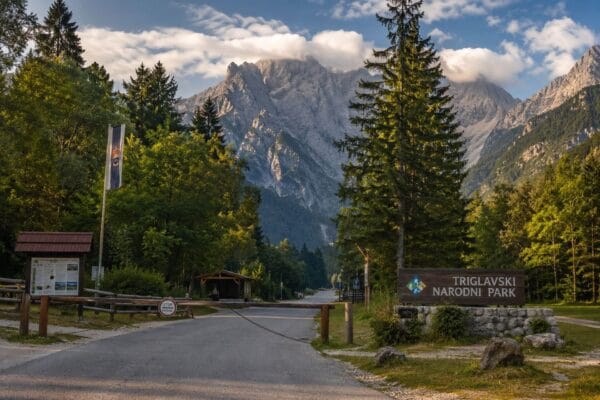
Useful for guests visiting Kranjska Gora, Trenta, Soča Valley and Triglav National Park
Food, mountain-hut atmosphere and practical local information in one place
This block is designed for independent guests and self-service booking. It does not imply a price guarantee or live availability.
Before you book your stay
Vršič Pass is a high mountain location, so it is worth checking a few practical details before you travel. This helps you plan your arrival, parking, hiking day and overnight stay more easily.
Access and road conditions
The Vršič road can be affected by season, weather and traffic. Before travelling, check current access information and plan enough time for the mountain road.
Parking
Parking rules and availability around Vršič can change by season and operator. Check the latest parking information before arrival, especially in busy periods.
Rooms and overnight stay
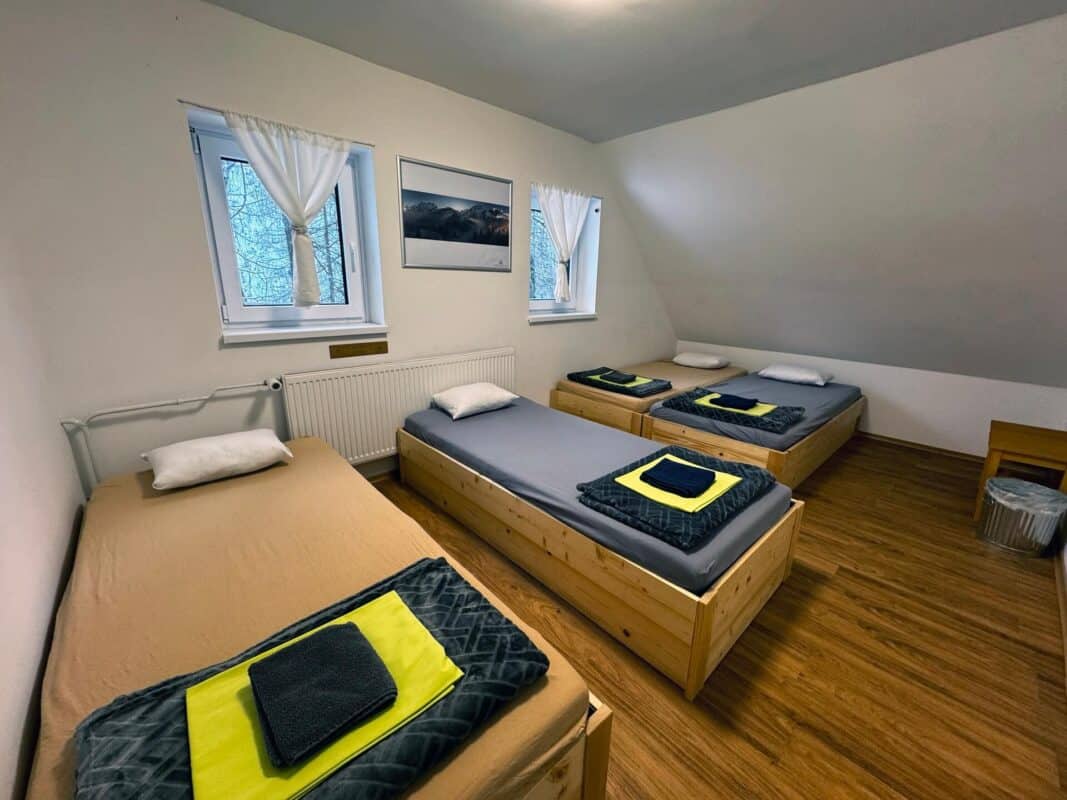
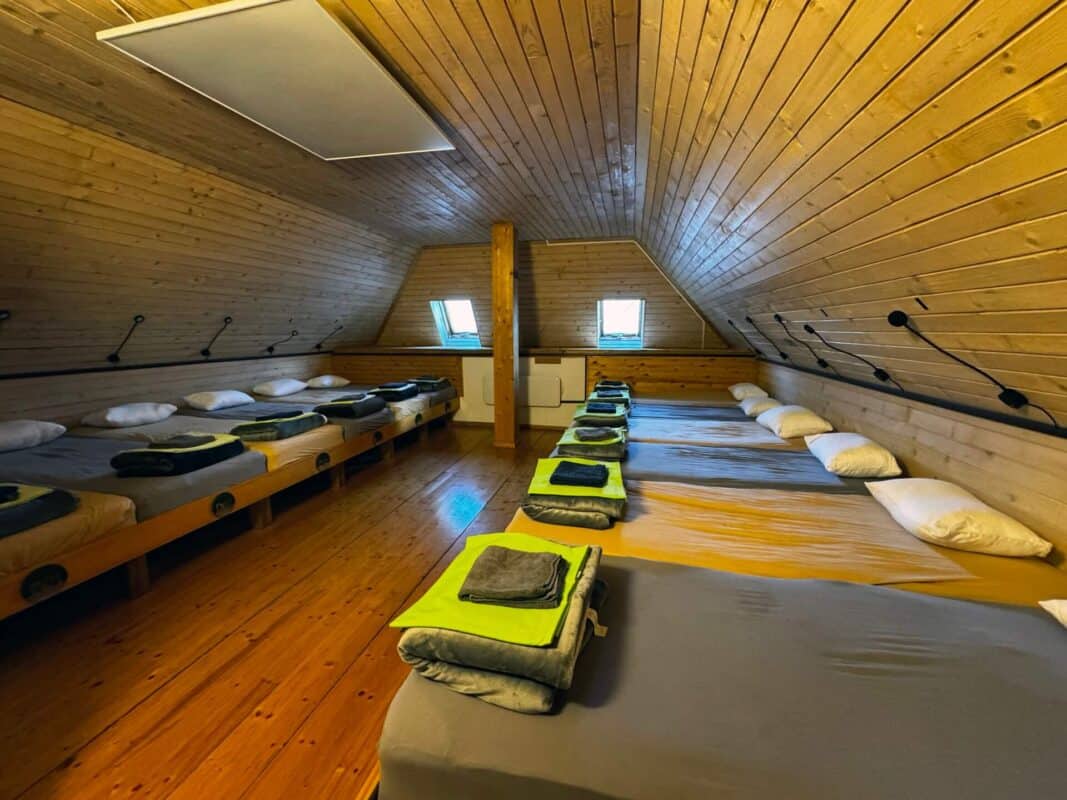
If you plan to stay overnight, check room availability in advance. This is especially important during the hiking season, weekends and good-weather periods.
Food, opening hours and groups
Opening times may vary outside the main summer season or by arrangement with groups. Contact the hut directly for the latest information before making fixed plans.
Self-service planning for your stay at Vršič Pass
Check room and availability options first.
Read access, parking and arrival notes before travelling.
Arrive with your own plan for Vršič, Kranjska Gora, Trenta and the Soča Valley.
Use contact only for special cases, not for information already explained on the page.
A trusted mountain hut at Vršič Pass
Erjavčeva koča has been part of the Vršič mountain pass experience for generations. Guests use it as a practical alpine base for hiking, cycling, scenic drives, visits to Kranjska Gora and trips toward Trenta and the Soča Valley.
Erjavčeva koča is a mountain hut at 1525 m, not a hotel or hostel. Come for nature, simple shelter and the rhythm of the mountains.
✓Expect
✓Direct access to Vršič, trails and Triglav National Park
✓Quiet evenings, early starts and weather-dependent mountain life
✓Food, shelter and practical help from the hut team
✓Unspoiled nature, mountain views and fresh alpine air
×Do not expect
×Perfect silence during busy mountain days
×A valley resort experience
×Luxury hotel rooms or city-hotel services
×Hostel-style nightlife or loud late evenings
Before you book your stay at Vršič Pass
Use the booking information on this page to decide independently. Booking platforms can help with comparison, but your reservation should be clear before you travel. Contact is only for special cases.
Direct booking is best for
Checking rooms and availability
Reading access, parking and arrival details
Booking when your dates and plan are clear
Special questions only for groups, late arrival or winter conditions
No price guarantee is implied. This block encourages self-service planning and reduces unnecessary calls or emails.
What happens after you check availability?
Checking availability is the first booking step, not a request for personal travel planning. Read the arrival, access and parking information before you book. Contact is only for special cases.
Choose the room or stay option that fits your plan.
Complete the booking request with your travel date and arrival plan.
Before travelling, read the access, parking and seasonal notes; use contact only for groups, late arrival or winter conditions.
CTA clicks are measured as intent signals. This block is designed for self-service reservations and to reduce unnecessary calls or emails.
Summer visit: parking, hiking and rooms
In summer, Vrsic is busy with hikers, cyclists and scenic-road visitors. Plan arrival time, parking, weather protection and overnight questions before you leave.
Arrive early when parking demand is high.
Check weather before longer hikes.
For overnight stays, contact the hut directly before travel.
This block is a practical planning reminder, not a live availability statement.
This guide is prepared from the perspective of Erjavčeva koča, a mountain hut on Vršič Pass. Use it together with current weather, road conditions and responsible behaviour in Triglav National Park.
Last updated: 08/02/2026First published: 07/01/2026Reading time: 10 min readPrepared by: Erjavčeva koča team
Official Journal of the DÖAV from 1875
Official Journal of the DÖAV from 1875
Official Journal of the DÖAV from 1875
Mitteilungen des Deutschen und Oesterreichischen Alpenvereins
In the third issue of this year’s Planinski vestnik, we read a very interesting article about the rise and fall of the Carniolan Section of the German and Austrian Alpine Club (DÖAV). In the present contribution, we will briefly leaf through its official journal.
The DÖAV sought to bring its activities as close as possible to the widest possible circle of people, which is why up to 70 per cent of the association’s expenditures were devoted to publishing. These included the journal Zeitschrift des Deutschen und Österreichischen Alpenvereins and, as we might call it, the association’s official gazette, Mittheilungen des Deutschen und Österreichischen Alpenvereins. Individual issues of the Mittheilungen were bound into volumes and are now available to modern researchers of mountaineering history on the Innsbruck archive’s website.
In the Slovenian context, the journal is of interest primarily from two perspectives. The first concerns the fact that the journal, like the association itself, was initially nonpolitical. The efforts of both the association and the journal focused on geographical connectedness and Alpine matters, not on political ambition, as reflected in the published news. Due to socio-political changes, however, especially in the period before the Second World War, both the association and the journal became instruments of the Greater German idea.
The second aspect concerns the wide reach of the association and the journal. A review of the news shows that knowledge of the mountain world extended widely. Knowing that the journal covered the German-speaking Central European area and that the association also included branches in England and Egypt, we may state that awareness of the Slovenian mountain landscape of that time far exceeded the framework of today’s common European space.
Official Journal of the DÖAV from 1875
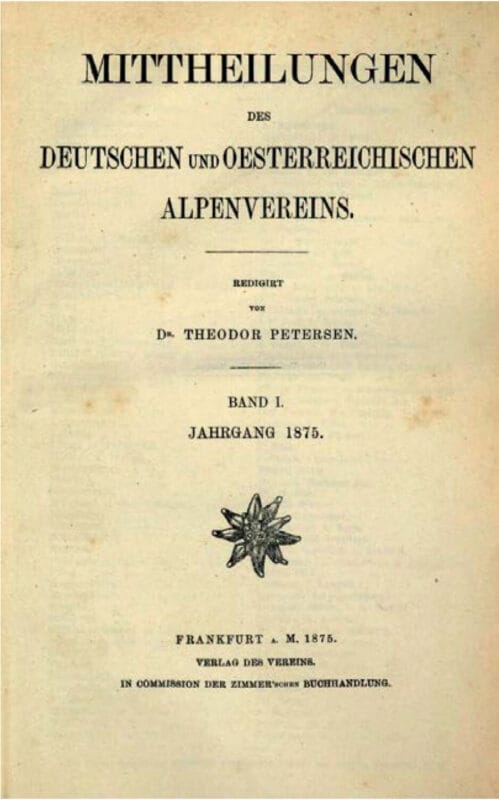
Form of the journal
As we can read on the cover of the first issue from 1875, the journal began publication in Frankfurt, where the association’s headquarters were located at the time. It was planned to be published six times a year. Members were to receive it free of charge through their local branches, but in the 1870s, it could also be purchased in bookshops at 4 marks or 2 florins. If we know that, in the same year, a six-month postal subscription to the central Laibacher Zeitung cost 7.50 florins, it follows that the price of the association’s journal was not low. This, together with the fact that it was written in German, meant that it was intended for a limited readership in the Slovenian lands—namely, a narrow segment of the bourgeoisie interested in mountaineering.
Due to the association’s ever-expanding activities and those of its branches, the journal was published on the 20th of each month from 1881 onward; from 1885 it appeared twice monthly, and in its final period, only once a month.
Editorial board
The editors of the journal were not unknown in the Slovenian lands, as Planinski vestnik also reported. The first editor of the Mittheilungen was the German chemist and alpinist Dr. Theodor Peterson from Frankfurt, who was also the first president of the DÖAV. In 1877, he was succeeded by Alpine researcher and alpinist Theodor Trautwein, who gave the journal a more literary character. It was taken even further in this direction by the journalist Johannes Emmer, who served as editor for four years starting in 1885.
The most important imprint on the journal, however, was left by the alpinist and merchant Heinrich Heß, who assumed the editorship in 1889 and led it until 1919. According to Planinski vestnik, during this period, the journal began to “take a position on every phenomenon in mountaineering and alpinism; it became mountaineering documentation that formed the basis of every alpine library.” Heß was wholeheartedly devoted to alpinism; in 1877, he climbed Großglockner without a guide, and later also the Matterhorn. He worked as an alpinist writer for 42 years and had the strictest standards regarding expression and linguistic purity. He possessed an innate ability to select the appropriate submissions from among the incoming letters and essays.
In 1920, the editorship was taken over by the alpinist Hans Barth, who led the journal until its demise in 1938. Before turning to more detailed reports on news from the Slovenian lands, it is worth noting that among the contributors was the educator Josef Vesel, a member of the main committee of the Carniolan branch during 1892–1901.
The life of the association’s journal can be divided into three periods: the period up to the First World War, the period of the First World War, and the interwar period.
Official Journal of the DÖAV from 1875
Cover of the official journal of the German and Austrian Alpine Club (DÖAV) from 1875 Source: Historisches Alpenarchiv
Before the First World War
In the first period, the journal published circulars from the central committee, scientific and travel articles, and instructional texts for mountaineers, including articles on nutrition, mountaineering equipment, and related topics. In proportion to the increased efforts of the central and branch committees, the journal increasingly carried reports on the construction of huts and mountain paths, their marking, and the installation of signposts. The journal contains numerous entries, including lists of accidents, deceased members, and mountaineering literature.
Despite the existence of several DÖAV branches, news from the Slovenian lands most often concerned the activities of the Carniolan Section. The range of news expanded over time—from the first modest and rather one-sided reports to a more diverse spectrum in line with the association’s increasingly complex activities. Whereas in the first year of publication, only one item was published, about a lecture organised by the branch on the topic of pile dwellers, the number of news items increased over the years and reached twelve in 1893. In 1882, most news related to the Carniolan Section concerned organised lectures, while the final item referred to an ascent of Grintovec. After the first Maria Theresa Hut, located below Triglav, was built in 1877, there were significantly more reports from that area. In general, the opening of huts in the Julian Alps, the Karavanks, and the Kamnik–Savinja Alps led to increased contributions.
In addition to reports on specific activities, longer articles by Johannes Frischauf and Julius Kugy are certainly worth mentioning. Among the leading articles, special mention should be made of the 1901 contribution by tax expert and long-time president of the Carniolan Section, Dr. Rudolf Roschnik, about the routes leading to and from the Vosshütte (today’s Erjavčeva Hut on Vršič). Although the authors of the news items from this period are not known, it may be assumed that Roschnik was the author of most of them. One example is his report on the first guiding course in Slovenia, organised by the Carniolan Section in 1894 in Mojstrana.
During the war
The journal did not cease publication during the First World War, as the editorial board believed that “… the longer the war lasts and the longer our members are unable to be active in the Alps, the more necessary it is that our association’s publications strengthen the sense of shared belonging.” Publication during this period was hampered by increased printing and labour costs. Obtaining the necessary paper and other materials required considerable effort and ingenuity, and often the print run depended on donated materials. Work was impeded by a shortage of skilled workers, repeated mail and freight blockades, and enormous price inflation.
Issues from this period reflect the spirit of the time and the association’s serious changes. Compared to the prewar period, there was also a radicalisation of language and content. The journal reduced its frequency from 24 issues to 12 per year and was subject to censorship, which restricted reporting and slowed production. Information about combat, life, and the activities of military units in the high mountains—requested by readers—could only be partially conveyed, despite concessions from the highest military authorities. The external appearance also changed, as from the beginning of the war until its demise, the Mittheilungen were printed in Gothic type.
The journal solicited voluntary donations for troops fighting in the mountains, particularly boots, walking sticks, ice axes, ropes, goggles, backpacks, lamps, and similar items. The journal also lists the names of DÖAV members who fell in battle. Reports from the Carniolan branch, or news connected with it, were rare, though it regularly appeared in the published list of branches.
From the Slovenian lands, one of the few items worth mentioning is the report on the accident of the 55-year-old guide Franc Urbas from Mojstrana. With his burial, the last member of the group of the first (trained) mountain guides in Slovenia was laid to rest.
Reporting between the wars
In the interwar period, new regular sections appeared, some aimed at young hikers, but overall, the journal tried to maintain its established course. It continued to publish reports from association branches, commemorate notable members, and write about mountaineering equipment, environmental protection, accidents, and more. Increasingly, the journal carried advertisements for mountaineering equipment, hospitality establishments, modes of transport, insurance companies, cameras, sun creams, pharmaceutical firms, and similar products. In general, there was also more illustrative material.
After the end of the First World War, news related to the Slovenian lands was, as expected, rare, since there were no longer any DÖAV branches in the area. The final notice from the Carniolan Section was addressed to members and concerned the journal itself, which could no longer be distributed locally; members therefore received it by post from Munich.
Among the longer articles about our mountains, two stand out. The first is a travelogue by a Viennese tourist about Vrtača. The second, probably more appealing to readers at the time, dates from 1926 and was based on the personal experiences of a member of the Munich branch. With his account, the author sought to prevent the former Austrian Alpine regions in Carniola (Slovenia)—that is, the Julian Alps, the Karavanks, and the Kamnik–Savinja Alps—which had been opened up and maintained by active Alpine Club branches before the war, from falling into oblivion. In addition to descriptions of their beauty, comparable to any other region of the Eastern Alps, and precise geographical descriptions, he listed all huts, starting points, and the time required to walk to the huts. Regarding food, he emphasised that prices were lower than in Germany and Austria, while the quantity and quality were considerably better. His experiences with the local population are also interesting. According to him, it was mostly Slovenian, except in Bohinj, where people seemed to speak German better than Slovenian. Despite the Slovenian origin of the population, a German-speaking mountaineer could generally get along quite well everywhere.
Decline of the journal
With the annexation of Austria to Germany on 12 March 1938 and the renaming of the association, the journal henceforth appeared as Mittheilungen des deutschen Alpenvereins. The change of name and its favourable stance toward the great event already indicated the journal’s future policy in the very first issue. It clearly positioned itself on the side of official Nazi policy, and it could be said that, until its demise, the Mittheilungen functioned as a political organ of the authorities—still intended to publish mountaineering news, but strictly in the Greater German spirit.
The final issue of the journal was published on 5 December 1938. After the founding of the Austrian Alpine Club (ÖAV) in 1945, the first issue of Mittheilungen des Oesterreichischen Alpenvereins appeared in Vienna; from 1948 onward, it was published in Innsbruck.
Official Journal of the DÖAV from 1875
Detail of a map of the extensive area from 1891, showing the seats of DÖAV sections. In Carniola (bottom right), the following sections were active at the time: the Carniolan Section in Ljubljana, Küstenland in Trieste, Görz in Gorizia, Cilli in Celje, and Marburg in Maribor. Source: Mittheilungen des DÖAV
We are located in the heart of Triglav National Park
Book a stay in the iconic, first-built mountain hut on the Vršič Pass
Erjavčeva mountain hut is open year-round. Reserve your stay and spend some time in the natural paradise of Triglav National Park (UNESCO), near Kranjska Gora, on the Vršič mountain pass in the heart of the park.
We use cookies to improve your browsing experience, measure traffic, and enhance website functionality. You can accept all cookies, reject non-essential cookies, or manage your preferences. Cookie Policy,
Privacy Policy
and Terms of Use.
!
Google Maps displays incorrect information that the road to Erjavčeva koča is closed. The road to Erjavčeva koča is open and normally passable from both directions.

 Slovenščina
 Bosanski
 Hrvatski
 Čeština
 Dansk
Dansk Dutch
Dutch Suomi
Suomi Français
 Deutsch
 Magyar
 Italiano
 Polski
 српски
 Slovenčina
 Español
 Svenska