

 Slovenščina
 Bosanski
 Hrvatski
 Čeština
 Dansk
Dansk Dutch
Dutch Suomi
Suomi Français
 Deutsch
 Magyar
 Italiano
 Polski
 српски
 Slovenčina
 Español
 Svenska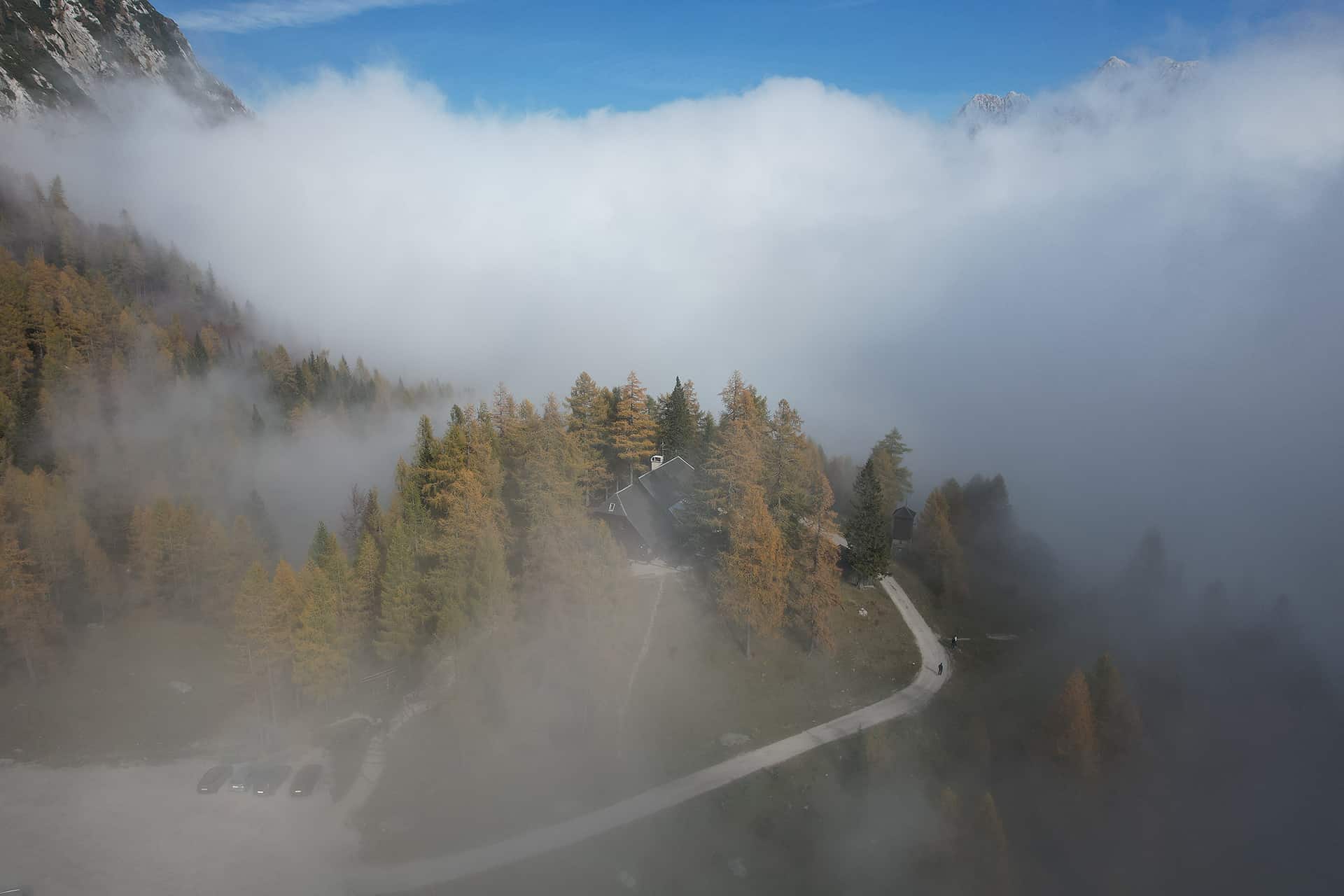
On this page
Jump to the most useful sections of this guide.
- Summer visit: parking, hiking and rooms
- JULIAN ALPS BIOSPHERE RESERVE VISITOR GUIDE • WINTER
- For National Park visitors
- IN WINTER, NATURE NEEDS PEACE AND OUR ADMIRATION. VISITATION SHOULD BE MODERATE, RESPECTFUL, AND SAFE.
- THE JULIAN ALPS IN WINTER – BEAUTY THAT NEEDS OUR CARE
- Responsible and safe in the mountains in winter
- For national park visitors
- IN WINTER, NATURE NEEDS PEACE AND OUR ADMIRATION. VISITATION SHOULD BE MODERATE, RESPECTFUL, AND SAFE.
- Responsible and safe in the mountains in winter
- Responsibly to the Mountains
- QUIET ZONES
- Winter
Quick summary
The most useful points from this guide before you continue.
Stay on Vršič Pass
Stay at Erjavčeva koča on Vršič Pass
Erjavčeva koča is a mountain hut at Vršič Pass, between Kranjska Gora, Trenta, the Soča Valley and the Julian Alps. It is a practical base for hikers, road-trippers, cyclists and guests who want to stay close to the mountain pass.
- Direct location on the Vršič Pass road
- Good base for hiking, scenic drives and Julian Alps day trips
- Useful for guests visiting Kranjska Gora, Trenta, Soča Valley and Triglav National Park
- Food, mountain-hut atmosphere and practical local information in one place
This block is designed for independent guests and self-service booking. It does not imply a price guarantee or live availability.
Before you book your stay
Vršič Pass is a high mountain location, so it is worth checking a few practical details before you travel. This helps you plan your arrival, parking, hiking day and overnight stay more easily.
Access and road conditions
The Vršič road can be affected by season, weather and traffic. Before travelling, check current access information and plan enough time for the mountain road.
Parking
Parking rules and availability around Vršič can change by season and operator. Check the latest parking information before arrival, especially in busy periods.
Rooms and overnight stay
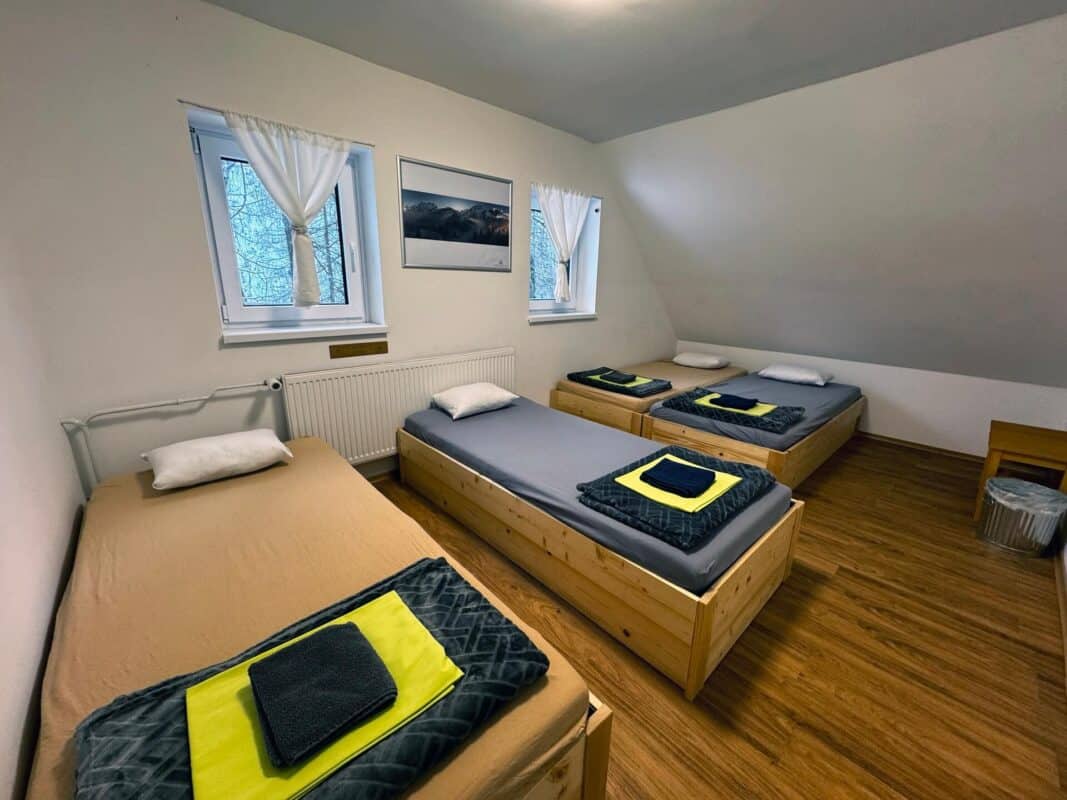
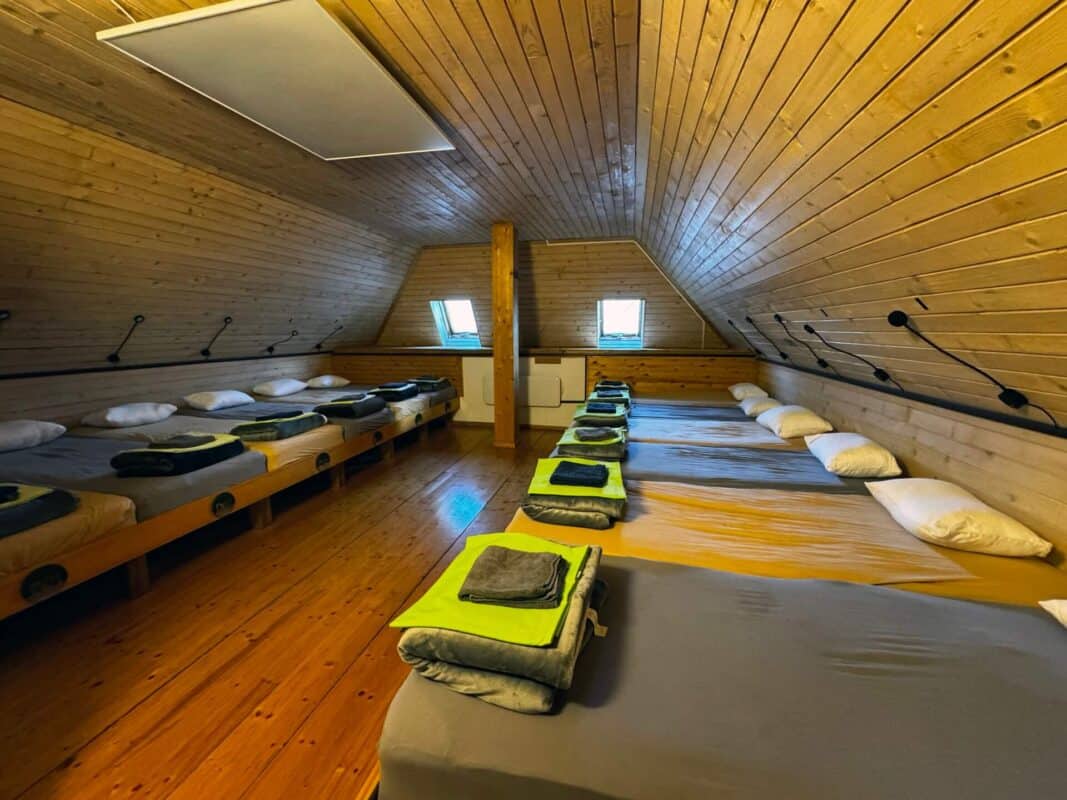
If you plan to stay overnight, check room availability in advance. This is especially important during the hiking season, weekends and good-weather periods.
Food, opening hours and groups
Opening times may vary outside the main summer season or by arrangement with groups. Contact the hut directly for the latest information before making fixed plans.
Self-service planning for your stay at Vršič Pass
- Check room and availability options first.
- Read access, parking and arrival notes before travelling.
- Arrive with your own plan for Vršič, Kranjska Gora, Trenta and the Soča Valley.
- Use contact only for special cases, not for information already explained on the page.
A trusted mountain hut at Vršič Pass
Erjavčeva koča has been part of the Vršič mountain pass experience for generations. Guests use it as a practical alpine base for hiking, cycling, scenic drives, visits to Kranjska Gora and trips toward Trenta and the Soča Valley.
Ready to stay on Vršič Pass? Check the verified accommodation page and reserve directly with the hut.
Erjavčeva koča is a mountain hut at 1525 m, not a hotel or hostel. Come for nature, simple shelter and the rhythm of the mountains.
- ✓A place to rest before or after your mountain trip
- ✓Simple mountain-hut comfort and shared house rules
- ✓Direct access to Vršič, trails and Triglav National Park
- ✓Quiet evenings, early starts and weather-dependent mountain life
- ×Private bathrooms in every room
- ×Unlimited parking or guaranteed road access in every weather
- ×Perfect silence during busy mountain days
- ×A valley resort experience
Before you book your stay at Vršič Pass
Use the booking information on this page to decide independently. Booking platforms can help with comparison, but your reservation should be clear before you travel. Contact is only for special cases.
Direct booking is best for
- Checking rooms and availability
- Reading access, parking and arrival details
- Booking when your dates and plan are clear
- Special questions only for groups, late arrival or winter conditions
Booking platforms are useful for
- Comparing accommodation options
- Reading platform-specific reviews
- Managing platform bookings in one account
- Using platform filters and policies
No price guarantee is implied. This block encourages self-service planning and reduces unnecessary calls or emails.
What happens after you check availability?
Checking availability is the first booking step, not a request for personal travel planning. Read the arrival, access and parking information before you book. Contact is only for special cases.
- Choose the room or stay option that fits your plan.
- Complete the booking request with your travel date and arrival plan.
- Before travelling, read the access, parking and seasonal notes; use contact only for groups, late arrival or winter conditions.
CTA clicks are measured as intent signals. This block is designed for self-service reservations and to reduce unnecessary calls or emails.
Summer visit: parking, hiking and rooms
In summer, Vrsic is busy with hikers, cyclists and scenic-road visitors. Plan arrival time, parking, weather protection and overnight questions before you leave.
- Arrive early when parking demand is high.
- Check weather before longer hikes.
- For overnight stays, contact the hut directly before travel.
This block is a practical planning reminder, not a live availability statement.
This guide is prepared from the perspective of Erjavčeva koča, a mountain hut on Vršič Pass. Use it together with current weather, road conditions and responsible behaviour in Triglav National Park.
Triglav National Park Newspaper Winter 2025 2026
Triglav National Park Newspaper Winter 2025 2026
Triglav National Park Newspaper Winter 2025 2026
JULIAN ALPS BIOSPHERE RESERVE VISITOR GUIDE • WINTER
For National Park visitors
The rules and recommendations regarding the code of conduct in national parks are of key importance in protected areas worldwide: to protect and conserve exceptional, pristine, and unique natural phenomena and to preserve them for future generations. The vast majority of visitors to Triglav National Park abide by these rules.
IN WINTER, NATURE NEEDS PEACE AND OUR ADMIRATION. VISITATION SHOULD BE MODERATE, RESPECTFUL, AND SAFE.
Triglav National Park Newspaper Winter 2025 2026
Triglav National Park Newspaper Winter 2025 2026
In 2024, Triglav National Park, the Julian Alps area and nature conservation in Slovenia was celebrate 100 years since the signing of the lease agreement to establish the Alpine Conservation Park, the predecessor of Triglav National Park.
THE JULIAN ALPS IN WINTER – BEAUTY THAT NEEDS OUR CARE
Responsible and safe in the mountains in winter
With the warmth of summer and autumn behind us, the time has come for the Julian Alps to don a blanket of snow, transforming them into a fairy-tale landscape. It is the season when many dust off their sledges and skis to enjoy the snow-covered slopes, while others test their skills on winter hikes of varying levels of difficulty. However, behind this image of serenity and stillness lies a delicate mountain world that is easily disturbed by too many visitors.
Life in the mountains does not stop under a thick layer of snow; it simply changes its rhythm. Over thousands of years, animals and plants have adapted to survive these harsh conditions. Beneath the snow, nature is very much alive. Snow acts as a protective blanket, retaining warmth and shielding animals and plants from wind and cold. Some animals sleep through the harshest months in their dens, while others move to sunnier slopes with less snow and slightly more food – all focused on the same goal: conserving energy.
Sudden disturbances in the seemingly quiet winter mountain environment caused by humans and irresponsible visitation lead to unnecessary energy loss, which animals cannot replace when food is scarce. Species such as chamois, hazel grouse, and capercaillie rely on complete calm to survive the cold months. This makes the question of how to balance the human desire to experience winter nature with the responsibility to protect it more relevant than ever.
The Julian Alps are a treasure we all share. Let’s protect them through responsible visitation: by keeping to marked trails, avoiding sensitive areas, keeping noise to a minimum, and showing deep respect for nature. May footprints in the snow be the only thing we leave behind. Let’s be guardians of the Julian Alps, not just visitors!
For national park visitors
The rules and recommendations regarding the code of conduct in national parks are of key importance in protected areas worldwide: to protect and conserve exceptional, pristine, and unique natural phenomena and to preserve them for future generations. The vast majority of visitors to Triglav National Park abide by these rules.
IN WINTER, NATURE NEEDS PEACE AND OUR ADMIRATION. VISITATION SHOULD BE MODERATE, RESPECTFUL, AND SAFE.
Responsible and safe in the mountains in winter
Short days, a thick blanket of snow, cold winds and low temperatures are a constant in the higher lying parts of Triglav National Park from the end of autumn and late into spring. By choosing the marked trails, checking conditions, and using proper gear and footwear, we can do a lot to ensure our own safety while allowing nature to take its winter rest.

Triglav National Park Newspaper Winter 2025 2026
Triglav National Park Newspaper Winter 2025 2026
Responsibly to the Mountains
Triglav National Park is the only national park in Slovenia. Visitors are only guests in this beautiful and sensitive natural environment and cultural landscape. Welcome!
As respectful visitors, make sure the area remains a place of peace and quiet for residents and visitors. The dog must be kept on a leash.
The weather in the mountains is very changeable. Bring a change of clothes, and dress in layers.
Leave your vehicle in a designated car park. Use public transport.
Attentive visitors appreciate the fragile natural environment and keep to designated trails. High risk of slipping on steep terrain. Hiring a mountain guide is recommended for high-altitude hikes.
Visitors are not allowed to spend the night outside designated areas.
Ice skating on frozen alpine lakes is forbidden.
Short days – take into account the length of the daytime period in winter.
YOUR STEP MATTERS. IT DOESN’T TAKE MUCH, BUT MAKES A GREAT DIFFERENCE.
QUIET ZONES
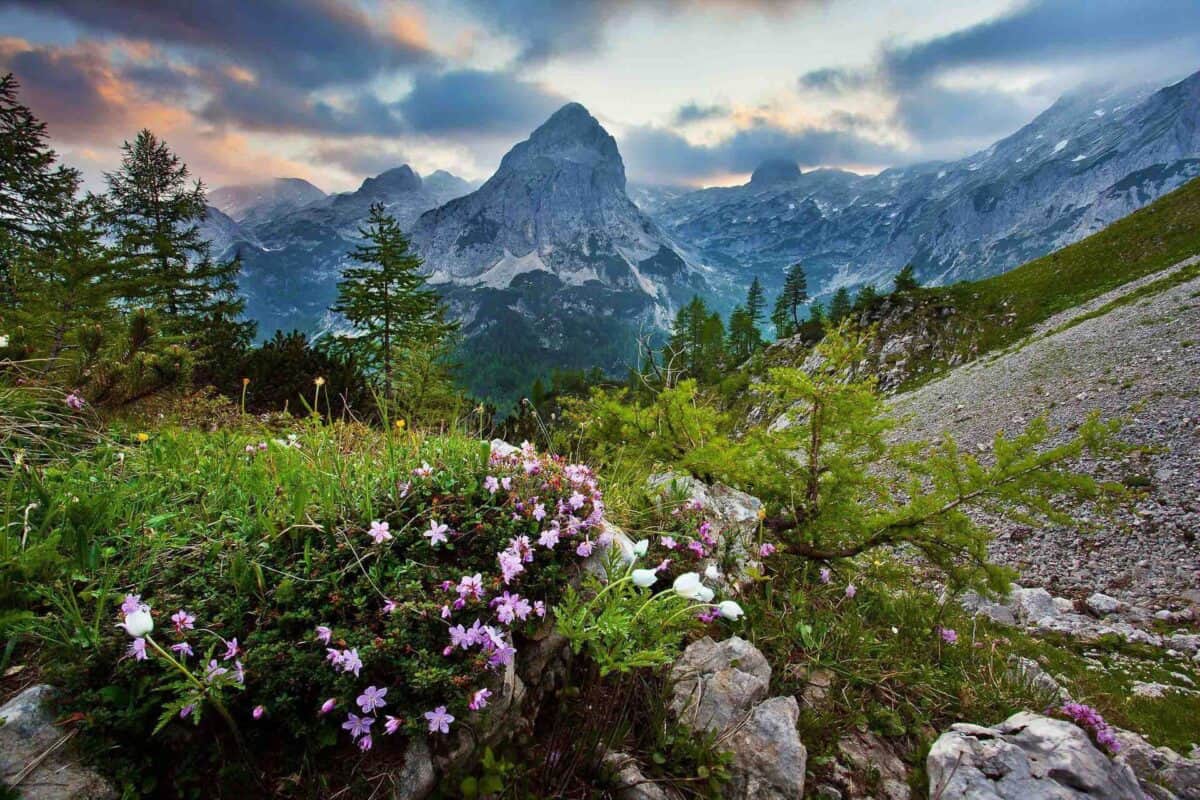
Quiet zones are areas in Triglav National Park that play a key role in the conservation of plant and animal species. In these areas, specific adjustments to time and space are needed for visitation and other activities. The quiet zones are intended to protect the capercaillie, rock ptarmigan, black grouse, chamois, and raised bogs.
Triglav National Park Newspaper Winter 2025 2026
Triglav National Park Newspaper Winter 2025 2026
Winter
The earth was taking its well-deserved rest. Winter brought pig slaughter, bean sorting, corn drying and shelling, seed preparation for next year’s sowing, schnapps making, tool repair and storage, spinning, weaving, knitting, and sewing. Hay was transported down from high pastures, and timber was hauled to the valley. But above all, the short winter days and long nights were a time of festivities and rest, when people gathered to enjoy each other’s company, singing and telling stories.
TRIGLAV NATIONAL PARK INFO POINTS
1. DOM TRENTA – INFO CENTER TRIGLAVSKEGA NARODNEGA PARKA
TRIGLAV NATIONAL PARK INFO CENTER
Na Logu v Trenti, Soča
E: [email protected] • www.tnp.si
2. CENTER TRIGLAVSKEGA NARODNEGA PARKA BOHINJ • Stara Fužina 37-38,
Bohinjsko jezero
E: [email protected] • www.tnp.si
3. INFOCENTER TRIGLAVSKA ROŽA BLED
Ljubljanska cesta 27, Bled
E: [email protected], [email protected]
4. INFO TOČKA TNP SLOVENSKI PLANINSKI MUZEJ, TIC DOVJE – MOJSTRANA
Triglavska cesta 49, Mojstrana
E: [email protected] • www.planinskimuzej.si
5. INFO TOČKA TNP ZELENA HIŠA TIC KOBARID
Trg svobode 16, Kobarid
E: [email protected] • www.dolina-soce.si
6. TIC BOHINJ, STARA FUŽINA
Stara Fužina 53b, Bohinjsko jezero
E: [email protected] • www.bohinj.si
7. TIC BOHINJ, RIBČEV LAZ
Ribčev Laz 48, Bohinjsko jezero
E: [email protected] • www.tdbohinj.si
8. TIC BLED
Cesta svobode 10, Bled
E: [email protected] • www.bled.si
9. TIC RADOVLJICA
Linhartov trg 9, Radovljica
E: [email protected] • www.radolca.si
10. TIC ČOPOVA ROJSTNA HIŠA / ČOP’S BIRTH HOUSE
Žirovnica 14, Žirovnica
E: [email protected] • www.visitzirovnica.si
11. TIC JESENICE
Cesta maršala Tita 18, Jesenice
E: [email protected] • www.visit.jesenice.si
12. TIC KRANJSKA GORA
Kolodvorska ulica 1c, Kranjska Gora
E: [email protected] • www.kranjska-gora.si
13. TIC MOJSTRANA
Slovenski planinski muzej / Slovenian Alpine Museum
Triglavska cesta 49, Mojstrana
E: [email protected] • www.visitmojstrana.si
14. TIC BOVEC
Trg golobarskih žrtev 47, Bovec
E: [email protected] • www.dolina-soce.si
15. TIC TOLMIN
Mestni trg 6, Tolmin
E: [email protected] • www.dolina-soce.si
One Health, One Planet
The One Health approach is based on the premise that the health of humans, animals, plants, fungi, microorganisms, and the environment is inextricably linked. All forms of life are part of a single natural system, and when its balance is disturbed, this aff ects the health of all its parts. Biodiversity regulates the climate, purifi es water, pollinates plants, and enables nutrient cycling. Hence, any loss of biodiversity also means the loss of the Earth’s natural safety mechanisms. It is therefore essential that we take a holistic approach to the preservation of nature and the environment, as explained by the One Health concept. One Health sees the environment as the habitat that provides people with air, water, soil, and food, and interprets nature as a mix of living and non-living elements woven into a system of diverse ecosystems that sustain and support life.
Disruptions in the relationship between humans and their environment lead to growing health problems, including respiratory diseases, stress, and mental health issues. A healthy environment means clean water and air, fertile soil, and ultimately, the stability of social systems. The environment is inseparably connected with nature, and nature is the foundation of life. Biodiversity enables ecosystems to regenerate and adapt to change. Animals, plants, fungi, and microorganisms form a web of life that drives the fl ow of matter and energy. Yet, through habitat destruction, pollution, and excessive pesticide use, this balance is being disrupted. The preservation of ecosystems and biodiversity is the foundation of the planet’s resilience. Protected areas contribute to this resilience by safeguarding species diversity, protecting habitats, and allowing natural processes to unfold undisturbed. In protected areas, care for nature and environmental health takes priority, making them a cornerstone of a sustainable future.
Humans are part of nature, even though technological progress often creates the illusion that we stand apart from it. In reality, the basic conditions for life – food, water, air, and energy – depend on healthy ecosystems. This means that nature directly supports human health. For example, a study by the Institute of Eco-Medicine in Salzburg involved participants with overweight and sedentary lifestyles who engaged in 10 weeks of hill walks, mindfulness in nature, meditation, and breathing exercises. Researchers monitored their immune system biomarkers, psychological well-being, and social factors. Another study explored the effects of forest bathing, alpine air, mountain microorganisms, and fine water aerosols near waterfalls, which can positively influence respiratory health. These studies show that nature improves our physical and mental well-being and positively aff ects our immune system.
At the same time, nature requires responsible human behaviour to remain healthy. By keeping to marked trails, we can avoid trampling of plants, reduce disturbance to animals and preserve sensitive habitats. If we respect quiet zones during our recreational activities and carefully select our winter routes, we can minimise stress and energy loss for wildlife while promoting visitor well-being. When people embrace respect for nature and all living beings, nature becomes healthier, which in turn helps people to maintain and restore their physical and mental balance.
Maintaining ecological balance, biodiversity, and a clean environment ensures stable health for individuals, society, and the economy – a healthy planet means health for all.

Triglav National Park Newspaper Winter 2025 2026
GOING TO THE MOUNTAINS IN WINTER?
certain parts of nature at a whim, whenever we see fi t?
Are we ready to make a compromise? Nature will thank us.

source: here
Trips and Hikes around the hut
Why visit a moutain hut?
We are open year-round
We are located in the heart of Triglav National Park
Book a stay in the iconic, first-built mountain hut on the Vršič Pass

Erjavčeva mountain hut is open year-round. Reserve your stay and spend some time in the natural paradise of Triglav National Park (UNESCO), near Kranjska Gora, on the Vršič mountain pass in the heart of the park.
Reserve your stayRelated mountain and travel guides
Choose the next verified guide for planning routes, parking, overnight stays and places near Vršič Pass.
- Accommodation in Mountain hut Vršič Kranjska Gora Slovenia — travel guide
- Hanzova pot on Prisojnik — travel guide
- Running spectacle in the Julian Alps — travel guide
- Is there anywhere I can park? — travel guide
- Slovenia – Julian Alps – Kranjska Gora – Vršič Pass – Erjavčeva koča Mountain Hut — travel guide
- Snow on Vršič on May 12 – Why Mountain Weather Changes So Quickly — travel guide
Plan your visit from Erjavčeva koča
Useful guides, practical information and accommodation options for Vršič Pass, Triglav National Park and the Julian Alps.
Book your stay at Erjavčeva koča
Ready to stay on Vršič Pass? Check the verified accommodation page and reserve directly with the hut.
Road, parking and arrival FAQ
Use these answers before relying on a route, booking time or parking plan.
Is this a live Vršič road status?
No. The site can guide you to access information, but current road conditions should be checked before departure.
What should I plan before driving up?
Plan the approach, parking, arrival time and a backup option for mountain weather or seasonal traffic.
Can I use the hut as a base for nearby routes?
Yes, but match your route, daylight and return plan before you start.
Where should I go next on the site?
Use the verified access, parking or accommodation links shown on this page.