


 Slovenščina
 Bosanski
 Hrvatski
 Čeština
 Dansk
Dansk Dutch
Dutch Suomi
Suomi Français
 Deutsch
 Magyar
 Italiano
 Polski
 српски
 Slovenčina
 Español
 Svenska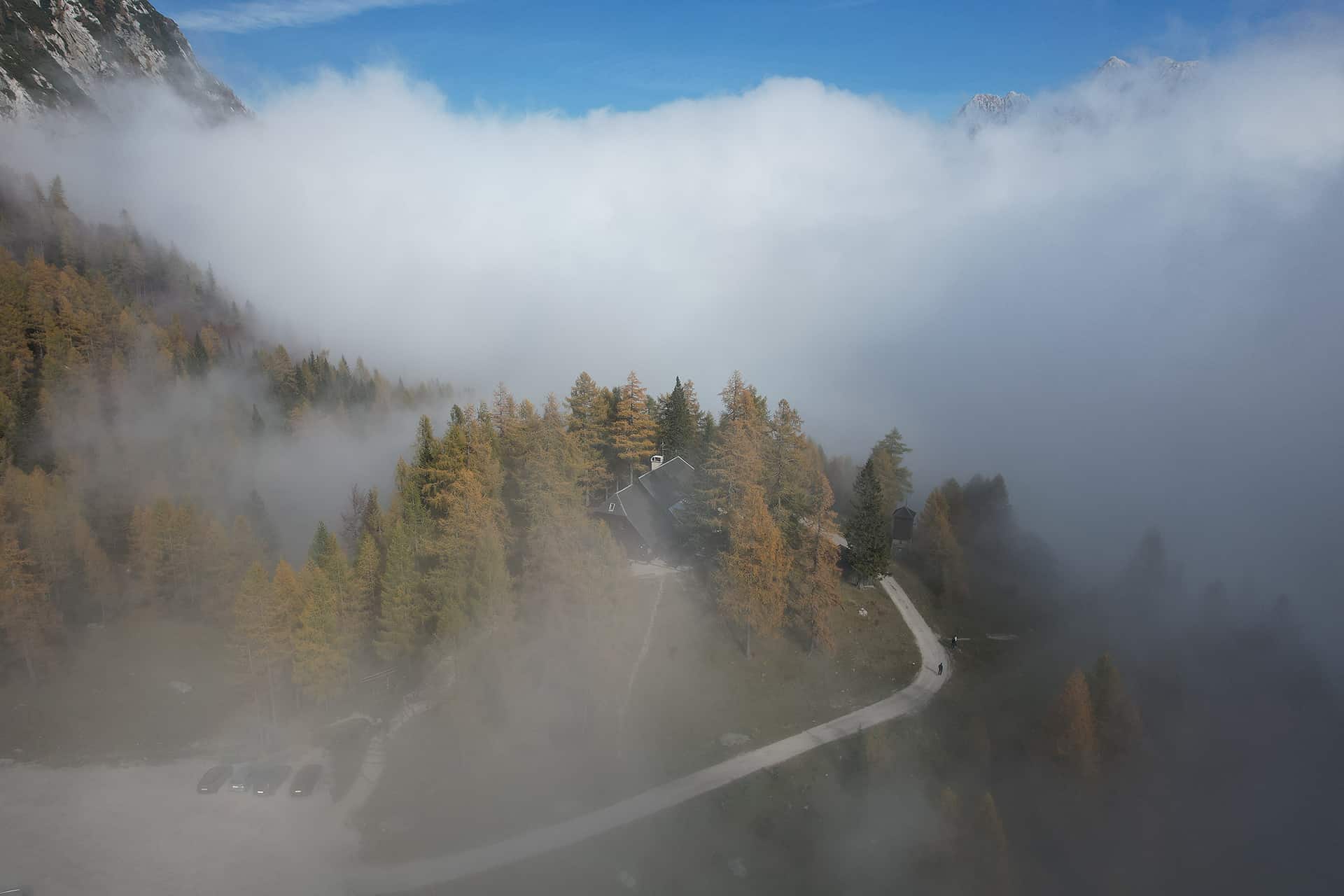

On this page
Jump to the most useful sections of this guide.
This guide is prepared from the perspective of Erjavčeva koča, a mountain hut on Vršič Pass. Use it together with current weather, road conditions and responsible behaviour in Triglav National Park.
Ready to stay on Vršič Pass? Check the verified accommodation page and reserve directly with the hut.
Erjavčeva koča is a mountain hut at 1525 m, not a hotel or hostel. Come for nature, simple shelter and the rhythm of the mountains.
- ✓Simple mountain-hut comfort and shared house rules
- ✓Direct access to Vršič, trails and Triglav National Park
- ✓Quiet evenings, early starts and weather-dependent mountain life
- ✓Food, shelter and practical help from the hut team
- ×Unlimited parking or guaranteed road access in every weather
- ×Perfect silence during busy mountain days
- ×A valley resort experience
- ×Luxury hotel rooms or city-hotel services
Stay on Vršič Pass
Stay at Erjavčeva koča on Vršič Pass
Erjavčeva koča is a mountain hut at Vršič Pass, between Kranjska Gora, Trenta, the Soča Valley and the Julian Alps. It is a practical base for hikers, road-trippers, cyclists and guests who want to stay close to the mountain pass.
- Direct location on the Vršič Pass road
- Good base for hiking, scenic drives and Julian Alps day trips
- Useful for guests visiting Kranjska Gora, Trenta, Soča Valley and Triglav National Park
- Food, mountain-hut atmosphere and practical local information in one place
This block is designed for independent guests and self-service booking. It does not imply a price guarantee or live availability.
Before you book your stay
Vršič Pass is a high mountain location, so it is worth checking a few practical details before you travel. This helps you plan your arrival, parking, hiking day and overnight stay more easily.
Access and road conditions
The Vršič road can be affected by season, weather and traffic. Before travelling, check current access information and plan enough time for the mountain road.
Parking
Parking rules and availability around Vršič can change by season and operator. Check the latest parking information before arrival, especially in busy periods.
Rooms and overnight stay
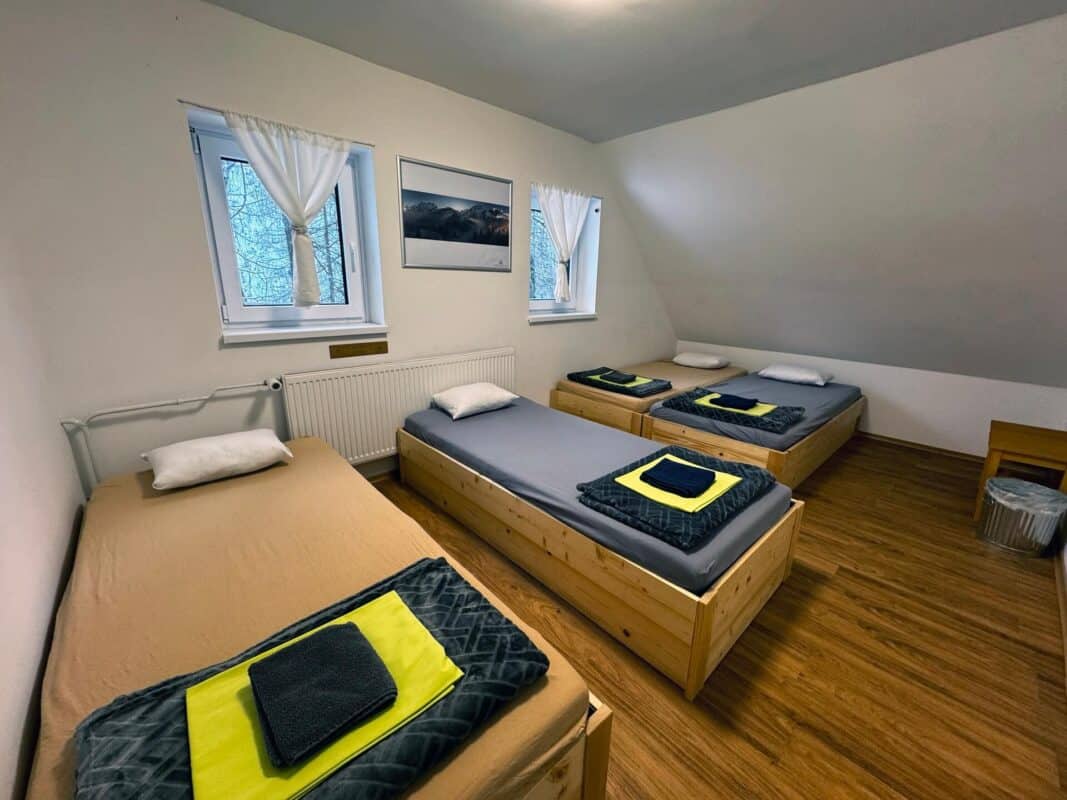
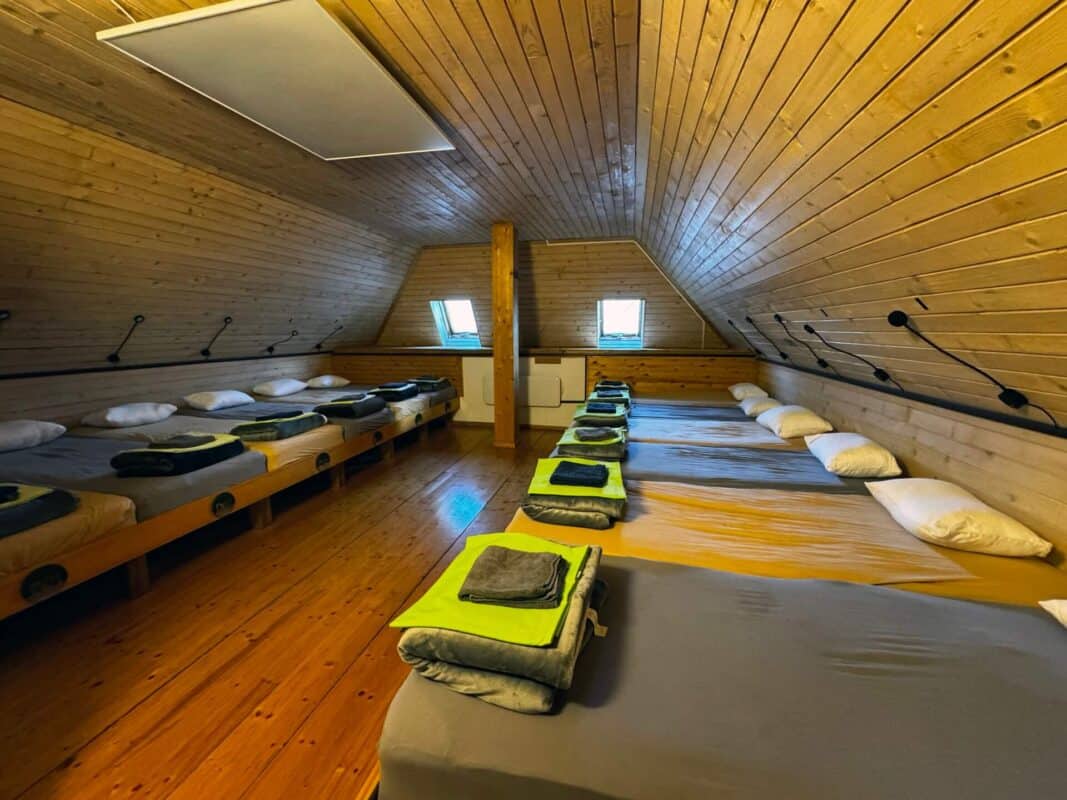
If you plan to stay overnight, check room availability in advance. This is especially important during the hiking season, weekends and good-weather periods.
Food, opening hours and groups
Opening times may vary outside the main summer season or by arrangement with groups. Contact the hut directly for the latest information before making fixed plans.
Self-service planning for your stay at Vršič Pass
- Check room and availability options first.
- Read access, parking and arrival notes before travelling.
- Arrive with your own plan for Vršič, Kranjska Gora, Trenta and the Soča Valley.
- Use contact only for special cases, not for information already explained on the page.
A trusted mountain hut at Vršič Pass
Erjavčeva koča has been part of the Vršič mountain pass experience for generations. Guests use it as a practical alpine base for hiking, cycling, scenic drives, visits to Kranjska Gora and trips toward Trenta and the Soča Valley.
Before you book your stay at Vršič Pass
Use the booking information on this page to decide independently. Booking platforms can help with comparison, but your reservation should be clear before you travel. Contact is only for special cases.
Direct booking is best for
- Checking rooms and availability
- Reading access, parking and arrival details
- Booking when your dates and plan are clear
- Special questions only for groups, late arrival or winter conditions
Booking platforms are useful for
- Comparing accommodation options
- Reading platform-specific reviews
- Managing platform bookings in one account
- Using platform filters and policies
No price guarantee is implied. This block encourages self-service planning and reduces unnecessary calls or emails.
What happens after you check availability?
Checking availability is the first booking step, not a request for personal travel planning. Read the arrival, access and parking information before you book. Contact is only for special cases.
- Choose the room or stay option that fits your plan.
- Complete the booking request with your travel date and arrival plan.
- Before travelling, read the access, parking and seasonal notes; use contact only for groups, late arrival or winter conditions.
CTA clicks are measured as intent signals. This block is designed for self-service reservations and to reduce unnecessary calls or emails.
Summer visit: parking, hiking and rooms
In summer, Vrsic is busy with hikers, cyclists and scenic-road visitors. Plan arrival time, parking, weather protection and overnight questions before you leave.
- Arrive early when parking demand is high.
- Check weather before longer hikes.
- For overnight stays, contact the hut directly before travel.
This block is a practical planning reminder, not a live availability statement.
On the centenary of the snow catastrophe at Vršič
This is the history of the road across Vršič, which should actually be called the ‘Russian Road,’ because it was built solely by Russians. It demanded much suffering and many human sacrifices from the Russian prisoners,” summarized Franc Uran, an advisor during the construction, in his memoir about the engineering feats across what is now the highest Slovenian road pass, sixty years ago.
He himself lived near the source of the Soča River for seven years, from the early beginnings of road construction in 1909 “until the arrival of that terrible avalanche at Vršič, which buried 110 Russians” in 1916. Although the exact number of victims remains unknown to this day, partly because the records of casualties were strictly guarded, we know the number was significantly higher. The figure mentioned by Uran aligns with a telegraph message sent to the army headquarters in Villach just hours after the avalanche on March 8, 1916, which reported 100 Russian prisoners and three transport cable workers. The following day, more detailed figures were provided: three dead (one guard and two Russian prisoners), five guards and 67 Russians injured, with 71 Russian prisoners and 12 guards still missing. Just a few days later, another avalanche struck, claiming additional lives.
It is estimated that the two avalanches were likely fatal for between 200 and 300 men, and when factoring in victims of avalanches in May of the following year, the number is closer to 300.
The prisoners were poorly dressed. Since they had to work in both good and bad weather, most of them had tattered uniforms. The Austrian military administration did not provide them with other clothing.

Rather to the front just to get away from these damn avalanches
At the end of February, it started snowing. At first, it was light, but then it intensified more and more, until it was snowing heavily, and we had to shovel it off the road. The snow was as dry as flour. At that time, some began to believe that my warnings were not unfounded. Even the Russians said that while there is snow in Russia, they don’t know such amounts as here. However, I could not have imagined that a catastrophe was so near.
Strange Spring Weather with Fatal Avalanches
Slovenian newspapers at the time did not give much attention to the avalanche. Short news pieces in March editions mention that numerous avalanches were also fatal for many Italian soldiers in Italy and that snow and flooding posed significant problems there as well. They also reported that the “strange spring weather” caused “far more avalanches than usual” in the Slovenian mountains. On March 14, the Slovenski narod newspaper mentioned the damage caused by the avalanche from Mojstrovka to the hut at Vršič, but there was no word about the human casualties it buried beneath it. This lack of reporting might have been due to the fact that the actual number of victims was not even fully known, and catastrophic avalanches were being reported from other parts of the Slovenian mountains. During the war years from 1915 to 1917, snow avalanches—those we know about—claimed approximately 1,500 lives.
In the years following the war, the tragic event at Vršič received more written accounts. Franc Uran decided to document the story of the road’s construction across Vršič and the suffering endured by Russian prisoners upon the 40th anniversary of the disaster, as he felt it was important to revive the memory of these events (his text was published in Planinski vestnik in 1957). This month marks 100 years since the avalanche from Mojstrovka buried numerous Russian prisoners of war beneath it and so terrified the survivors that they refused, at any cost, to return to their barracks. Even though the story has been told many times, it deserves another mention on such a significant anniversary.
Italy Enters the War, Work on the Road Speeds Up
The development of the road across Vršič began years before the war, and even after it started, the Austro-Hungarian army recognized the strategic importance of this route. After Italy declared war, the need for this connection became more urgent than ever. The existing road across the Predel Pass was too exposed to enemy fire, so the Austro-Hungarian army could only use it at night. They also used an underground tunnel, which led from the Rabelj mine to Log pod Mangartom, but these connections were insufficient. Therefore, they decided to build a road over the Vršič Pass as well. When the Italians began shelling the road over the Predel Pass in June 1915, construction efforts on the 1,611-meter-high pass were accelerated.
All work came to a halt. We had no idea what had happened on the other side of Vršič. No one dared to go to the summit. That day, it was absolutely impossible to persuade the Russian prisoners to participate in any rescue operation, and even the Austrian officers had neither the will nor the courage to go to the site of the catastrophe. We began to speculate about how many victims there must have been.

Military Mass at Vršič, 1915
Nevertheless, a few of us gathered and headed up to Vršič. When we arrived, we were met with a horrifying scene of devastation. Where the 20-meter-high framework of Evgen’s monument had stood just the day before, there was now nothing to be seen—only here and there a broken beam or plank lay in the snow. The amount of snow was immense, packed tightly. Since it was still snowing and the entire summit was shrouded in fog, it was impossible to determine where the avalanche had come from or how it had occurred.
Military Mass at Vršič, 1915
The military mass at Vršič in 1915 was a solemn and symbolic event that reflected the challenging and turbulent times during World War I. At that time, the Vršič Pass held significant strategic importance for the Austro-Hungarian army, as it was a critical supply route for troops and materials heading to the Isonzo Front. The mass, held in this remote and harsh alpine environment, likely served as a moment of spiritual solace and unity for soldiers and workers enduring the hardships of war.
This religious gathering would have included both soldiers and Russian prisoners of war, who were forced to work on the construction of the Vršič road under extreme and often inhumane conditions. The mass likely carried deep meaning for those present, providing a sense of hope and faith amid the grueling labor and ever-present danger of avalanches, cold, and conflict.
Religious ceremonies like this were common in wartime, as they offered comfort and a reminder of shared humanity, even in the midst of unimaginable suffering. The Vršič Pass, later scarred by avalanches that claimed the lives of many workers, remains a site imbued with historical and emotional significance. Events such as the military mass serve as reminders of the resilience and faith of those who lived and worked through one of the darkest periods in history.

Rather to the front just to get away from these damn avalanches
Rather to the front just to get away from these damn avalanches
The Construction Began in the Summer of 1915
The construction of the road began in the summer of 1915, as soon as the snow melted. While the road was passable by the fall of that same year, the full construction, including maintenance work, took approximately two and a half years. To maximize traffic capacity and aware that winter conditions would limit road usage, a parallel 30-kilometer-long transport cableway was also constructed. The cableway was completed in 1915 in Log in Trenta and later extended. A specially selected staff of Austro-Hungarian pioneer units, which included some civilians, was tasked with building the road. The construction engineers were primarily German-speaking Czechs, along with some Hungarians. According to Uran, the route to Trenta was quickly completed and divided into 12 or 13 sections.
Initially Tolerant Towards Russians, Later Contact Was Forbidden
Under harsh conditions, approximately 10,000 Russian prisoners of war worked on the serpentine road, with additional laborers building the cableway and performing tasks in the valley. Estimates suggest that between 10,000 and 12,000 soldiers arrived in Kranjska Gora in 1915 for road construction. The first Siberian prisoners arrived in Kranjska Gora in September 1914. Uran recalls them in his writings:
“In the fall, the war command sent 25 Russians to Kranjska Gora. They were all Siberians, tall, dignified people, housed in Pečar’s salon. Austrian soldiers guarded them. Every morning, they would leave Kranjska Gora, each carrying an iron bar, which they delivered to Močile. These iron bars were later used for wire barriers on Vršič. This was their daily task. In the evening, they would often sing various Russian songs, and the locals enjoyed listening to them, bringing them small treats. Initially, the Austrian guards did not forbid this, but later any contact with the Russians was strictly prohibited and even dangerous, as anyone caught was immediately considered a traitor to the homeland.”
Hard Work Amid Severe Shortages
New convoys of prisoners of war arrived and were housed in settlements with barracks, which included wooden structures on stone foundations, kitchens, an infirmary, warehouses, and a bakery. With most of the local male population mobilized for war, the prisoners from eastern battlefields worked on the cableway, road maintenance, valley infrastructure, hospitals, warehouses, and railroads, but primarily on the central project of the time—the construction of the Vršič road.
The prisoners worked in groups of 25, supervised by an Austrian soldier and a Russian interpreter, often Jewish. They quarried stone, built viaducts, and carried out earthworks. While international law stipulated that prisoners should be paid for forced labor and protected, these conventions were often ignored. Instead, they were forced to work in conditions of severe shortages and harsh weather. The barracks were poorly heated, and food rations were inadequate. The demanding roadwork was dangerous, resulting in numerous injuries. Due to cold, dampness, and malnutrition, diseases such as dysentery, cholera, and smallpox spread among the exhausted prisoners, often with fatal outcomes.
“The prisoners were poorly dressed. Since they had to work in both good and bad weather, most of them had tattered uniforms. The Austrian war administration did not provide them with other clothing. As a result, various diseases, such as dysentery, even bloody dysentery, cholera, and smallpox, spread among them, and many died,” writes Uran.
They uncovered around 15 prisoners and one guard. All of them were horribly mutilated. The beams had torn off heads, arms, and legs from some of the bodies. The idea that any living beings could still be under the snow was completely out of the question.
Rather to the front just to get away from these damn avalanches
Physical Abuse of Prisoners
The already gruelling captivity of the prisoners was worsened by the actions of certain guards, engineers, and officers, who, as Uran recounts, treated the Russians inhumanely and acted “brutally” toward them. “For even the smallest infraction, a prisoner would be tied to a tree, where he would faint in a short time. Then, they would splash cold water on his face to revive him and leave him hanging for two to three hours. The most brutal among the engineers was Ing. Kavalir, a Hungarian, who oversaw the section under Močile. Whenever he was drunk, he would come onto the road with a heavy stick and lash out at the Russians indiscriminately, not caring where the blows landed. Many Austrian guards also enjoyed beating the Russians. Complaining was impossible.”
Since they blamed the Italians for prolonging the war, the Russian prisoners retaliated similarly against captured Italian soldiers. “When the guards brought captured Italians down the new road, the Russians would always attack them with pickaxes and shovels, claiming that the Italians were responsible for the war still continuing—that it would have ended long ago if Italy hadn’t helped Russia. It was only with difficulty that the guards managed to protect the Italians from being killed on the spot.”
Deaths Due to Disease, Cold, and Starvation
Russian soldiers died from diseases, hypothermia, malnutrition, and accidents during blasting or other demanding work. Their comrades buried them wherever they could along the road, marking the humble graves with simple Orthodox wooden crosses. Some were also laid to rest in the parish cemetery in Kranjska Gora, the military cemetery in Trenta or Soča, and other locations.
Warnings About Avalanches Were Mocked
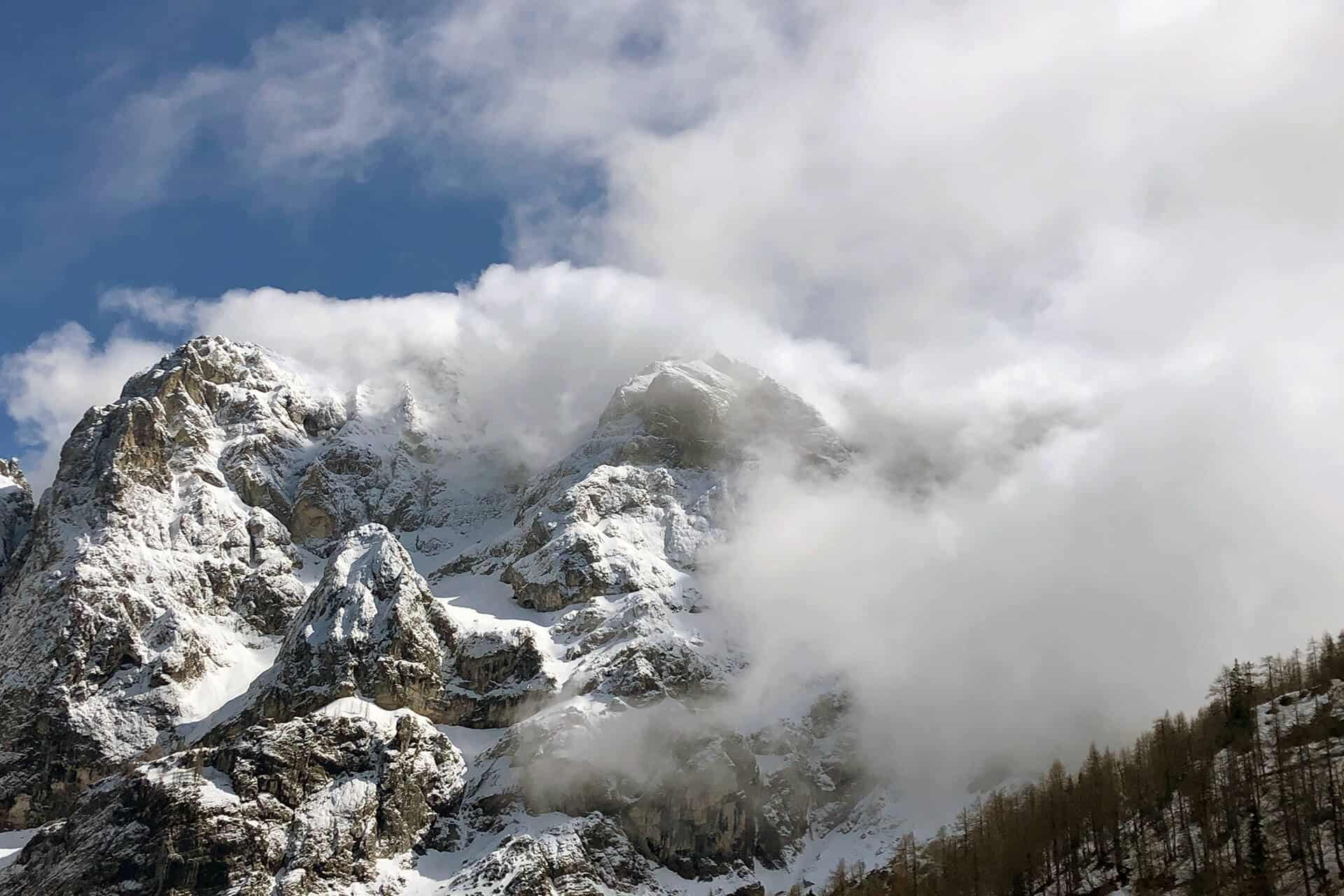
The winter months of 1915-1916 were unusually mild, with locals claiming they hadn’t seen such a winter in over thirty years. This led construction leaders to laugh off the warnings of local mountaineers, who cautioned that winter had not yet shown its true dangers and that preparations for avalanches were not unnecessary.
“November arrived. The first support beams for avalanche protection roofs were being erected at Močile. But there was still no snow. December came, and still, not a single flake fell. Officers, engineers, and the crew, all of whom knew me, mocked me, saying, ‘Where are those avalanches you keep warning us about?’ Christmas of 1915 came and went. On the night of St. Stephen’s Day, a little snow finally fell, and a small avalanche from Slemena buried two Russians up to their waists above Močile. Laughing, they dug themselves out. Everyone who saw it laughed at them—and laughed at me even more,” writes Uran, who became a constant target of ridicule for his avalanche warnings. “I was almost embarrassed because I had truly never seen a winter like this before.”
Despite this, the engineers eventually heeded his advice, as ensuring the road over Vršič and maintaining access to the frontlines was too important to risk its closure by avalanches. They constructed protective avalanche roofs over the road, but these ultimately proved too weak to withstand the disaster that struck.
Everything seemed to indicate that the road could indeed be cleared and reopened to traffic. But then another avalanche turned everything upside down. One night, after we had all gone to bed, at half-past eleven, a terrifying roaring and rumbling was heard above Voss’s hut. The officers, startled in their rooms, began shouting and ran half-dressed into the dining hall, asking what was happening, as the ground shook, and even the hut trembled noticeably. The massive avalanche was coming down from Slemena. It roared and thundered for some time, and then everything went silent. Fortunately, nothing happened to the hut.

Rather to the front just to get away from these damn avalanches
Rather to the front just to get away from these damn avalanches
Spring Approaches, but the Snowstorm Persists
At the end of February, it began to snow—lightly at first, but soon, the snow fell heavily and continued for days without stopping. It was as dry as flour, Uran recalls. “At that point, some began to believe that my warnings were not unfounded. Even the Russians said that while it does snow in Russia, they’ve never seen such quantities there. Still, I couldn’t imagine how close the catastrophe was.”
“Avalanche, Avalanche!”
The fatal avalanche struck on Wednesday, March 8, 1916, around 1 p.m. It rushed down from the southern slopes of Mojstrovka and Robičje, breaking through the avalanche protection roofs before burying the entire settlement of road workers in the northern camp. Uran recalls the event:
“On March 8, 1916, after lunch, I intended to go up to the summit to inspect the work. I left our hut around one o’clock in a proper snowstorm. When I reached Huda Ravna, I heard a single, terrible scream from countless throats that immediately fell silent. I continued forward slowly and was soon met by Russian prisoners running towards me with terrified faces, shouting: ‘Avalanche, avalanche!’ A few Austrian guards also arrived. Everyone who came from the summit was so frightened that we couldn’t get any clear information out of them. Nor could we persuade anyone to return to the site. They all declared that they’d rather be killed than go back. Even the officers and engineers were completely paralyzed and didn’t know what to do, as all communication with Kranjska Gora and the command there was instantly cut off.”
At Any Cost, Away from the Avalanches
Despite its supposed indestructibility, the avalanche destroyed the 20-meter-high structure of Evgen’s monument. All work stopped, Uran writes. No one dared ascend to the summit to assess the situation on the other side of Vršič. Almost no one could be convinced to inspect the site of the disaster or rescue the victims. “We began to speculate about how many casualties there must be. At that moment, it was impossible to determine precisely because Russian prisoners were also working on the other side of the pass. But even then, we quickly realized that about 100 Russian prisoners and several Austrian guards were missing. Officers from Tičarjev dom fled to our side and reported that everything at the summit was destroyed and that Tičarjev dom was completely evacuated.”
Traffic across Vršič was halted, and both cableway stations at the summit were buried. The fear among the Russian prisoners was so overwhelming that they ignored orders, and the engineers and officers were no different. “The command in Kranjska Gora evacuated all structures up to Vršič, leaving no one in the buildings or barracks. The Russians were so terrified that the command began to realize it couldn’t rely on them for much. The soldiers, officers included, were no less frightened. Everyone wanted to leave, even to the front, just to get away from these cursed avalanches.”

Rather to the front just to get away from these damn avalanches
To the Sons of Russia
The devastation left behind by the avalanches only became apparent as the snow began to melt. The sight of the mutilated bodies must have been horrifying. Around 15 bodies a day were transported to various cemeteries, primarily in Kranjska Gora, the military cemetery in Trenta, individual graves on the slopes of the pass, and a burial site where, later that same year, Russian prisoners erected a memorial Orthodox chapel for their fallen comrades. The chapel featured onion-domed towers and was a tribute to the victims. In 1937, the remains of Russian prisoners from the Kranjska Gora cemetery were transferred to a communal tomb near the chapel. During the construction of the road, engineer Josip Slavec erected a pyramid with the inscription To the Sons of Russia near the chapel, and skeletal remains discovered during roadwork were also placed there.
After the war, the chapel was maintained by the locals of Kranjska Gora, as well as Russian prisoners who, due to the Soviet revolution, chose to remain in Slovenia. Since 1992, representatives of both nations and two Christian denominations gather annually in front of the chapel to honor the fallen.
For the Russian soldiers, the road, solemnly named after Archduke Eugen upon its opening, became the “Road of Death.” Many collapsed and drew their last breath along its path, finding their final resting place thousands of kilometers away from their homeland. Yet, the road also saw countless Austro-Hungarian soldiers marching in the opposite direction. These terrified men, long resigned to the notion that the war’s end was far off, crossed Vršič toward the Krn and Kanin ranges or the battlefields near Bovec, stepping closer to their own deaths.
It is difficult to drive along this road today without pausing to think about the countless poor soldiers, the senselessness of war, and its horrific magnitude. Yet, it is also worth remembering the humanity, camaraderie, and solidarity symbolized by the Russian Chapel, captured so vividly in a group photograph of Austro-Hungarian soldiers and Russian prisoners standing together in front of this Orthodox memorial.

How the road over the Vršič mountain pass was built
How the road over the Vršič mountain pass was built. The article from Planinski vestnik...
Feb

Vrata — Trenta — Vršič (1922)
Vrata — Trenta — Vršič (1922), the article from Planiniski vestnik from December 1922, from...
Jan

Prisojnik’s kingdom (1915 & 1929)
Near Erjavčeva hut, with a view of Prisojnik’s kingdom, as depicted in the story article...
Jan
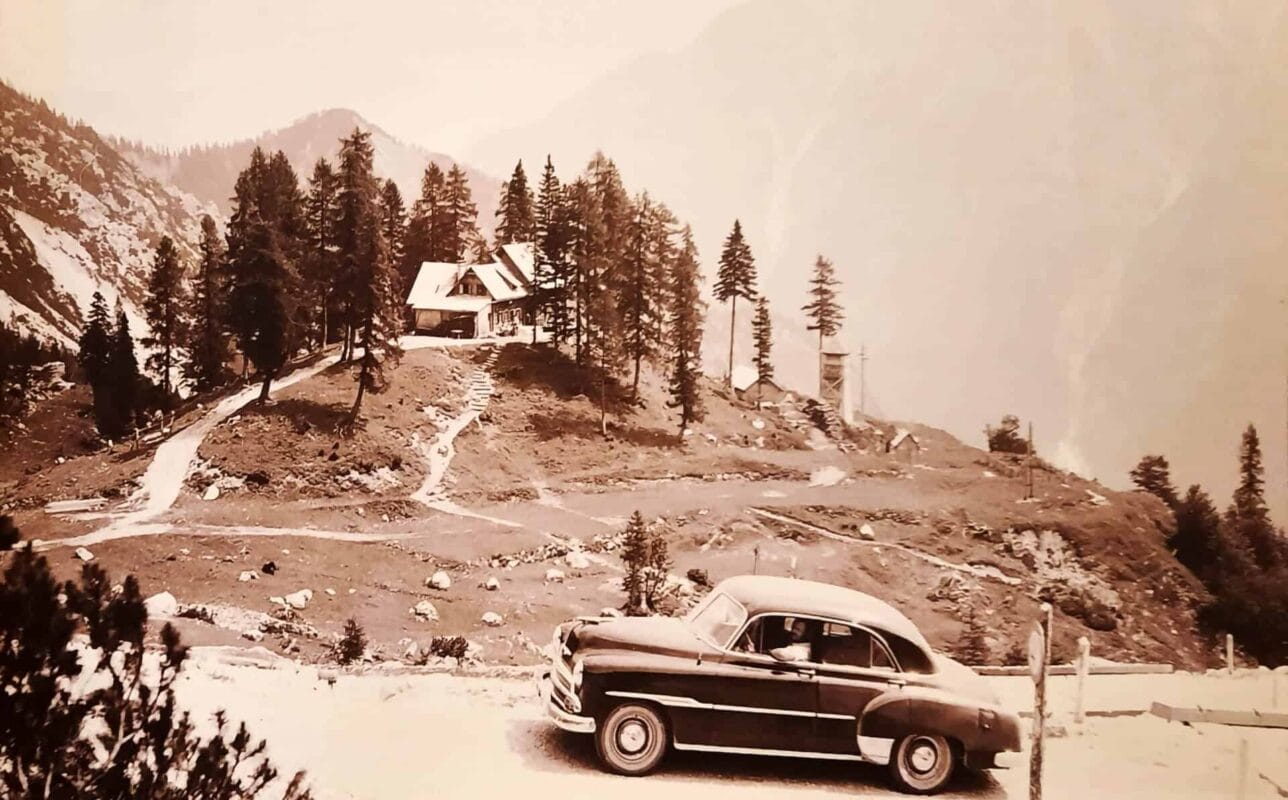
Rather to the front just to get away from these damn avalanches
Rather to the front just to get away from these damn avalanches
Source: here
Trips and Hikes around the hut
Why visit a moutain hut?
We are open year-round
We are located in the heart of Triglav National Park
Book a stay in the iconic, first-built mountain hut on the Vršič Pass

Erjavčeva mountain hut is open year-round. Reserve your stay and spend some time in the natural paradise of Triglav National Park (UNESCO), near Kranjska Gora, on the Vršič mountain pass in the heart of the park.
Reserve your stayRelated mountain and travel guides
Choose the next verified guide for planning routes, parking, overnight stays and places near Vršič Pass.
- Accommodation in Mountain hut Vršič Kranjska Gora Slovenia — travel guide
- Hanzova pot on Prisojnik — travel guide
- Running spectacle in the Julian Alps — travel guide
- Is there anywhere I can park? — travel guide
- Slovenia – Julian Alps – Kranjska Gora – Vršič Pass – Erjavčeva koča Mountain Hut — travel guide
- Snow on Vršič on May 12 – Why Mountain Weather Changes So Quickly — travel guide
Plan your visit from Erjavčeva koča
Useful guides, practical information and accommodation options for Vršič Pass, Triglav National Park and the Julian Alps.
Book your stay at Erjavčeva koča
Ready to stay on Vršič Pass? Check the verified accommodation page and reserve directly with the hut.
Road, parking and arrival FAQ
Use these answers before relying on a route, booking time or parking plan.
Is this a live Vršič road status?
No. The site can guide you to access information, but current road conditions should be checked before departure.
What should I plan before driving up?
Plan the approach, parking, arrival time and a backup option for mountain weather or seasonal traffic.
Can I use the hut as a base for nearby routes?
Yes, but match your route, daylight and return plan before you start.
Where should I go next on the site?
Use the verified access, parking or accommodation links shown on this page.