The most useful points from this guide before you continue.
Stay on Vršič Pass
Stay at Erjavčeva koča on Vršič Pass
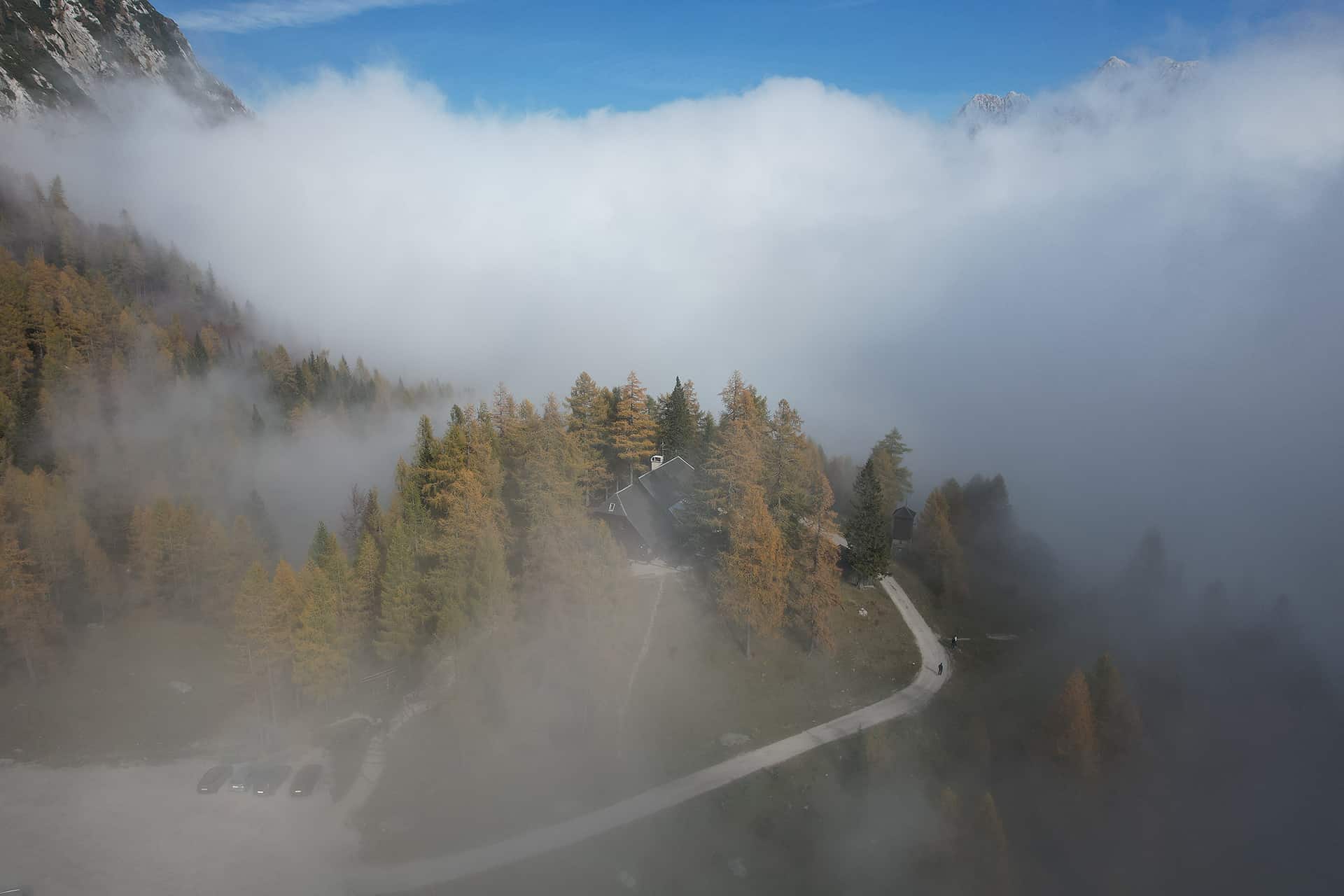
Erjavčeva koča is a mountain hut at Vršič Pass, between Kranjska Gora, Trenta, the Soča Valley and the Julian Alps. It is a practical base for hikers, road-trippers, cyclists and guests who want to stay close to the mountain pass.
Direct location on the Vršič Pass road
Good base for hiking, scenic drives and Julian Alps day trips
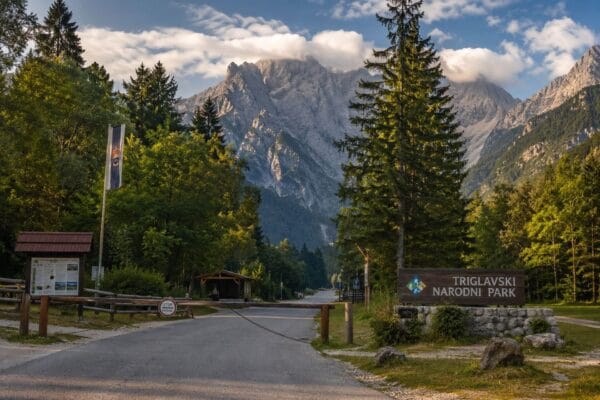
Useful for guests visiting Kranjska Gora, Trenta, Soča Valley and Triglav National Park
Food, mountain-hut atmosphere and practical local information in one place
This block is designed for independent guests and self-service booking. It does not imply a price guarantee or live availability.
Before you book your stay
Vršič Pass is a high mountain location, so it is worth checking a few practical details before you travel. This helps you plan your arrival, parking, hiking day and overnight stay more easily.
Access and road conditions
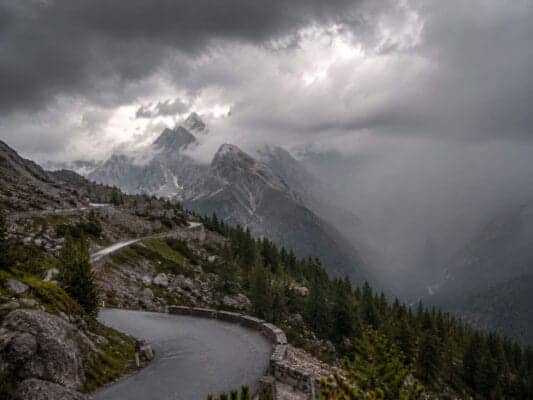
The Vršič road can be affected by season, weather and traffic. Before travelling, check current access information and plan enough time for the mountain road.
Parking
Parking rules and availability around Vršič can change by season and operator. Check the latest parking information before arrival, especially in busy periods.
Rooms and overnight stay
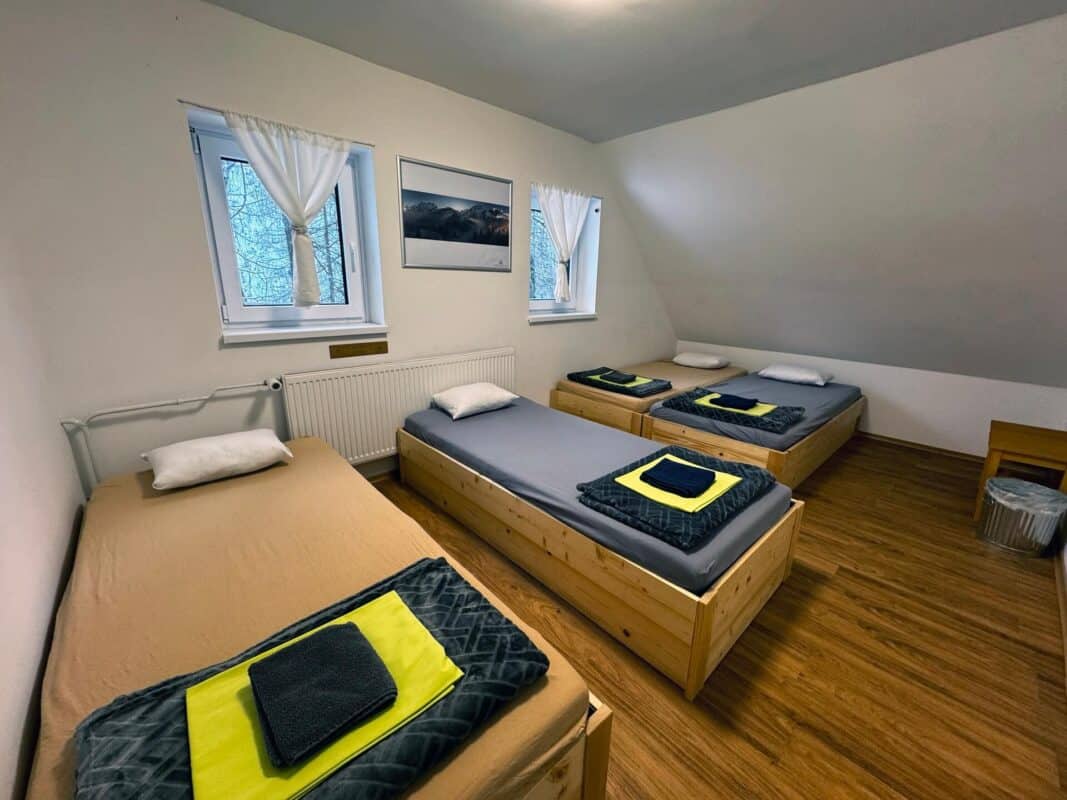
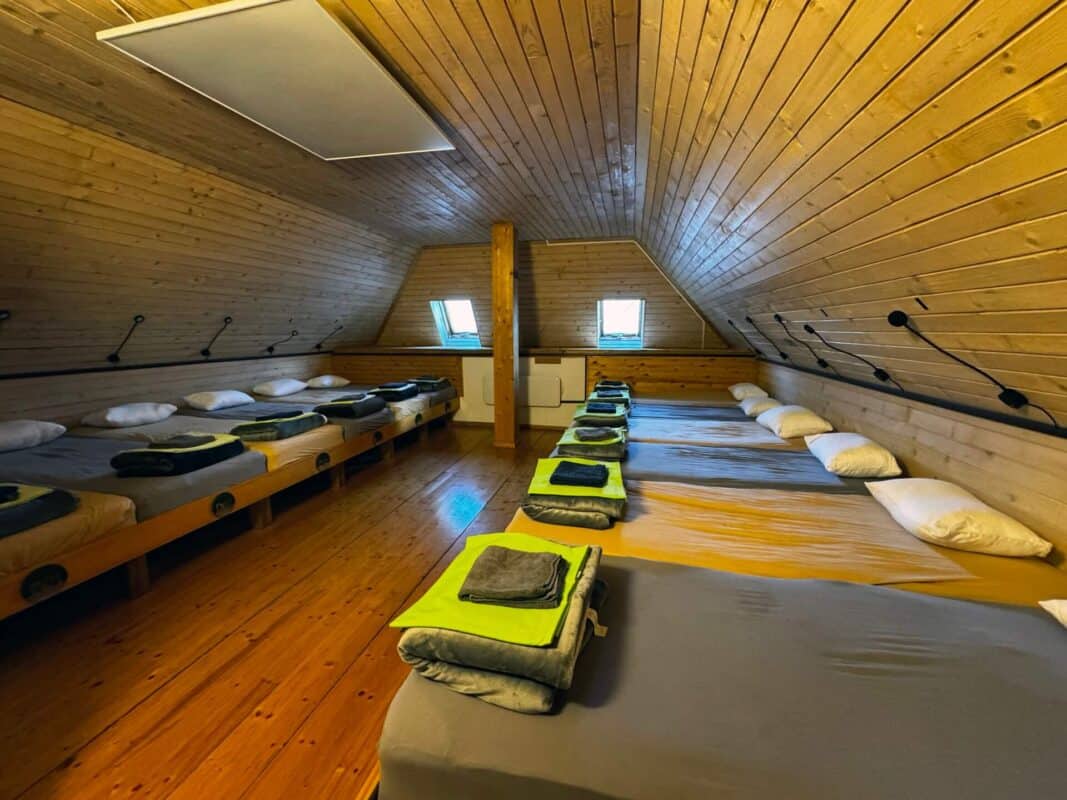
If you plan to stay overnight, check room availability in advance. This is especially important during the hiking season, weekends and good-weather periods.
Food, opening hours and groups
Opening times may vary outside the main summer season or by arrangement with groups. Contact the hut directly for the latest information before making fixed plans.
Self-service planning for your stay at Vršič Pass
Check room and availability options first.
Read access, parking and arrival notes before travelling.
Arrive with your own plan for Vršič, Kranjska Gora, Trenta and the Soča Valley.
Use contact only for special cases, not for information already explained on the page.
A trusted mountain hut at Vršič Pass
Erjavčeva koča has been part of the Vršič mountain pass experience for generations. Guests use it as a practical alpine base for hiking, cycling, scenic drives, visits to Kranjska Gora and trips toward Trenta and the Soča Valley.
Erjavčeva koča is a mountain hut at 1525 m, not a hotel or hostel. Come for nature, simple shelter and the rhythm of the mountains.
✓Expect
✓Unspoiled nature, mountain views and fresh alpine air
✓A place to rest before or after your mountain trip
✓Simple mountain-hut comfort and shared house rules
✓Direct access to Vršič, trails and Triglav National Park
×Do not expect
×Hostel-style nightlife or loud late evenings
×Private bathrooms in every room
×Unlimited parking or guaranteed road access in every weather
×Perfect silence during busy mountain days
Before you book your stay at Vršič Pass
Use the booking information on this page to decide independently. Booking platforms can help with comparison, but your reservation should be clear before you travel. Contact is only for special cases.
Direct booking is best for
Checking rooms and availability
Reading access, parking and arrival details
Booking when your dates and plan are clear
Special questions only for groups, late arrival or winter conditions
No price guarantee is implied. This block encourages self-service planning and reduces unnecessary calls or emails.
What happens after you check availability?
Checking availability is the first booking step, not a request for personal travel planning. Read the arrival, access and parking information before you book. Contact is only for special cases.
Choose the room or stay option that fits your plan.
Complete the booking request with your travel date and arrival plan.
Before travelling, read the access, parking and seasonal notes; use contact only for groups, late arrival or winter conditions.
CTA clicks are measured as intent signals. This block is designed for self-service reservations and to reduce unnecessary calls or emails.
Summer visit: parking, hiking and rooms
In summer, Vrsic is busy with hikers, cyclists and scenic-road visitors. Plan arrival time, parking, weather protection and overnight questions before you leave.
Arrive early when parking demand is high.
Check weather before longer hikes.
For overnight stays, contact the hut directly before travel.
This block is a practical planning reminder, not a live availability statement.
This guide is prepared from the perspective of Erjavčeva koča, a mountain hut on Vršič Pass. Use it together with current weather, road conditions and responsible behaviour in Triglav National Park.
Last updated: 08/02/2026First published: 08/01/2026Reading time: 11 min readPrepared by: Erjavčeva koča team
Prisojnik’s kingdom (1915 & 1929)
Prisojnik’s kingdom (1915 & 1929)
Prisojnik’s kingdom (1915 & 1929)
On Vršič, 18 October 1915
(page 14-15)
Where is the former peace of the Pišnica! Today, the cliffs of Prisojnik and Razor echo with the shrieking of the immediate rear of the front line, the rattling of heavy freight trucks and wagons, the neighing of horses and mules, the heavy footsteps of regiments and battalions—all of them going along that strange road into uncertainty. Now a magnificent, wide Alpine road runs through here, across bridges and galleries on steep gradients and hairpin bends, built by 3,000 Russian prisoners of war. Entire villages of barracks with large kitchens line the road, settlements of tents as if fresh snow had fallen—now on this embankment, now again in a ditch beside the road.
By the roadside stands a tall wooden cross, a monument erected in memory of the completed road, a kind of faint consolation for us who are heading into grey distances. For the inscription on it reads:
»Ob nach Norden, ob nach Süden,
Jede Strasse führt zum Ziele,
ob zum Kampfe, ob zum Frieden,
das entscheidet Gottes Wille.«
“Whether northward or southward,
Every road leads to the goal.
Whether to battle or to peace,
That is decided by God’s will.”
Along this road I walk today, taking my leave. I do not shake anyone’s hand. Beneath a heavy rucksack, girded with instruments of death, I have no true sense for the beauty of the autumn day or the grandeur of nature. As I walk, I reckon accounts with the past. Encountering endless supply columns and medical transports, I have but one wish—that I might soon return on such a wagon, even if I were missing half a limb.
By the Voshütte (now Erjavčeva Hut), there is a medical station; in front of it, countless wagons, wounded men, and Russians.
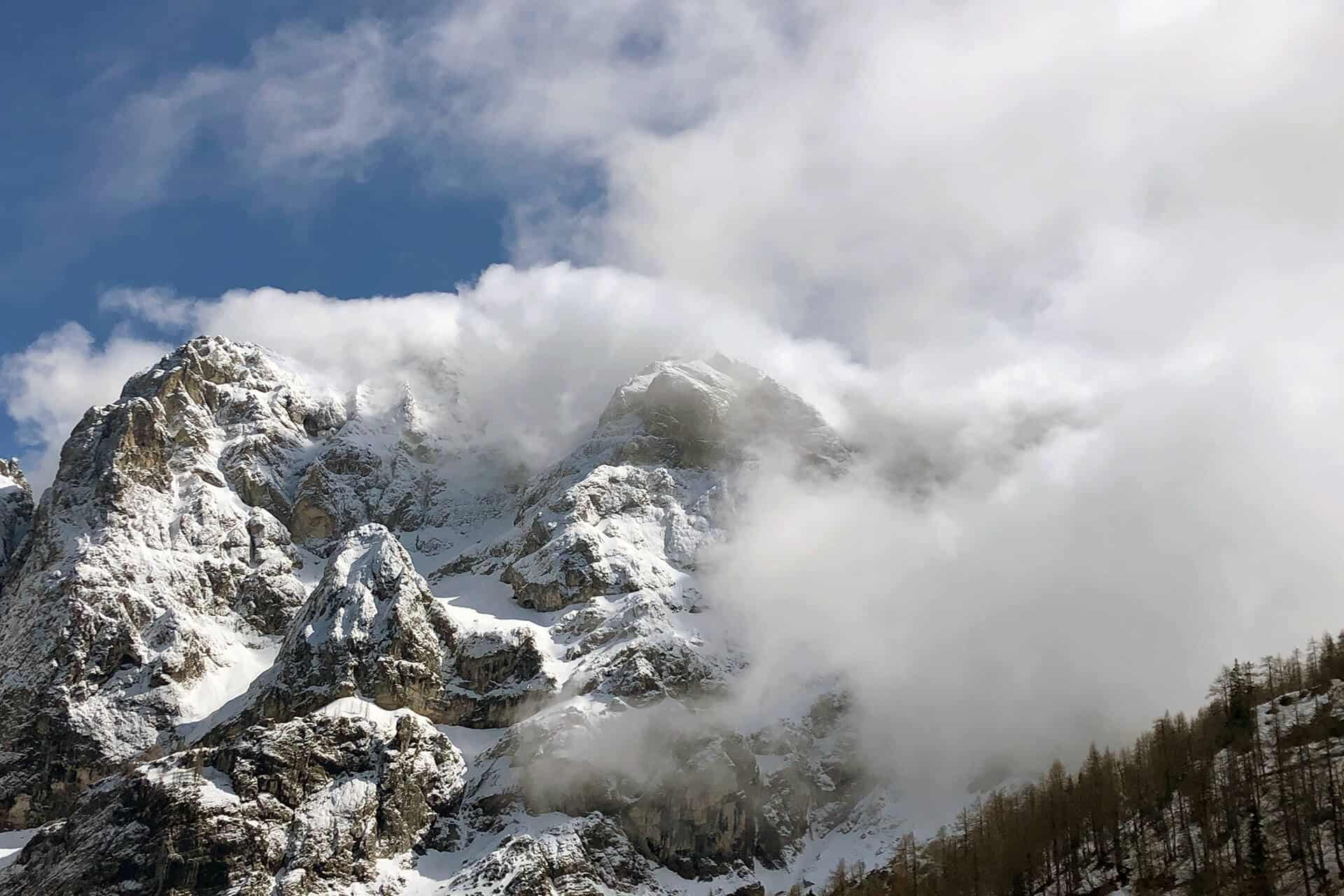
The surrounding peaks and ridges are already covered with snow. They are far more beautiful than those we are leaving behind, more magnificent because of their wild, ravaged forms. And yet, in their embrace lie all the horrors of war…
Prisojnik’s kingdomPrisojnik’s kingdom
Prisojnik’s kingdom
Josip Vandot
(page 17-20)
They say that a tourist can never grow tired of the same mountain: he may crawl over it for months and years, yet he still does not know it to the very top. Why is this so? A mountain would be just a mountain were it not for the sun, the sky, and the mists; sun, sky, mist, and clouds possess a magical power in the alpine world, transforming mountains into the most varied shapes. With fresh colors—sometimes friendly, sometimes threatening—they paint walls and ridges so that every moment they take on a different form: today they smile at you, proudly upright; tomorrow they weep, so that you can almost see the tears sliding down smooth cliffs; at other times they glare stubbornly at you, breathing a dreadful wrath that threatens you with doom if you begin to climb upon their bare, cold breasts… Thus are they transformed by sky, sun, and mist. The mountaineer knows all these mountain shades; the mountain is new to him each time, because each time he sees it in a different colour, a different light, a different attire—and therefore he never grows weary of it.
Mojstrovka, gentle, pleasant little lady, adorns herself each year with the most beautiful colours; in mornings and evenings she dresses in crimson, beckons golden clouds to crown her with gleaming diadems; on sunny days she shines in pure silver, washed at night by heavenly dew. She beckons—with a snowy diadem upon her head, with swelling breasts. Yet no one came from anywhere. For the puny border guard on the other side hardly counts, panting and cursing over her rocks. Only two or three times does a grey buzzard rise from the Mala Pišnica, circle her head dully, and shriek with a piercing, harsh cry—then silence again, ringing in one’s ears and getting on one’s nerves. Far below, the lonely Erjavčeva Hut crouches like a bird hiding from an enemy in some sheltered nook. For long hours, there is no human presence, and even if the hut is full, no singing is heard like in those times that seem long, long past, when thousands came to visit the kindly lady Mojstrovka…
Perhaps it was the tenth time, perhaps the hundredth, perhaps even more, that I climbed up from behind the saddle between Robičje and Mojstrovka. The sun was still “silvering” Prisojnik’s walls, and Mojstrovka too was still full of it. But the stony slope, scattered only here and there with low dwarf pine and plunging steeply toward Vršič, was already dark, and smoke rose straight up from Erjavčeva Hut’s chimney. The silence—unbroken by even the faintest breath of a mountain breeze—was oppressive and did not invite one into the hut. So I turned away and began walking over the gravel spread beneath Mojstrovka’s entire base. I reached the path leading to the first and only chimney, right beneath walls that rise vertically high into the clear sky. Down below on the road, just under the barricaded Vršič, the first person appeared; his footsteps and the clatter of his long iron-shod staff were clearly audible. It was a shepherd returning from his round around Prisojnik; soon he disappeared beneath Sovina Glava. For a brief moment, there came the drawn-out lowing of cattle lying somewhere among the dwarf pines, waiting for night. And again deathly silence—only a pebble slides down a vertical chute in the middle of the mute wall and comes to rest with a muffled clink among the scree.
Prisojnik’s kingdom
I do not stop beneath the chimney, but climb upward blindly. In my soul, a hidden joy awakens, and a kind of spitefulness—I myself do not know why. Because the silence is unpleasant, I begin whistling at the top of my voice; I care nothing for the border guards, supposedly somewhere down there beyond Sovina Glava. The chimney climb is easy, as if made for our ladies. Soon, you are on the ridge and walking up a gentle stony slope straight upward over giant shoulders. The sun is already shining beyond Prisojnik’s Window, which opens unfriendly above the narrow gorge sinking into dusk; beyond Sovina Glava, pressed shamefacedly against the steep slope, lies the poor Dom na Vršiču. The narrow Soča Valley is already black; only here and there a white ribbon of the wide road glimmers on the steep hillside, winding from the valley high up to Vršič itself, to the stone barrier by Sovina Glava.
The path runs for a long—too long—time along the very edge of an abyss, until one grows tired of it; at last it turns aside toward Travnik, gleaming there beside Jalovec. But suddenly it twists straight upward; you begin to climb low steps toward the summit. The silvery rays of the sun fade within moments; in astonishment, you search the sky for a cloud that might have hidden the sun, but there is none. The clear blue sky arches above you, and only from behind the neighbouring Prisojnik do gauzy mists creep. The sun has slipped behind the ridges; an indistinct gloom rises from the gorge, driving from rock to rock, until it is all around you and high above you. And now the last step: you climb, climb over it—and you are on Mojstrovka’s summit.
And behold, a marvel! As if I had suddenly stepped from a black dungeon into white day! Yet this is not day, not daylight—fire seems to have burst forth from the sky itself, so fierce that rocky peaks and mountains blaze in a cold flame. The fiery light is spread everywhere; it seems to you that you yourself are burning in this fire that has seized the entire vast expanse. Your eyes sting so that you can no longer look. I cover them with my hand and wait, wait. A cold wind suddenly rises from unknown depths, blowing evenly, as if to extinguish the mighty mountain blaze. I open my eyes—the fiery glow has gone out; only a violet sheen still clings to the cold rocks and fades more and more. Far away beyond Korotane, somewhere behind the unseen world, the sun is sinking; it winks once more from behind blood-red mists—and then it is gone. Only the sky remains red, red too the highest snowfields, but the entire world beneath the mountains is already wrapped in the darkness of alpine night. And the mountains themselves vanish into dusk; violet colours flicker in their last shades, fade, and die away. In the distance, a red finger appears once more and beckons into the cosmos—and then darkness and night lie upon all the summits. Not far away, above Mala Pišnica, almost beside the summit of Ponca, a pearl flashes—the evening star…
I wrap myself tightly in my cape and huddle behind a rock where the wind cannot reach. I see nothing anymore except the stars, igniting one after another across the vast sky. Grave-like silence is poured over everything; not even the wind is heard as it presses evenly against the dark peak. Nothing can be distinguished beneath or around you; only restless stars shimmer in the sky, as if you were sitting upon the grave of the universal world that God destroyed for its sins, now guarded by silent stars to keep it from awakening to new life. A strange feeling grips your heart; you would like to pray, but find no words; you would like to sing, but no voice comes from your throat. And so you sit there in silence, thinking God knows what, reaching for your flask as the cold creeps more and more along your spine. You wait and do not know why you wait; it seems to you that you have been sitting there for long hours—or perhaps only three moments… You are not afraid, and terror is not near you.
Prisojnik’s kingdom
But already, a milky, transparent light streaks across the sky on the side where the Proklete Police jut into the night. The light grows, spreads, and draws nearer. The peaks of neighbouring mountains step out of the darkness, shining silver, asleep beneath heavenly stars. The ridges of the Proklete Police glow in the quiet light, as if gold coins were clashing around their jagged summits. And suddenly they appear upon a golden plate: from behind the mountain the red moon rises, its rays leap like a thought into the black night, and soon the entire broad Mojstrovka is full of them, trembling strangely for an instant, then calm again. In the white light, the night now shines, so quiet that you can clearly hear the beating of your own heart. You can distinguish the path at least ten steps below you and need not fear treacherous walls or deceptive abysses.
I descend from step to step and soon reach the ridge above a deep chasm, at whose bottom Vršič dreams in white rays, and the lonely Erjavčeva Hut. Carefully, foot shields foot; I slide above the abyss for three, four minutes—perhaps more; the rock creaks beneath iron-shod boots, but then the abyss is gone. I have slid down to the chimney, yawning black beneath me where the moon cannot reach. But what of it! My legs know every little ledge, my hands every crack, and my back is accustomed to the caress of merciful rocks. Downward in a rush, the staff slips from my hand, scrapes loudly along the cliffs, and comes to rest beneath the chimney. My body resists; hands and feet calmly feel along both walls. One squints, for it makes no difference whether the eyes are open or closed; one whistles softly and does not even count the invisible steps. The foot feels—ah!—and already touches soft sand beneath. Good cheer seizes you; you wave your hat and shout, the echo strangely reverberating from all sides. I picked up the staff, leaned on it, and rushed down the slope through springy sand. And now I am safely below on the path, walking toward the lit Erjavčeva Hut.
You lie quietly in the loft, wrapping yourself in a warm blanket, thinking—and thinking nothing. Down in the room, over wine, a lively company still lingers; now and then a woman’s laugh rings out… Your eyes droop, yet your heart still keeps watch; your eyes have already closed, your thoughts long since entered the kingdom of dreams, but your heart still listens and does not rest all night.
In the morning, you bask alone on the veranda in the early sun. The nocturnal company has gone. From high down on Prisojnik’s wall, you hear a playful shout; a mischievous woman’s laugh, barely audible—then all is quiet again…
We are located in the heart of Triglav National Park
Book a stay in the iconic, first-built mountain hut on the Vršič Pass
Erjavčeva mountain hut is open year-round. Reserve your stay and spend some time in the natural paradise of Triglav National Park (UNESCO), near Kranjska Gora, on the Vršič mountain pass in the heart of the park.
We use cookies to improve your browsing experience, measure traffic, and enhance website functionality. You can accept all cookies, reject non-essential cookies, or manage your preferences. Cookie Policy,
Privacy Policy
and Terms of Use.
!
Google Maps displays incorrect information that the road to Erjavčeva koča is closed. The road to Erjavčeva koča is open and normally passable from both directions.


 Slovenščina
 Bosanski
 Hrvatski
 Čeština
 Dansk
Dansk Dutch
Dutch Suomi
Suomi Français
 Deutsch
 Magyar
 Italiano
 Polski
 српски
 Slovenčina
 Español
 Svenska